
Sofwave vs. Ulthera: skin conditions to check during your consultation
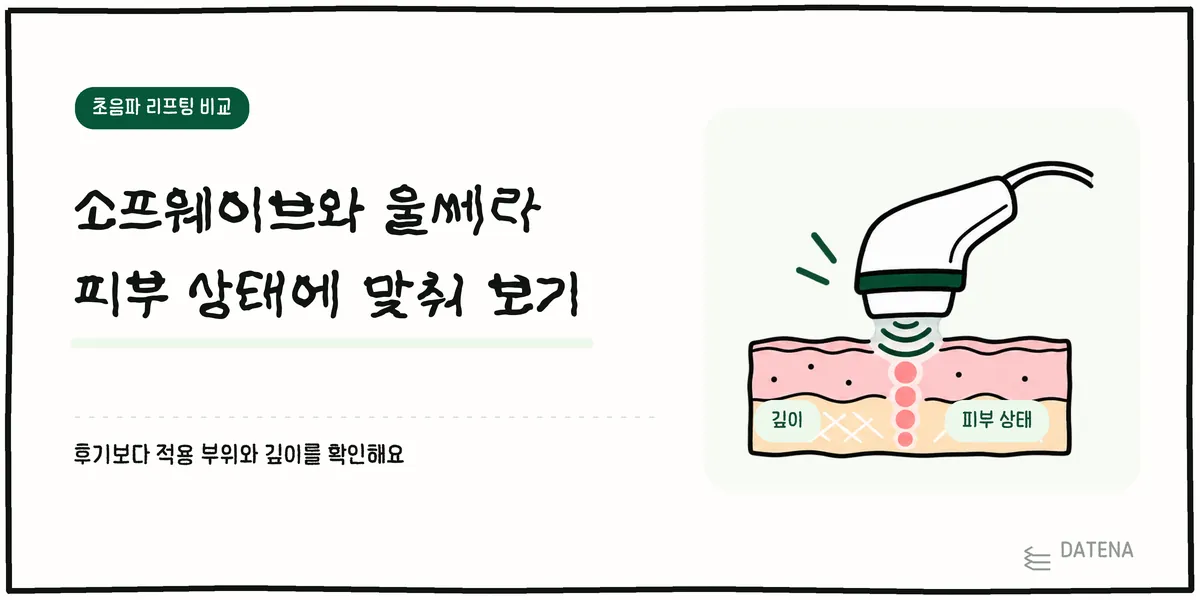
1. Even if a review sounds like you, will the same treatment suit you?
Hello, this is Datena Clinic.
When you look up Sofwave and Ulthera reviews, the choices of people with concerns like yours tend to catch your eye.
Still, you may worry whether it will suit your face too, or whether your cheeks might end up looking more hollow.
If fine lines and a sagging jawline both bother you, you may also wonder which area should be treated.
Below, we explain how the devices differ and why we look at skin thickness and facial volume.
2. Sofwave targets the dermis
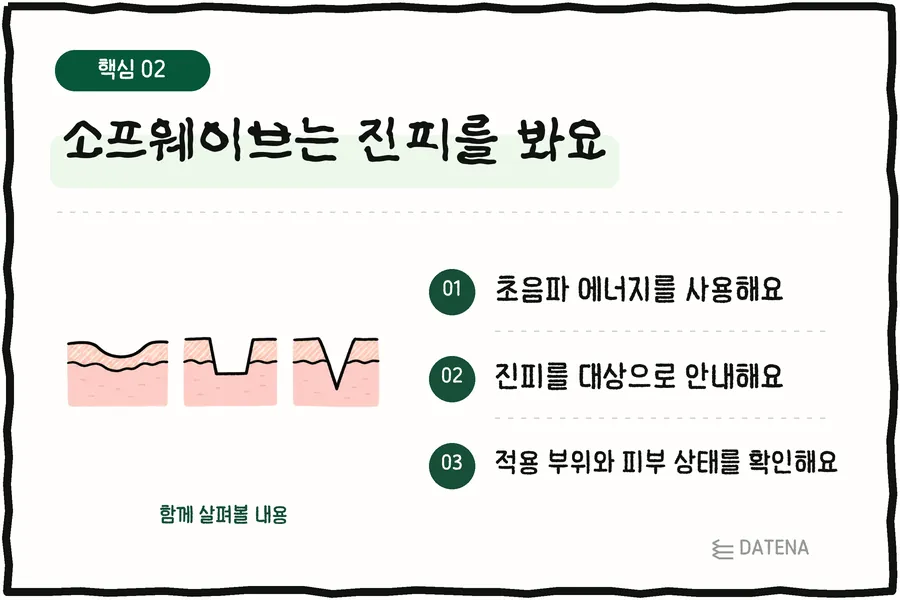
Sofwave delivers ultrasound energy to the dermis at a depth of about 1.5mm.[1]
It's a device that addresses wrinkles and firmness by using the skin's response to heat.
Targeting the dermis doesn't mean the same settings are used regardless of skin thickness.
Whether to use it should be decided based on the skin condition of the area and the change you're hoping for.
3. Ulthera uses transducers matched to each area
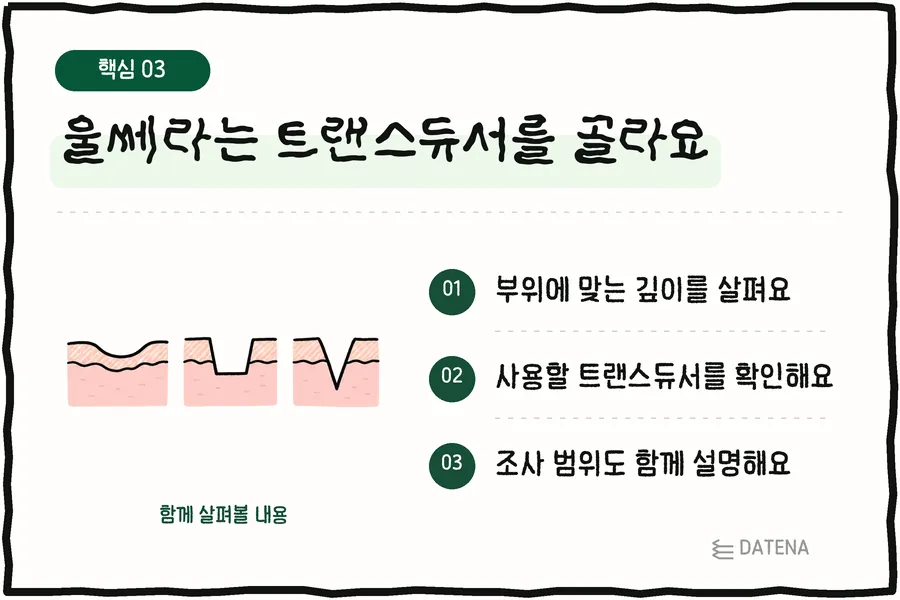
Ulthera uses different focal depths, such as 1.5mm, 3.0mm and 4.5mm, depending on the transducer.
It also lets the provider see the tissue on ultrasound imaging during treatment.[2]
Skin and tissue thickness can vary from one part of the face to another.
The depth and coverage are chosen based on skin and tissue thickness and the treatment area.
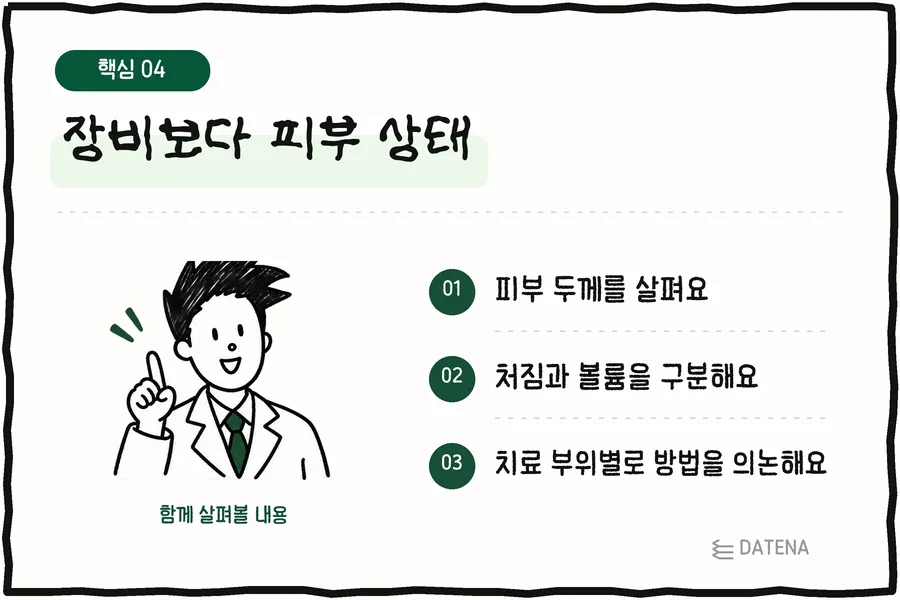
4. We explain the device differences in terms of your skin
The differences between these two devices help guide which areas to treat.
What we compare | Sofwave | Ulthera |
|---|---|---|
Stated treatment depth | Dermis, about 1.5mm | 1.5, 3.0, 4.5mm and more, depending on the transducer |
How it's performed | Delivers ultrasound heat to the dermis | Performed using ultrasound imaging and transducers |
Pre-treatment exam | Skin thickness, elasticity, treatment areas | Tissue thickness, volume, treatment areas |
Energy reaching deeper doesn't automatically make a treatment better for every skin concern.
The choice should reflect which layers and areas actually need attention.
5. Let us know if your cheeks are thin or have changed after past treatments
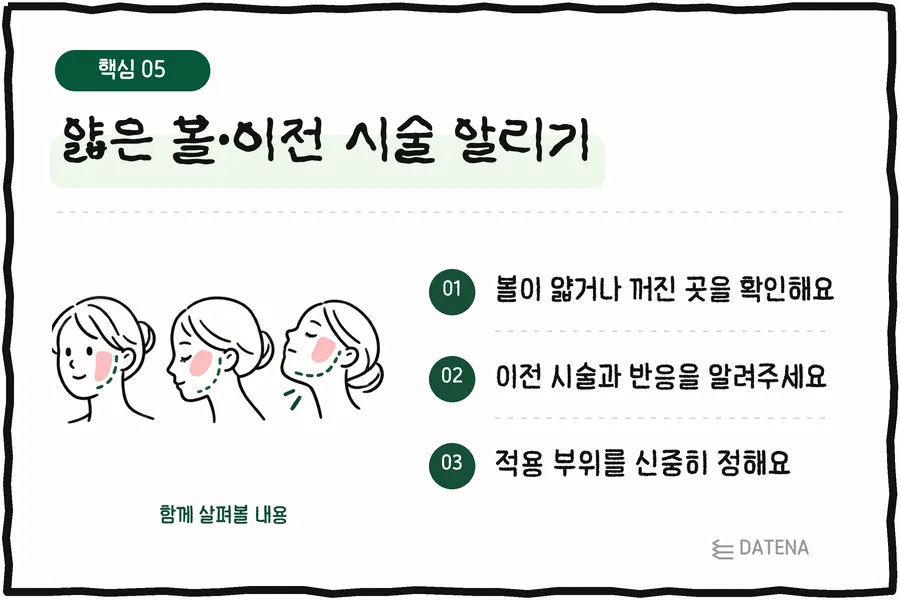
If you're worried about hollow cheeks or have recently lost weight, please point out those areas directly.
We also need to know about any past lifting treatments and injectables such as fillers.
Knowing all this lets us carefully decide whether to treat the whole face or only specific areas.
If we're considering both treatments together, we'll explain why each one is used in each area and what the recovery involves.
6. Wrapping up: Sofwave vs. Ulthera
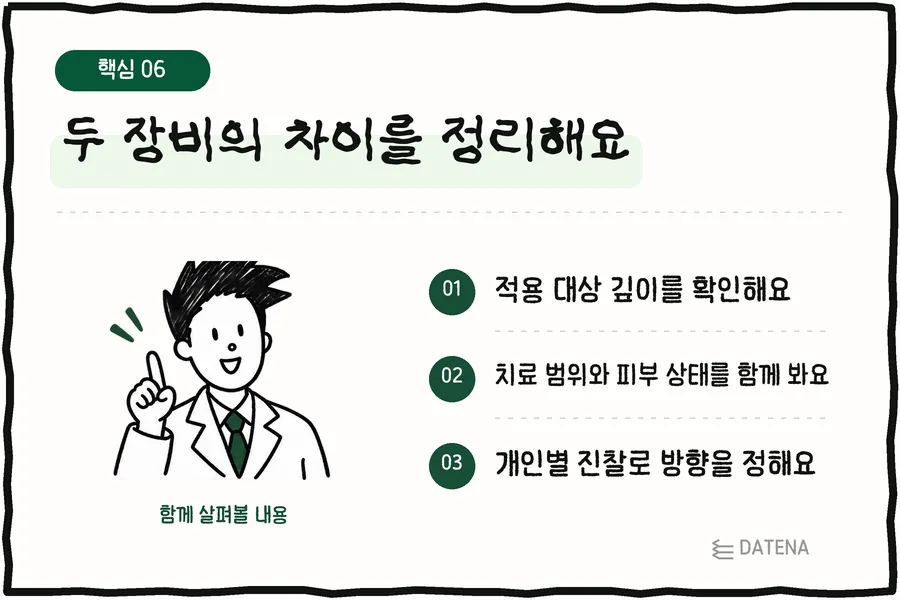
Sofwave and Ulthera differ in treatment depth and imaging capability.
We look at each device's characteristics alongside your current skin thickness, facial volume and the change you're hoping for, then decide which areas to treat.
Even when both devices are considered together, there should be a clear reason for using each one in each area.
This has been Datena Clinic, walking you through the differences between the two devices and the skin factors we look at during your exam.