
Treating old acne scars: what should be assessed before you start?
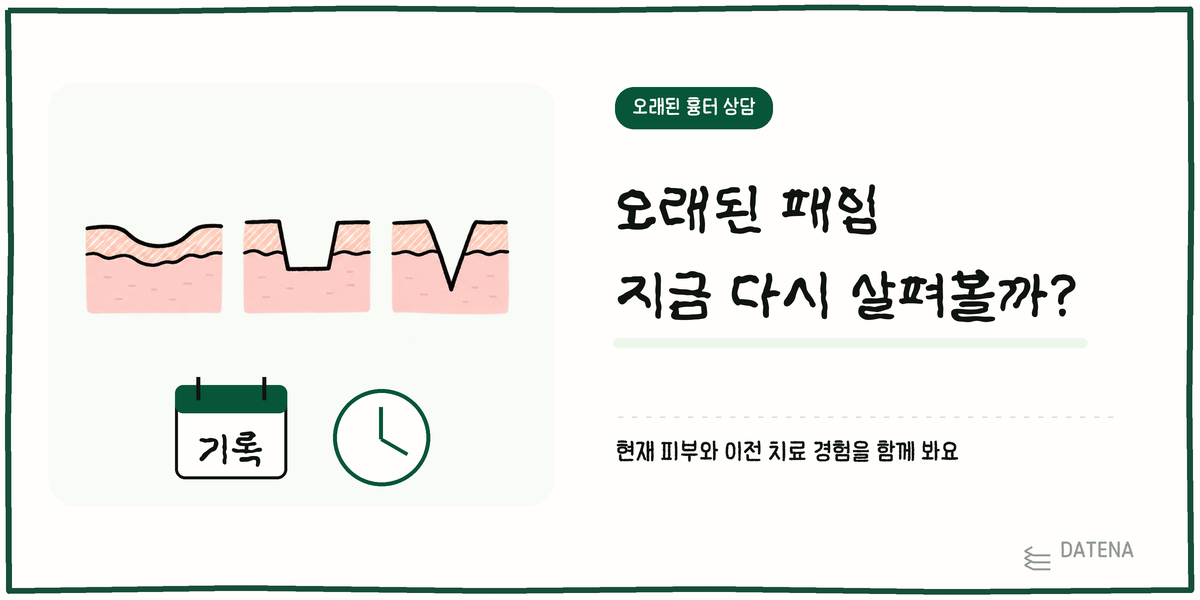
1. Deciding to treat scars you've lived with for years
Hello, this is Datena Clinic.
Maybe you've been self-conscious about scars from your school days for years, or you stopped treatment and are wondering whether to start again.
You might worry whether treatment can still work after so much time, or whether recovery will be as tough as it was before.
If you've been through treatment once already, deciding again can feel even more cautious.
We'll look at the indentations that remain and the current state of your skin, and hear what went well and what was hard last time.
2. Long-standing indentations can look different from area to area
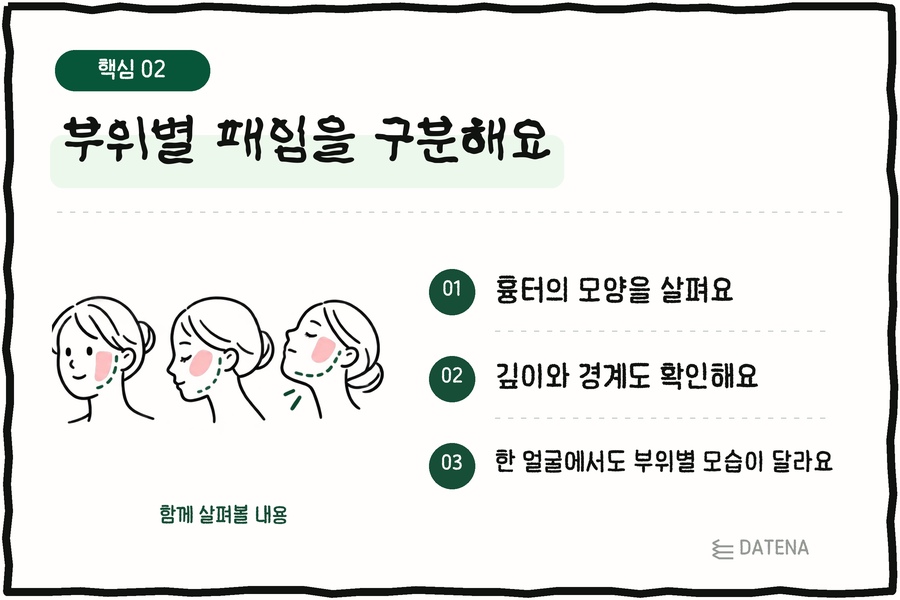
One cheek may have broad, shallow depressions while the other has clusters of small, deep scars.
As time passes and your skin's firmness or facial volume changes, the same scars can become more noticeable.
If red or brown marks remain, they need to be assessed separately from the indentations.
Treatments that fade discoloration and treatments that address sunken skin serve different purposes.
3. Knowing what worked and what didn't in past treatments helps
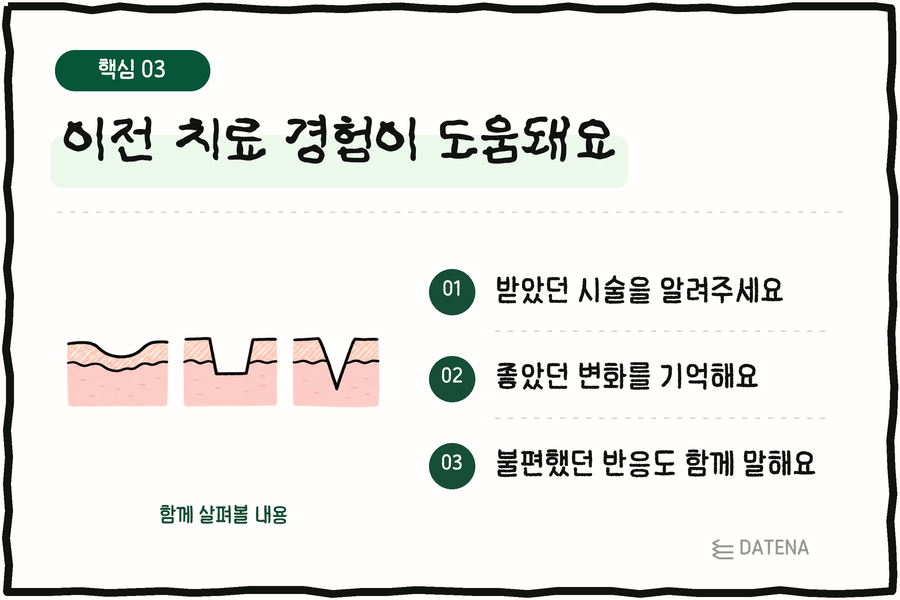
It matters not just which treatments you've had before, but also what changed afterward.
Let us know, for example, if the broad hollows on your cheeks improved but small scars remained, or if pigmentation during recovery was hard on you.
The type of past treatments and roughly when you had them
Areas where you noticed improvement and areas that changed less
Any bruising, redness or pigmentation that lingered for a long time
Why you stopped treatment, and how much recovery time you can manage now
It's okay if you don't remember the exact name of a treatment.
Photos or aftercare sheets from that time can help us understand your treatment history.
4. We choose a treatment approach that fits your skin as it is now
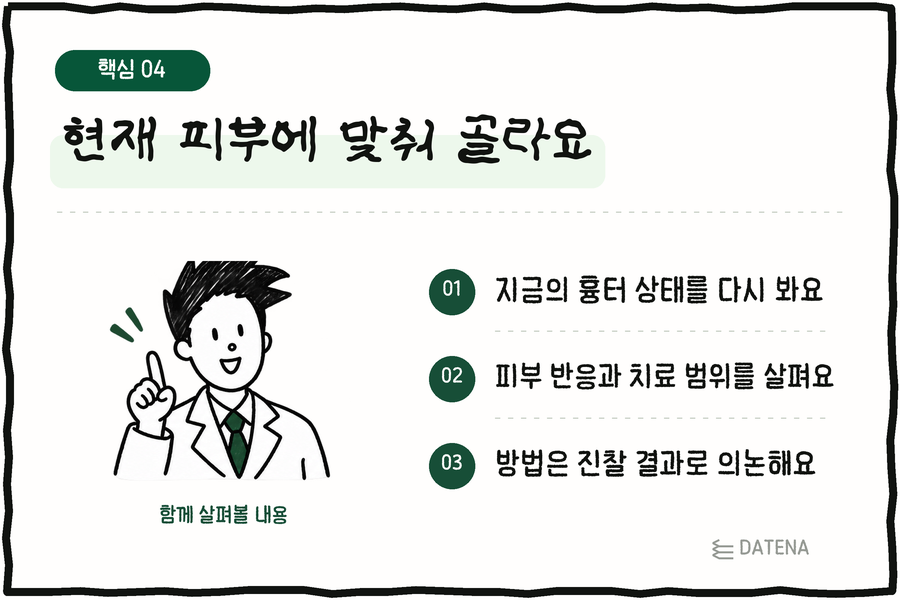
For tethered scars, we may consider treatments that work beneath the skin.
Deep depressions or sharply defined edges may need a separate approach, so we sometimes combine several methods.[1]
Even if a treatment worked well for you in the past, we need to adjust the area and intensity if your skin is sensitive now or your acne has come back.
Whether to repeat a previous treatment is decided based on today's examination.
5. You don't have to treat every scar all at once
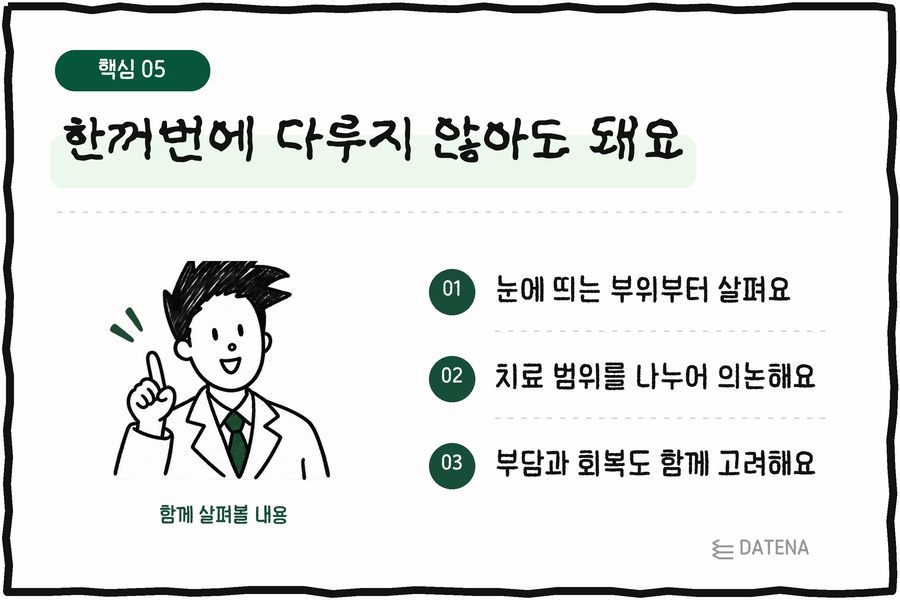
If recovery time has made you hesitant about treatment, we can start by discussing the areas that bother you most.
Dividing the treatment area lets us move forward while keeping an eye on your schedule and how your skin responds.
That said, treating a smaller area doesn't mean you should expect no recovery reaction at all.
We'll explain what changes to expect and how much recovery time you'll need.
6. If you're reconsidering treatment for long-standing scars
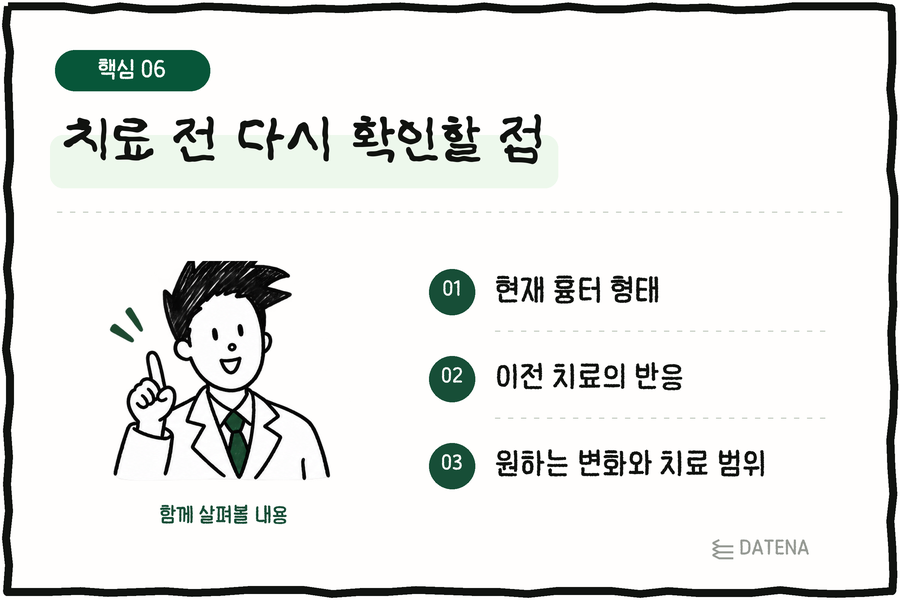
Even old acne scars can be evaluated for treatment based on the depressions, tethering and skin condition you have today.
What improved with past treatments, and what made recovery difficult, both help guide the choice of method and treatment area.
Since there are limits to removing scars completely, our goal is to soften the depressions and improve skin texture.
To everyone who has long struggled with old acne scars, we hope today's explanation helps as you think about treatment again.
You can find details on our treatments and directions on the Datena Clinic official website.