
Bruising and Swelling After Subcision: What to Check While You Heal
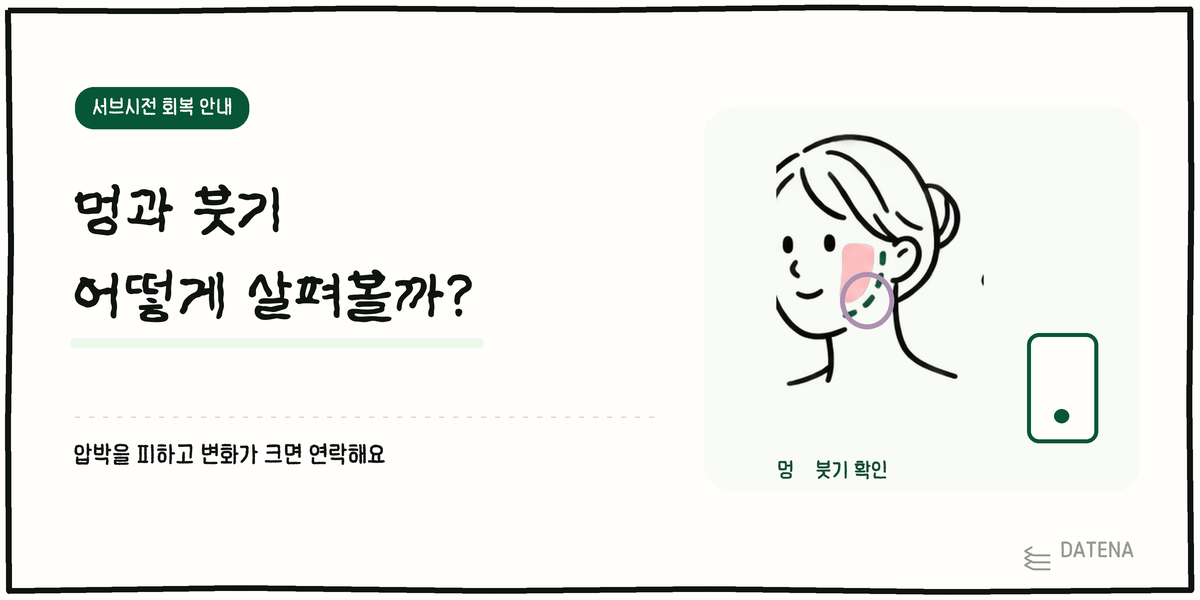
1. Seeing bruises after treatment can be unsettling
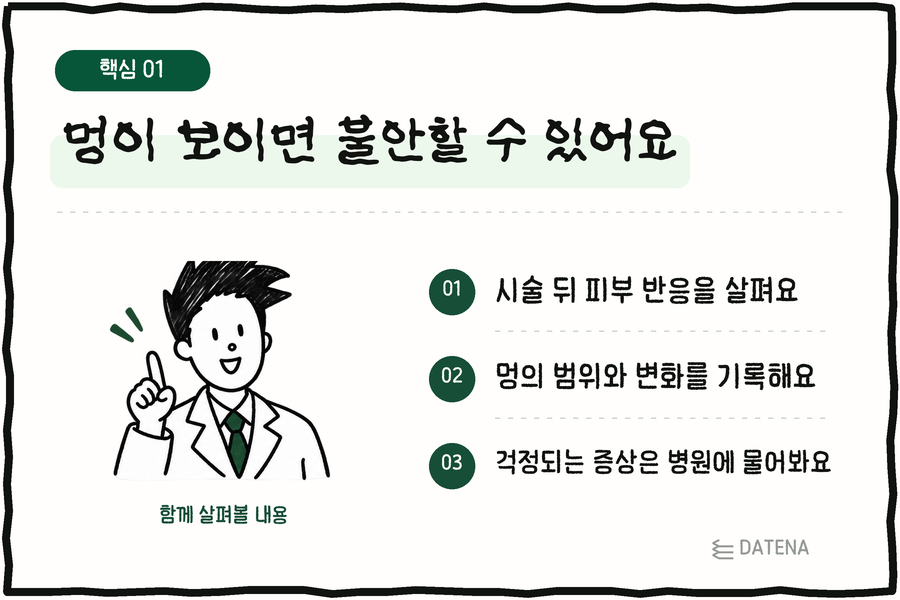
Hello, this is Datena Clinic.
Even when you expected it, seeing bruising and swelling in the mirror after subcision can make you uneasy.
You might worry that something went wrong, or that the bruises will stick around for a long time.
When you're looking at your healing face every day, even small changes can feel big.
Below, we'll explain why bruising and swelling happen, how to track your progress, and which symptoms mean you should be seen.
2. Bruising and swelling happen in different ways
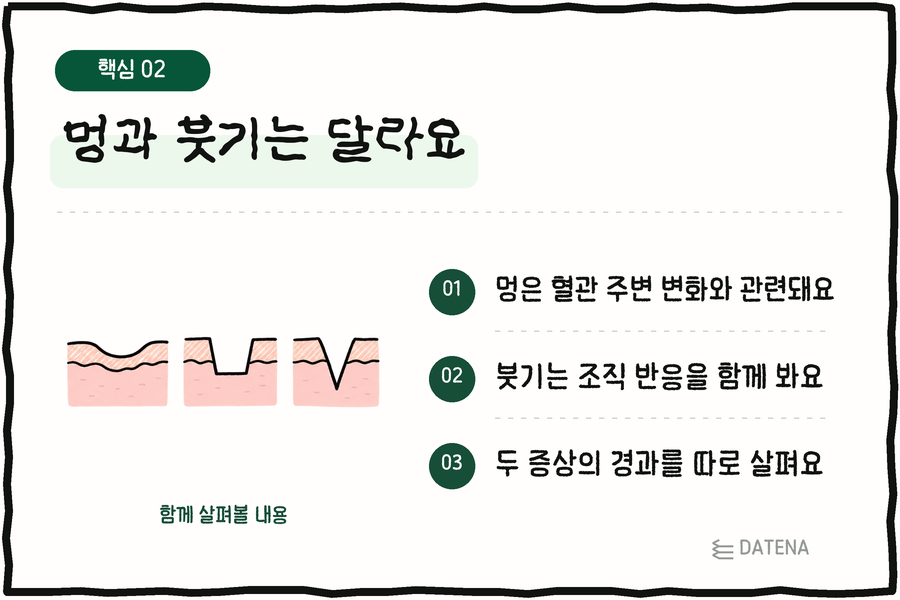
A bruise is the color you see when blood has escaped beneath the skin.
Swelling can come from the tissue's response in the treated area and shifts in body fluids, among other things.
A bruise may change color over time, and as swelling goes down the area can look different from how it did at first.
Reactions vary with the size of the treated area and how easily you bleed, so it's hard to set your own recovery timeline based on someone else's photos.
3. Tell us about your regular medications and whether you bruise easily
If you tend to get large bruises from even minor bumps, please let us know before the procedure.
We also need to know if you take any medications or supplements that could affect blood clotting.
For prescription drugs, you're welcome to show us the prescription or a photo that shows the medication names.
Never stop a medication you take for another condition on your own; any adjustment should be discussed with the doctor who manages that condition.
4. Avoid pressure and vigorous massage while you heal
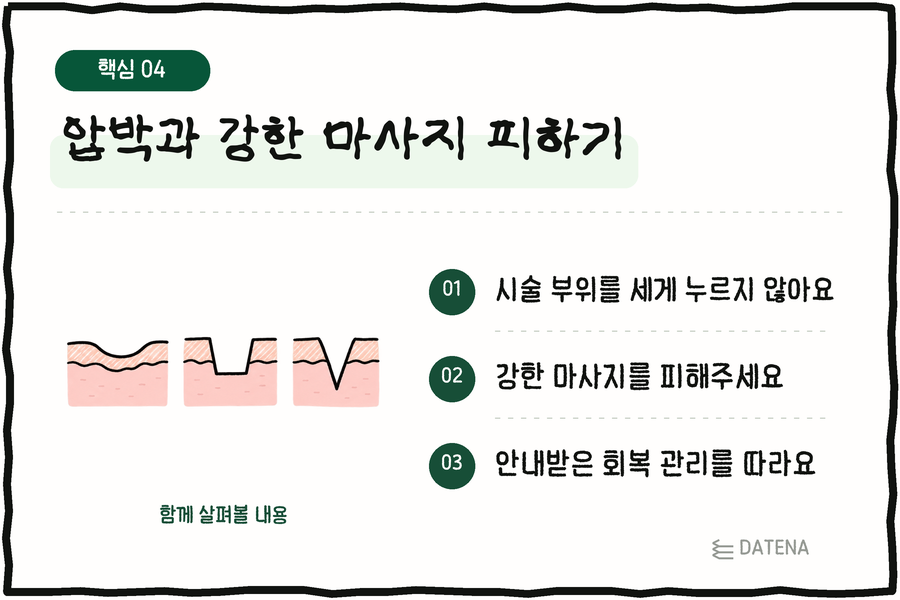
You may be tempted to press or rub the area to make the bruises fade faster, but please don't, as it irritates tissue that's still healing.
If you were told to use a cold compress, don't put ice directly on your skin; follow the timing and method you were given.
When you can go back to hot packs, saunas or intense exercise also depends on how extensive your treatment was.
While some mild discomfort lingers, start by cutting back on the habit of touching your face over and over.
5. Contact us if you notice these changes
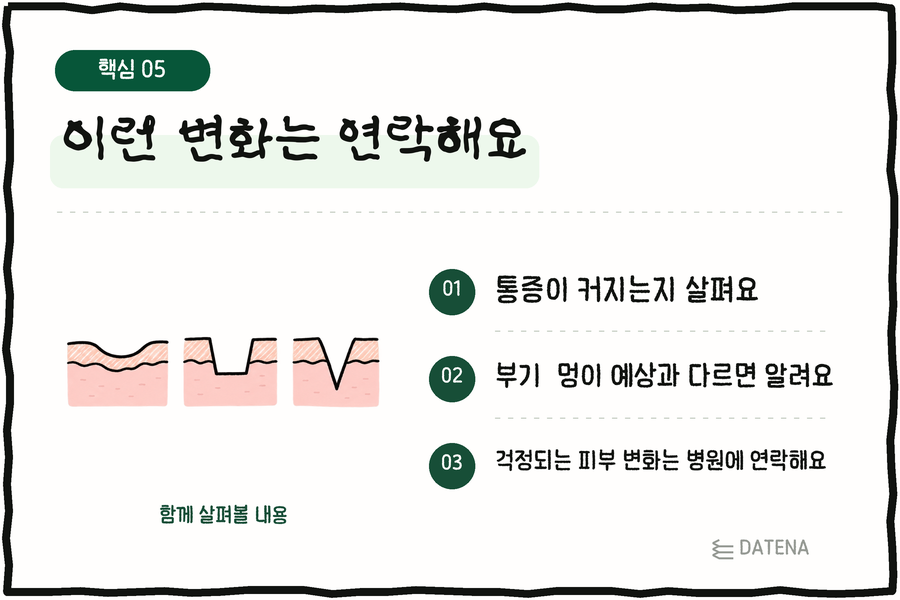
A bruise that's fading and symptoms that are getting worse need to be looked at separately.
In particular, the following changes should be checked at the clinic.
Pain or swelling that keeps getting worse
One area suddenly growing larger or swelling up firm
Redness that spreads, along with warmth, pus or fever
Changes in sensation or a clear abnormality in skin color
Don't wait until your scheduled follow-up visit; let us know your symptoms and when they started.
6. Remember how to keep an eye on bruising and swelling
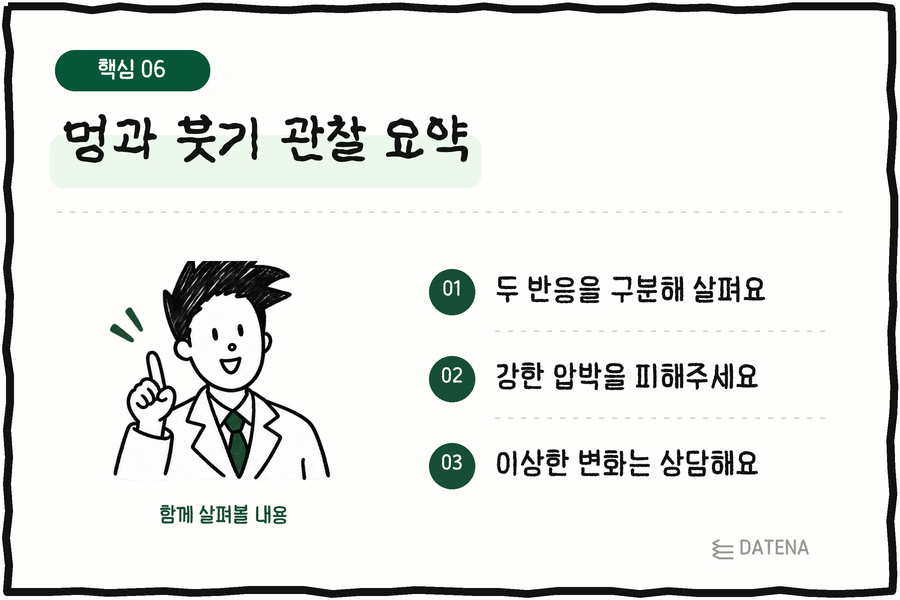
How quickly bruising and swelling settle after subcision varies from person to person.
Check that the bruise is fading and the pain is easing, and avoid pressing or rubbing the skin.
If pain and swelling increase, or you notice warmth, discharge or similar signs, you should have it checked at the clinic.
We hope you can care for your healing skin gently while the bruising and swelling settle.
You can find details on our treatments and directions on the Datena Clinic official website.