
Botox Timing: When to Go Back If the Results Seem to Be Fading

If your Botox seems to be wearing off, you may be wondering whether to move your next appointment up.
Here we walk through product-specific guidance, treatment areas, and what to check before repeat injections.
Today's summary
Botox timing isn't the same for everyone.
We check the product, the area, and how you responded last time.
Repeat injections at short intervals call for caution.
We also assess changes in your expressions and any side effects.
Hello, this is Datena Clinic.
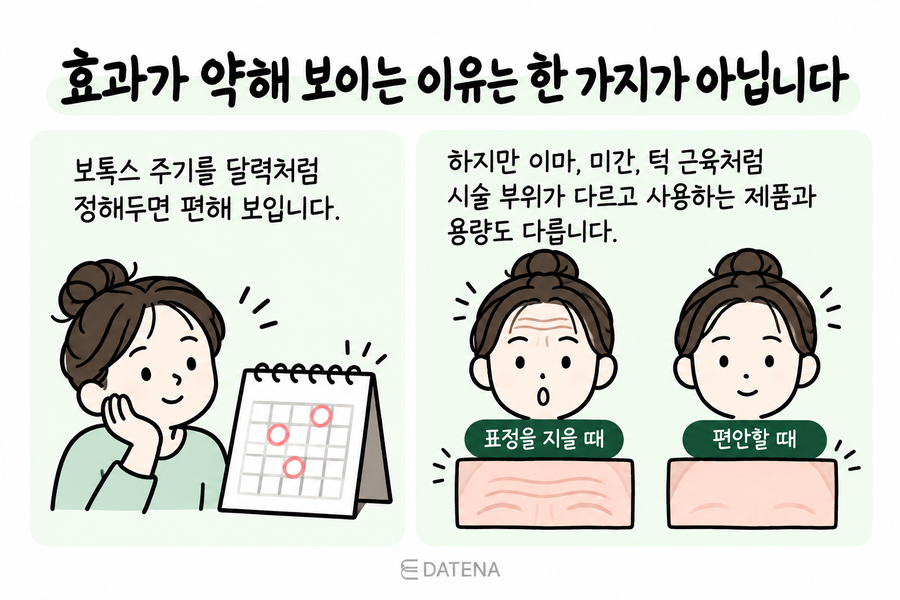
Setting your Botox schedule like a calendar reminder can seem convenient.
But treatment areas differ, such as the forehead, the frown lines between the brows, or the jaw muscles, and so do the products and doses used.
When people search for Botox timing, they usually expect a single answer for how many months to wait.
But even for the same person, the next appointment can shift when the treatment area or goal changes.
Before getting injected again just because the effect seems weaker, there are a few things worth checking.
1. Check the product, area, and dose from your last Botox
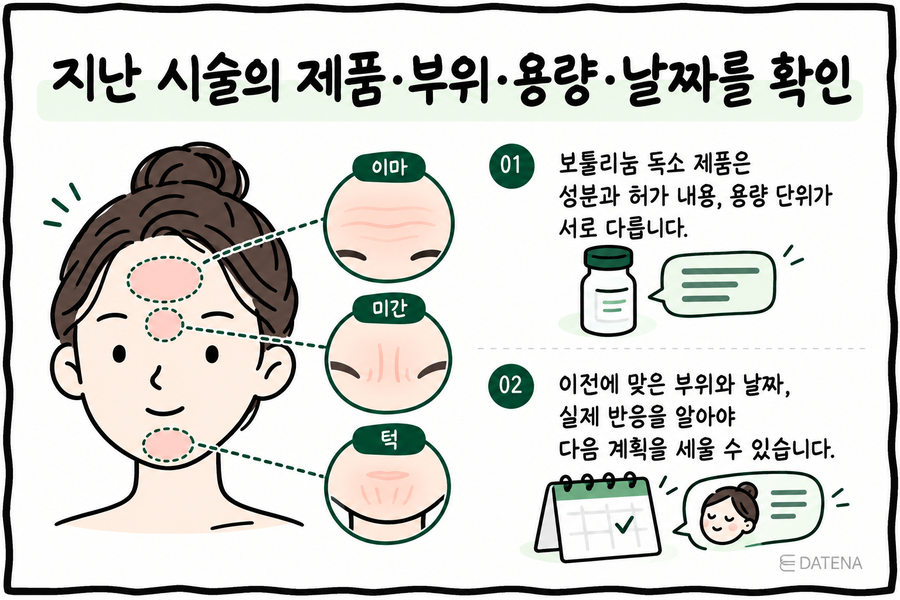
Botulinum toxin products differ in their ingredients, approved uses, and dosing units.
We need to know the areas treated, the dates, and how you actually responded to plan your next step.
A record of your past treatment is most helpful when it includes not just the product name but also the areas and doses.
It's also important to remember that units from different products can't be compared directly.
Applying one product's recommended interval to another product as-is can cause problems.
2. Why the effect may feel like it's fading
Your muscle movement may be gradually returning, or the change you hoped for may not have been enough from the start.
If expression habits or the wrinkles themselves remain in the skin, you may feel the treatment didn't work.
Wrinkles that stay even when your face is at rest can be hard to fix just by reducing muscle movement.
On the other hand, for wrinkles that only show up when you make expressions, the first step is to look at your current muscle movement.
Looking at treatment photos alongside your facial movement helps pinpoint the cause.
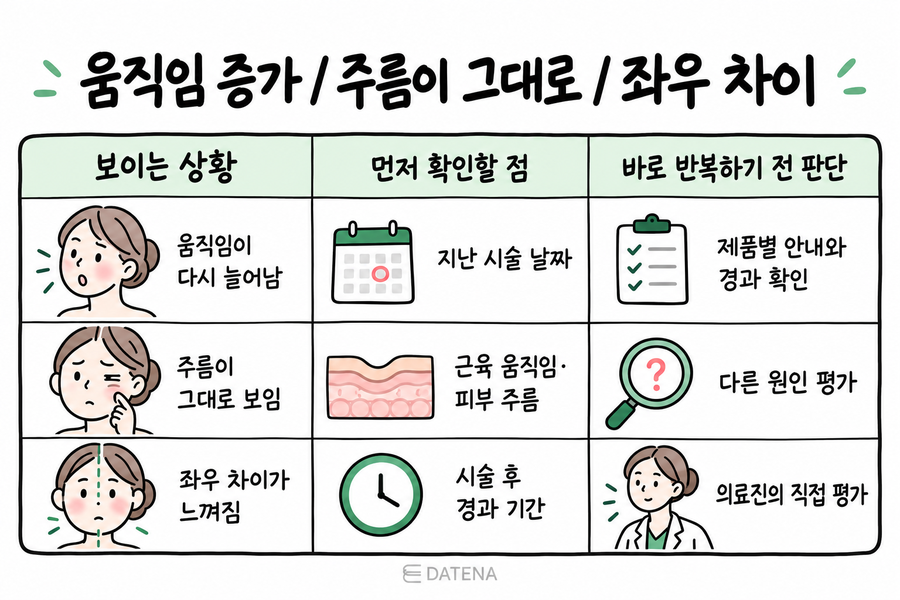
What you notice | What to check first | What to assess before repeating right away |
|---|---|---|
Movement is coming back | Date of last treatment | Check product-specific guidance and progress |
Wrinkles are still visible | Muscle movement vs. skin wrinkles | Evaluate other causes |
Left and right look different | Time elapsed since treatment | In-person assessment by the doctor |
3. Why we don't rush the interval between treatments

Official approval documents for some products state that the safety and effectiveness of frequent repeat treatments have not been fully evaluated.
Extra injections at short intervals and high cumulative exposure are factors considered when discussing reduced response.
One product's official labeling states that the safety and effectiveness of dosing more often than every 3 months have not been fully evaluated.
That said, this figure shouldn't be applied as a one-size-fits-all retreatment date for every product and every person.
We can't say for certain that resistance will develop, but it's best to avoid rushing into repeat treatments when they aren't needed.
4. Changes in expression and chewing after repeat treatments
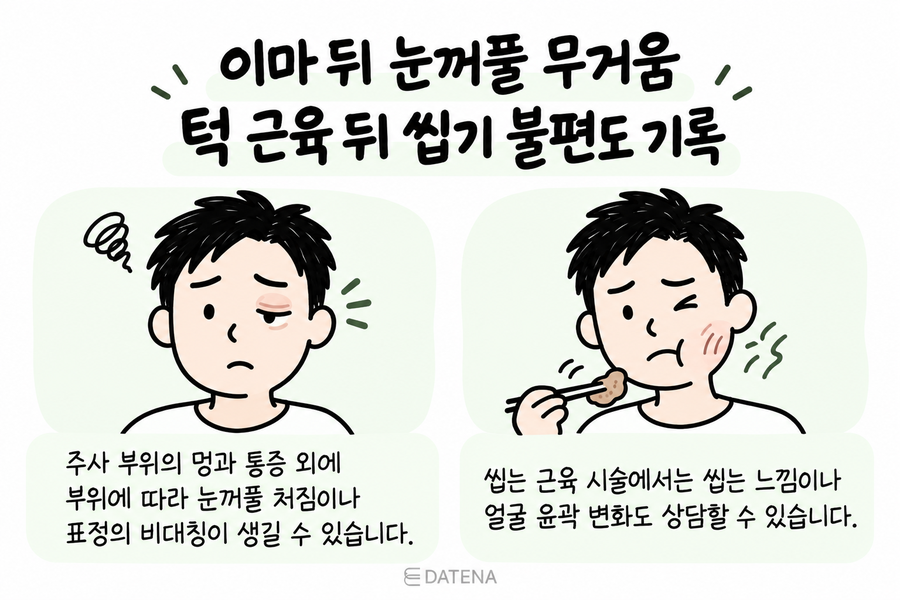
Besides bruising and soreness at the injection site, depending on the area treated, drooping eyelids or uneven facial expressions can occur.
For treatments on the chewing muscles, we can also talk through changes in how chewing feels or in your facial contour.
If your eyelids felt heavy after a forehead treatment, that's important information for planning the next one.
Whether chewing food felt uncomfortable after a jaw muscle treatment should also be discussed when deciding whether to repeat it.
Any uncomfortable reaction from a previous treatment should be factored into the next plan.
5. Checking your medications and existing conditions

If you have a neuromuscular disorder or take certain medications, this needs to be checked before the product is used.
If you are pregnant or breastfeeding, please also talk with our medical team before treatment.
Oral medications and neuromuscular conditions can affect how you respond to the injection and how safe it is.
If you experienced generalized muscle weakness or difficulty swallowing after a previous injection, you must let us know.
It's best to share any past allergic reactions and the names of products you've had as accurately as you can.
6. Deciding when to have your next treatment
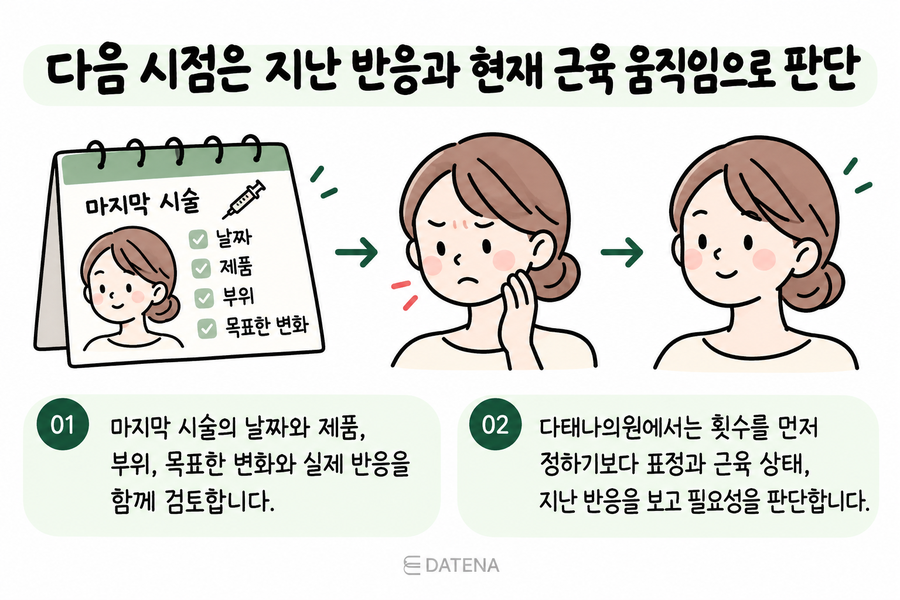
We review the date, product and area of your last treatment, along with the change you were aiming for and how you actually responded.
At Datena Clinic, rather than setting a number of sessions up front, we decide whether treatment is needed based on your expressions, muscle condition and past reactions.
It helps to note when your expressions started to change after your last treatment.
This helps us tell whether the effect seems weaker because of the treatment interval or because of a different skin issue.
The right interval for you is decided through that process.
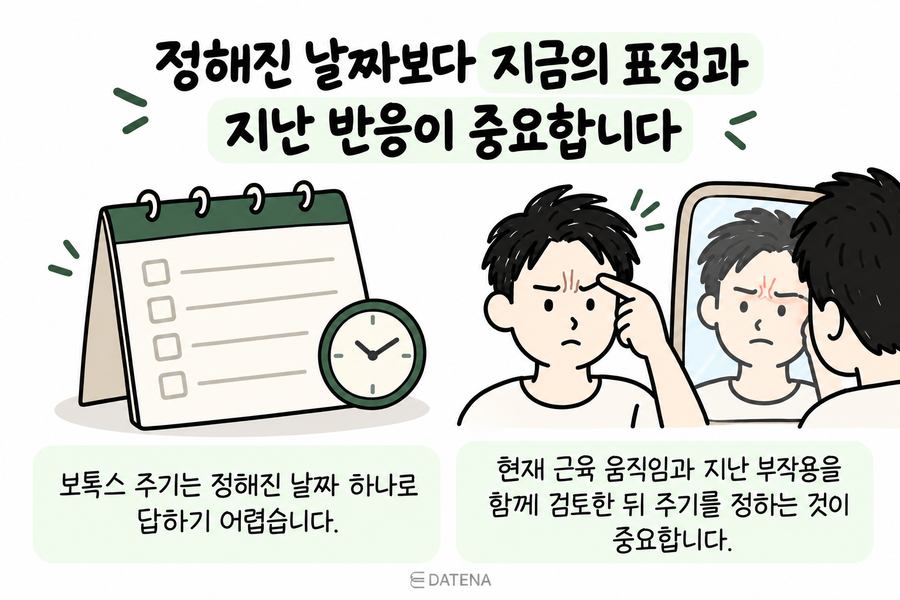
There's no single fixed date that answers the question of how often to get Botox.
You don't need to get treated again just because a certain date has arrived.
What matters is setting your schedule after reviewing both your current muscle movement and any past side effects.
When the effect seems weaker, it helps to review your last treatment and how your expressions have changed, rather than repeating right away.
You can find details on our treatments and directions on the Datena Clinic official website.