
Rejuran Rituo results: how to assess changes in skin texture and fine lines
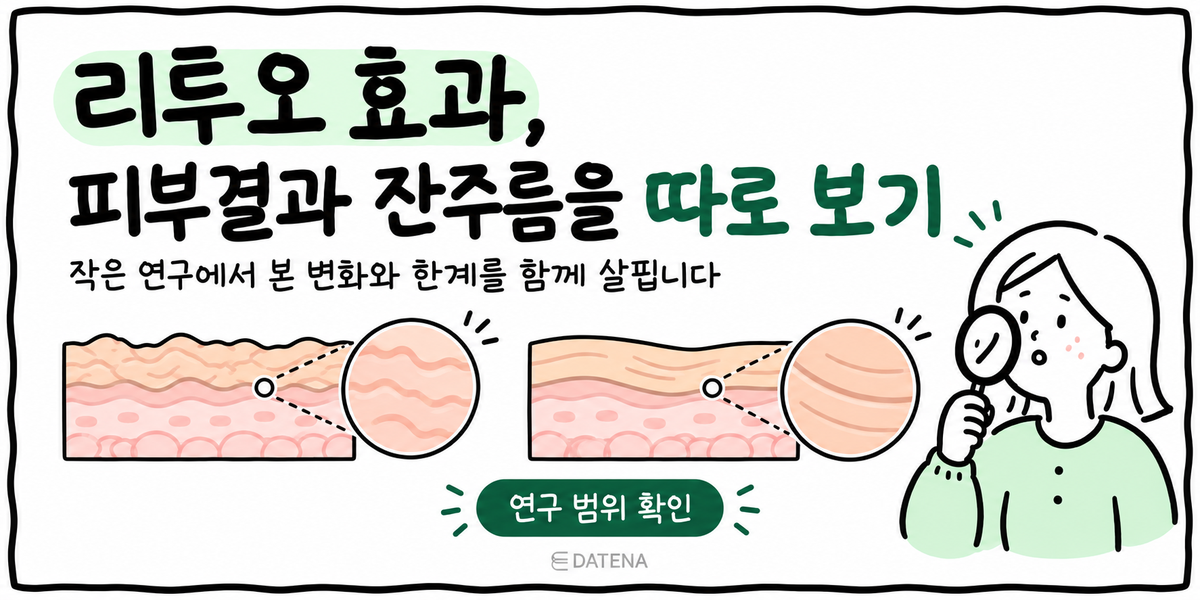
If you're looking into Rituo, you may be wondering whether to focus on changes in skin texture or in firmness.
Here we look at what the product is, how far the published research actually goes, and which measures to check during your consultation.
Today's summary
Rituo is a product derived from acellular dermal matrix.
The research so far is still limited in size and duration.
We set separate goals, such as skin texture or fine lines.
We also go over post-injection reactions and information about the source material.
Hello, this is Datena Clinic.
Rituo is often mentioned alongside other skin boosters, but that doesn't mean their ingredients or research are the same.
What matters isn't just the impression that your skin looks better after treatment, but which measures were assessed, and when.
When talking about what Rituo can do, look past the product name and check what each study actually measured.
The newer a product is, the more careful you should be about stretching small study results to cover every skin concern.
Let's separate what's currently known from what's still uncertain.

1. What Rituo is made of and how it works
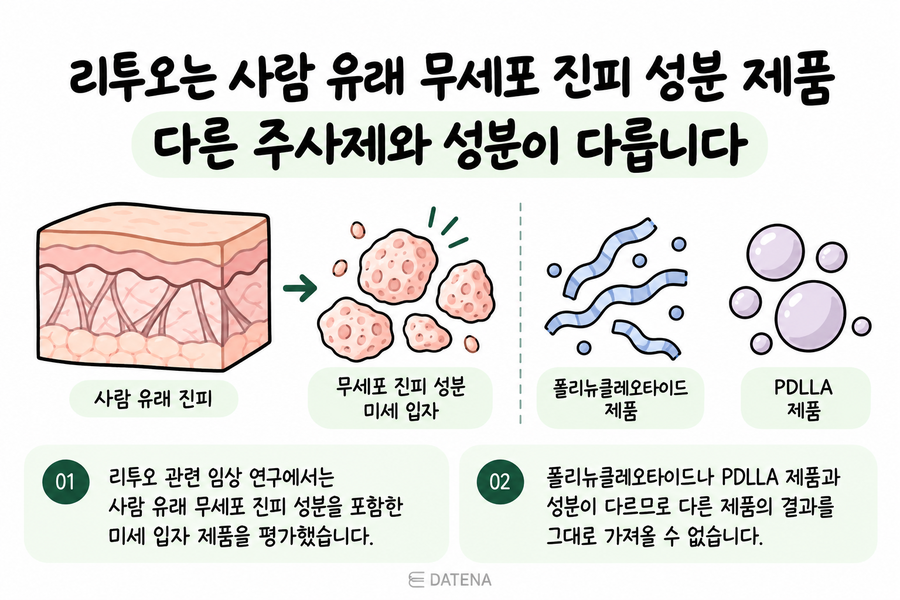
Clinical studies on Rituo evaluated a microparticle product containing human-derived acellular dermal components.
Its ingredients differ from polynucleotide or PDLLA products, so results from those products can't simply be applied to it.
"Derived from acellular dermis" means the source material has been processed to remove cells.
The fact that it comes from human-derived material is a separate question from what results you personally will see.
Be sure to check the specifics of the product's source material and how it's used before treatment.
2. What a 20-person study found, and its limits

A small facial comparison study reported changes in some skin condition measures.
Because the number of participants and the follow-up period were limited, it's hard to draw firm conclusions about long-term results or effects across all skin types.
The published facial comparison study had 20 participants and a 20-week follow-up period.
It looked at measures such as skin roughness and hydration, but it doesn't tell us about the results of repeated treatments over the long term.
Some of the researchers reportedly had a history of advising on the product's development, so independent follow-up studies are also worth looking at.
What to check | What the study looked at | What to keep in mind when interpreting |
|---|---|---|
Skin texture · fine lines | Changes in specific measures | How noticeable it feels varies from person to person |
Safety | Reactions during the follow-up period | Doesn't account for all long-term risks |
Comparison | Compared with other injectables | Can't be generalized to every product |
3. How to assess skin texture and fine lines
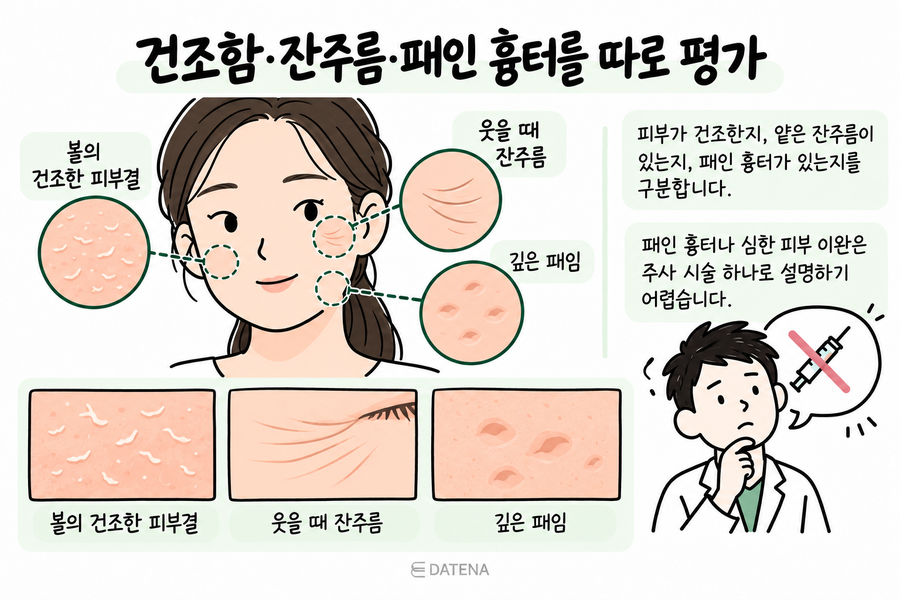
We first sort out whether your skin is dry, whether you have shallow fine lines, or whether you have depressed (pitted) scars.
Depressed scars or significant skin laxity are hard to explain with a single injectable treatment.
How we assess results depends on whether you want to ease that tight feeling after cleansing or address the fine lines that show when you smile.
Subjective satisfaction alone makes it hard to tell what has actually changed.
Taking photos under the same conditions before treatment and setting target areas makes it easier to compare progress.
4. Past reactions to mention before treatment

If you currently have a skin infection, inflammation or a wound, or if you have had an adverse reaction to a previous injectable treatment, you should let us know.
Because it is made from human-derived material, it is a good idea to get a thorough explanation of the product information and the injection plan.
If a previous injectable product caused swelling or lumps, please tell us when you had it and which product it was.
If the fact that it is a human-derived tissue product concerns you, it is important to hear a full explanation of how the material is processed and about the product before deciding.
You should also share the medications you take and your past treatment history.
5. Watch for pain and skin color changes after injection
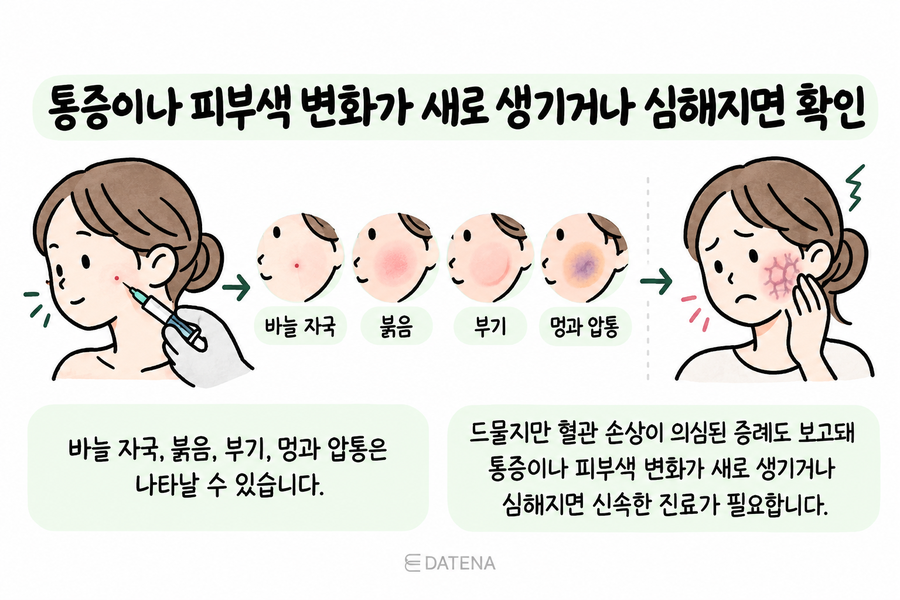
Needle marks, redness, swelling, bruising and tenderness can occur.
Although rare, cases of suspected vascular injury have been reported, so if pain or skin color changes newly appear or get worse, you need to be seen promptly.
In the reports of suspected vascular injury, pain and skin changes appeared two days after treatment.
These cases are rare, but new pain or a net-like (mottled) color change should not be brushed off just because things looked fine right after treatment.
A small study reporting few serious adverse reactions does not mean there is no risk for any individual.
6. Confirming the product and your treatment goals

We go over the exact product name, the target areas, when results will be assessed, and what changes are unlikely to happen.
At Datena Clinic, we focus less on the buzz around a new product and more on your current skin concerns and the scope of the published evidence.
Also check whether the product used in the studies is the same one you will receive, and whether any other ingredients will be mixed in.
A complete explanation includes hearing that there are still gaps in what we know about the product's role and long-term safety.
If your symptoms come from a different cause, another treatment may be a better fit.
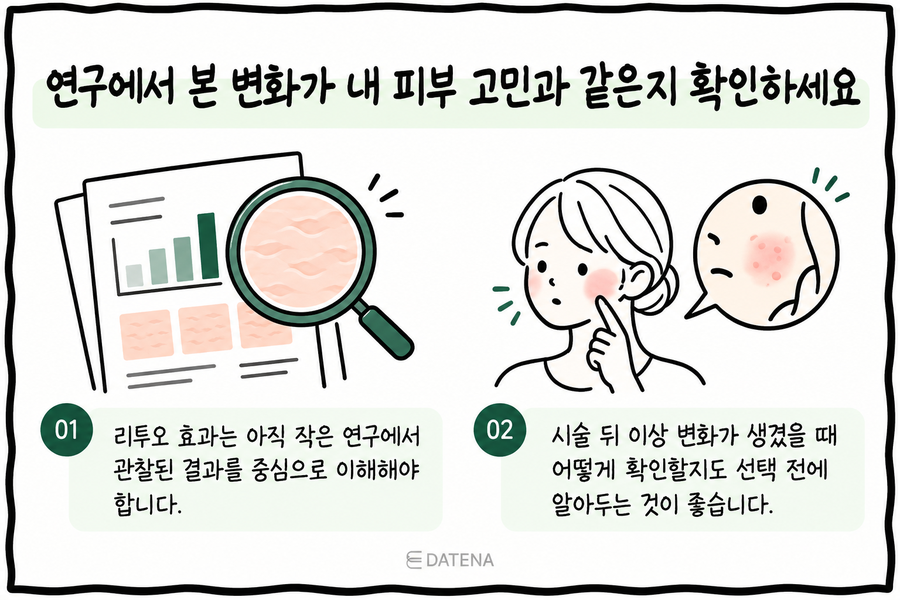
The effects of Rituo should still be understood mainly through results observed in small studies.
Research on Rituo shows promise for skin condition, but it cannot yet confirm long-term results.
It is also wise to know, before choosing, how any unusual changes after treatment will be checked.
Check whether your skin concern matches the goals assessed in the research, and review the limits of the treatment as well.
You can find details on our treatments and directions on the Datena Clinic official website.