
Why Do Pitted Acne Scars Form?
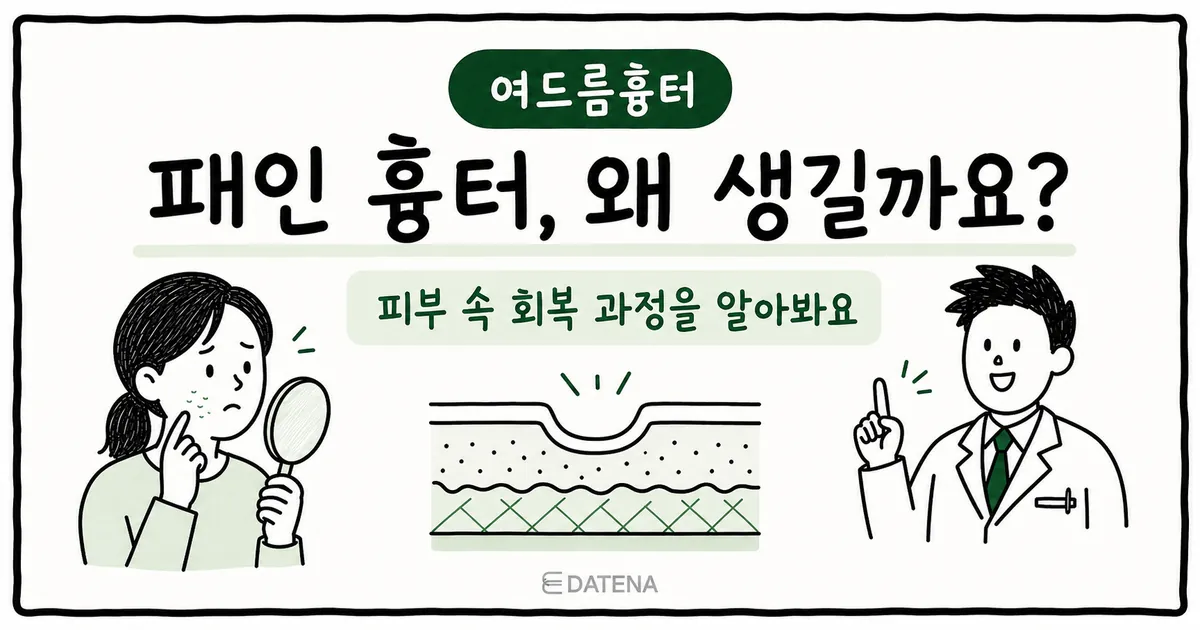
📌 Today's takeaways
✓ Inflammatory acne can leave damage deep in the skin.
✓ Scar risk depends on how severe the inflammation is and how your skin heals.
✓ Squeezing pimples with your fingers can raise the risk of scarring.
✓ The earlier scars are managed, the better the chances of improvement may be.
Hello, this is Datena Clinic.
📑 Contents
Does every pimple leave a scar?
Does more severe inflammation mean a higher scar risk?
Why does squeezing pimples cause scars?
Why does the same acne scar differently from person to person?
How do fresh scars differ from older ones?
When should treatment start to help prevent acne scars?
01. Does every pimple leave a scar?
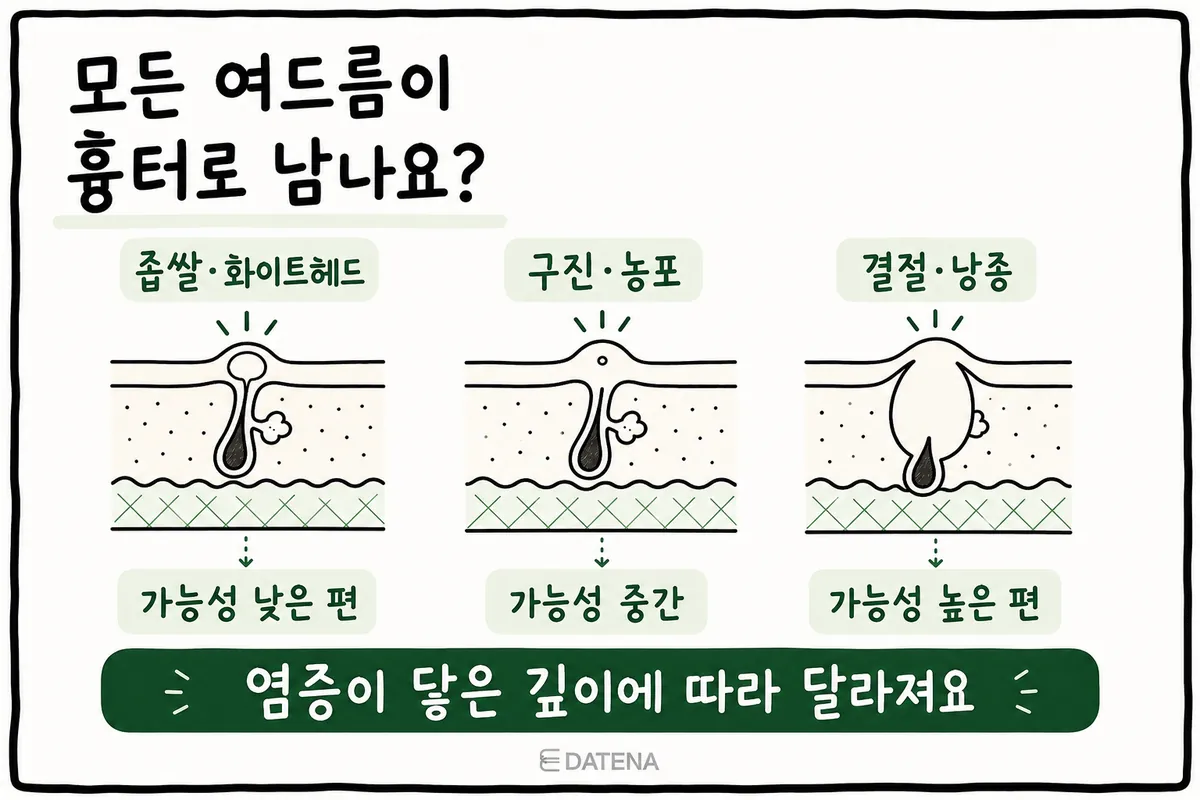
Not every breakout turns into a scar.
Small bumps and minor pimples that stay at the skin's surface usually fade without leaving much of a mark.
But when inflammation spreads down into the dermis, the deeper layer of skin, collagen may not fully fill back in during healing, leaving a pitted scar.
Acne type | Characteristics | Likelihood of scarring |
|---|---|---|
Small bumps / whiteheads | Mild, limited to the skin's surface | Relatively low |
Papules / pustules | Red and swollen, with pain or pus | Moderate |
Nodules / cysts | Inflammation reaches deep into the skin | Relatively high |
The type of acne and how deep the inflammation reaches can affect the likelihood of scarring.
02. Does more severe inflammation mean a higher scar risk?
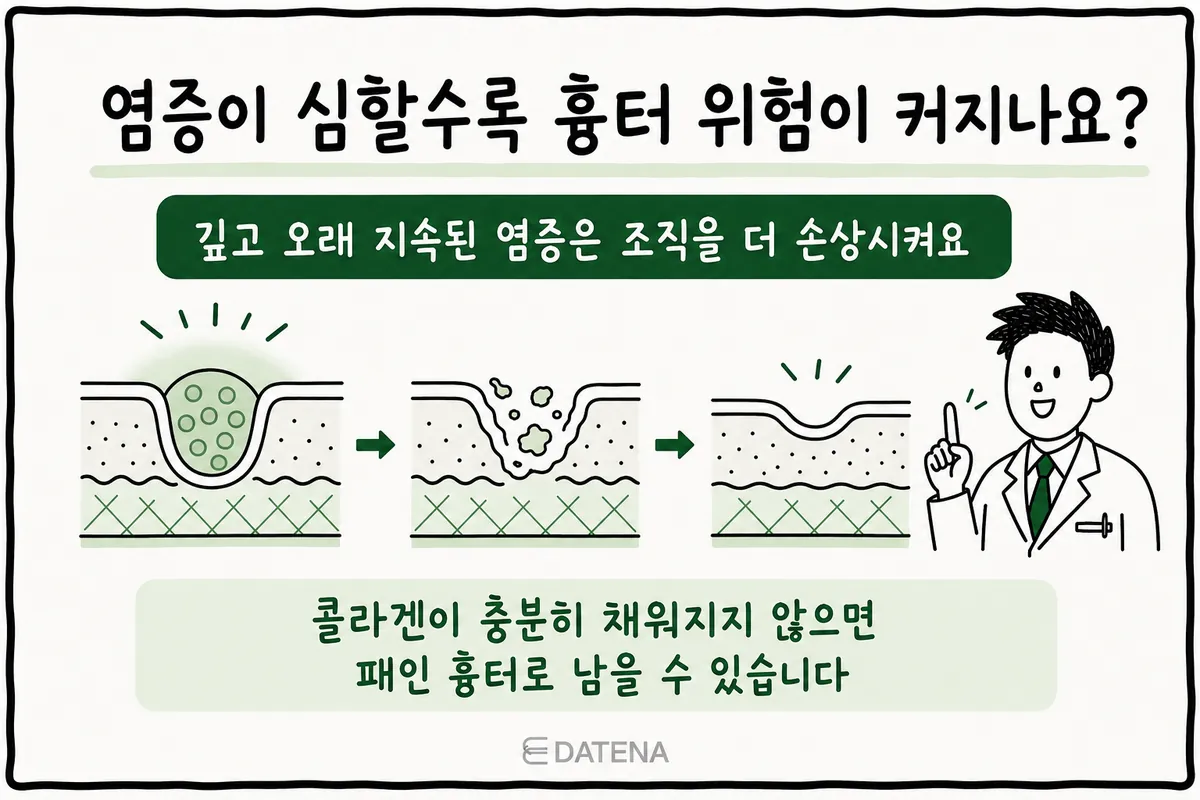
Yes. How severe the inflammation is and how long it lasts are closely linked to whether scars form.
When inflammation is severe or drags on for a long time, it can damage the collagen deep in the skin and even the surrounding tissue.
If new tissue doesn't fill back up to the original skin level as the damaged area heals, a sunken, pitted scar is left behind.
In particular, nodular acne that feels red and firm, and cystic acne sitting deep beneath the skin, are more likely to lead to scarring.
Keep in mind
What matters is not so much the size of a pimple as how deep the inflammation has spread into the skin.
03. Why does squeezing pimples cause scars?
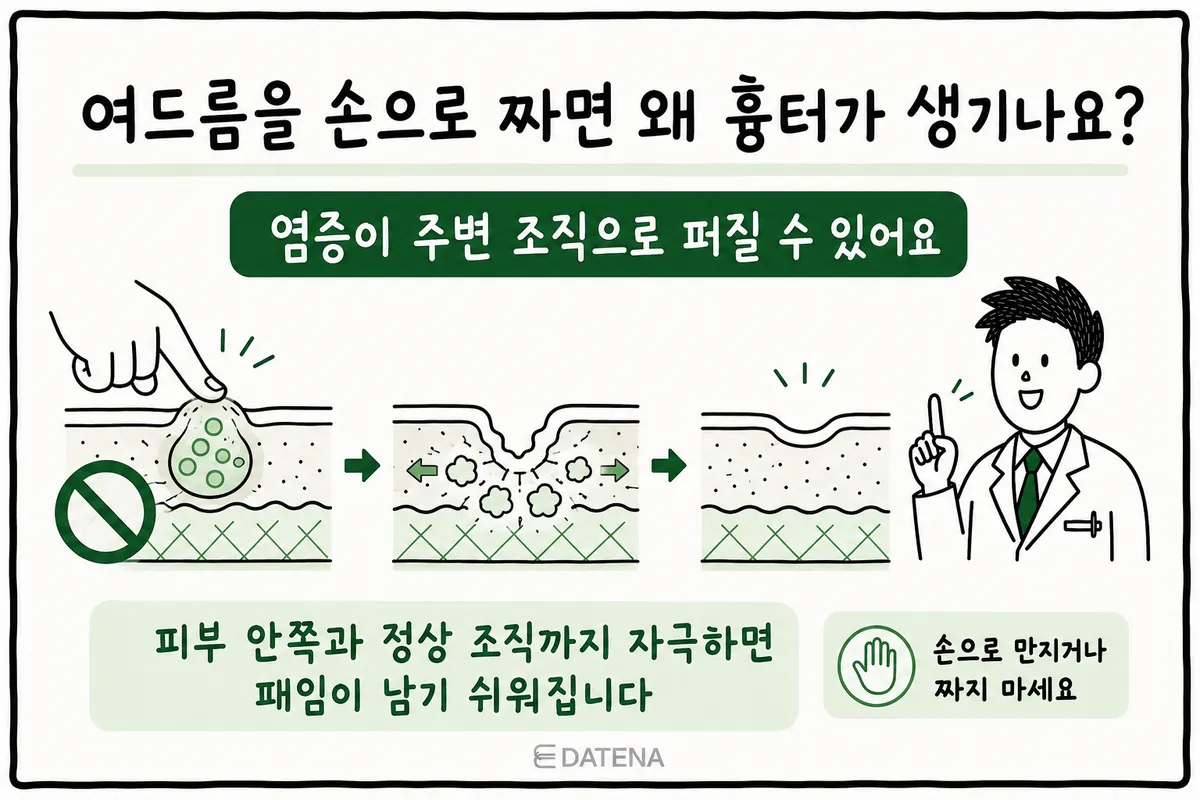
Squeezing a pimple can make it look like the inflammation is coming out of the skin.
But applying the wrong kind of pressure can spread oil and inflammatory material into the surrounding tissue or deeper into the skin.
Repeatedly pressing on or picking at deep-seated inflammation can also damage healthy skin tissue along with it.
As the damaged area grows, the skin is less able to heal evenly, and the chance of scarring goes up.
On top of that, bacteria on your hands or nails can get into the wound, making the inflammation worse or slowing down healing.
Habits to avoid
Pressing pimples with your fingernails
Repeatedly picking off scabs
Squeezing the same spot over and over
Using tools that haven't been sanitized
04. Why does the same kind of acne leave different scars on different people?
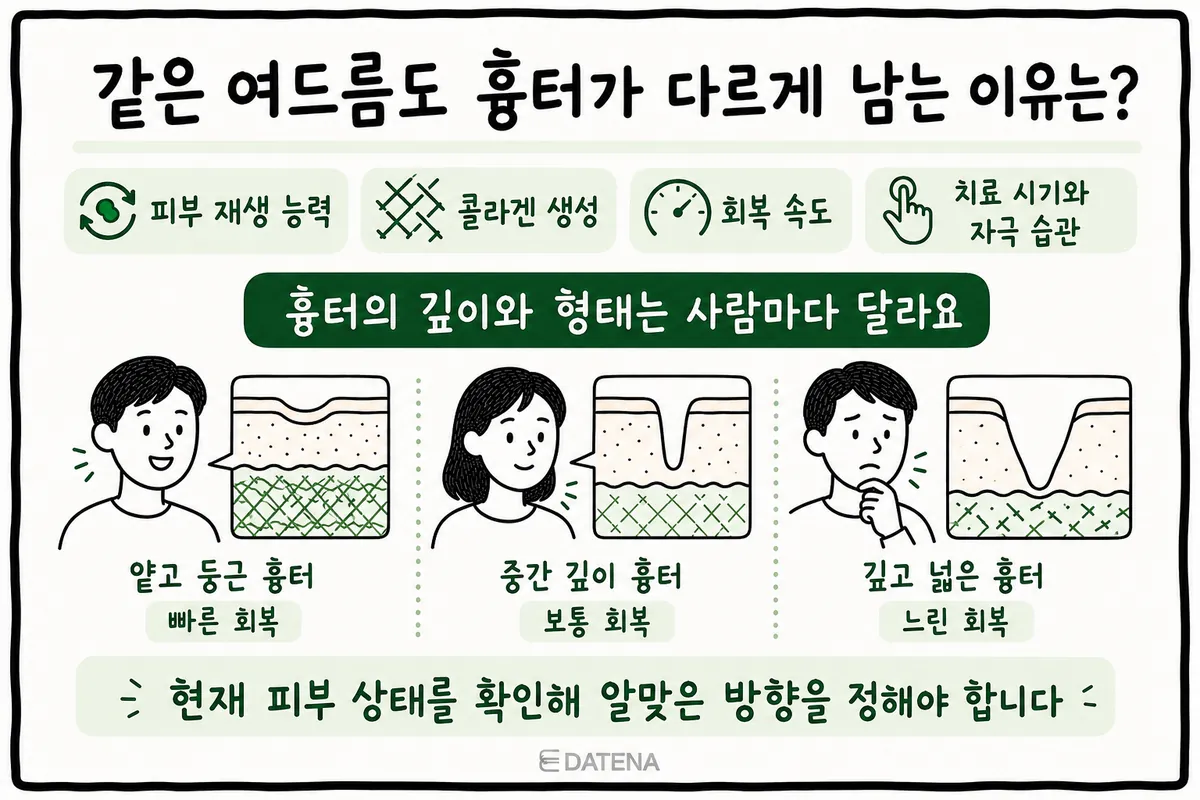
Even with a similar level of inflammation, the depth and shape of the scars left behind can vary from person to person.
That's because people differ in how quickly their skin heals and how well it produces collagen.
Skin thickness, oil production, how long the inflammation lasted, whether it was squeezed, and when treatment began can all influence scarring.
Even on the same person's face, scars can look different depending on the area.
In areas with different tissue characteristics, such as the cheeks or temples, the depth and shape of the indentations can also differ.
For this reason, when assessing acne scars, it's important to look not just at how many scars there are, but at the skin's condition and the type of scars together.
05. How do fresh scars differ from older ones?
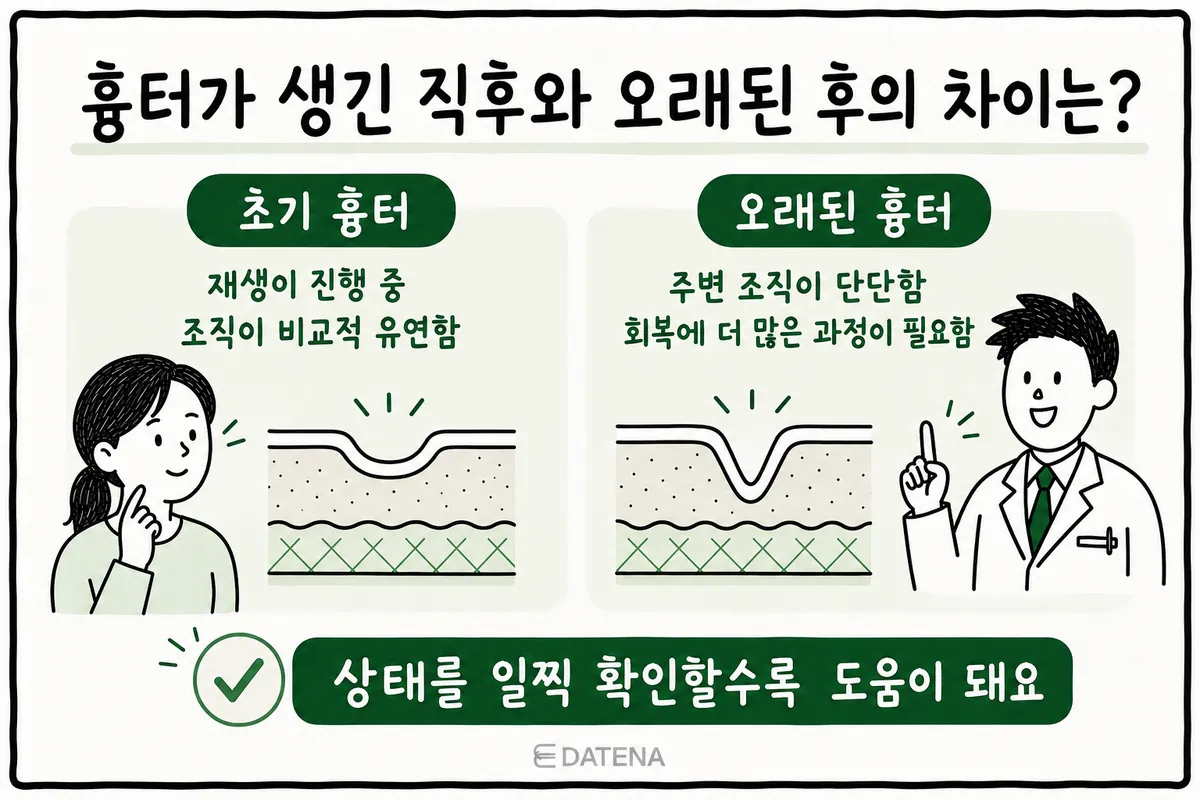
When a scar has just formed, the healing response is still underway inside the skin.
There may still be some redness, and the tissue may feel relatively soft and pliable.
At this stage, checking the skin's condition and any inflammation and caring for it properly can help keep the scar from getting deeper.
On the other hand, when a scar has been there a long time, the surrounding tissue can harden or become tethered to the layers beneath the skin.
In that case, it's harder for the skin to fill back in naturally, and several sessions may be needed to see improvement.
Type | Early scars | Older scars |
Skin condition | Redness and signs of inflammation may remain | May be closer to skin tone or come with pigmentation |
Tissue characteristics | Relatively soft, with healing still in progress | Tissue may be firm or tethered |
Care approach | Inflammation and the skin's healing status are checked together | Care needs to be tailored to the depth and shape of the scar |
06. When should I start treatment to prevent acne scars?
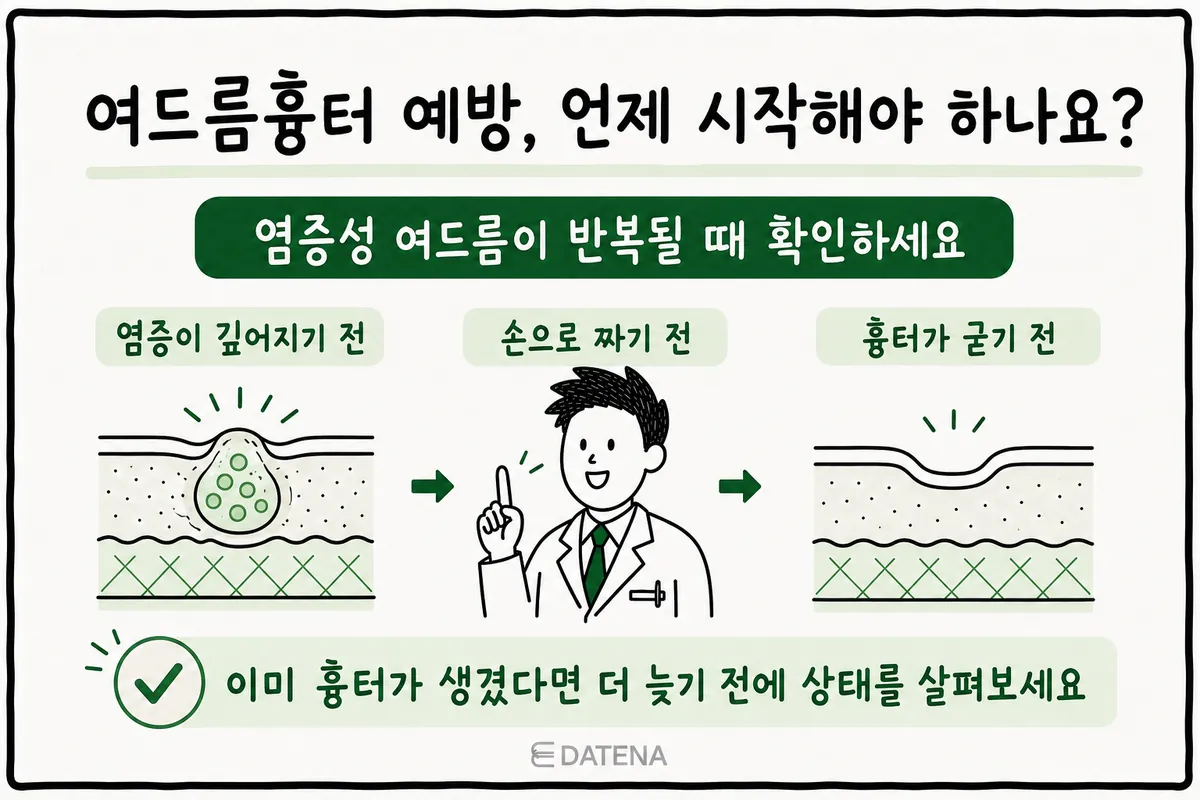
The best time to reduce acne scarring is while inflammatory acne is still recurring.
Even if you don't see any pitted scars yet, frequent red, painful breakouts may mean damage is building up deep in the skin.
Managing acne before the inflammation gets worse helps lower the chance that it leads to deep tissue damage.
If scars have already formed, it's a good idea to check for any remaining inflammation, how deep the scars are, and how well your skin is recovering.
In particular, if you only treat the scarred areas while breakouts keep coming, new scars can keep forming, so inflammatory acne and scarring need to be looked at together.
Check whether it's time for care
When red, painful breakouts keep coming back
When nodular or cystic acne appears often
When dents start to show where acne has cleared
When existing scars seem to be getting wider or deeper
Start by understanding what causes pitted acne scars
So far, we've walked through how pitted acne scars form.
We're not saying you have to come to our clinic.
But knowing why scars form makes it easier to judge more accurately what kind of care your skin needs right now.
Pitted scars can appear when skin damaged by inflammation doesn't fully fill back in as it heals.
The depth and shape of a scar can vary depending on how deep the inflammation went, how long it lasted, picking or squeezing habits, and your own ability to heal.
At Datena Clinic, we care not only about the scars you can see, but also about how people who've lived with skin concerns for a long time feel, and we treat both with attention.
If you're struggling with acne or pitted scars right now, we encourage you to start by understanding what caused your scars and where your skin stands today.
Medically reviewed by: Dr. Kang Dong-hyun (Datena Clinic) · Meet our doctors: /about.html