
Subcision for Acne Scars: When Is It Needed?
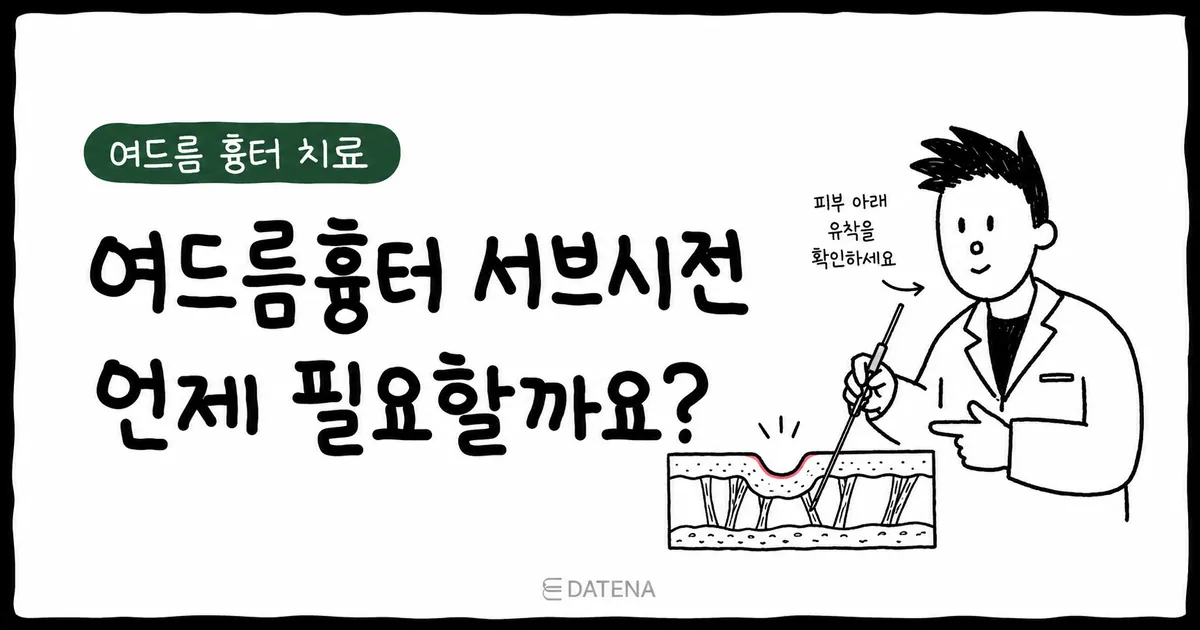
Today's summary
Subcision is a procedure that releases the tethered tissue under the skin, lifting scars that have been pulled down.
It can be used for broad, gently sloping depressed scars and for scars that leave the skin surface uneven.
Narrow, deep scars may also need injectable treatments or laser treatment alongside it.
How many sessions you need, and which methods we use, depend on the shape of your scars and how tethered they are.
Hello, this is Datena Clinic.
Acne scars can look alike on the surface, yet the cause underneath the skin can be quite different.
If the problem is tethering that pulls the skin surface downward, treatments like lasers that only work on the surface may not bring enough change.
In cases like this, subcision is a procedure worth considering.
How does subcision work beneath the skin?
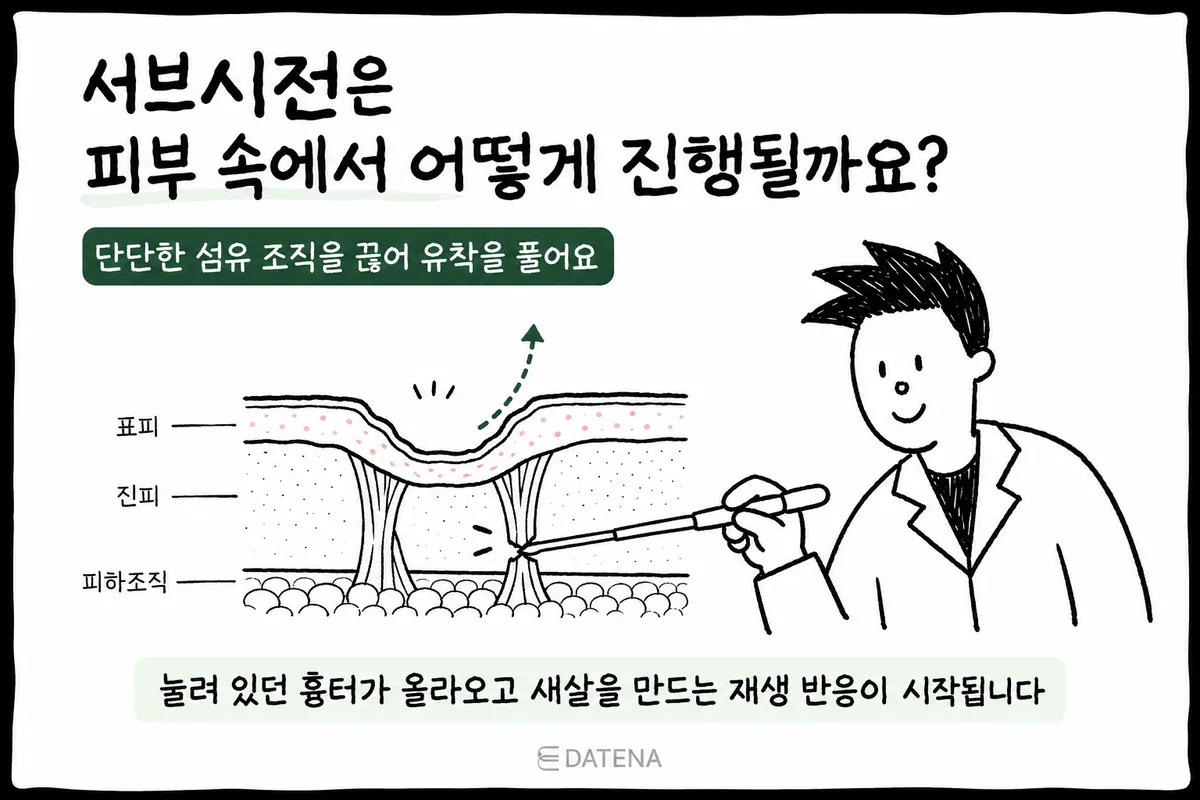
Subcision releases the tethering under the skin, one of the reasons scars sink so deeply.
As the skin heals after acne inflammation, tough fibrous tissue can form and pull the skin surface downward.
During subcision, a fine instrument is inserted under the skin to cut through the fibrous bands pulling the scar down.
Once the tethering is released, there's room for the depressed scar to rise back up.
The space created under the skin fills with blood, and as healing gets underway, collagen production may be stimulated.
Key steps of subcision
Identify tethering under the skin → Release the tethered tissue → Create space for the depressed scar to lift → Skin regeneration response
Which types of acne scars is it used for?
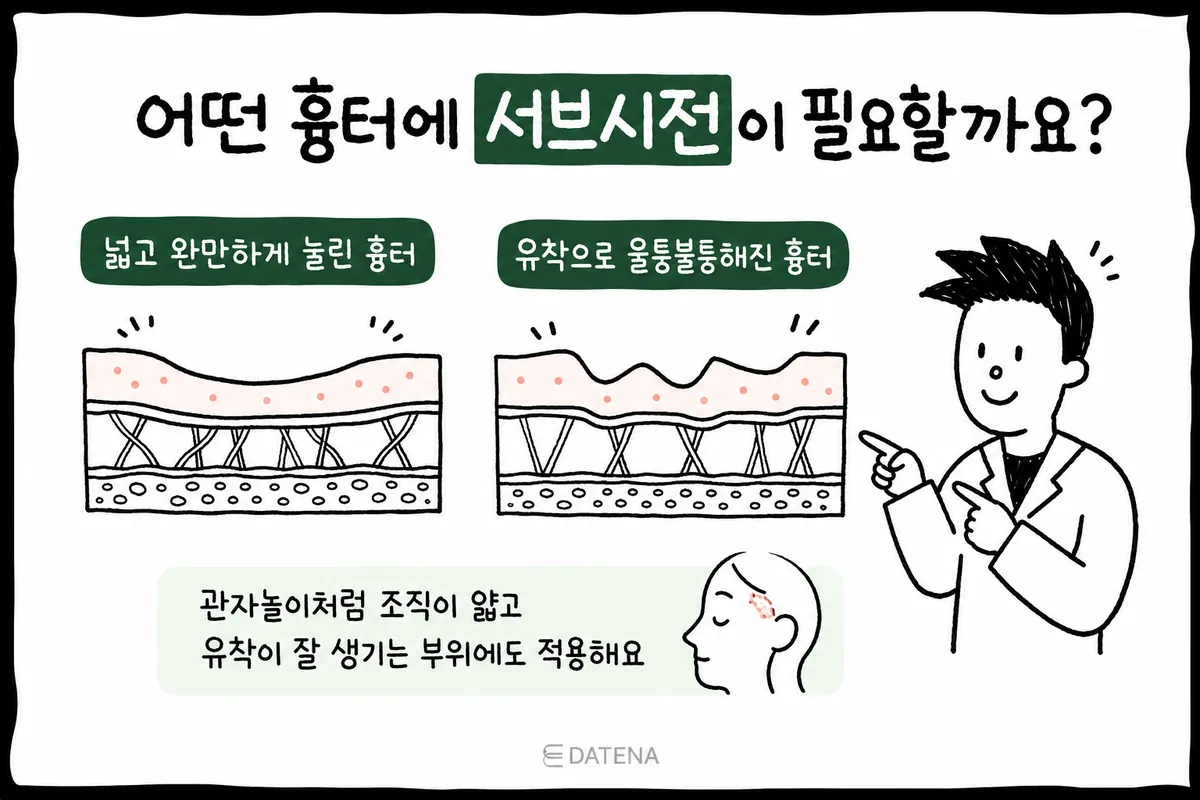
Subcision is mainly used for broad, gently depressed scars caused by tethering beneath the skin.
Typical examples are scars that sink softly along with the surrounding skin rather than having sharp, clearly defined edges.
If the dip flattens out fairly smoothly when you stretch the skin around the scar with your fingers, tethering under the skin may be playing a role.
It can also be considered for areas like the temples or cheeks, where acne scars spread widely and leave the skin surface looking bumpy.
That said, it's hard to tell whether tethering is present just from how a scar looks on the surface.
Skin thickness, scar depth, the extent of tethering and the condition of the surrounding tissue all need to be checked together.
Scars where subcision may be considered
Broad, gently depressed scars
Scars with confirmed tethering under the skin
Uneven, bumpy scars on the cheeks or temples
Scars that soften when the surrounding skin is stretched
Scars that didn't improve enough with laser treatment alone
Can it be used for narrow, deep scars?
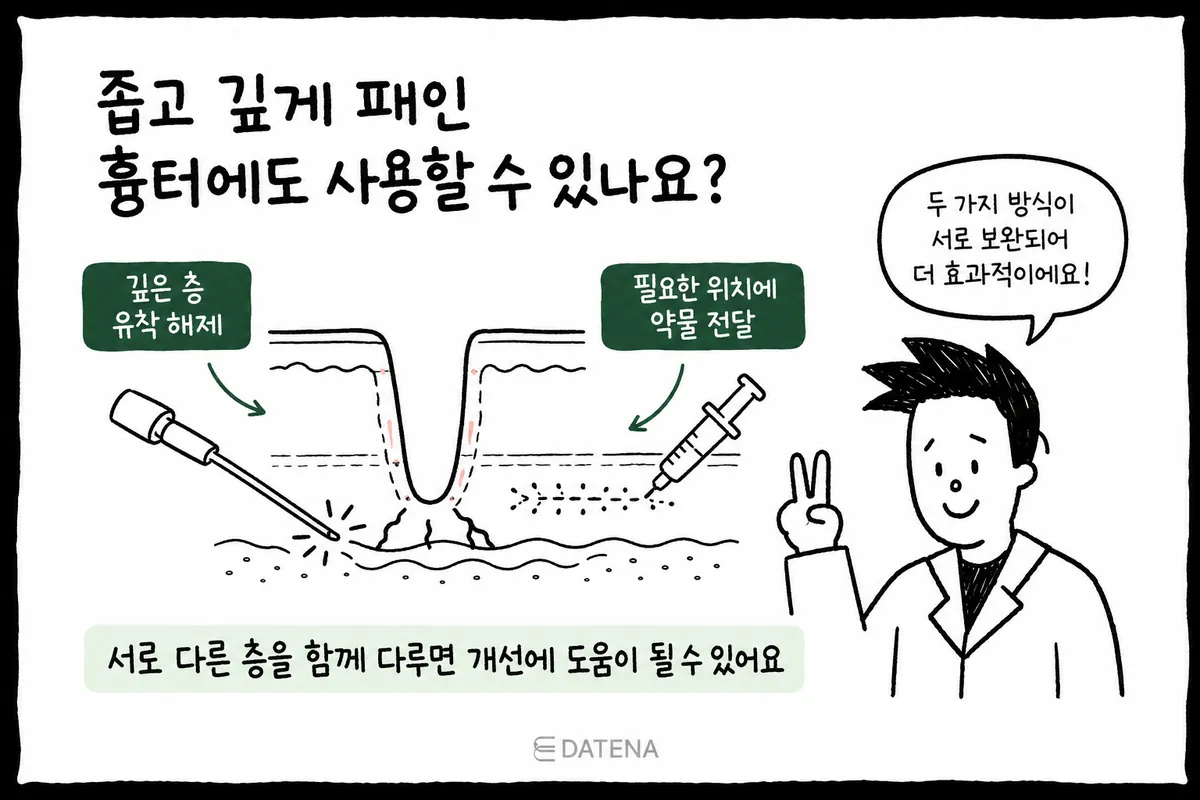
Narrow, deep scars often can't be treated adequately with subcision alone.
That's because these scars may run thin and long deep into the skin, or the damage below may go deeper than the opening at the surface suggests.
Subcision helps release tethering under the skin, but it may have limits in improving the walls and floor of narrow, deep scars.
In these cases, we may also consider a procedure that uses high pressure to deliver medication exactly where it's needed, laser treatment, and similar options.
The idea is to release deep tethering with subcision, then address the other layers of the scar with injectable or laser treatments.
If you have a mix of scar types, rather than repeating the same procedure on every scar, it's important to match the treatment to each scar's shape and depth.
How long do bruising and swelling last after the procedure?
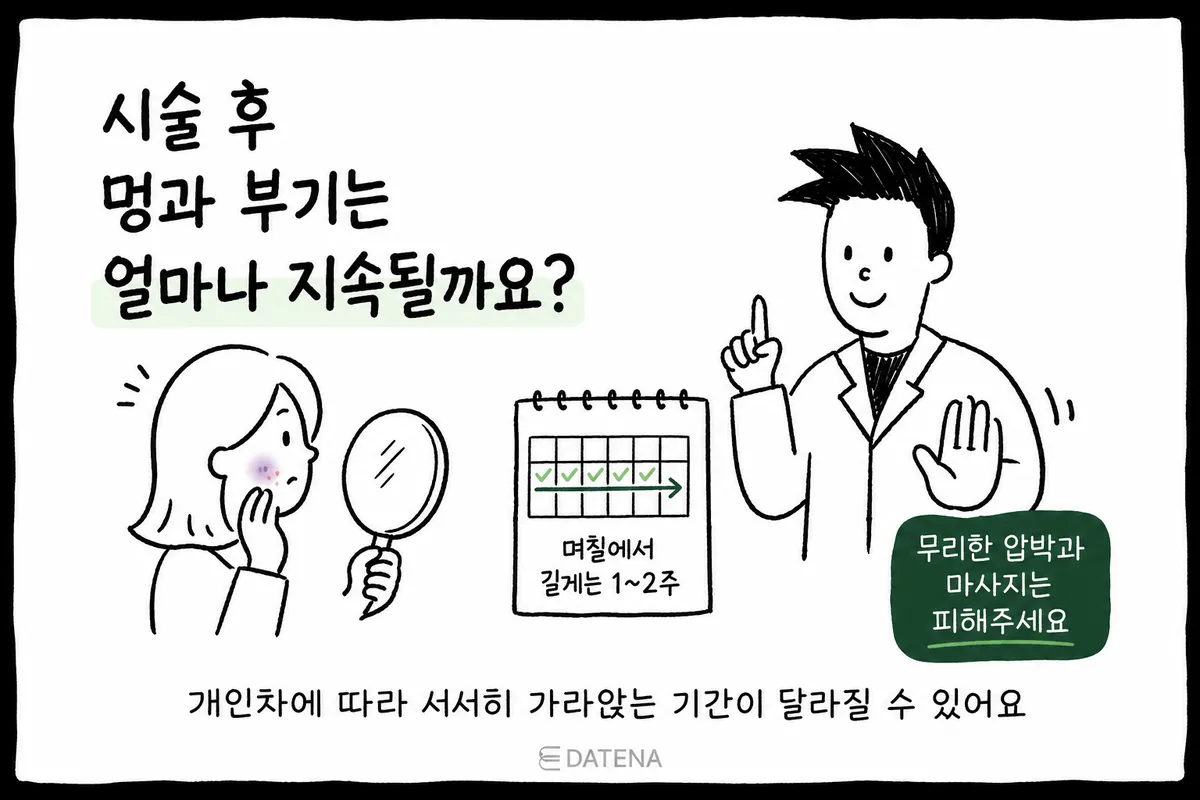
Because subcision works by directly releasing tissue beneath the skin, you may notice bruising and swelling in the treated area.
How much bruising you get depends on the size of the treated area and your skin, and it usually lasts a few days before gradually fading.
If your skin is thin or you bruise easily, marks can sometimes linger for 1–2 weeks.
Swelling, and some tenderness when you press on the skin, may also stick around for a while.
While you heal, it's best to avoid pressing hard on the treated area or touching it over and over.
What to keep in mind during recovery
Don't press hard on the treated area
Avoid heavy massage and anything that irritates the skin
Skip alcohol and intense exercise for the period we advise
Wear sunscreen whenever you go out
If bruising or swelling gets worse, have our medical team check it
Recovery speed can vary with the size of the treated area and your skin condition, so if you have an important event coming up, pick a treatment date that leaves plenty of time to heal.
Is one subcision session enough?
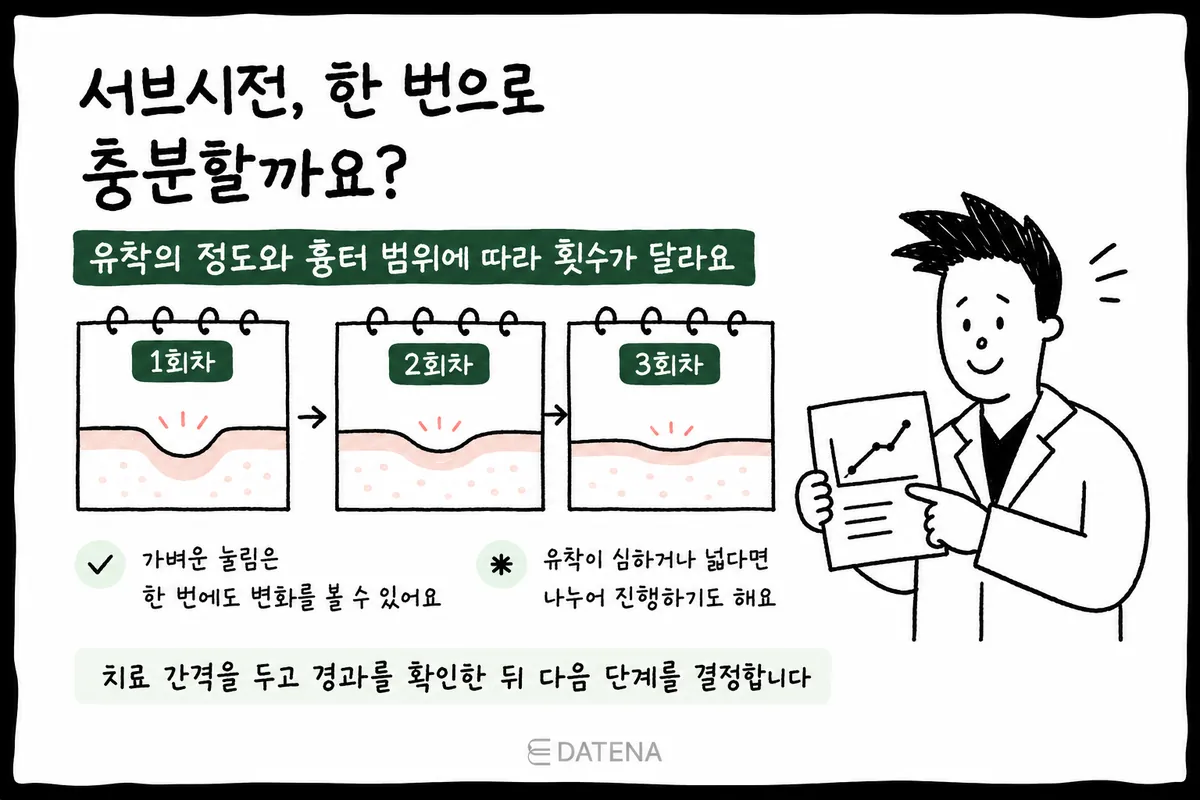
The number of sessions you need depends on how strong the tethering is and how large the scarred area is.
If the tethering is limited and relatively mild, you may see the depressions soften after just one session.
If the tethering is strong or the scars cover a wide area, rather than overworking all the tissue at once, we may split treatment into sessions spaced out over time.
After each session, it's important to give the bruising and swelling time to settle and let the skin fully recover.
Rushing into the next session before you've healed can put extra strain on your skin, so we check your progress before deciding on any further treatment.
What affects the number of sessions
Scar depth, strength of tethering, size of the scarred area, skin thickness, healing speed, and any treatments done alongside it
Is subcision combined with lasers or other treatments?
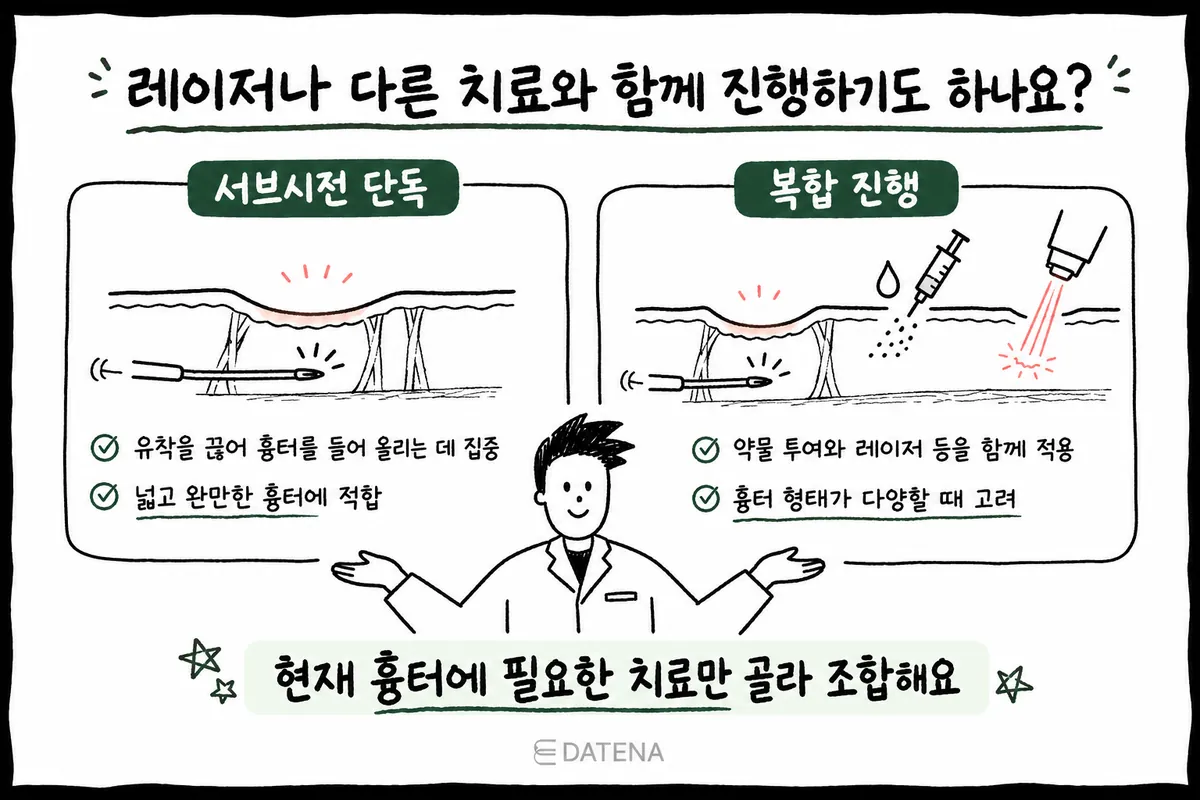
Subcision is often done together with other acne scar treatments.
That's because one person's skin can have a mix of broad depressed scars, narrow deep scars, and scars with sharp edges.
Subcision releases the tethering beneath the skin, while laser treatment can be used to stimulate skin renewal and collagen production.
Injectable treatments may also be considered to deliver ingredients into narrow, deep areas or the specific skin layers that need them.
By combining treatments to match the shape and depth of your scars, each treatment can take on the areas it handles best.
Type | Main purpose | When it may be considered |
|---|---|---|
Subcision alone | Releases tethering beneath the skin and lifts depressed scars | When broad, gently sloping depressed scars are the main concern |
Subcision + injectables | Releases tethering and delivers ingredients to the skin layers that need them | When narrow, deep scars are also present |
Subcision + laser | Addresses tethering while also stimulating skin renewal | When skin texture and scar edges also need work |
Combination treatment | Applies different treatments to different scar types | When you have a mix of acne scar types |
What to check before subcision
Subcision isn't something to apply to every area just because you have acne scars.
The first step is to confirm whether the depressions you see are actually caused by tethering beneath the skin.
Repeating subcision on scars without clear tethering is unlikely to give the change you're hoping for, and may only add unnecessary bruising and swelling.
During your consultation, it's a good idea to go over the following together:
Whether your current scars are tethered beneath the skin
Whether the scars are broad and rolling, or narrow and deep
Which areas need subcision and which should be left out
Whether injectables or laser treatment should be combined
How much bruising and swelling to expect, and how long recovery takes
What treatment interval suits your skin
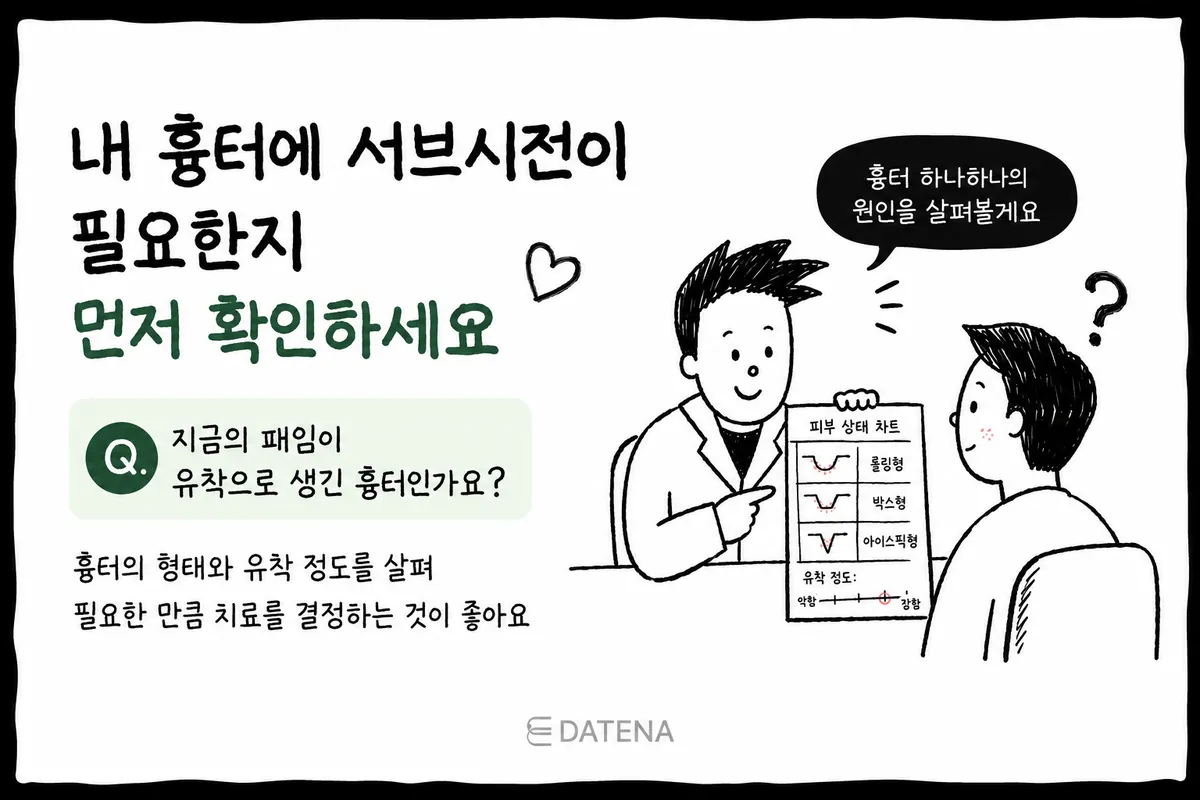
Subcision is a procedure that can be considered for depressed acne scars caused by tethering beneath the skin.
It works by releasing the fibrous bands that pull the scar downward, helping the depressed skin rise back up.
If your scars are narrow and deep, or a mix of different types, you may need injectables, laser treatment, or other options alongside subcision.
Before deciding on treatment, it's important to take the time to confirm whether your scars are related to tethering and which areas actually need subcision.
This doesn't mean you have to be treated at Datena Clinic.
Whenever you get an acne scar consultation, we hope you'll first check what's causing the depressions and whether there's tethering beneath the skin.
At Datena Clinic, we look at the shape and depth of your scars and the extent of tethering, then recommend treatment only within the range your skin actually needs.
We hope this article has helped you better understand subcision for acne scars.
Medically reviewed by: Dr. Kang Dong-hyun (Datena Clinic) · Meet our doctors: /about.html