
Glabellar Botox ("11s" Botox): Telling Frown-Only Lines Apart from Lines That Stay at Rest
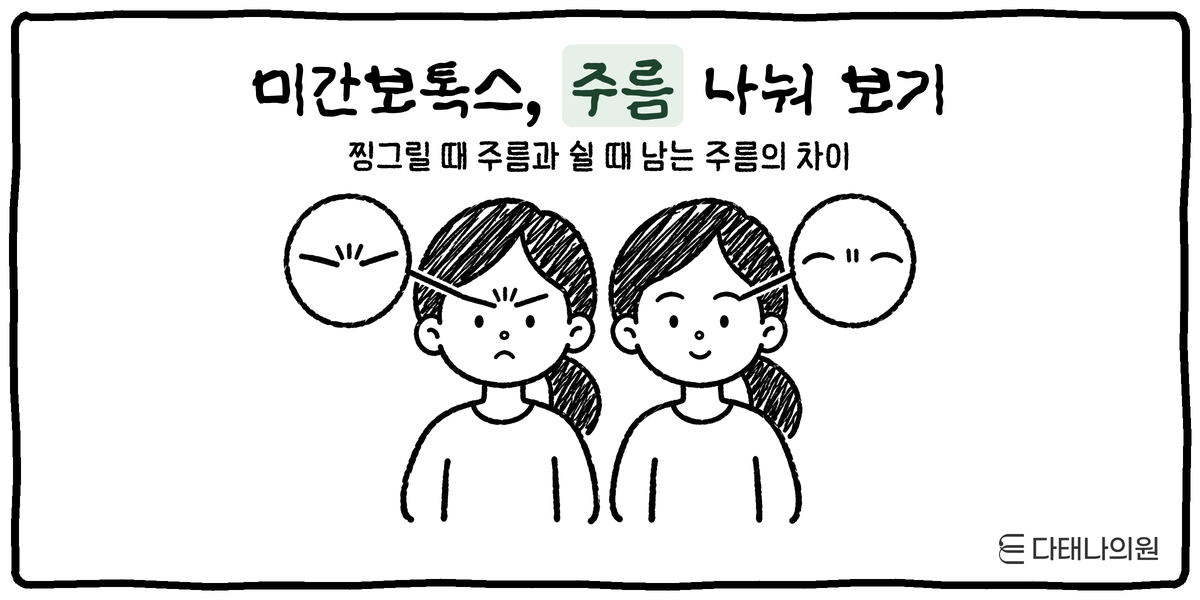
Many people start looking into Botox for the frown lines between their brows after being told they look angry. Here we separate the lines that appear only when you make an expression from the ones that remain even when your face is relaxed, and walk through reactions like brow or eyelid drooping and what to check again after treatment.
1. The two muscles behind the lines between your brows
2. Frowning vs. relaxed: comparing the lines
3. Why frown lines look different from person to person
4. Eyelid or brow drooping and other reactions
5. Health details to share before treatment
6. Reassessing the changes over several weeks
Today's summary
Frown lines are created by muscles that pull the brows together and down.
Lines that remain at rest have limits with Botox alone.
Rarely, the eyelid may look droopy.
It's best to reassess your expressions once the effect has settled.

Hello, this is Datena Clinic.
The vertical lines between the brows form where the skin folds again and again, whenever you concentrate, squint against bright light, or worry. That's why the same "11s" show up only when frowning for some people, while for others the lines stay clearly visible even with a neutral face. Because Botox is an injection that reduces muscle movement, what you can expect differs between these two cases. Today we'll go step by step: the muscles behind frown lines, how results differ depending on the state of the lines, and the reactions that can appear after treatment.
1. The two muscles behind the lines between your brows
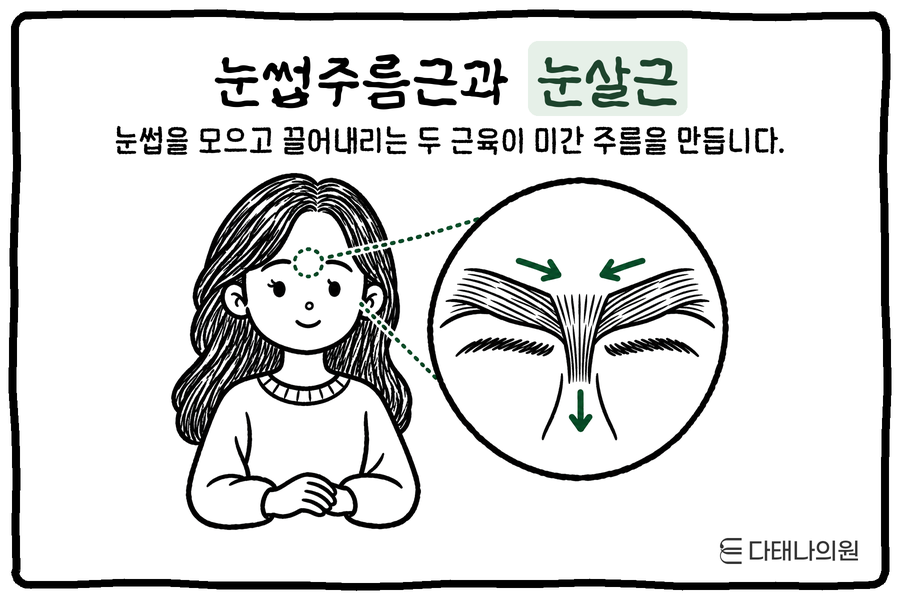
The main muscles involved in frown lines are the corrugator supercilii and the procerus. The corrugator runs from deep at the inner end of the brow up into the brow skin and draws both brows toward the center, creating vertical lines between them.
The procerus runs from the upper bridge of the nose into the skin between the brows. It pulls the inner brows downward and creates horizontal lines across the top of the nose. Glabellar Botox reduces the activity of these muscles, weakening the force of a frown. The official product approval information also describes glabellar lines as lines associated with the activity of these two muscles.
2. Frowning vs. relaxed: comparing the lines

Lines that appear when muscles move and disappear when you relax your expression are called dynamic wrinkles; lines that stay regardless of movement are called static wrinkles. Frown lines that show up only when you frown are mainly caused by muscle movement, so the change you can expect from Botox tends to be fairly clear.
On the other hand, when the folding repeats for a long time, faint lines remain even with a neutral face, and over more time the skin can look deeply creased. Even when muscle movement is reduced, these lines keep the skin's own folding and loss of elasticity, so they're hard to erase in one go. That's why during the consultation we check both your neutral face and a full, hard frown.
What you see | What to look at |
|---|---|
Appears only when frowning | Mainly muscle movement |
Faintly visible at rest | Skin creasing is also involved |
Deeply etched at rest | Botox alone has limits |
Horizontal line on the nose bridge | Check procerus movement |
3. Why frown lines look different from person to person
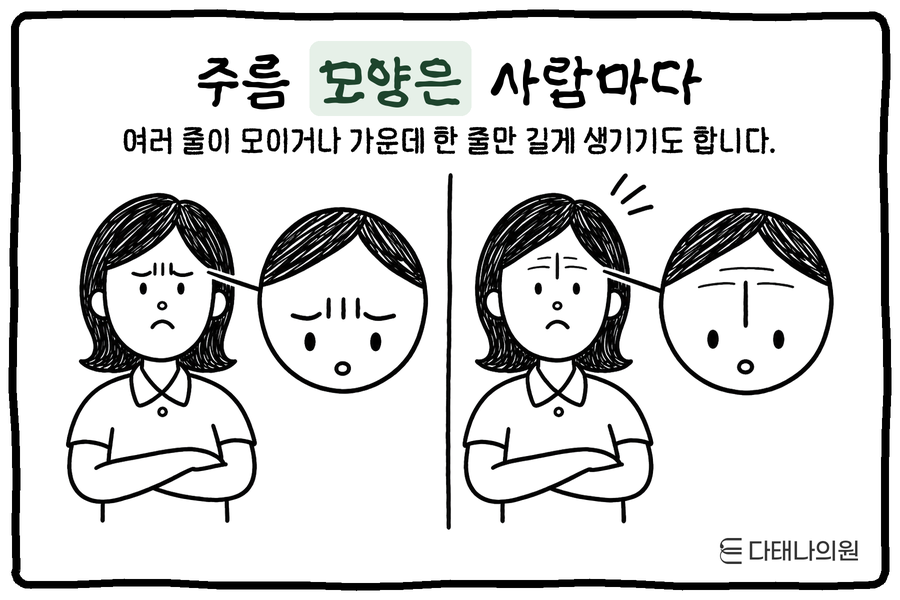
Frown lines don't all look the same. In some people, the brows pull strongly toward the center and create two or three vertical lines; in others, a single line runs long and high up the middle.
Ultrasound studies have also reported that in some people the forehead muscle moves along with a frown. In those cases, treating only the glabellar muscles can leave lines higher up. The shape of the procerus and the direction the muscles move also vary from person to person, which changes where and how much is injected. That's why it matters more to watch you make the expression several times than to rely on a single photo.
4. Eyelid or brow drooping and other reactions

Small bruises, redness, or a tight feeling at the injection sites, along with a temporary headache, are relatively common. The reaction to watch for is a droopy-looking upper eyelid, which was reported in about 3% of people in clinical trials for glabellar lines.
This can happen when the medication spreads toward the muscle that lifts the eyelid, so the approval information advises placing injections at the outer brow at least 1cm above the bony rim over the eye. An unnatural brow shape, a feeling of dry eyes, and, rarely, double vision can also occur. These reactions usually start within the first week after injection and ease over time, but if you have any trouble swallowing or breathing, you need medical evaluation right away.
5. Health details to share before treatment

If you are pregnant or breastfeeding, botulinum toxin injections should be avoided. We also don't treat people who have a neuromuscular condition such as myasthenia gravis, or who have had an allergic reaction to a botulinum toxin injection before.
If your eyelids usually feel heavy or your brows sit at different heights, we need to check this beforehand so we can tell drooping apart from existing asymmetry. If you take blood-thinning medication, you may bruise more easily, and if there's inflammation or a breakout in the area between your brows, it's best to reschedule until it settles.
6. Reassessing the changes over several weeks
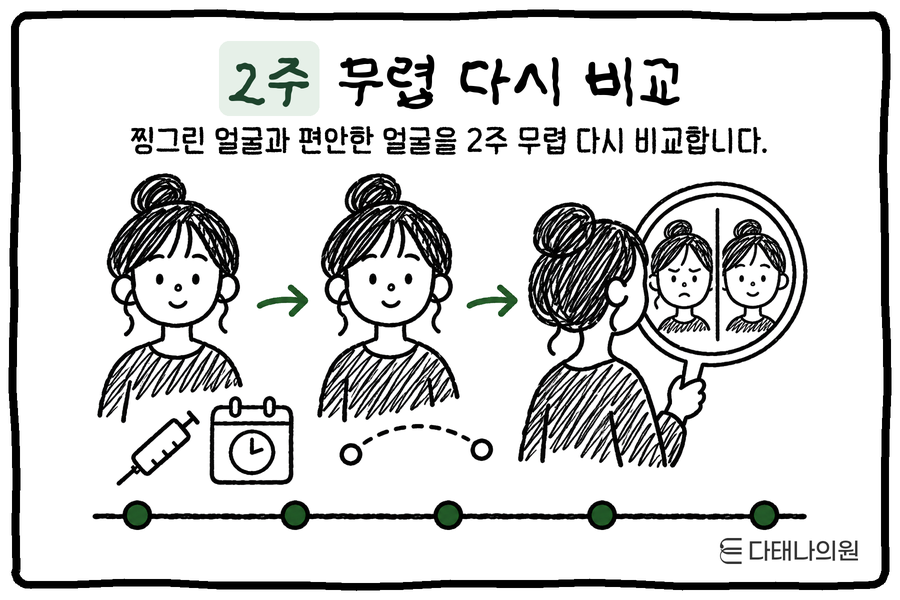
The weakening of the muscles usually shows up over several days and is often most noticeable around day ten. So rather than judging the result in the mirror the day after treatment, it's more accurate to compare your frowning and relaxed faces again at about two weeks.
At that point we record how much the frowning force has decreased, what lines remain on a neutral face, and whether brow height and eyelids look fine. Muscle activity gradually returns over a few months, and how quickly the lines reappear varies from person to person. These repeated assessments become the basis for deciding the dose and injection points next time.
Wrapping up
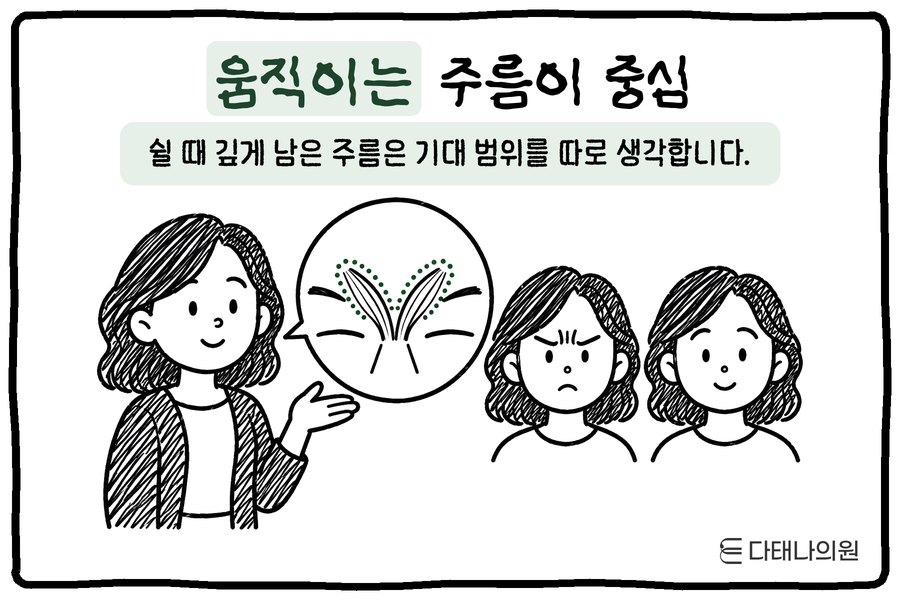
What you can expect from glabellar Botox is softer vertical lines when you move, as the frowning muscles lose some of their strength. Lines that stay deep even at rest also involve changes in the skin, so expectations for them need to be considered separately. Recording your expressions and eyelid condition before treatment and comparing again around two weeks lets you calmly tell the changes you wanted apart from any uncomfortable reactions.
You can find details on our treatments and directions on the Datena Clinic official website.