
Juvelook Results: Why Expectations Differ for Texture vs. Depressed Areas
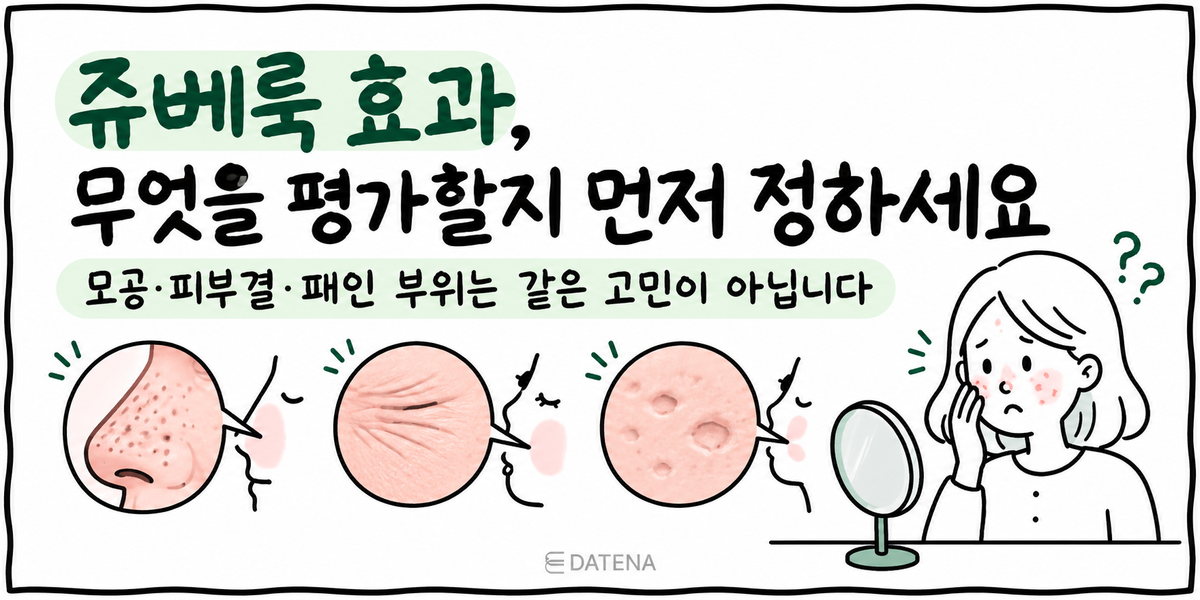
If you're looking into Juvelook, you may be wondering whether you can expect the same kind of change for pores, scars and fine lines.
Here we'll explain why the goals to check and the timing of evaluation differ depending on the type of skin concern.
Today's summary
With Juvelook, the product type and injection method matter.
Pores and depressed scars aren't the same problem.
Results aren't judged by how your skin looks right after treatment.
Be aware of reactions like redness, bruising and nodules, too.
Hello, this is Datena Clinic.
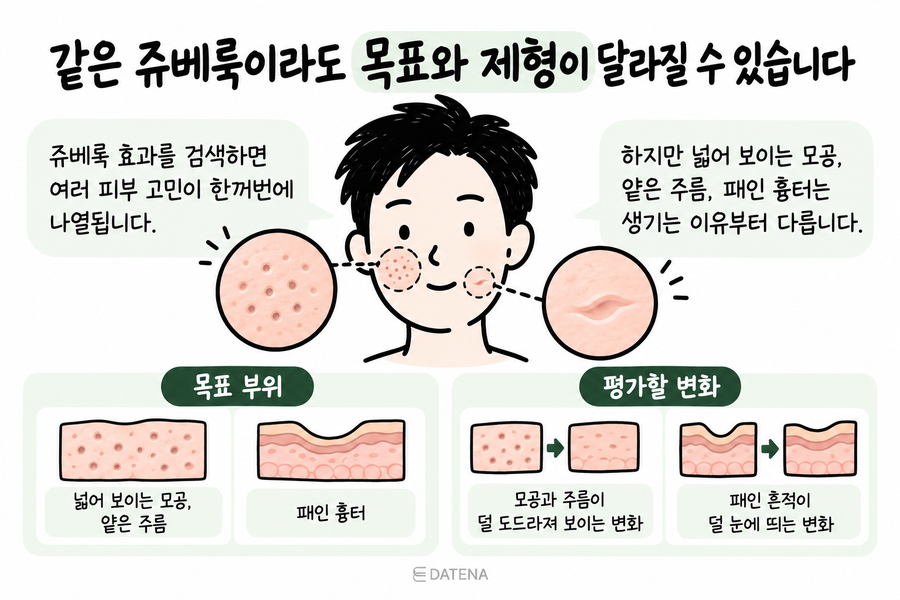
Search for Juvelook results and you'll see a long list of skin concerns all lumped together.
But enlarged-looking pores, shallow wrinkles and depressed scars differ right from their causes.
Wanting your pores to look less visible and wanting a specific depression to soften are also two different goals.
Deciding in advance what to watch for after treatment makes your expectations about the results much clearer.
Rather than just looking at the word "improvement," it's worth first thinking about what will be evaluated, and by what standard.
1. Start by Telling the Juvelook Products Apart
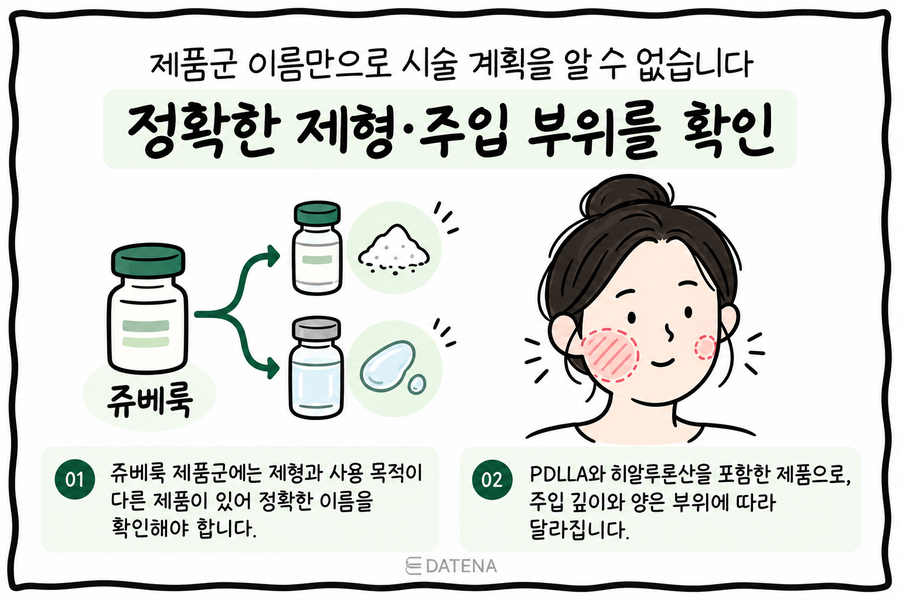
The Juvelook line includes products with different formulations and purposes, so it's important to know the exact product name.
It's a product containing PDLLA and hyaluronic acid, and the injection depth and amount vary by area.
Even when they're all presented under the Juvelook name, you need to distinguish formulations aimed at skin texture from those aimed at volume.
Confirming the actual product used and where it's injected is the starting point for explaining results.
An ingredient description alone can't tell you whether a treatment is right for you.
2. What Changes to Look for in Pores and Skin Texture
Pores can look more noticeable when you have a lot of oil or when the skin around them loses firmness.
Even if there's research on texture changes, it shouldn't be read as pores disappearing permanently.
Pores that stand out when you look closely in the mirror can seem larger or smaller depending on lighting and how oily your skin is.
So rather than counting pores, it's more realistic to look at how noticeable the surface is under the same conditions.
Current acne, sun exposure and habits that irritate the skin should be checked as well.
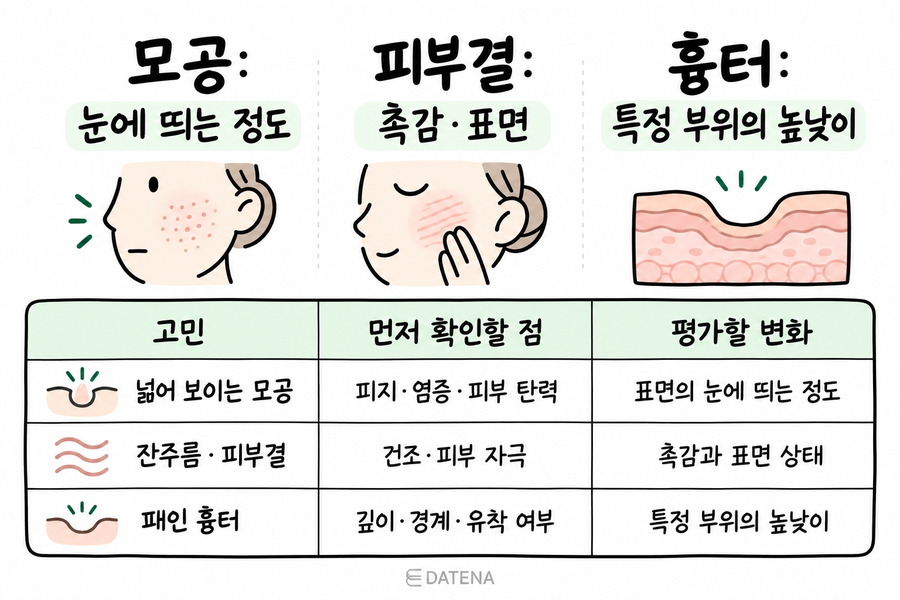
Concern | What to check first | Change to Assess |
|---|---|---|
Pores that look enlarged | Oil, inflammation, skin firmness | How noticeable the surface is |
Fine lines, skin texture | Dryness, skin irritation | Feel and surface condition |
Depressed scars | Depth, edges, tethering | Height differences in specific areas |
3. Treatment Depends on the Type of Depressed Scar
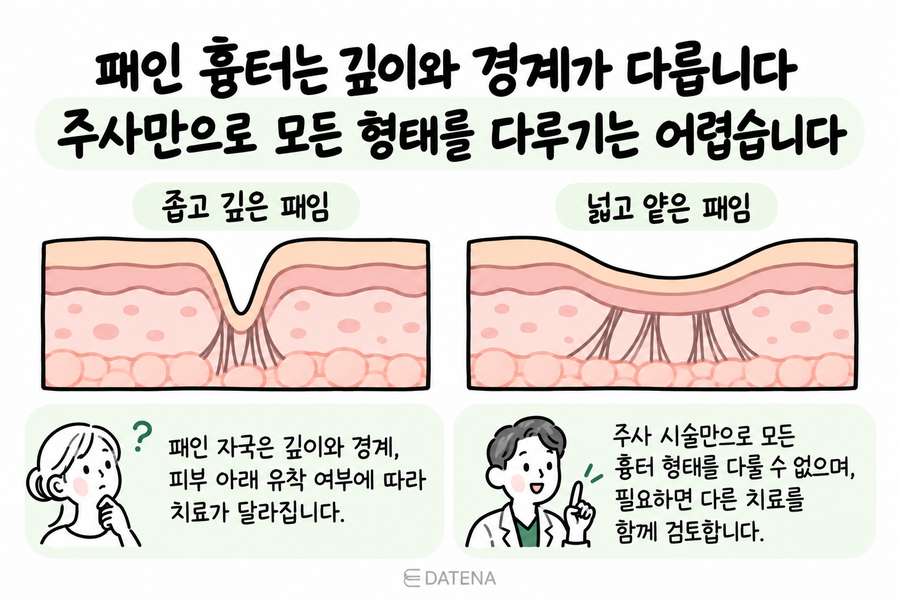
Treatment for depressed marks depends on their depth, their edges, and whether the skin is tethered underneath.
Injections alone can't address every type of scar, so other treatments are considered alongside them when needed.
Narrow, deep ice-pick scars and wide, shallow depressions don't respond the same way to the same method.
We check how much the edges smooth out when the skin is stretched because this also shapes the choice of treatment.
In particular, if inflammatory acne keeps appearing, preventing new marks may need to come first.
4. Telling Early Swelling Apart from Real Change
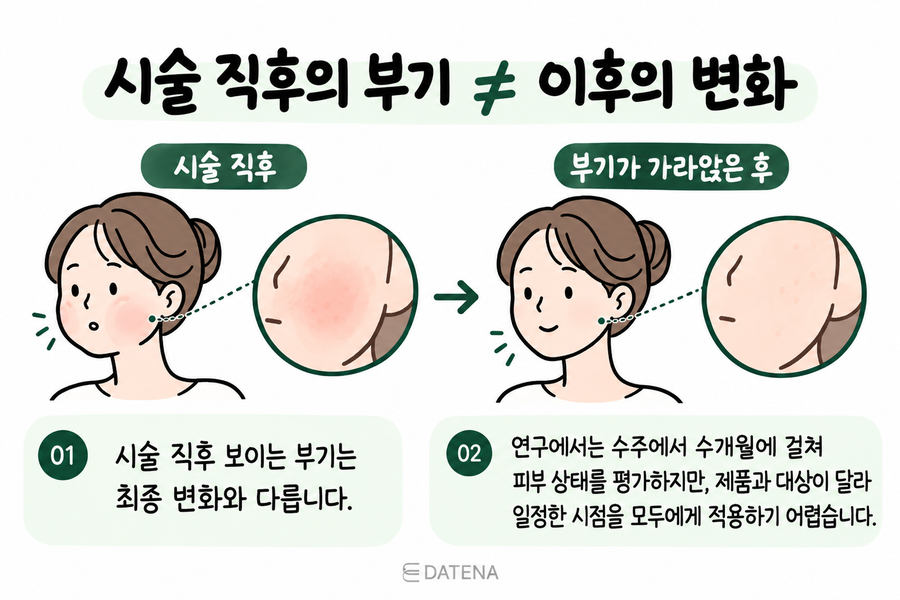
Swelling right after treatment isn't the same as the final result.
Studies evaluate skin over weeks to months, but because products and study subjects differ, it's hard to apply one fixed timeline to everyone.
Confusing how you look right as swelling fades with how you look weeks later can lead you to overestimate the results.
Deciding first whether you're assessing texture or depressed areas keeps you from reading different changes all at once.
Taking photos under the same lighting and angle, and keeping track of any discomfort, makes the assessment more reliable.
5. When to Watch for Nodules and Inflammation
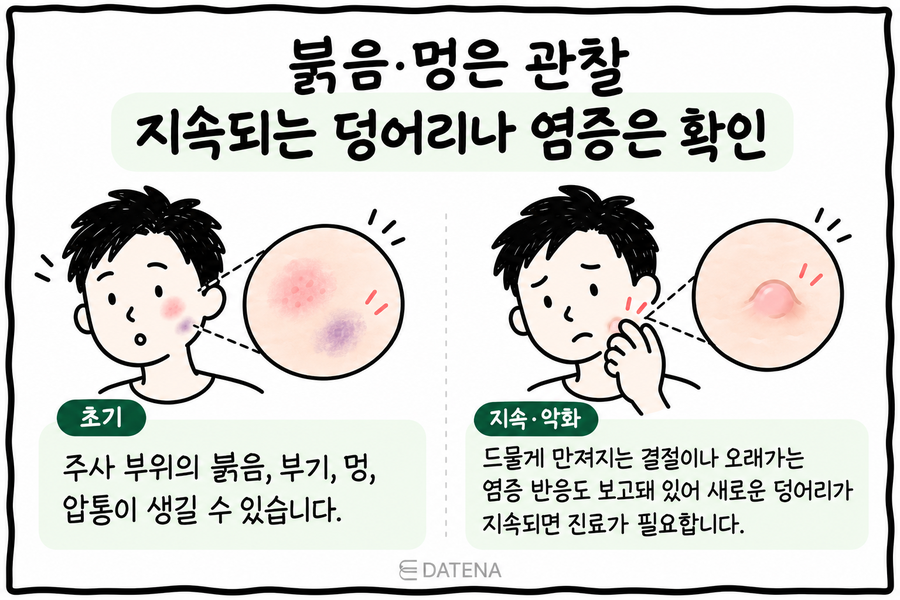
You may notice redness, swelling, bruising or tenderness where the injections went in.
In rare cases, palpable nodules or longer-lasting inflammatory reactions have been reported, so if a new lump persists, please come in to be checked.
A nodule may not be visible on the surface and may only be felt with your fingertips.
Jotting down where a new lump is and how big it is can help you describe how things have progressed.
Avoid pressing hard on or irritating the treated area, and follow the aftercare instructions you were given.
6. How to choose a target area and evaluate results
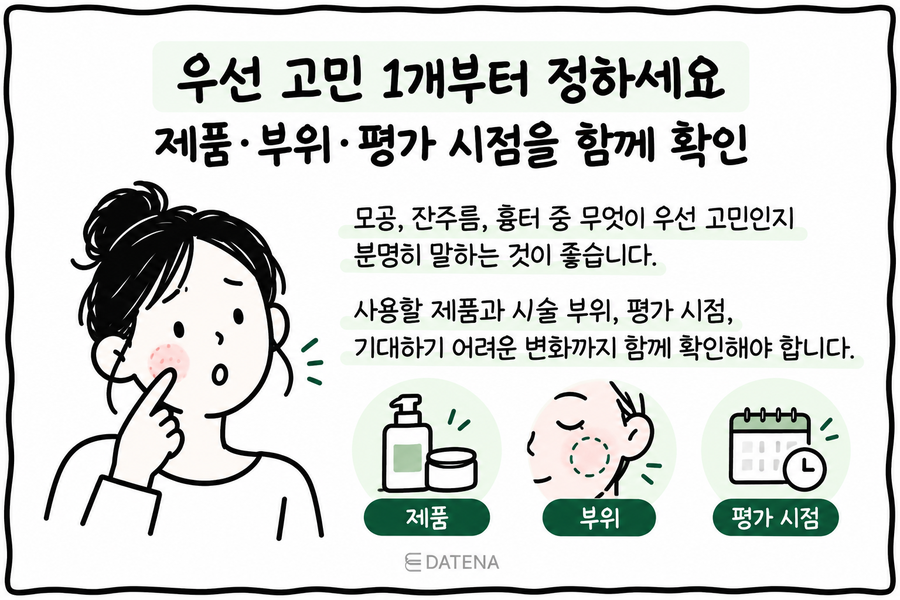
It helps to be clear about which concern comes first for you: pores, fine lines or scars.
You should also confirm the product to be used, the treatment area, the evaluation timing, and which changes are unlikely to happen.
Before treatment, it's also a good idea to point with your finger to the spot that bothers you most.
That's because improving overall texture across a wide area and lifting one or two depressions may call for different injection plans.
At Datena Clinic, we look not just at the single symptom you see in a photo but at your overall current skin condition to decide whether treatment is needed.
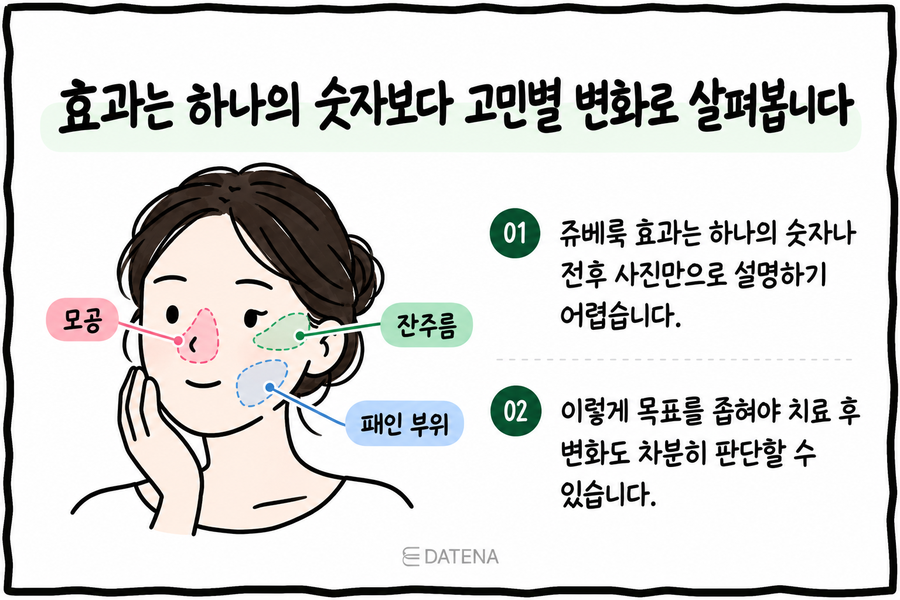
Juvelook results are hard to sum up with one number or a set of before-and-after photos.
Rather than the single word "results," it's more accurate to evaluate pore visibility, fine lines and specific depressions separately.
Narrowing your goals this way makes it easier to judge changes calmly after treatment.
What matters is sorting out your current skin concerns and understanding the limits before deciding whether to go ahead.
You can find details on our treatments and directions on the Datena Clinic official website.