
Juvelook Volume Side Effects: How to Tell Swelling from Nodules
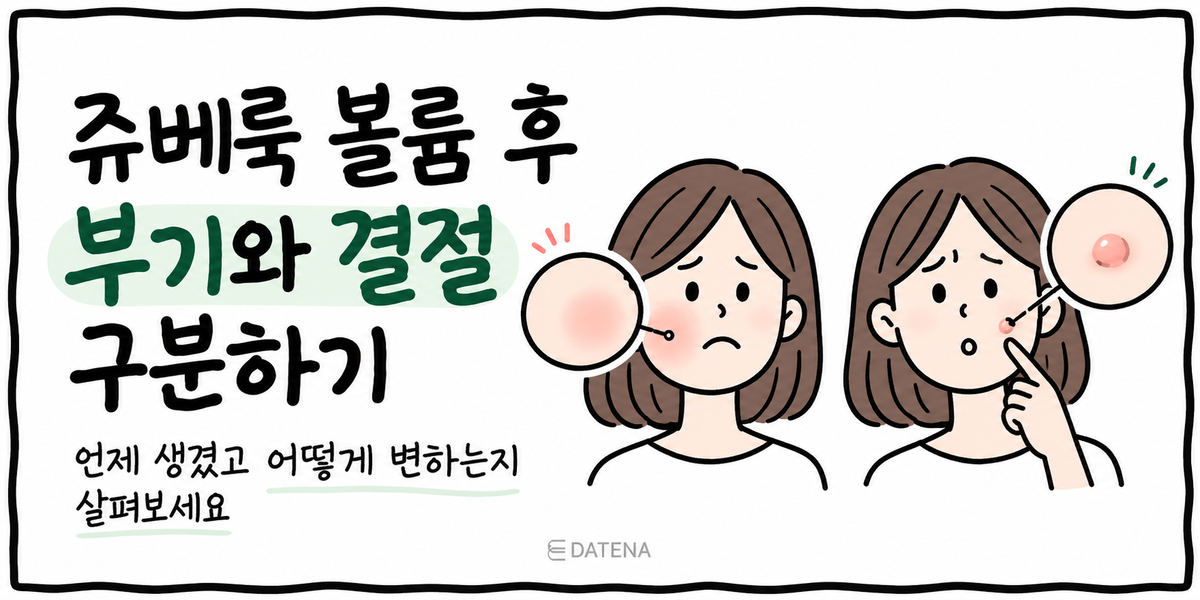
After a Juvelook Volume treatment, it can be worrying if the area looks swollen or you can feel a small lump.
Let's sort out which early reactions are common and which signs need a closer look.
Today's summary
Swelling and bruising can show up right after the injections.
A hard nodule needs to be checked over time.
If warmth or pain gets worse, you need to be evaluated for infection or other causes.
We go over the product's characteristics and the injection plan in advance.
Hello, this is Datena Clinic.
With volume-focused injections, it's hard to judge the result just by how things look right after the treatment.
That said, not every lump should be written off as normal healing.
With Juvelook Volume, knowing what reactions can follow the treatment matters just as much as your expectations for the result.
In particular, a lump that's still there after some time has passed shouldn't be treated as the same thing as the initial swelling.
It helps to break down what changed by when it appeared and what the symptoms are.
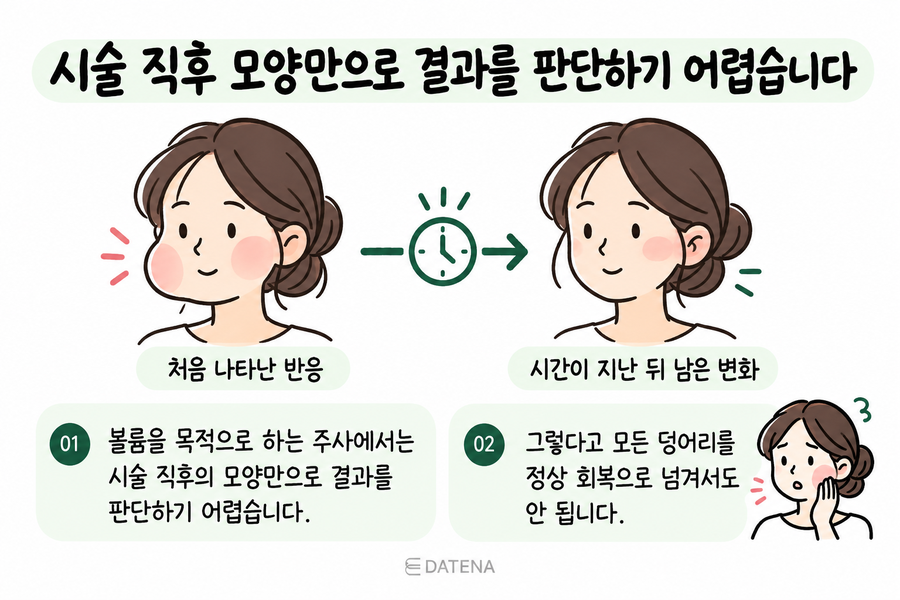
1. How swelling and bruising progress right after treatment
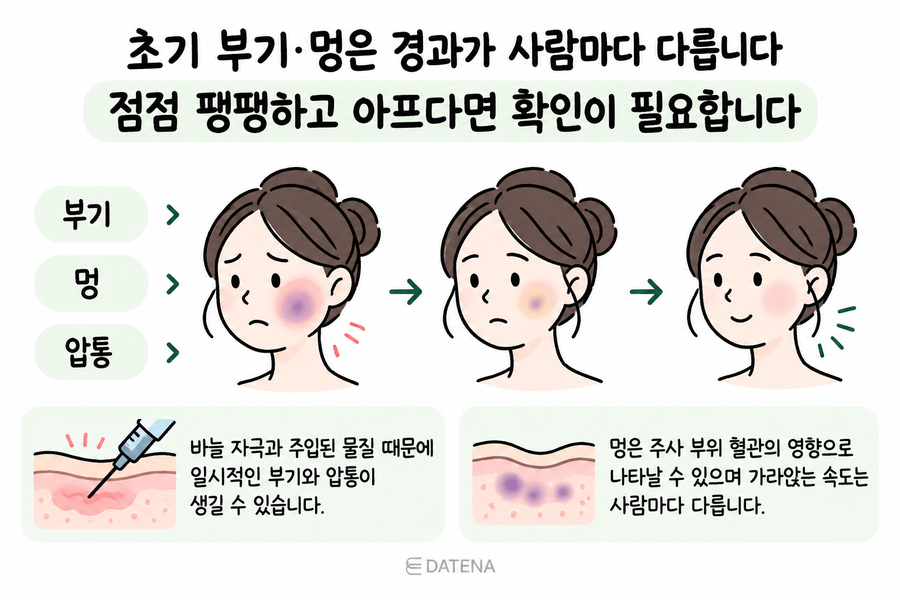
The needle and the injected material can cause temporary swelling and tenderness.
Bruising can appear when small blood vessels at the injection site are affected, and how quickly it fades varies from person to person.
A bruise may look darker than it did at first before gradually fading.
On the other hand, if the area keeps getting tighter and more painful, it needs to be checked to see whether it's really just an early reaction.
It's best not to assume your early look is your final contour.
2. A palpable nodule vs. a bruise
A bruise can change your skin color and feel tender, while a nodule is a localized lump you can feel.
Nodules and delayed inflammatory reactions have been reported with PDLLA-based products, so anything that persists should be checked.
The color change you see in the mirror and the texture you feel with your fingers tell you different things.
It's a good idea to note whether the lump moves, whether the skin over it is red, and whether it hurts when pressed.
Even if they look similar on the surface, the cause can differ, such as infection, a hematoma, or a product-related reaction.
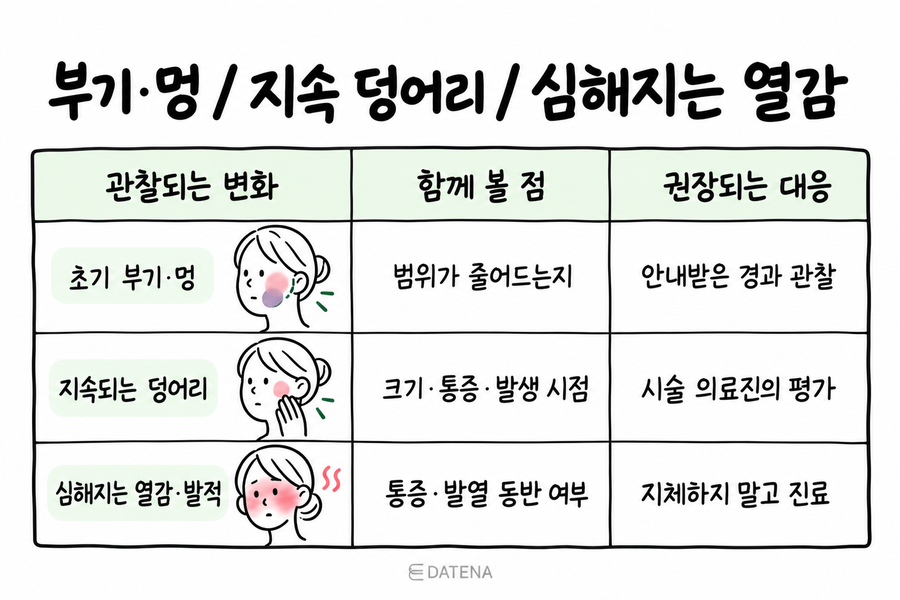
What you notice | What else to check | Recommended response |
|---|---|---|
Early swelling or bruising | Whether the area is shrinking | Monitor as instructed |
A lump that persists | Size, pain, and when it appeared | Evaluation by the treating doctor |
Worsening warmth or redness | Whether pain or fever is present | Get seen without delay |
3. Checking a lump that appears later
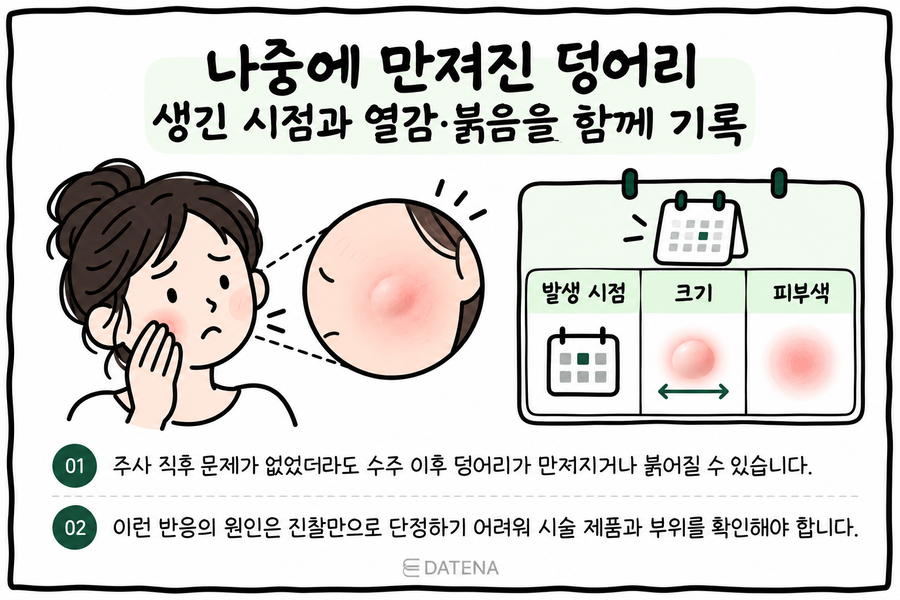
Even if everything was fine right after the injections, a lump or redness can appear weeks later.
The cause of a reaction like this is hard to pin down by examination alone, so the product used and the treated area need to be checked.
The medical literature on nodules distinguishes between those that come with inflammation and those that don't.
Depending on whether there's warmth or a change in skin color, the tests and treatment approach may differ.
Squeezing it at home or massaging it hard can make things worse.
4. Skin Conditions and Past Treatments to Mention Before Your Procedure
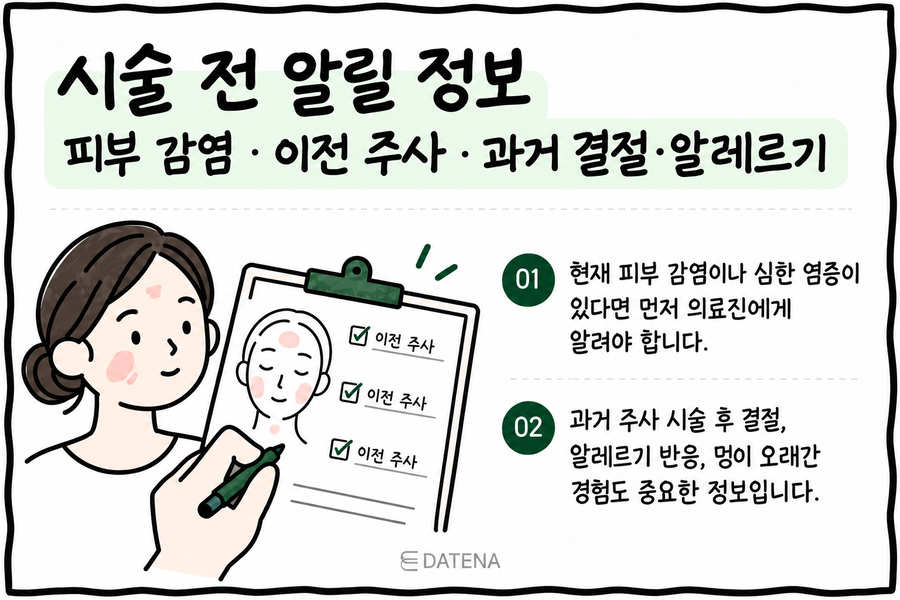
If you currently have a skin infection or significant inflammation, let your provider know first.
Past experiences of nodules, allergic reactions, or bruising that lasted a long time after injections are also important information.
If you've had a different injectable product in the past, try to find out its name and when you had it.
If a previous product is still present or was injected in a different spot, that can change how a newly felt lump is interpreted.
Sharing the medications you take and your treatment history helps us tell apart other possible causes.
5. Keep a Record of Pain, Warmth, and Color Changes
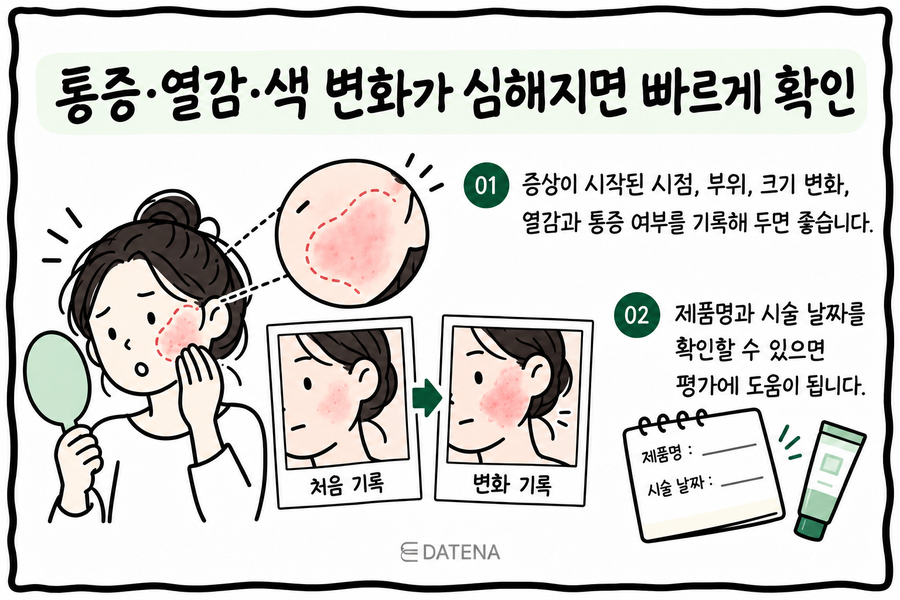
It helps to note when symptoms started, where they are, any change in size, and whether there's warmth or pain.
Knowing the product name and treatment date helps with the assessment.
Taking photos of the direction the redness is spreading makes it easier to explain whether it's simple skin irritation or a worsening change.
Even if a lump isn't painful, if it's getting bigger over time, tell your provider when it appeared and how its size has changed.
If you have suddenly worsening pain, a change in skin color, or whole-body symptoms, get seen by a doctor right away.
6. Review Your Volume Goals and Injection Plan
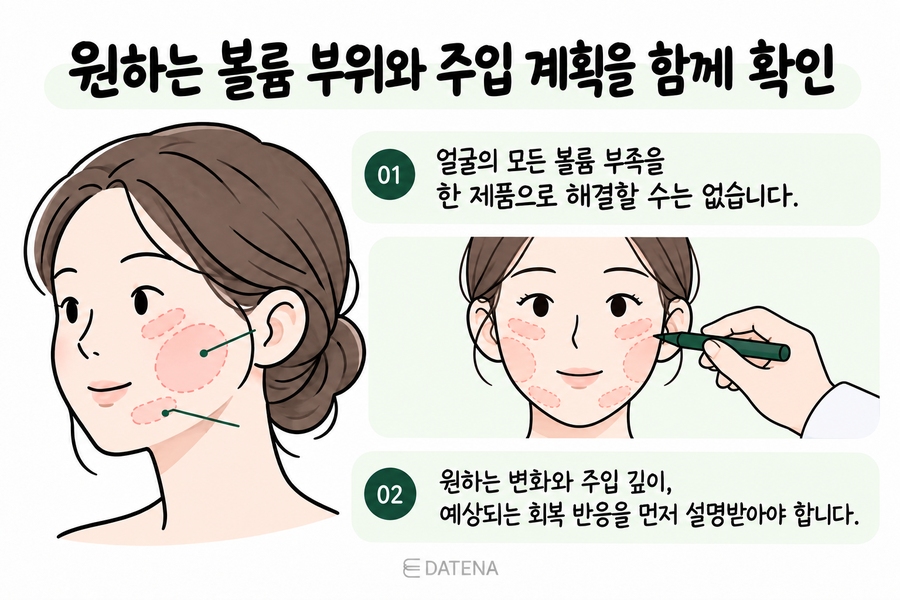
No single product can fix every kind of volume loss in the face.
You should first have the desired change, injection depth, and expected recovery reactions explained to you.
We need to consider where and how much volume you want, along with the skin thickness in that area.
Simply increasing the amount injected to get a more noticeable result isn't a sound way to decide.
At Datena Clinic, we believe it's important to explain not only whether a treatment is right for you, but also which reactions to watch for afterward.
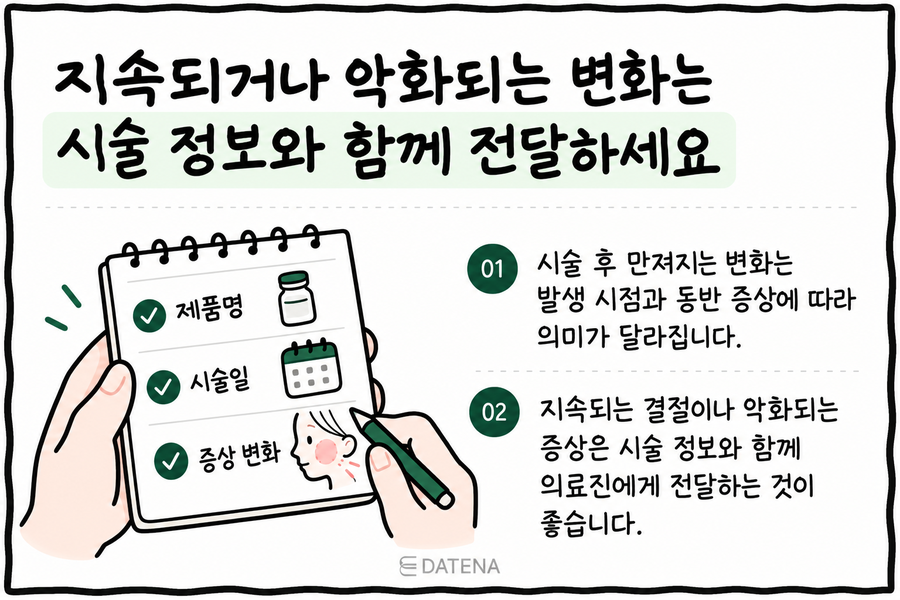
What a lump you feel after treatment means depends on when it appeared and what other symptoms come with it.
Repeatedly pressing on healing skin to check it can also irritate it.
It's best to report persistent nodules or worsening symptoms to your provider, along with your treatment details.
Rather than waiting a long time assuming it'll be fine, if changes persist or get worse, it's best to have it checked at the clinic where you were treated.
You can find details on our treatments and directions on the Datena Clinic official website.