
Salivary Gland Botox: How to Tell a Bulge Below the Ear or Under the Jaw from Your Chewing Muscle
Many people look into salivary gland Botox because the area below the ear or under the jaw looks rounded and puffy. Here's how to tell whether the bulge is a salivary gland or a chewing muscle, what changes you can expect, and which reactions to watch for.
1. Where the parotid and submandibular glands sit
2. How it differs from the masseter, which shows when you clench
3. How much change to expect from salivary gland Botox
4. Reactions like dry mouth and chewing discomfort
5. A suddenly swollen, painful gland points to other conditions first
6. When to postpone or reconsider treatment
Today's summary
The salivary glands sit separately: in front of and below the ear, and under the jaw.
If it pops up when you clench, it's most likely the masseter.
Changes in gland size are temporary and vary from person to person.
Sudden swelling and pain need to be checked for inflammation or stones first.
Hello, this is Datena Clinic.
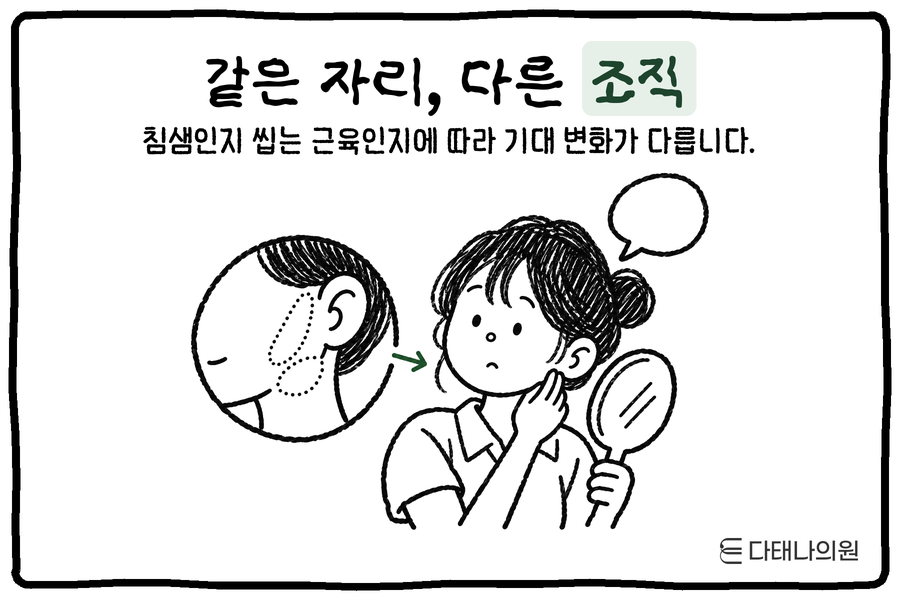
When you look at photos hoping to refine your face shape, you may notice that it isn't the tip of your chin but the area below your ear or just under the jawbone that looks rounded and prominent. Many people end up searching for both square-jaw Botox and salivary gland Botox at this point, but the two treatments target different tissue. Even if it looks like the same spot, what you can expect depends on whether the contour comes from an enlarged chewing muscle or from a saliva-producing gland showing through. Today we'll walk through where the salivary glands are, how to tell them apart from muscle, how much change to expect, and what reactions to watch for.
1. Where the parotid and submandibular glands sit
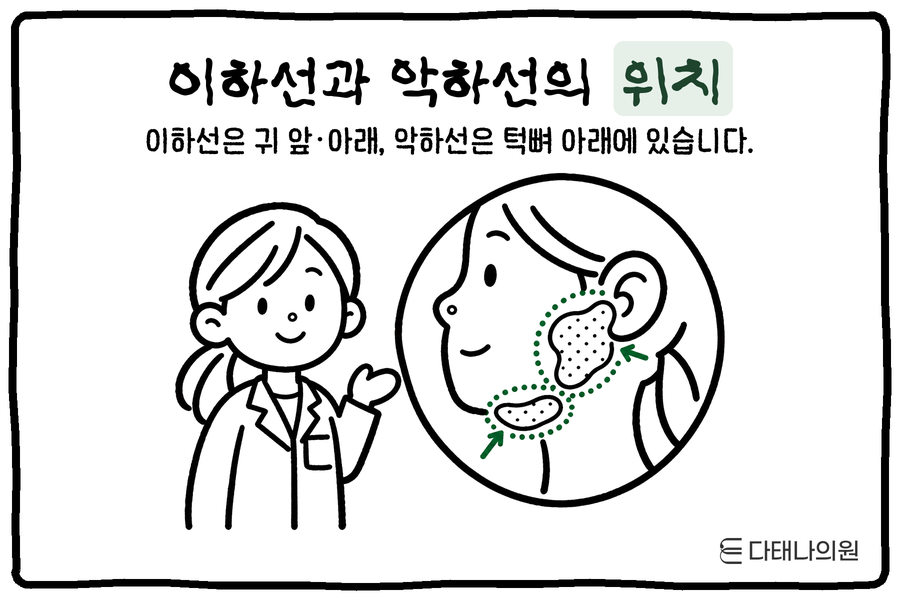
Two large salivary glands affect the contour of the face. The parotid gland is the biggest salivary gland. It spreads widely just in front of and below the ear, and part of it covers the outer surface of the masseter, the chewing muscle.
The submandibular gland sits on the inner, lower side of the body of the lower jawbone, in what's called the submandibular triangle. So an enlarged parotid tends to make the side of the face below the ear look wide, while an enlarged submandibular gland tends to make the area just under the jawline look puffy and saggy. Even with the same salivary gland Botox, where we check depends on which gland is shaping your contour.
2. How it differs from the masseter, which shows when you clench
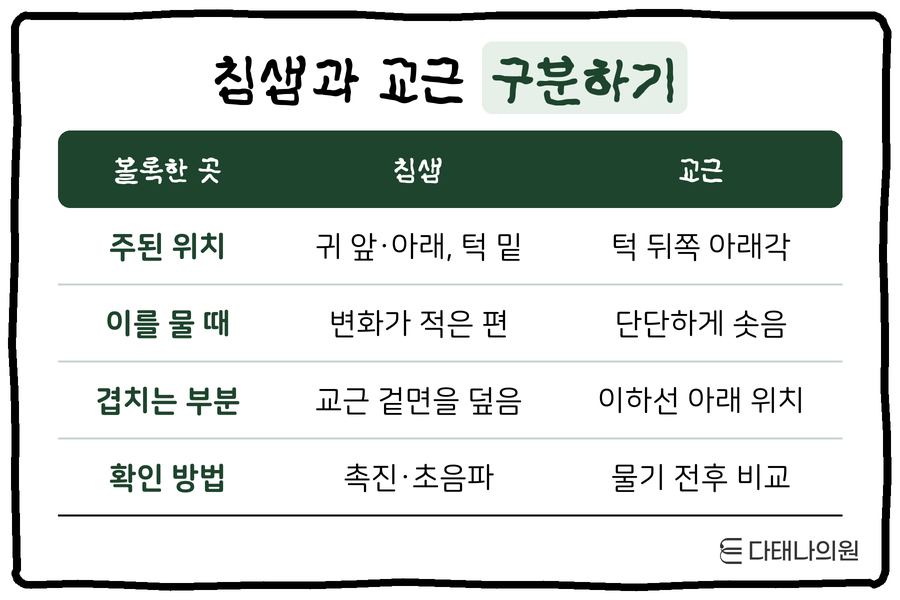
The easiest test is to compare your face at rest with your face when you clench your back teeth hard. The masseter firms up and bulges near the back lower angle of the jaw when you bite down, but a salivary gland isn't a muscle, so its shape usually doesn't change much when you clench.
That said, because the parotid overlaps the masseter, it's hard to separate the two accurately by touch alone. Studies describe using ultrasound to measure the boundary between the parotid and masseter and their depth beneath the skin to decide where to inject. Both causes can also be present together, so during the exam we look from the front, from the side, and with your teeth clenched.
Where it bulges | Salivary gland | Masseter |
|---|---|---|
Main location | In front of/below the ear, under the jaw | Back lower angle of the jaw |
When you clench | Little change | Firms up and bulges |
Overlap | Covers the masseter's outer surface | Lies beneath the parotid |
How to check | Palpation, ultrasound | Compare before and after clenching |
3. How much change to expect from salivary gland Botox
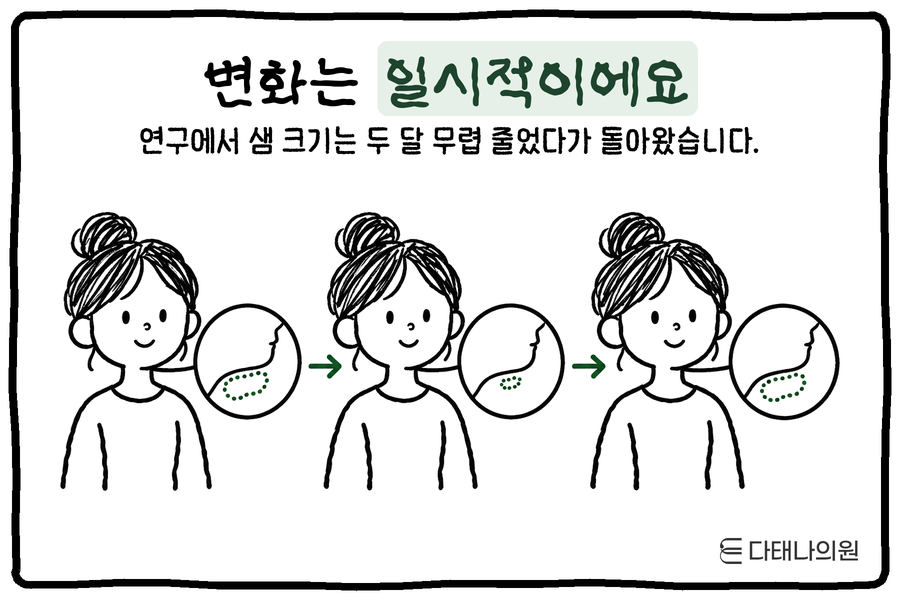
Salivary gland Botox aims to temporarily shrink the gland to soften a bulging contour. A small study of injections into the submandibular gland reported that gland thickness decreased the most around two months, then returned close to its pre-treatment size around six months.
In other words, the change isn't permanent, and since most studies have involved only small numbers of people, it's hard to expect the same degree of change for everyone. Results vary a lot between cases where the salivary glands are the main contributor and cases where jawbone shape, fat and skin laxity are all mixed in. That's why, before treatment, we first need to work through together which area you'd like to look smaller, by how much, and whether the cause is actually the salivary gland.
4. Reactions like dry mouth and chewing discomfort
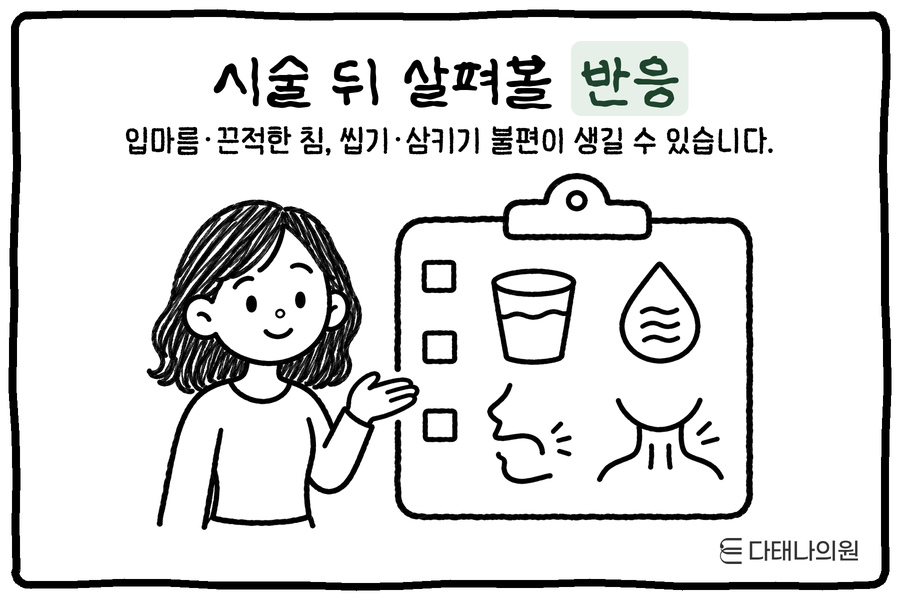
Soreness at the injection site, small bruises and temporary swelling are common reactions. Because the medication acts on the salivary glands, your mouth may feel dry or your saliva sticky. If dry mouth lasts a long time, it can lead to cavities or gum problems, so it's a good idea to drink water often and keep up with oral care.
If the medication spreads to nearby muscles, chewing may feel weaker, or swallowing and speaking may become uncomfortable. Branches of the facial nerve and the salivary duct run near the parotid gland, so changes in facial expression or salivary gland inflammation can rarely occur. If you have severe difficulty swallowing or trouble breathing, seek medical evaluation without delay.
5. A suddenly swollen, painful gland points to other conditions first
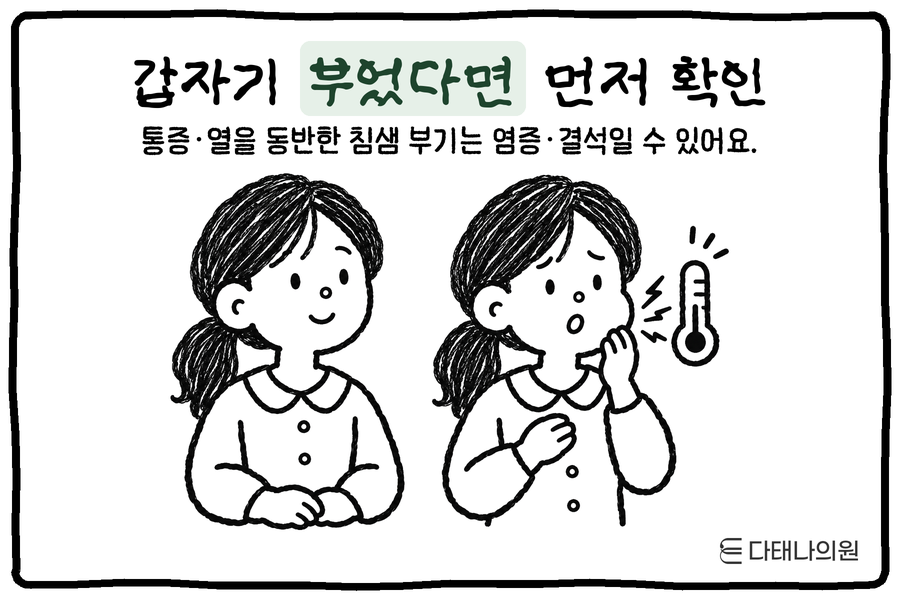
A contour that has looked gradually fuller over a long time and a salivary gland that suddenly swelled up over a few days need to be viewed completely differently. If the gland is swollen, hurts when pressed, comes with a fever, or gets more painful when you eat, it may be sialadenitis (salivary gland inflammation) caused by a bacterial or viral infection, or a stone blocking the salivary duct.
If you can feel a firm lump on only one side, or if pus-like discharge comes out inside your mouth, the cause needs to be checked first as well. Going ahead with a cosmetic injection in this situation could mean the underlying cause gets missed. If the swelling extends to your neck and you're having trouble breathing, you need emergency care.
6. When to postpone or reconsider treatment
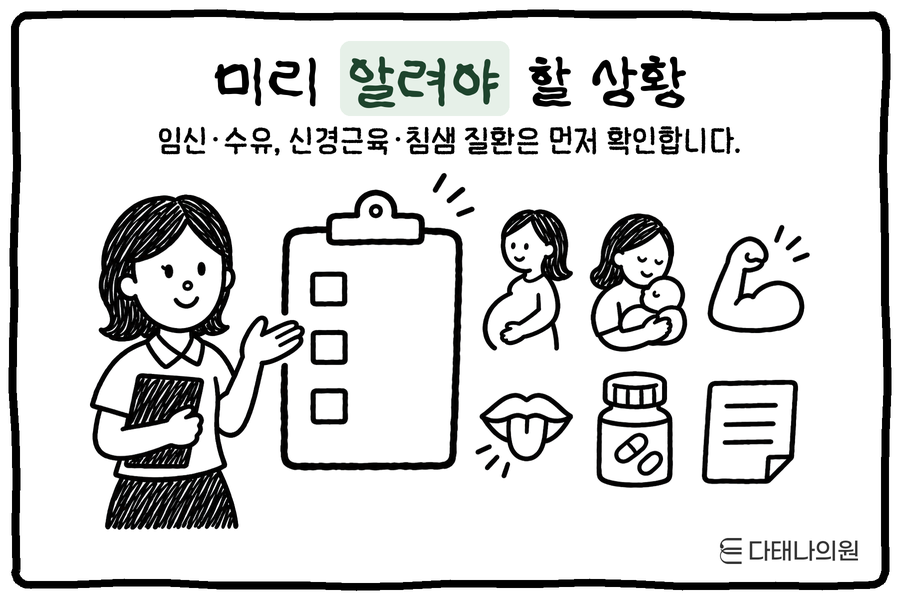
If you're pregnant or breastfeeding, botulinum toxin injections should, as a rule, be avoided. We also postpone treatment if you have a neuromuscular condition that weakens muscle strength, such as myasthenia gravis, or if there is inflammation or a skin infection at the injection site.
If you often have a dry mouth, or have ever been diagnosed with a salivary gland condition or an autoimmune disease such as Sjögren's syndrome, please let us know in advance. Blood thinners (anticoagulants or antiplatelet drugs) can make bruising more likely, so we'll review your medication list as well. Keeping a note of where and when you've had Botox before, and how you reacted, helps us plan this treatment.
Wrapping up
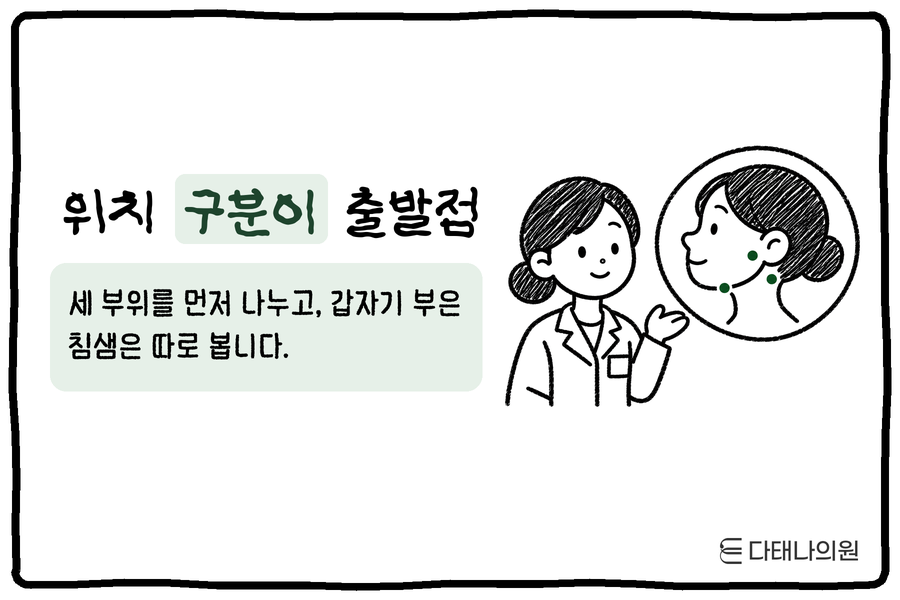
If you're considering salivary gland Botox, the starting point is to figure out whether the bulge is the parotid gland in front of and below the ear, the submandibular gland under the jaw, or the masseter muscle that pops up when you clench your teeth. You should also know that the change is temporary, varies a lot from person to person, and that reactions like dry mouth or difficulty chewing can occur. Above all, remember that a salivary gland that suddenly swells or hurts calls for checking the underlying condition before any cosmetic treatment.
You can find details on our treatments and directions on the Datena Clinic official website.