
Swelling After Thermage: What Settles in a Few Days and What Signs Need a Check
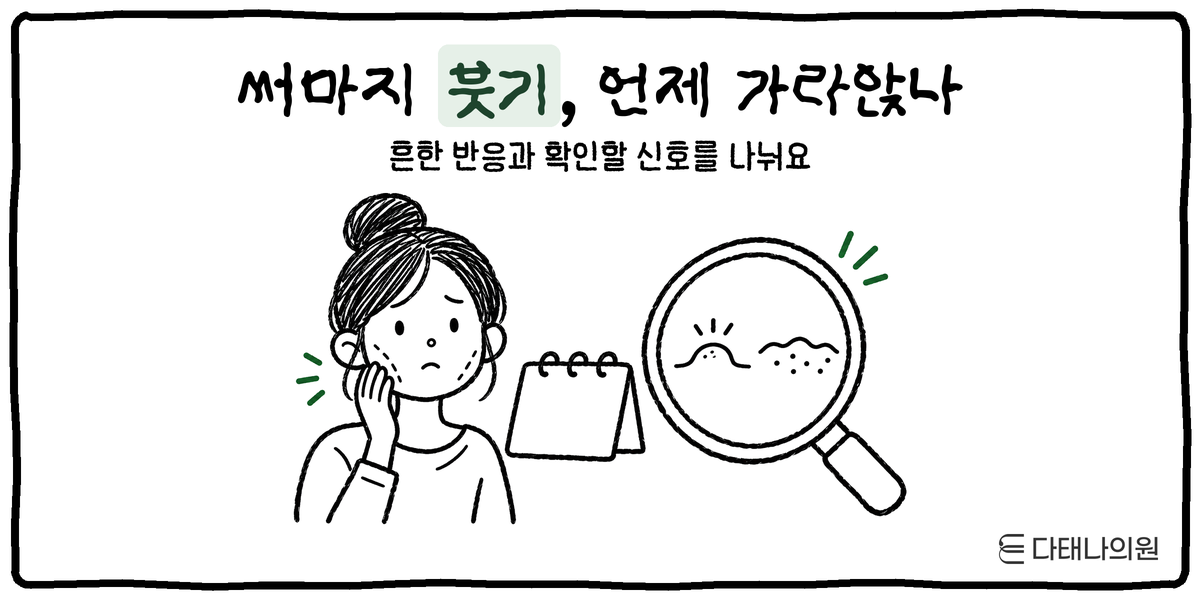
If your face looks puffy after Thermage, it's natural to wonder whether that's a normal part of recovery or a sign that something's wrong. Here we lay out how long swelling, redness and tenderness usually last, how to care for your skin, and which signs need a separate check.
1. Why swelling follows radiofrequency heat
2. How long swelling, redness and tenderness last
3. Swelling varies by area and by person
4. Everyday care to help swelling settle
5. Common reactions vs. reactions that need a check
6. What to keep in mind when judging swelling and results
Today's summary
Redness usually fades within about a day, and swelling within a few days.
In rare cases, swelling can last a few weeks.
Blisters, scabs, dents or lumps need a separate check.
When swelling goes down and when you can judge results are two different timelines.

Hello, this is Datena Clinic.
Thermage is known for its short recovery, so many people are caught off guard when they wake up the next day with a puffy face. Swelling after Thermage is a common reaction to heat, but how long it lasts and what it looks like varies from person to person. Most of the time it's a temporary change that settles within a few days, but it should be told apart from reactions that need a check, such as burns, blisters or lasting dents. Below, we'll walk through why swelling happens, how it typically progresses, how to care for your skin, and which signs to watch for.
1. Why swelling follows radiofrequency heat
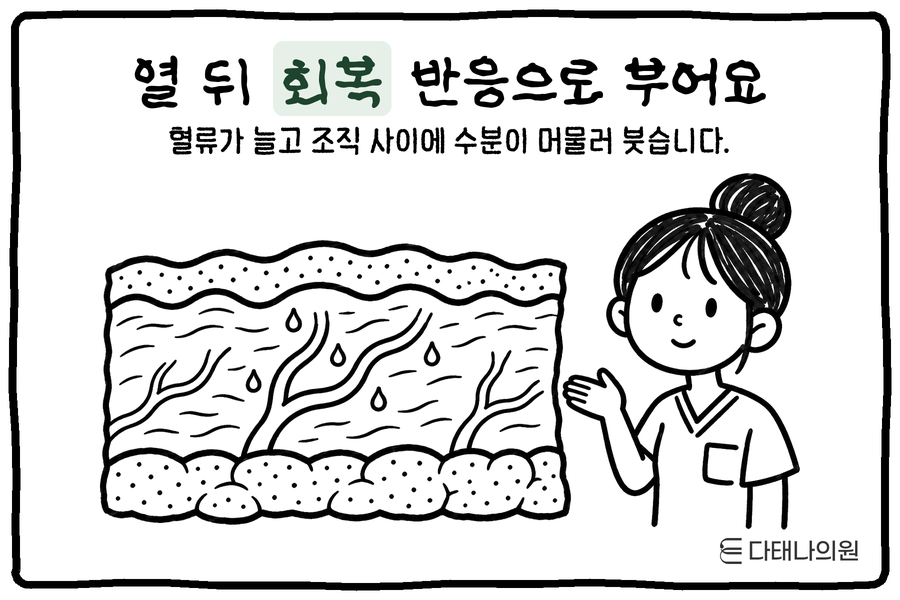
Thermage uses radiofrequency energy to heat the dermis and the tissue beneath it, prompting collagen changes. As heated tissue begins its recovery response, blood flow increases and fluid lingers between tissues, causing temporary swelling. The process of rebuilding collagen within the skin also starts from this same recovery response. How much you swell depends on the area and depth the heat reached and on your own healing response. That's why redness and swelling right after treatment are considered somewhat expected, and what we watch is whether they ease day by day.
2. How long swelling, redness and tenderness last
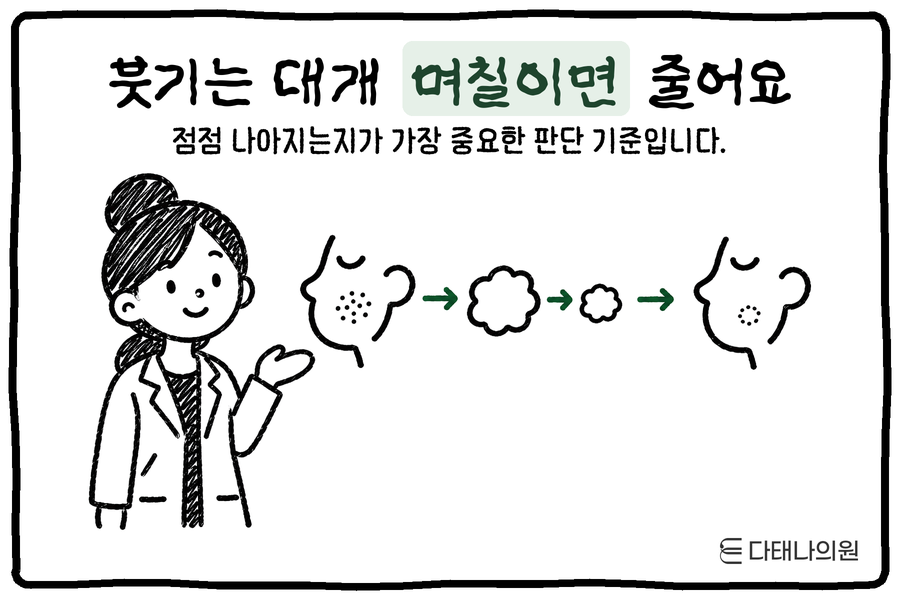
In a study analyzing more than 600 treatments with an earlier generation of Thermage, redness and swelling mostly disappeared within 24 hours, with swelling lingering for about a week in only some cases. The manufacturer's safety information likewise says swelling usually subsides within 5 days but can last up to several weeks. You may also feel soreness or tenderness when pressing the treated area, which generally fades along with the swelling. More than the exact duration, the key sign that a reaction is temporary is whether it keeps improving over time. If swelling is lasting a while, taking photos of your face the day after treatment and a few days later under the same conditions makes it easier to compare how it's going down.
3. Swelling varies by area and by person

Areas with thin, loose skin, like around the eyes, can show swelling more noticeably even with the same reaction. Small lumps can sometimes be felt in the neck area, and the manufacturer notes these usually settle within 1–2 weeks. If your face tends to puff up easily in general, post-treatment swelling may also feel like it lasts a bit longer. Even in the same person, the degree of swelling differs depending on the treated area and energy settings. If, after treatment around the eyes, your eyes stay red and painful or your vision feels blurry, that needs to be checked separately from the swelling.
4. Everyday care to help swelling settle

The manufacturer says no special aftercare is needed, but if the swelling bothers you, some everyday care can help. While the area still feels warm, apply a cold compress wrapped in a clean towel for short periods, and avoid holding ice directly on your skin for long. For a few days, cut back on things that increase heat and blood flow to the face, like saunas, hot baths and heavy drinking, and sleeping with your pillow slightly raised can reduce morning puffiness. Don't rub or massage the treated area hard, and keep up gentle cleansing, moisturizing and sun protection.
5. Common reactions vs. reactions that need a check

If redness, swelling and mild tenderness ease day by day, it's usually a temporary reaction. On the other hand, blisters or scabs may mean a burn where heat has damaged the upper layer of skin, so they should be checked right away. The manufacturer notes that surface dents or unevenness can appear not right after treatment but more than a month later, and rarely, the skin may darken or sensation may become dulled. Swelling that grows instead of shrinking, severe swelling on just one side, or warmth and pain that keep getting worse also need a check.
Reaction | Typical course | When to get it checked |
|---|---|---|
Redness | Usually about a day | Getting darker after several days |
Swelling | Usually around 5 days | Lasting weeks, or on one side only |
Blisters/scabs | Uncommon | Check right away if they appear |
Surface dents | May appear after a month | When a dent remains |
Lumps | Usually 1–2 weeks | If it grows or becomes painful |
6. What to keep in mind when judging swelling and results

Right after treatment, swelling can make your skin look tighter and smoother than usual, so when the swelling goes down it's easy to feel like the effect has faded. The collagen changes you're hoping for with Thermage develop over several months, so it helps to think of the swelling phase and the time for judging results as two separate things. On the flip side, while swelling lingers, it's hard to see accurately how your facial contours have changed. Once the swelling has fully gone, comparing photos taken under the same conditions over a few months gives you a much clearer picture of the real change. Sensory changes like numbness or tingling usually fade quickly but can last a few weeks, so jotting them down by date along with the swelling makes it easier to explain at your follow-up visit.
Wrapping up
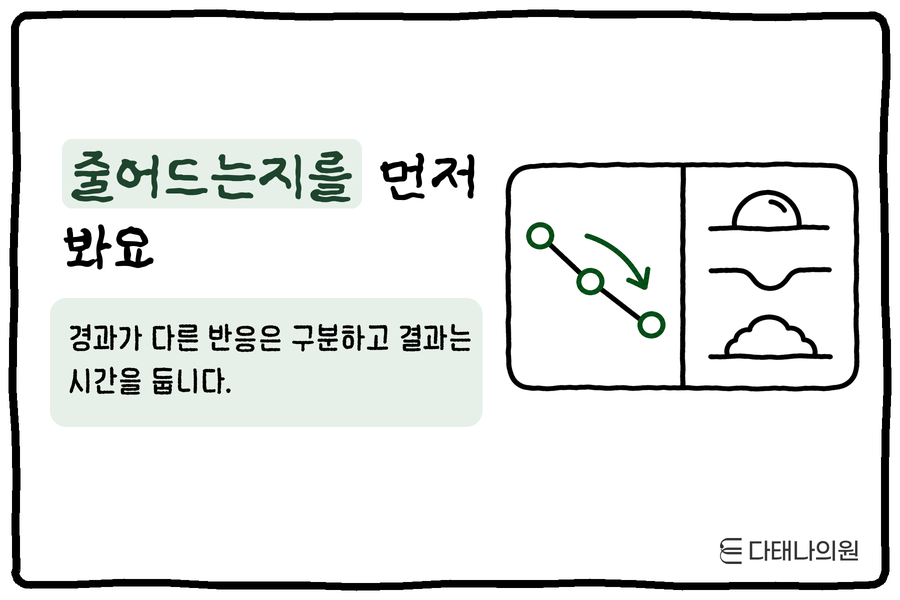
Swelling after Thermage is a temporary reaction that mostly settles within a few days, and the key thing to watch is whether it keeps decreasing day by day. Keep reactions that follow a different course, such as blisters, scabs, dents that appear later, or lumps that grow, separate in your mind, and judge your results with some time after the swelling has fully gone.
You can find details on our treatments and directions on the Datena Clinic official website.