
Acne extraction: which spots you shouldn't squeeze at home, and signs you need treatment
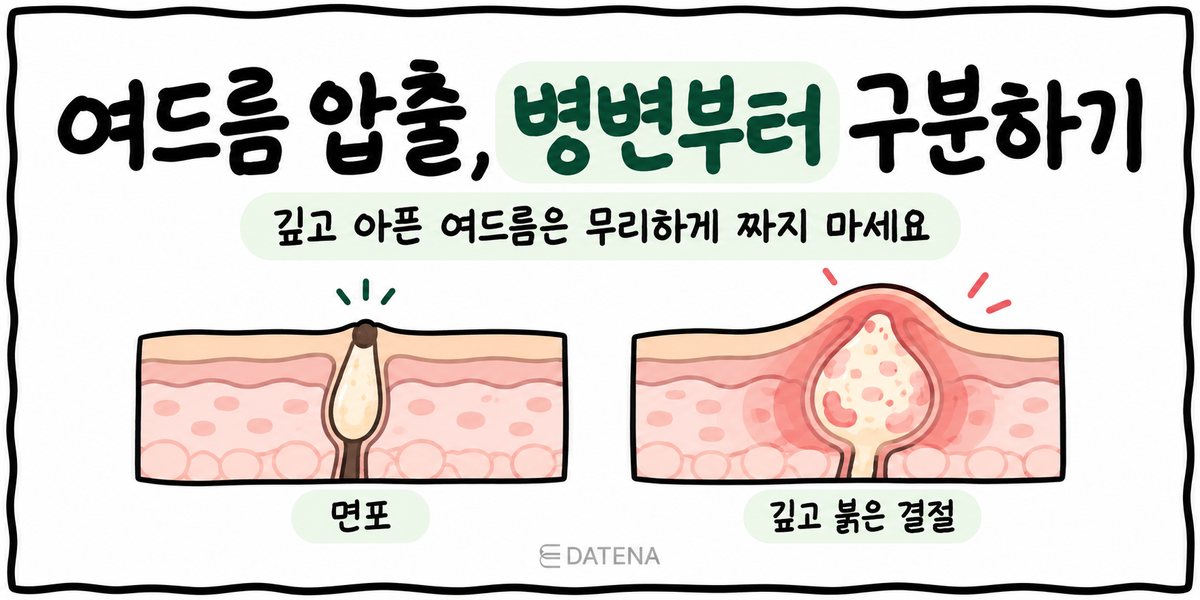
When a breakout shows up, it's hard to know whether to squeeze it so it heals faster or just leave it alone.
Here's how to tell when extraction can help and when touching a spot with your fingers is risky.
Today's summary
Not every pimple should be extracted.
Deep, painful spots need a different kind of treatment.
Squeezing with your fingers raises the risk of inflammation and scarring.
If breakouts keep coming back, the acne itself needs treatment.
Hello, this is Datena Clinic.
It's easy to think of extraction as simply getting out whatever you can see.
But depending on the type and depth of the spot, extraction may or may not be an option, or another treatment may need to come first.
If you get extractions often and still keep breaking out, it's worth asking whether you're relying on a single procedure to fix everything.
Whether a spot should be extracted varies from one to the next, and you also need separate treatment to cut down on new inflammation.
To reduce marks, the first step is figuring out what kind of acne you have.
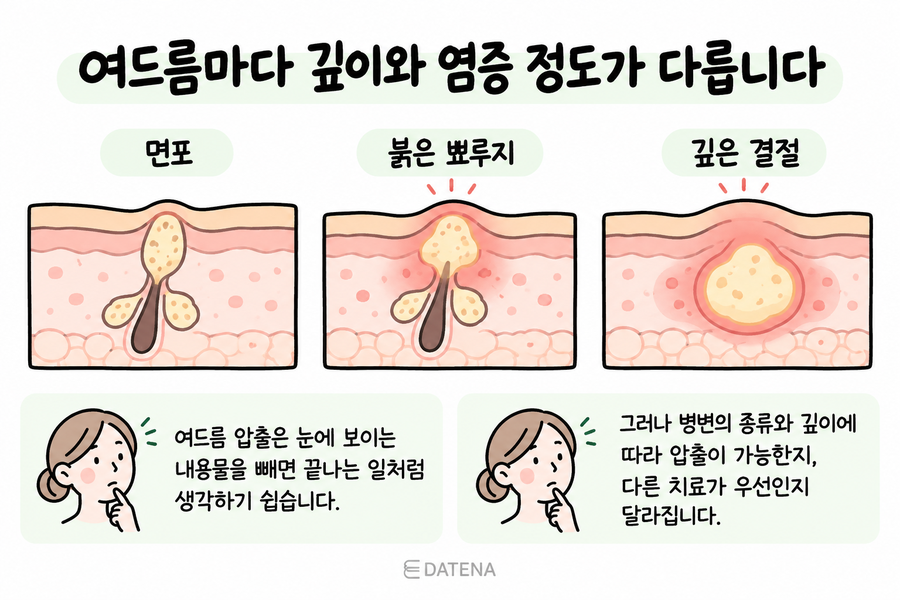
1. Comedones vs. deep inflammatory acne
Whiteheads and blackheads (comedones) are a different condition from red, painful inflammatory acne.
With deep nodules or cysts, forcing pressure on them can increase inflammation in the surrounding skin and raise the risk of scarring.
A comedone that looks like a black dot and a red nodule you can feel deep under the skin carry very different risks when you press on them.
Firm, deep spots in particular are best left alone rather than trying to open them up with your fingers.
Since it's hard to judge how deep a spot goes just by looking at it, an exam can help.
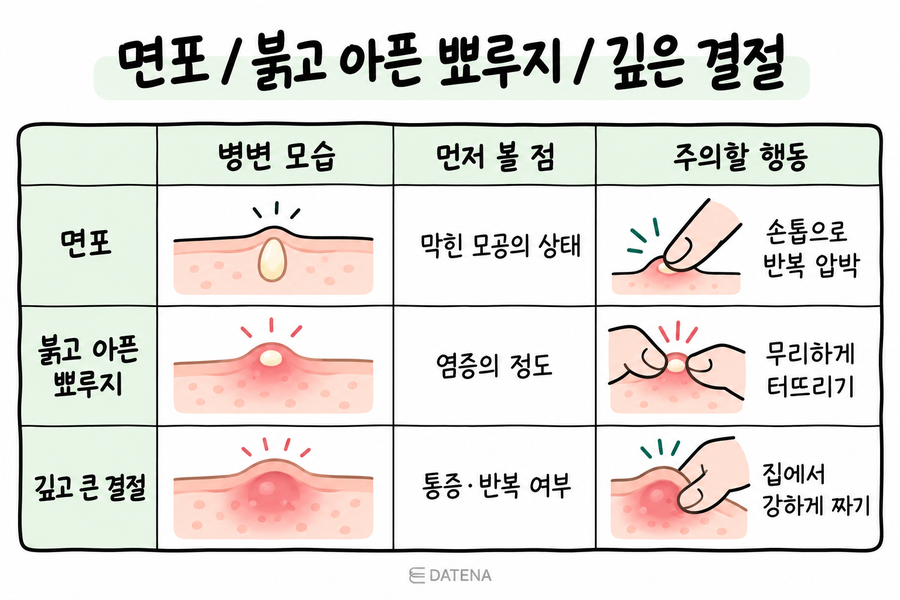
What the spot looks like | What to check first | What to avoid |
|---|---|---|
Comedone | How clogged the pore is | Pressing repeatedly with your nails |
Red, painful pimple | How inflamed it is | Forcing it to pop |
Large, deep nodule | Pain and whether it keeps recurring | Squeezing hard at home |
2. What we check during in-clinic extraction
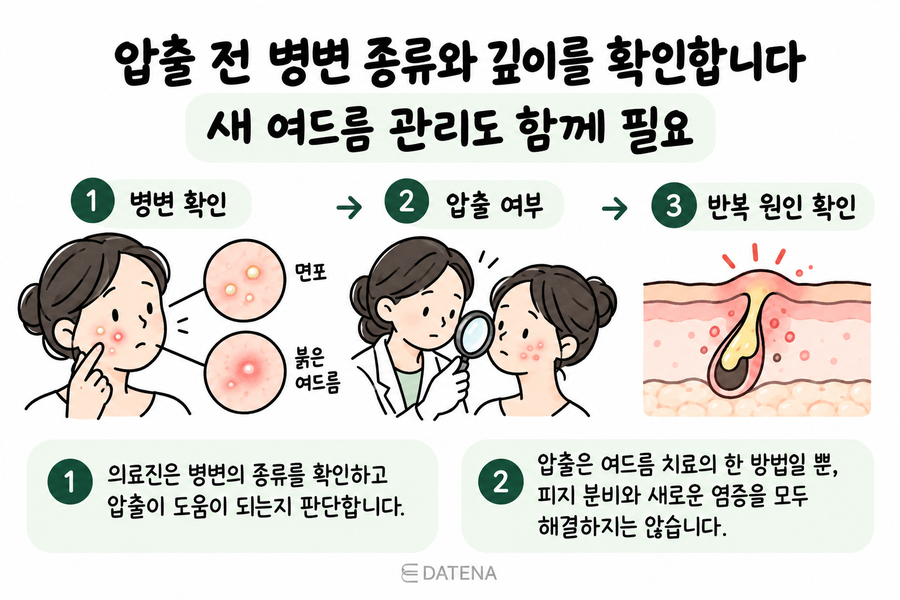
Our medical team identifies the type of spot and decides whether extraction will help.
Extraction is only one part of acne treatment; it doesn't address oil production or new inflammation on its own.
Even when extracting comedones is helpful, we keep an eye on how much the skin has been irritated.
If new comedones keep forming, we also look at everyday things that may be aggravating your pores, like the products you use or tightness after cleansing.
If your acne keeps coming back, medication and a skin care plan should be reviewed together.
3. Why squeezing with your fingers leaves marks
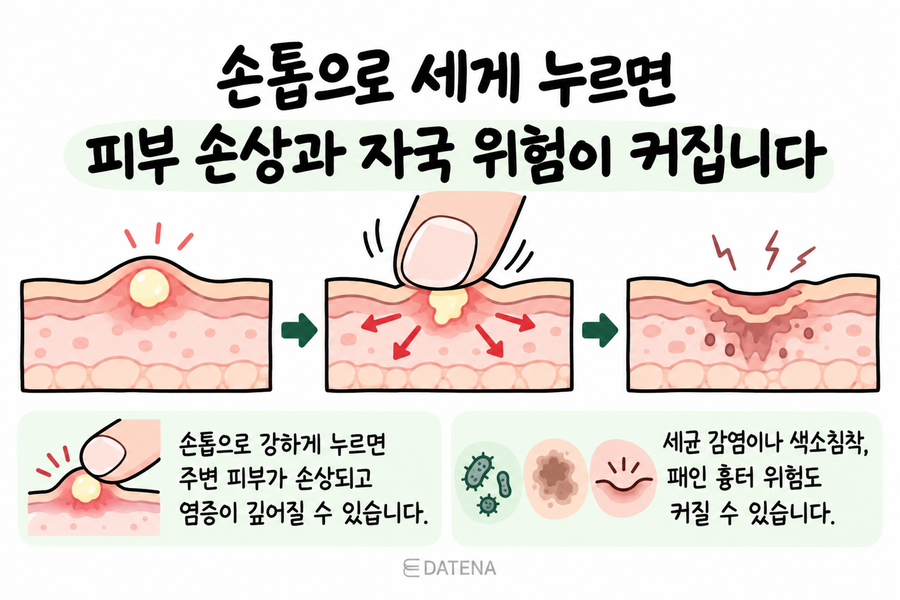
Pressing hard with your fingernails can damage the surrounding skin and push the inflammation deeper.
It can also raise the risk of bacterial infection, dark marks (hyperpigmentation), and pitted scars.
Squeezing from several directions with your nails can tear the skin around the spot.
If nothing comes out and you press even harder, the risk of inflammation and dark marks goes up.
In particular, avoid repeatedly pressing on deep lesions that aren't yet ready to drain.
4. When You Need a Different Treatment Instead of Extraction
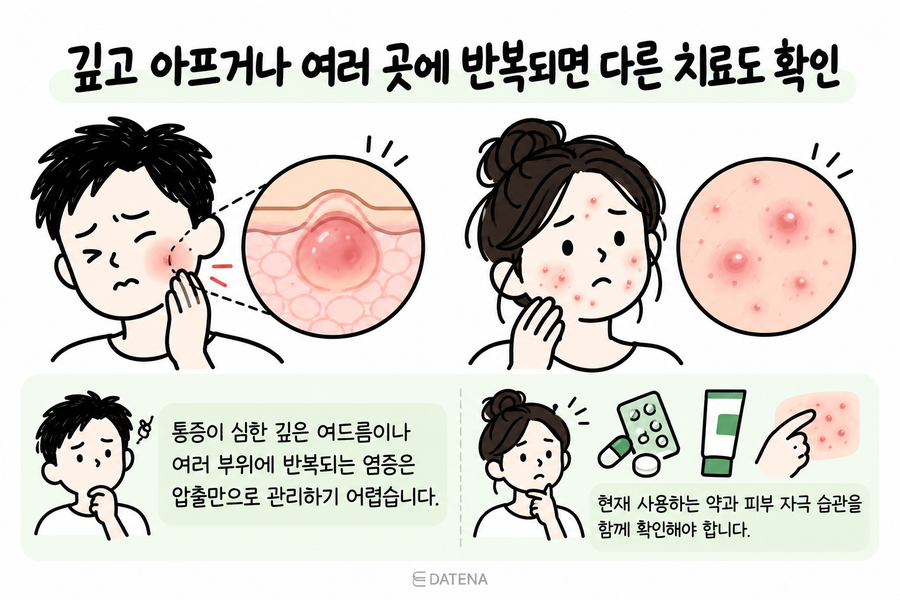
Deep, painful acne or inflammation that keeps coming back in several areas is hard to manage with extraction alone.
Your current medications and any habits that irritate your skin should be reviewed as well.
For deep, painful acne, your doctor may consider medication or other procedures.
Being told a spot can't be extracted doesn't mean there's no way to treat it.
If a spot suddenly swells up and feels very hot, it should also be checked for infection.
5. How to Check the Area After Extraction
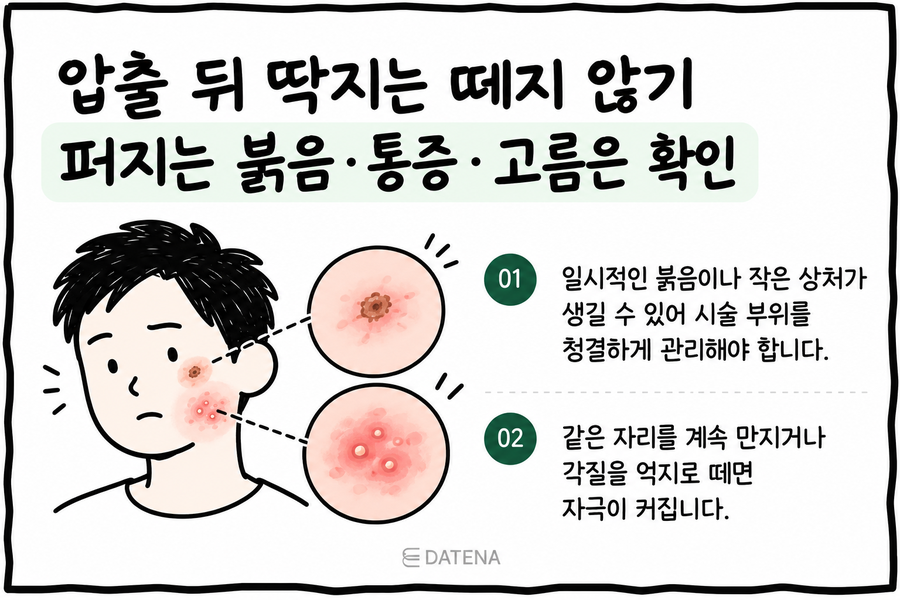
Temporary redness or small wounds can appear, so keep the treated area clean.
Touching the same spot over and over or picking off flaky skin makes irritation worse.
If a small scab forms after extraction, don't pull it off.
If the wound stays moist or the scab keeps coming off, it's worth going over your aftercare routine again.
If the redness spreads or the pain and pus increase, you should be seen by a doctor.
6. A Treatment Plan to Cut Down on Recurring Acne
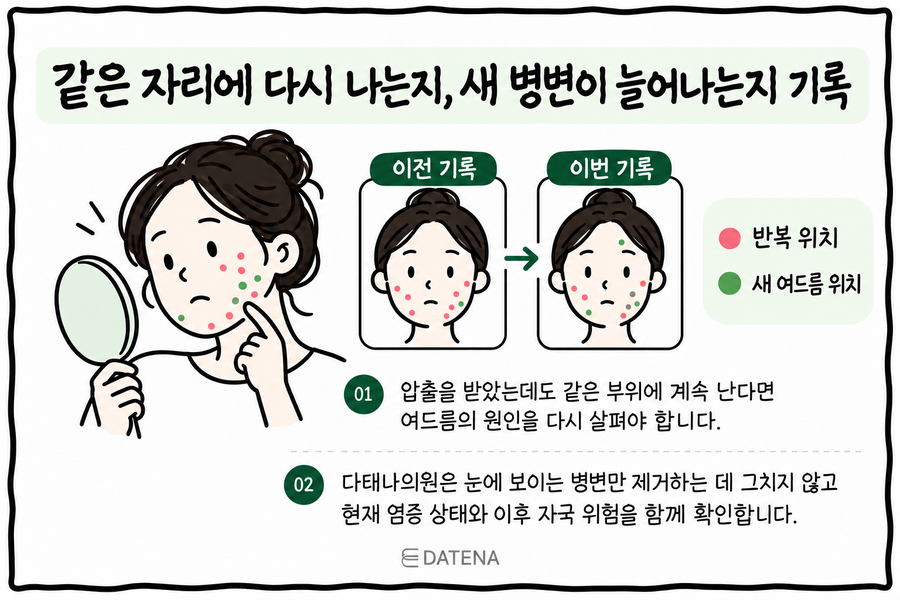
If breakouts keep showing up in the same spot even after extraction, the cause of your acne needs a closer look.
At Datena Clinic, we don't just remove the lesions you can see; we also assess your current inflammation and the risk of marks it may leave behind.
Try to notice whether your acne keeps returning in the same place or whether new spots are appearing across your whole face.
This is key information for deciding whether to keep doing extractions or to change your acne treatment.
Matching the treatment to each type of lesion is important for reducing scarring.
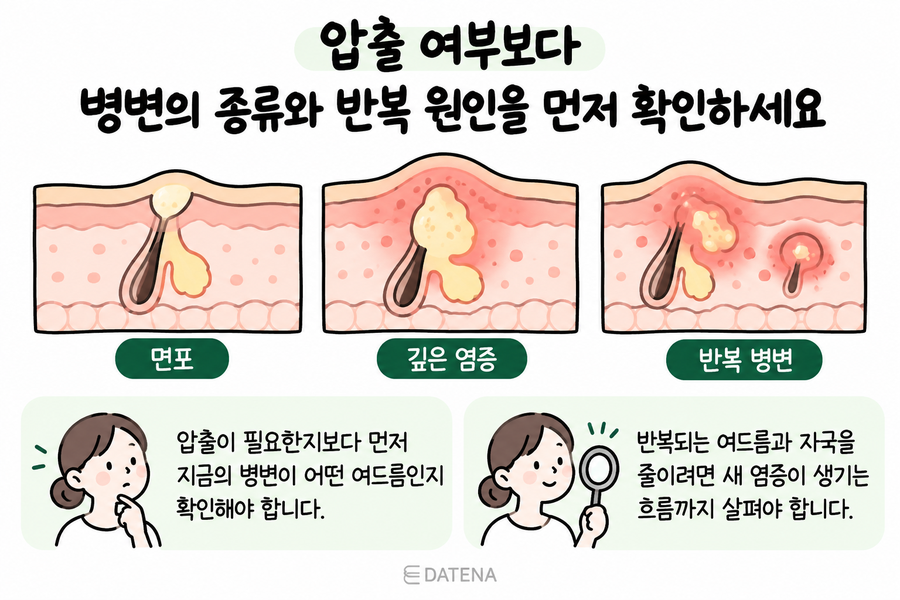
Before asking whether a spot needs extraction, it's important to first identify what kind of acne it is.
Extraction is one part of treatment, done selectively on the right lesions.
To reduce recurring acne and the marks it leaves, you also need to look at the pattern of how new inflammation develops.
For deep or recurring inflammation, setting up a treatment plan helps more than squeezing at home.
You can find details on our treatments and directions on the Datena Clinic official website.