
Pore-minimizing treatments: how oil and skin firmness shape the right choice
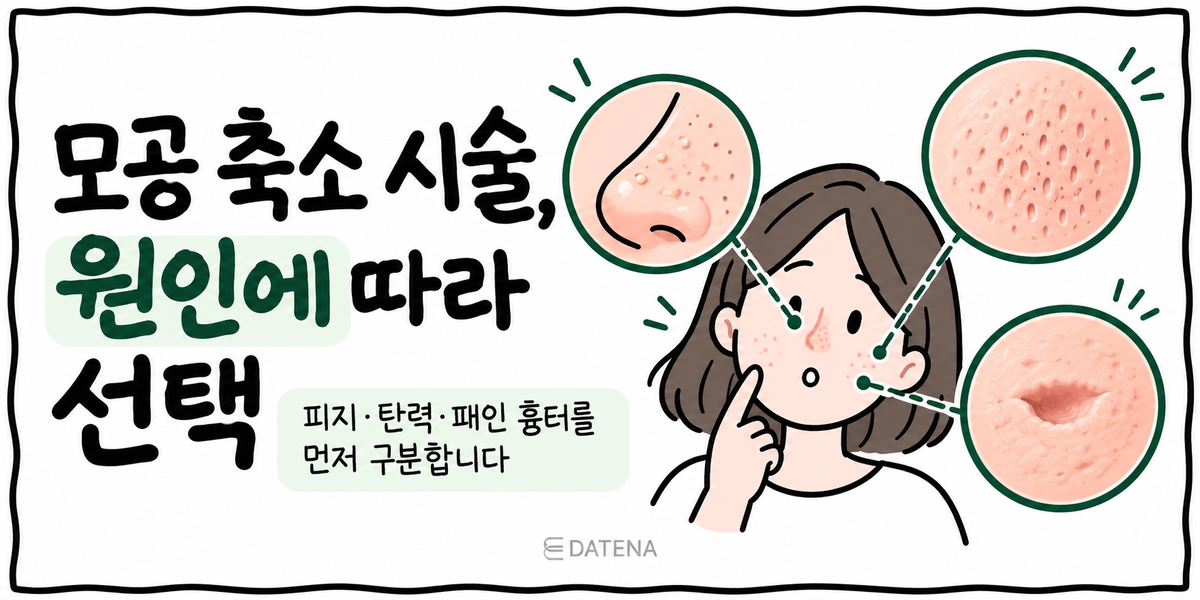
If your pores look large, you may have looked into all kinds of treatments and still be unsure where to start.
Here we break down what makes pores stand out and explain what treatments can realistically achieve.
Today's summary
Pores can't be closed completely.
We separate oil, acne and loss of firmness.
The goal is to make pores less noticeable.
We also check the risk of irritation and pigment changes.
Hello, this is Datena Clinic.
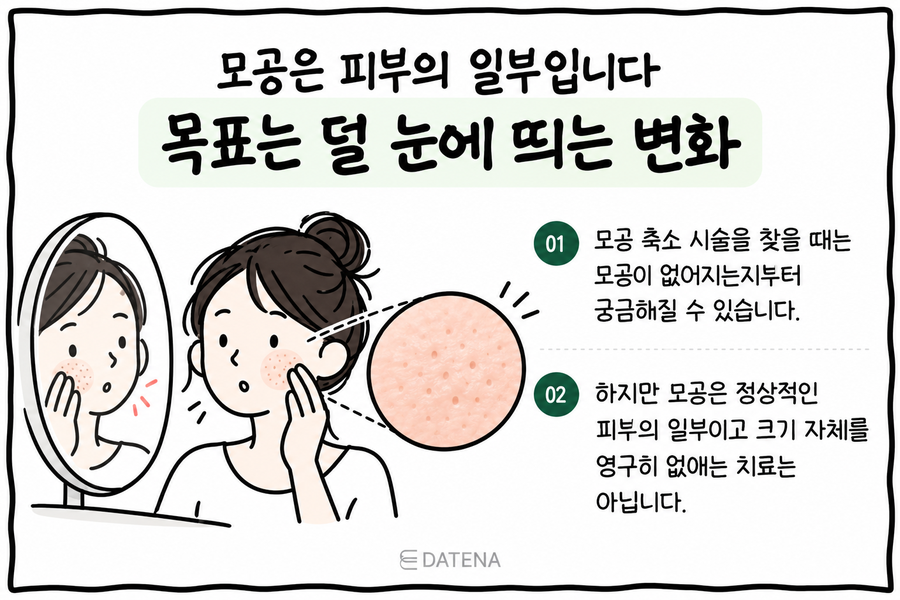
When you start looking into pore treatments, your first question may be whether your pores will disappear.
But pores are a normal part of healthy skin, and no treatment permanently gets rid of them.
Wanting smaller pores usually means two things: hoping less oil builds up, and hoping your skin looks tighter.
Once you separate those two goals, the care you need changes too.
Understanding why your pores look bigger is what lets us set realistic goals for both skincare and treatment.
1. Three reasons pores look larger
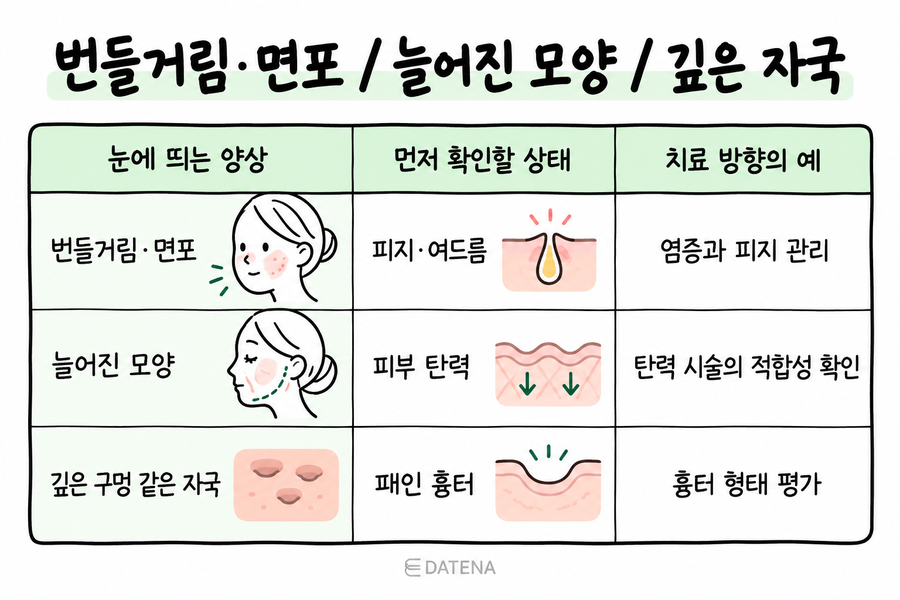
Heavy oil production or a buildup of comedones can make pores more visible.
Loss of skin firmness or accumulated sun damage can also make the skin around pores look slack.
Comedones around the nose and sagging pores on the cheeks don't have the same cause.
We also need to check whether deep-looking marks are left over from past acne.
Some people mistake depressed acne scars for pores, so it's important to tell the shapes apart.
What you notice | What to check first | Example treatment direction |
|---|---|---|
Shine and comedones | Oil and acne | Managing inflammation and oil |
Sagging shape | Skin firmness | Checking whether firming treatments are a good fit |
Deep, hole-like marks | Depressed scars | Assessing the type of scarring |
2. When oil and comedones stand out
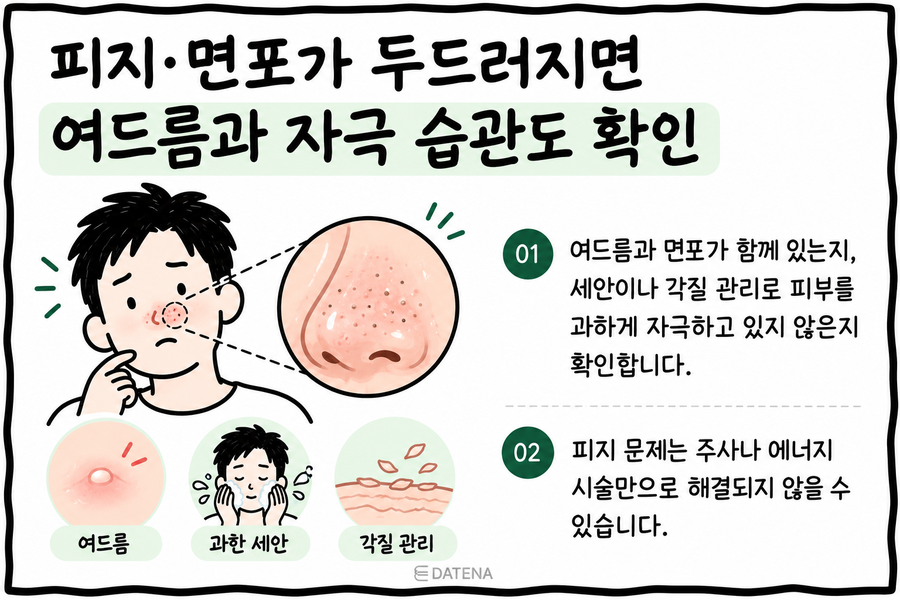
We check whether you have acne along with comedones, and whether cleansing or exfoliating is over-irritating your skin.
Oil problems may not be solved by injections or energy-based treatments alone.
If oil is your main concern, we look at whether you use salicylic acid or acne medications, along with how irritated your skin is.
Harsh cleansing several times a day can actually irritate your skin more.
If you get recurring acne, treating that should come first.
3. When loss of firmness makes pores look stretched
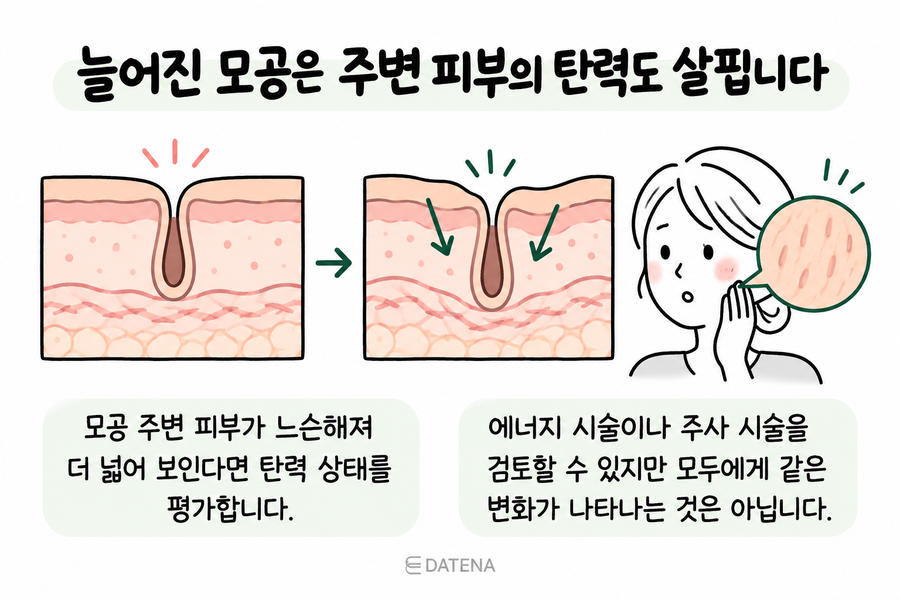
If the skin around your pores has loosened and they look wider, we assess your skin's firmness.
Energy-based or injectable treatments may be considered, but not everyone sees the same change.
In areas where changes in firmness are noticeable, such as the cheeks, we observe how the skin around the pores is stretching.
Care to reduce UV-related skin damage should also continue before and after treatment.
Skin thickness, fine lines and pigmentation issues need to be looked at as well.
4. Telling pores apart from depressed scars
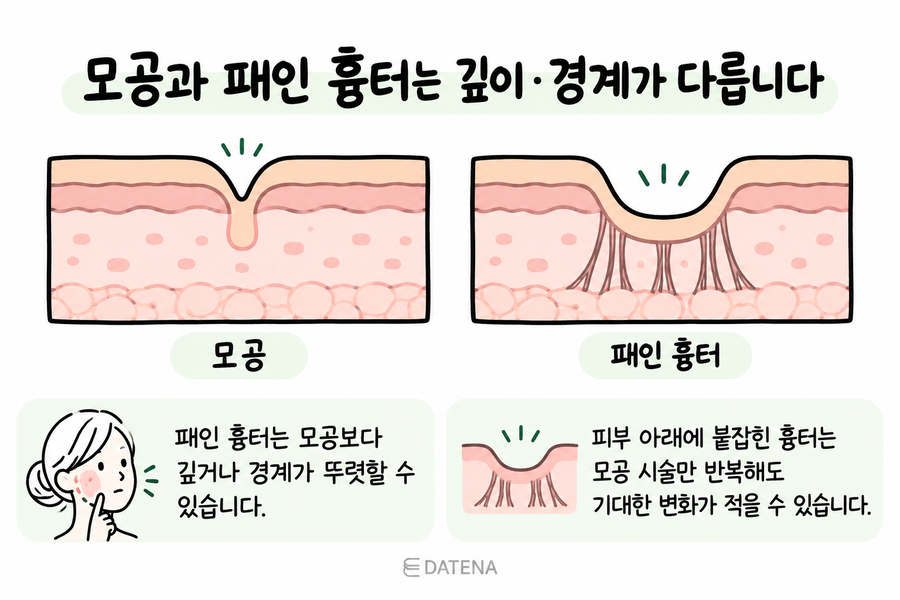
Depressed scars can be deeper than pores or have sharper edges.
With scars that are tethered beneath the skin, simply repeating pore treatments may bring less change than expected.
Scars sometimes have edges that sit deeper than the surrounding skin and cast a shadow.
If a scar in one area is mistaken for a pore, it's easy to miss why the expected change isn't showing up.
Pores and scars can exist side by side on the same face, so we look at each area separately.
5. Watch for redness and pigmentation after treatment
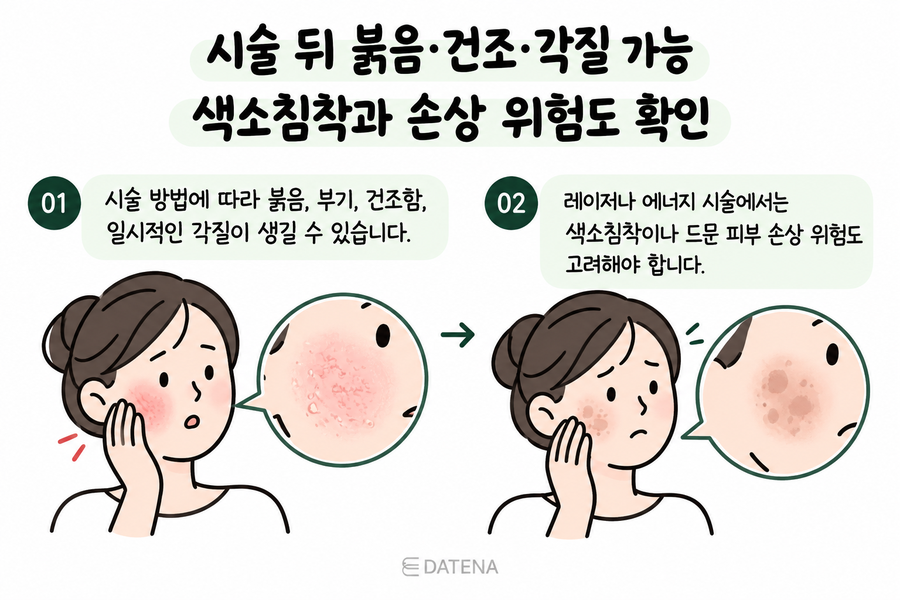
Depending on the method, you may get redness, swelling, dryness or temporary flaking.
With laser or energy-based treatments, the risk of pigmentation and rare skin damage also needs to be considered.
Adding a treatment on top of peeling skin can make redness and stinging worse.
If you've started several new products, it's also worth figuring out which one is causing the irritation.
If your skin is sensitive or has active inflammation, the timing and intensity of treatment should be chosen carefully.
6. How to assess pores becoming less noticeable
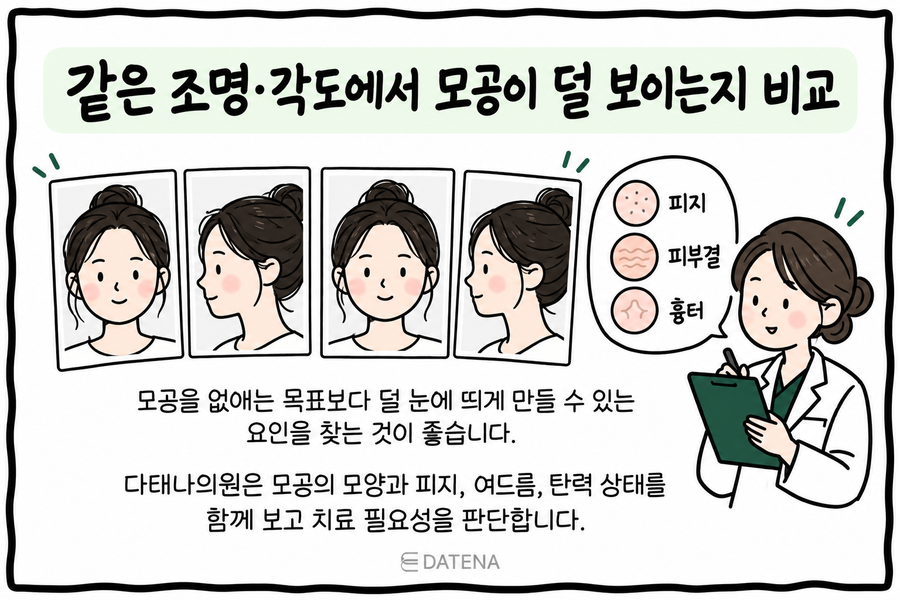
Rather than aiming to erase pores, it's better to find the factors that can make them less noticeable.
At Datena Clinic, we look at pore shape, oil, acne and skin firmness together to decide whether treatment is needed.
Taking photos of your pores from the front and the side under the same lighting makes it easier to compare real changes.
It's more realistic to record oiliness, skin texture and depressed marks separately rather than lumping them into a single result.
You should also confirm in advance how much change to expect and whether ongoing care will be needed.
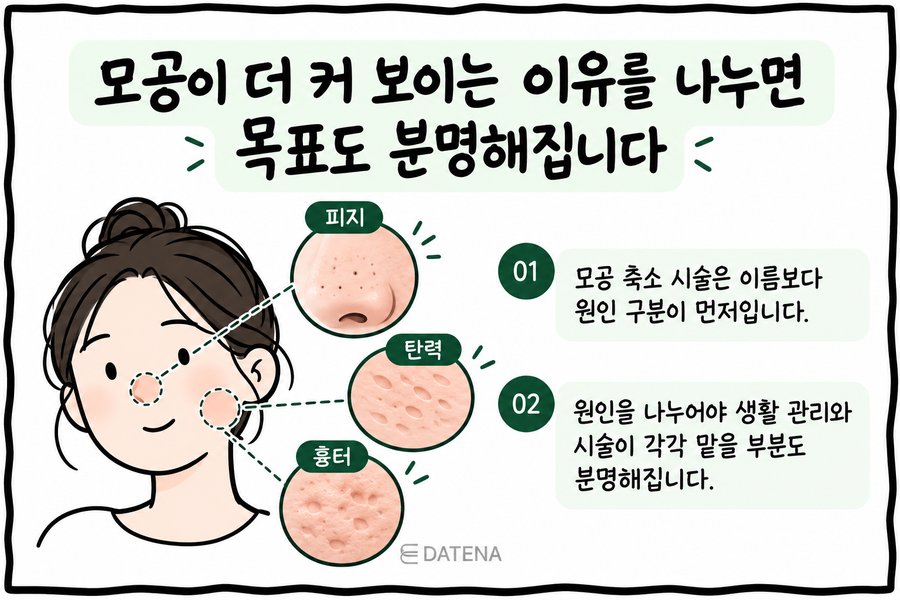
With pore-minimizing treatments, identifying the cause comes before choosing a treatment name.
Pores are shaped by oil, inflammation, firmness and scarring all at once.
Separating the causes also makes it clear what daily care and what treatment should each handle.
Finding out whether oil, firmness or scarring has the biggest effect on your skin right now helps guide your treatment choice.
You can find details on our treatments and directions on the Datena Clinic official website.