
Before searching Thermage prices, check whether your skin actually needs radiofrequency treatment
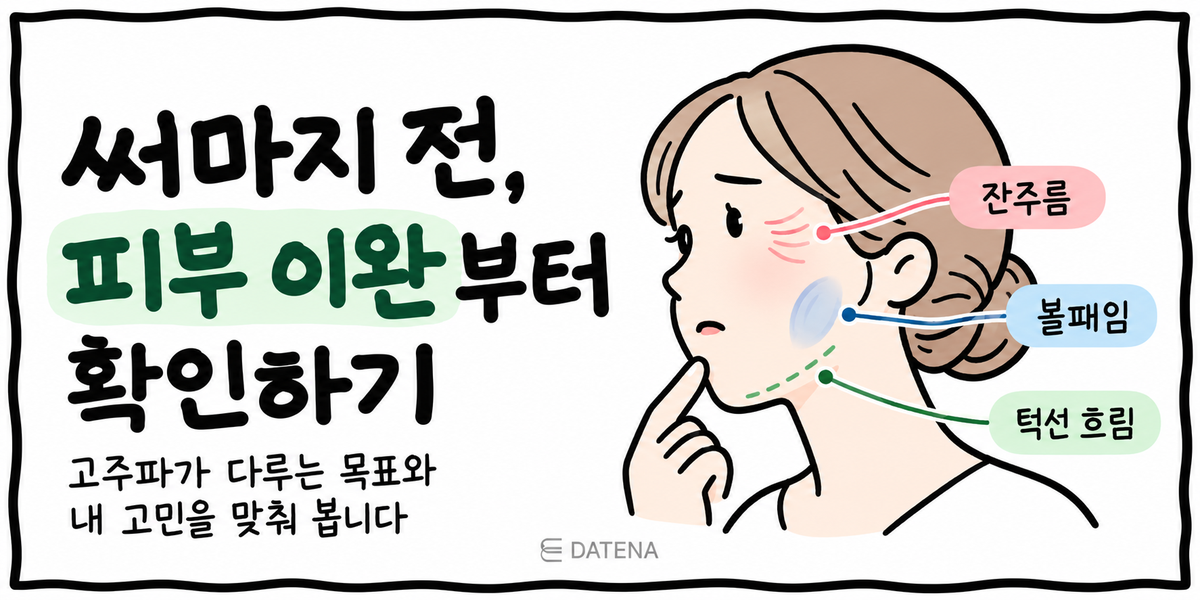
While researching Thermage, it can be hard to tell whether it's a treatment your skin really needs.
Here we cover the goals of monopolar radiofrequency, questions to check whether it suits you, and what to expect after treatment.
Today's summary
Thermage uses monopolar radiofrequency.
We first assess how much skin laxity you have.
The treatment area and your past treatment history matter.
Be aware of warmth, redness, swelling and the risk of burns.
Hello, this is Datena Clinic.
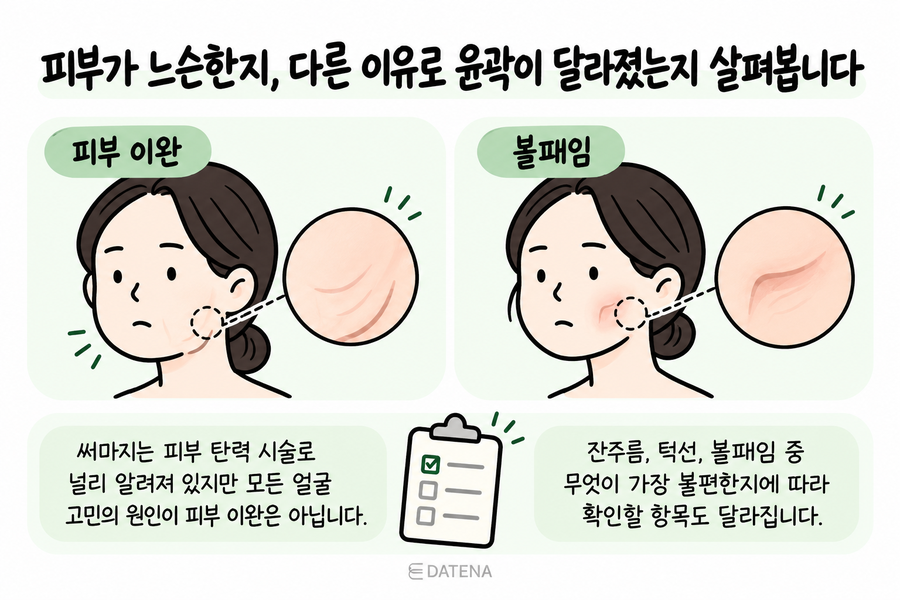
Thermage is widely known as a skin-firming treatment, but not every facial concern is caused by skin laxity.
What we need to check depends on what bothers you most: fine lines, your jawline or hollow cheeks.
Even if you know the name Thermage, if you can't explain why your skin needs it, there's no need to rush the decision.
In particular, any injectable treatments you've already had and whether you have an implanted electrical device are the first things we need to check.
Before choosing a treatment, let's look at what kinds of concerns radiofrequency actually addresses.
1. What Thermage radiofrequency treatment aims to do
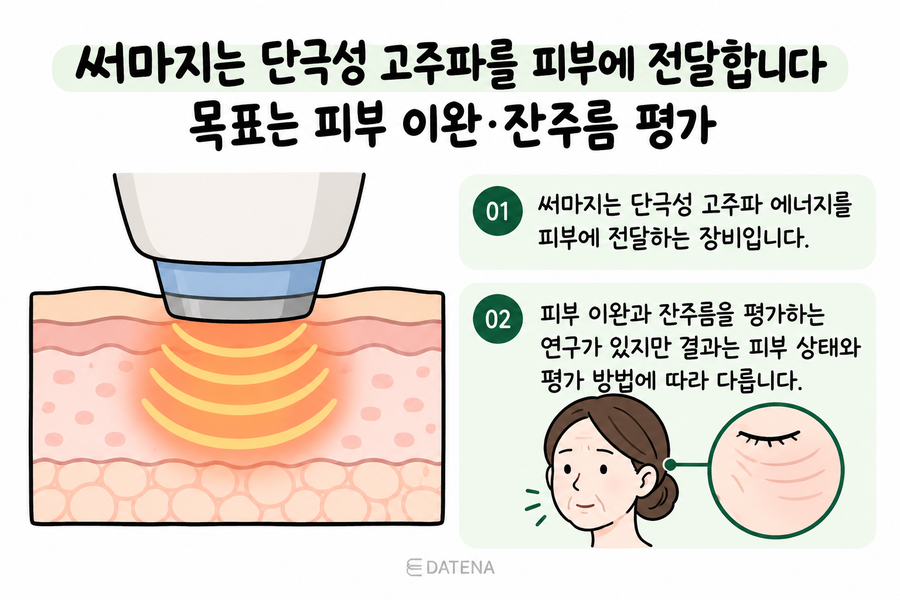
Thermage is a device that delivers monopolar radiofrequency energy to the skin.
There are studies evaluating it for skin laxity and fine lines, but results vary depending on skin condition and how outcomes are measured.
Radiofrequency uses heat with the goal of changing the condition of the skin.
If you assume it can change surface wrinkles and your facial contour to the same degree, your expectations may end up too high.
Because it delivers heat to the skin, treatment planning and safety management matter.
2. Telling skin laxity apart from hollow cheeks
If your cheeks have sunken or your facial fat has shifted position, simply tightening the skin may not give you the contour you're hoping for.
On the other hand, if fine lines and looseness of the skin surface are your main concern, radiofrequency may be worth considering.
Look in the mirror and try to sort out whether your jawline looks less defined because of the skin or because of fat under the chin.
If hollow cheeks are prominent, a treatment aimed only at skin laxity will have a limited role.
It helps to say specifically which area you want to change, and by how much, to feel satisfied.
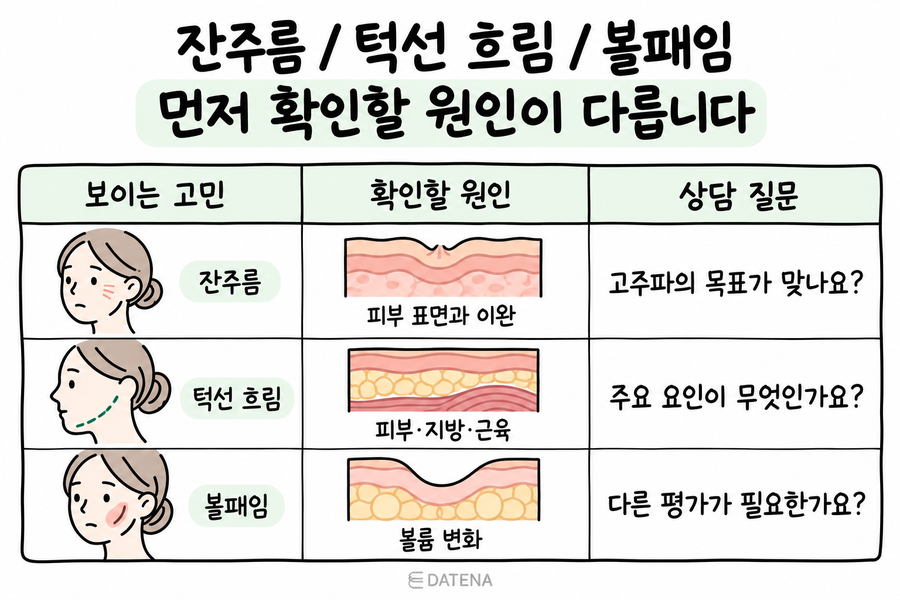
Visible concern | Cause to check | Question for your consultation |
|---|---|---|
Fine lines | Skin surface and laxity | Is radiofrequency the right goal? |
Less defined jawline | Skin, fat, muscle | What's the main factor? |
Hollow cheeks | Volume changes | Do I need a different kind of assessment? |
3. Checking past treatments and implanted electrical devices
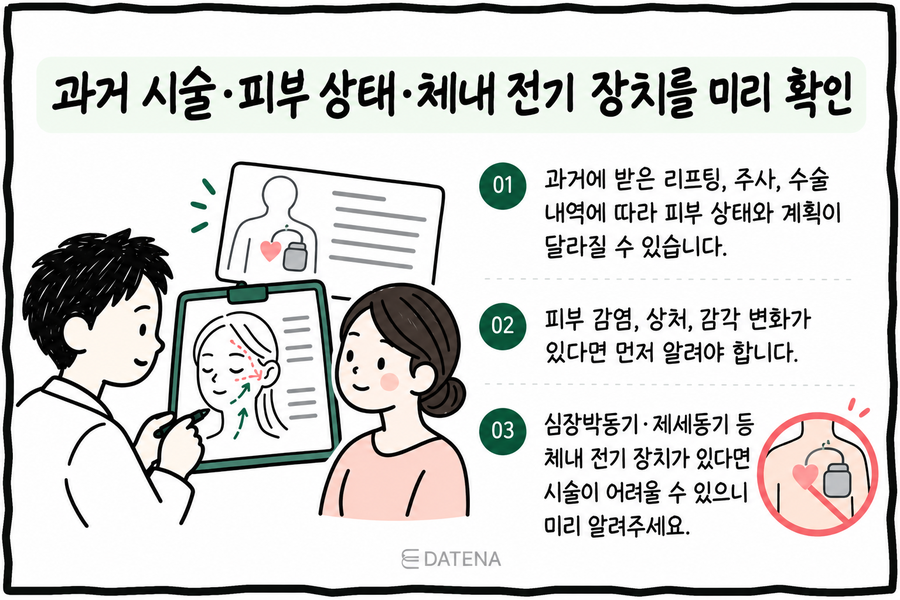
Your skin condition and treatment plan can differ depending on past lifting treatments, injections and surgeries.
If you have a skin infection, a wound or any change in sensation, let us know first.
The manufacturer's materials state that there isn't enough research on treating over substances that have been injected into the skin.
If you've had substances injected before or have tattoos, tell us in advance so we can review the plan accordingly.
If you have an implanted electrical device such as a pacemaker or defibrillator, this is a contraindication for Thermage, so you must tell us.
4. Swelling right after treatment vs. lasting change
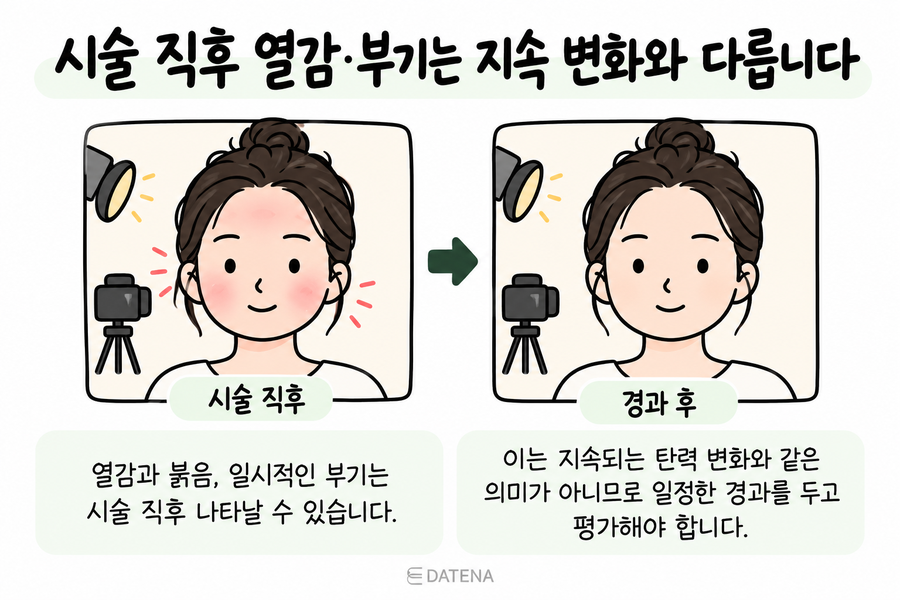
Warmth, redness and temporary swelling can appear right after treatment.
These don't mean the same thing as a lasting change in firmness, so results should be assessed after some time has passed.
The tight feeling you may notice on the day of treatment can't be taken as the same thing as a long-lasting change.
Keeping separate notes on how the swelling and warmth settle and how your skin texture changes makes assessment easier.
Differences in facial expression and lighting in photos also affect how results are judged.
5. Watch for heat, blisters and changes in skin color
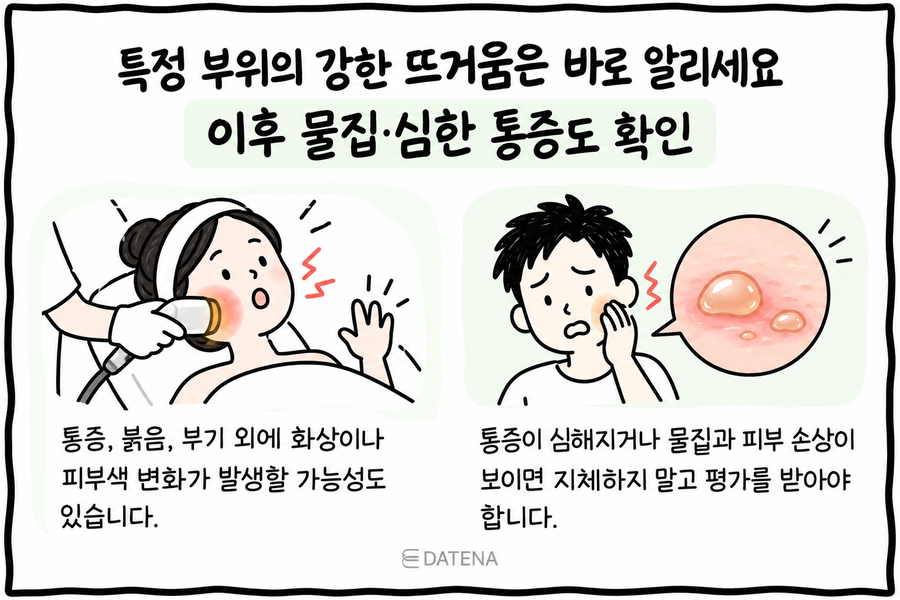
Besides pain, redness and swelling, burns or changes in skin color can also occur.
If pain gets worse, or you notice blisters or skin damage, get evaluated without delay.
If you feel heat concentrating in one spot during treatment, tell the medical staff right away.
Pain or blisters that keep getting worse after treatment are different from the usual feeling of warmth and should be checked.
After treatment, it's best to minimize irritation and follow the aftercare instructions you were given.
6. Three things to confirm before treatment
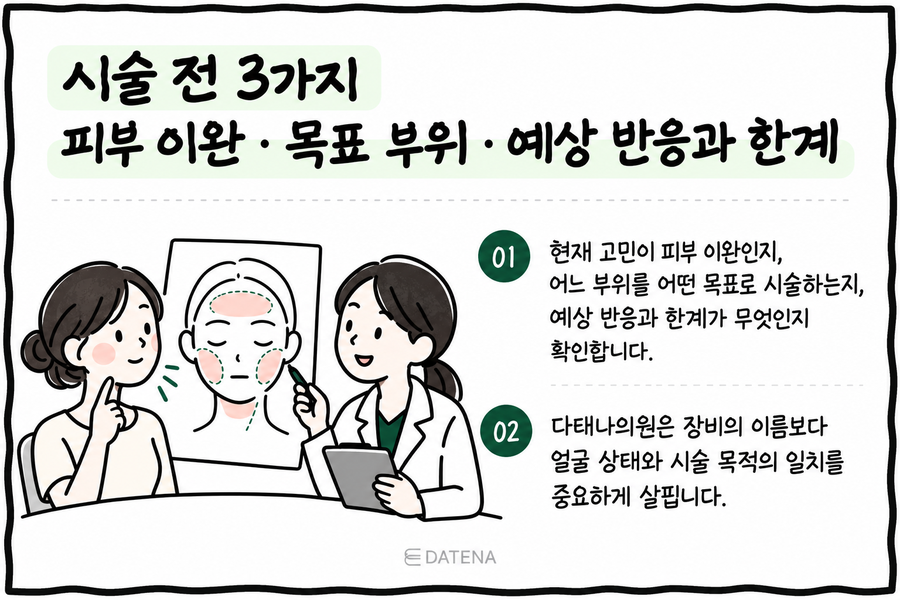
Confirm whether your main concern is actually skin laxity, which areas are being treated and for what goal, and what reactions and limitations to expect.
At Datena Clinic, we care less about the name of the device and more about whether your face's condition matches the purpose of the treatment.
During your consultation, before asking about devices, ask which area is being targeted and what change the treatment is aiming for.
A thorough explanation includes changes that are hard to predict and the symptoms you should watch for after treatment.
Depending on your skin concern, a different treatment or simply monitoring over time may be more appropriate.
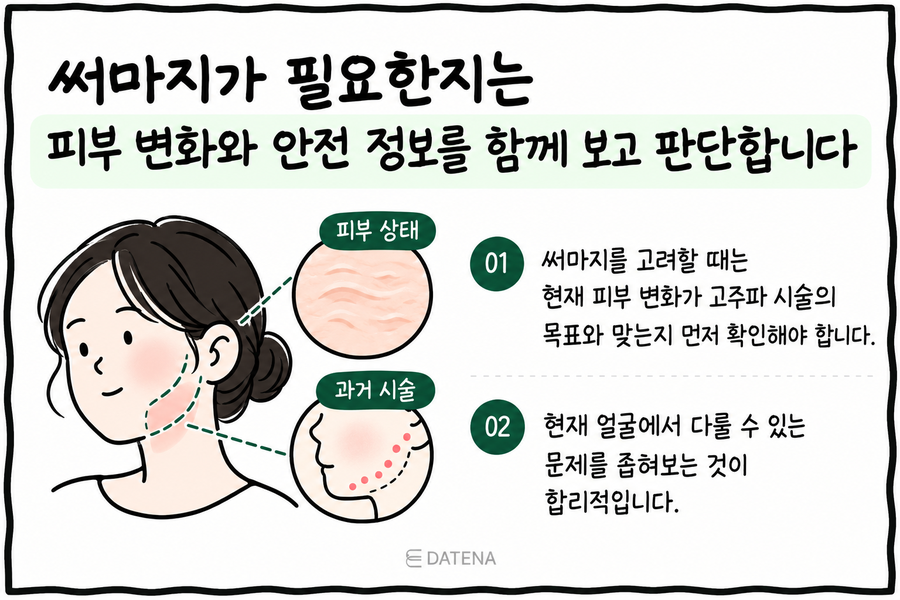
If you're considering Thermage, first check whether the changes in your skin actually match what a radiofrequency treatment is meant to address.
Deciding whether Thermage is right for you takes into account the degree of skin laxity, your past treatments, and safety-related information.
It makes sense to narrow down which concerns on your face can realistically be addressed right now.
Understanding the treatment scope and expected reactions helps you judge the results realistically.
You can find details on our treatments and directions on the Datena Clinic official website.