
Laser for acne pigmentation: what to check before treating brown marks
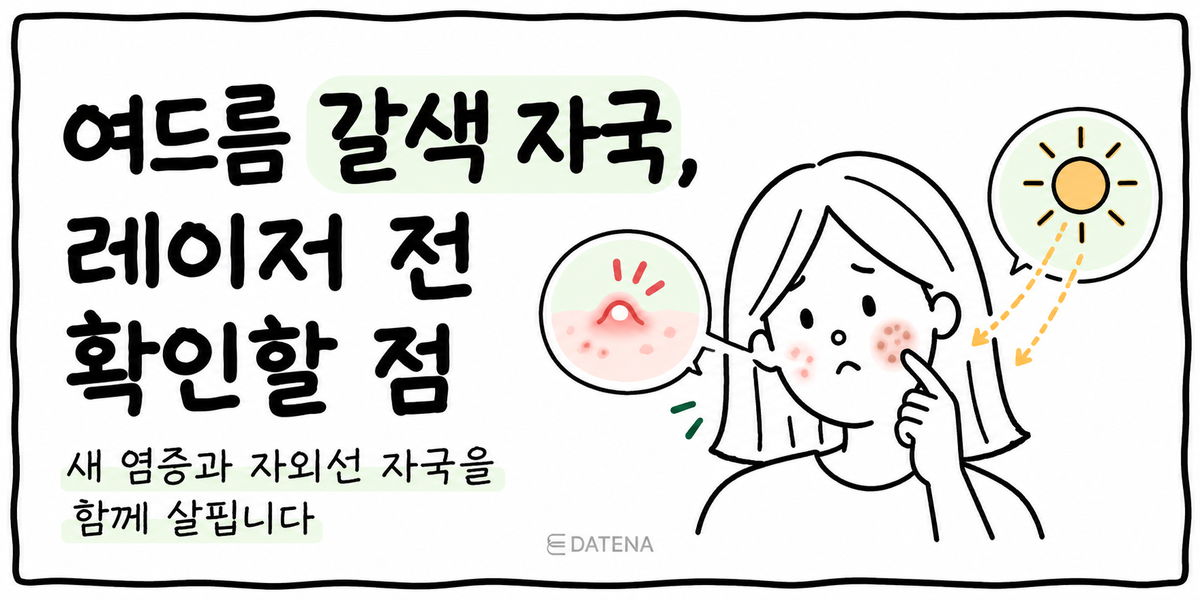
When a breakout heals and leaves a brown mark behind, it's natural to want a laser to get rid of it fast.
Let's look at what makes pigmentation worse and what should be assessed before you decide on a treatment.
Today's summary
Brown marks are not the same as depressed scars.
Managing new breakouts and sun exposure matters.
Laser isn't always the first choice.
We also check the risk of marks getting darker after treatment.
Hello, this is Datena Clinic.
Brown acne marks can appear as your skin heals.
They may fade gradually, but if new breakouts and sun exposure keep irritating the skin, they can stick around for a long time.
Brown marks after acne fade slowly, so it's easy to feel impatient.
But repeating laser sessions without first checking the color of the marks and how irritated your skin is can actually make things more uncomfortable.
Before picking a laser by name, let's figure out what kind of mark you're actually looking at.
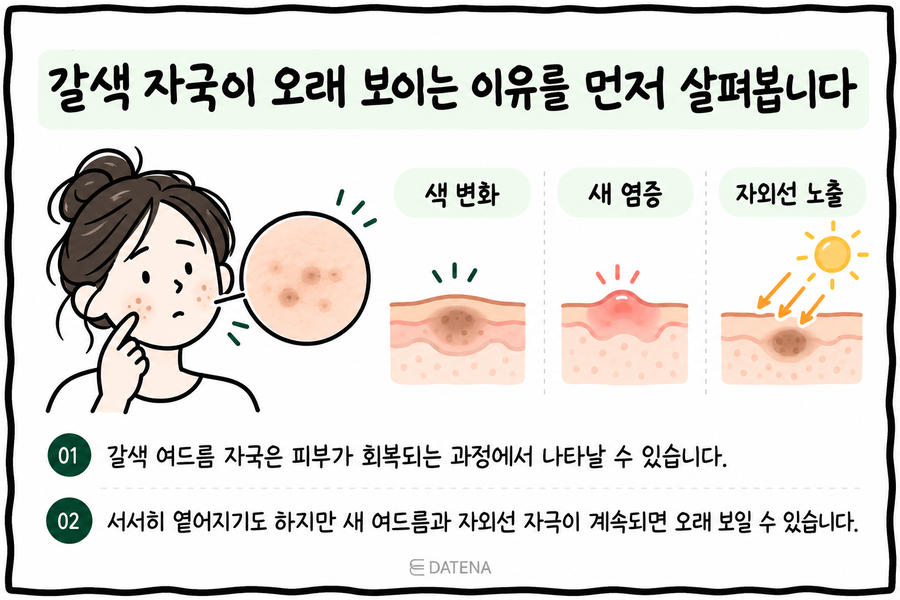
1. Telling brown marks apart from other pigment problems
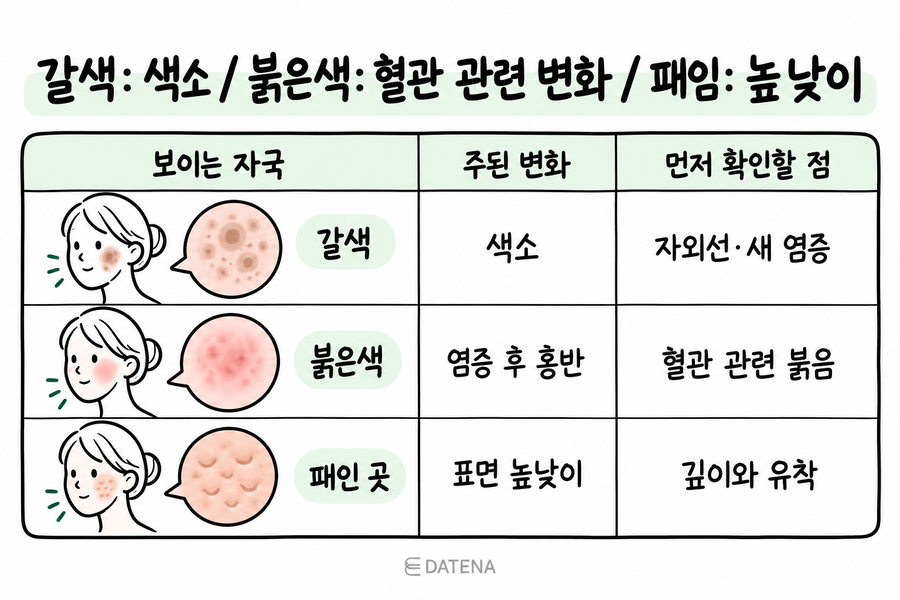
Post-inflammatory hyperpigmentation is color left behind where inflammation, like acne, has passed.
Red marks are different because they involve changes in blood vessels, and depressed scars involve changes in the height of the skin's surface.
If the brown color is spread over a wide area, other pigment problems such as melasma need to be considered besides acne marks.
The first clue is whether the marks line up exactly with where the acne used to be.
Several types can show up on the same face, so each one needs to be identified separately.
What you see | Main change | What to check first |
|---|---|---|
Brown | Pigment | Sun exposure & new inflammation |
Red | Post-inflammatory erythema | Vessel-related redness |
Indented | Surface height | Depth and tethering |
2. Why new breakouts need to be managed first
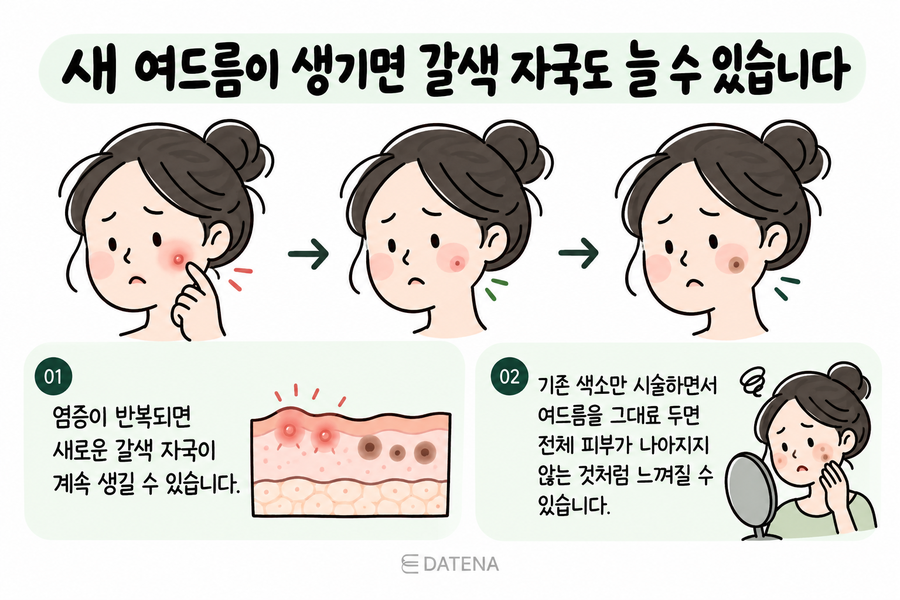
If inflammation keeps coming back, new brown marks can keep forming.
If you only treat existing pigment and leave the acne alone, it can feel like your skin as a whole isn't improving.
Squeezing new pimples with your fingers can make inflammation last longer and leave more brown marks.
A treatment plan includes both fading existing marks and preventing new ones.
Depending on how active your acne is right now, medication and skin care may come first.
3. Sun Protection and Managing Skin Irritation
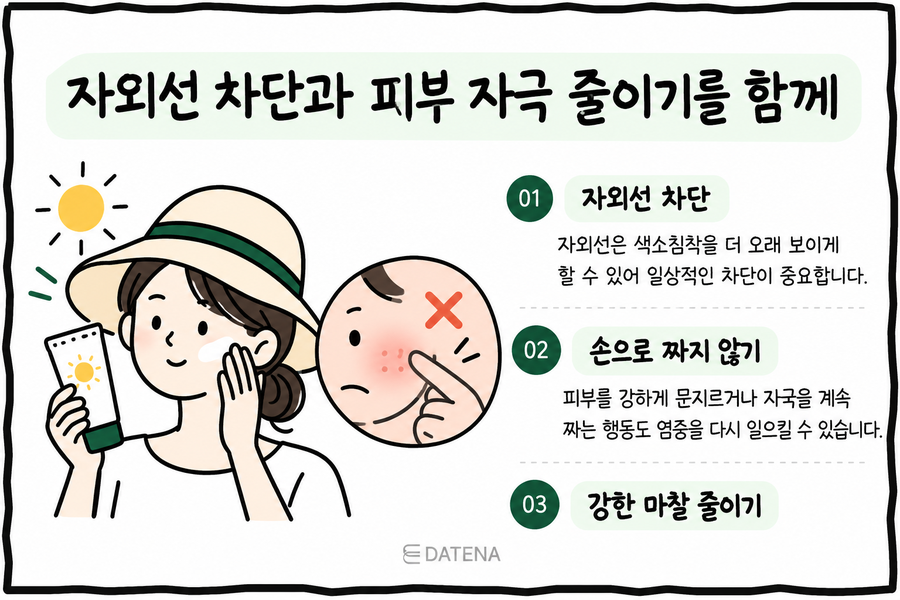
UV exposure can make pigmentation linger longer, so daily sun protection matters.
Scrubbing your skin hard or repeatedly picking at marks can also reignite inflammation.
Even on days when you rely on a hat or shade, using sunscreen consistently helps.
If your skin is irritated, choosing a sunscreen formula that doesn't sting makes it easier to keep up your routine.
Managing pigmentation is less about a single treatment and more about pairing care with everyday habits that reduce irritation.
4. The Risk of Darkening After Laser
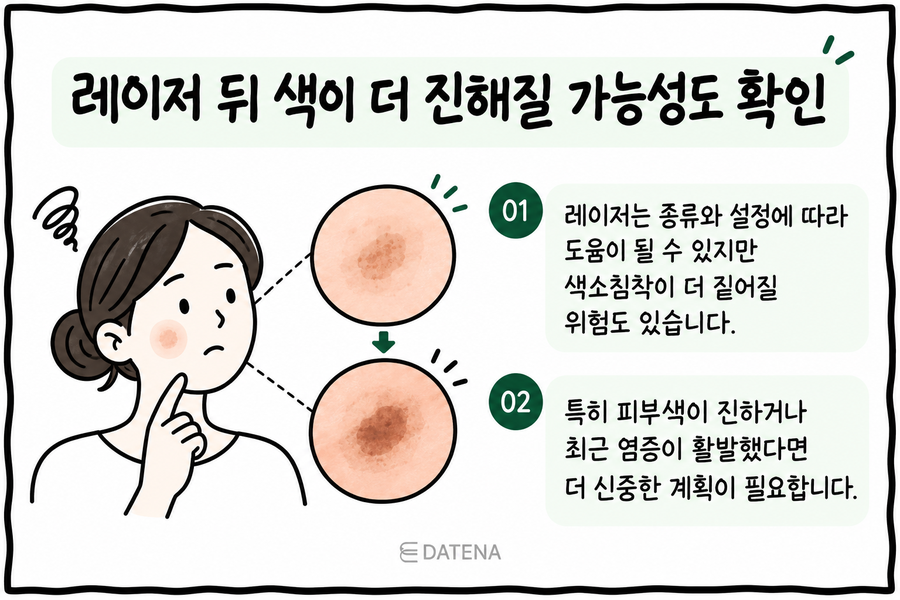
Depending on the type and settings, laser can help, but there is also a risk that pigmentation gets darker.
This calls for more careful planning, especially if you have a deeper skin tone or have had active inflammation recently.
The type of laser and its settings can vary with your skin tone and how deep the pigment sits.
If you've had a lot of sun recently or your inflammation has been severe, you should be given a thorough explanation of the risk of darkening.
Your consultation should also check whether other pigment conditions, such as melasma, are mixed in.
5. Watching for Scabs, Blisters and Pain After Treatment
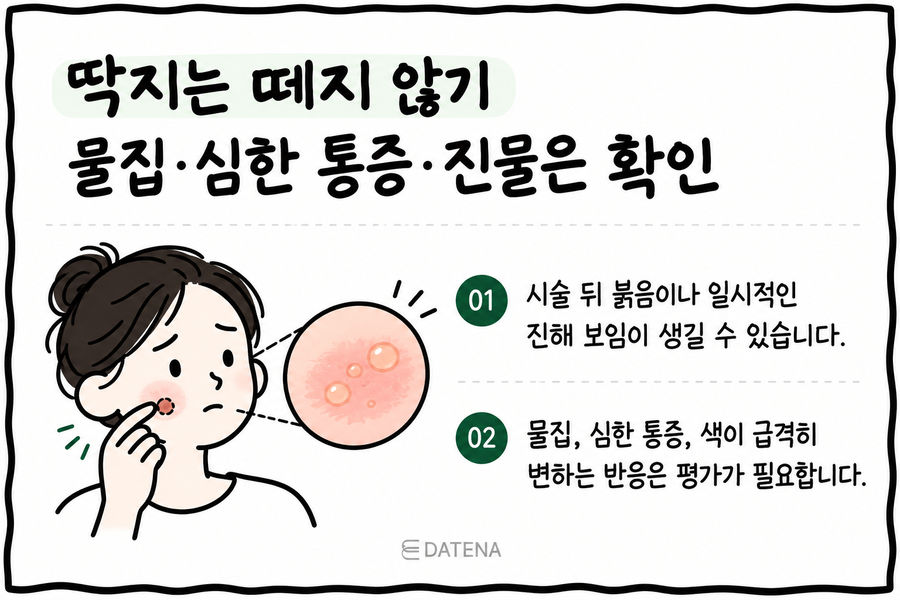
Redness or temporary darkening can appear after treatment.
Blisters, severe pain, or rapid changes in color need to be evaluated.
If a scab forms on the treated area, don't pick it off; let it fall off naturally.
When pain, blisters, or oozing occur, it's important to check whether this is a normal part of healing.
Follow the moisturizing and sun-care instructions from your medical team, and avoid harsh exfoliation on your own.
6. Three Things to Consider When Deciding Treatment Order
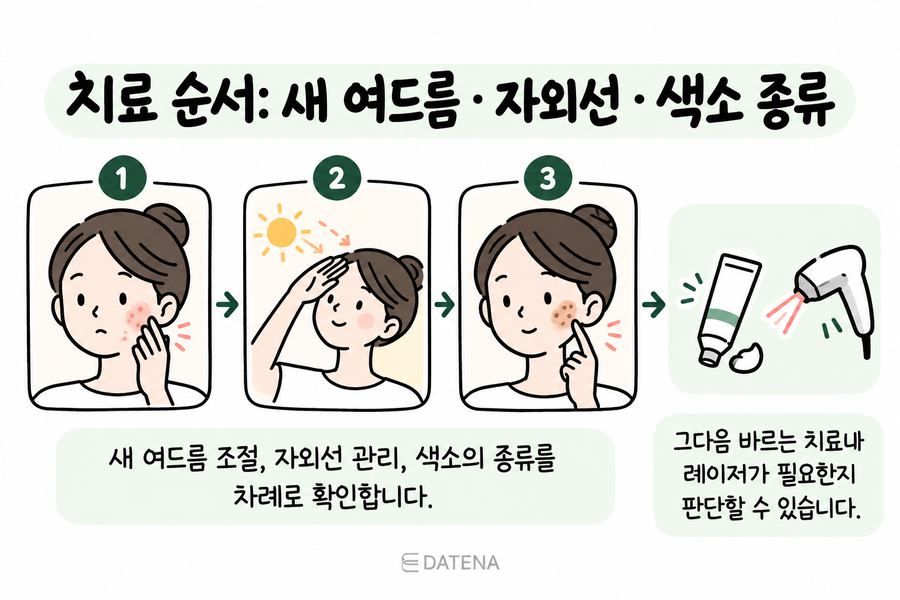
We check, in order, whether new breakouts are under control, how sun exposure is managed, and what type of pigment it is.
From there, we can decide whether topical treatment or laser is needed.
Comparing photos to see how much marks have faded with previous treatment makes it easier to choose the next step.
It's also important to check whether only brown marks remain, or whether there are indented scars or redness as well.
Rather than choosing a treatment based on the color of the marks alone, Datena Clinic also looks at current inflammation and skin sensitivity.
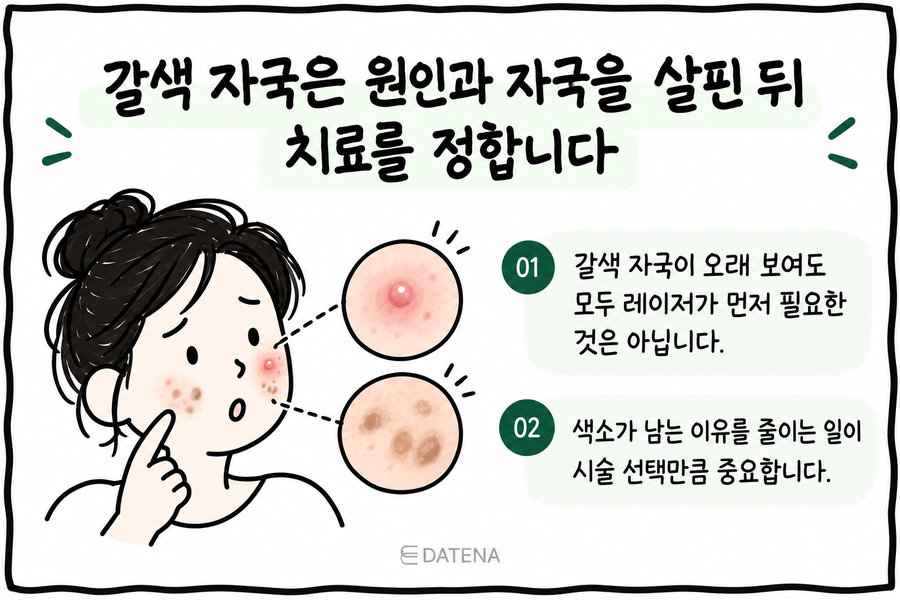
Even if brown marks have lingered a long time, not all of them need laser first.
Before deciding whether laser is needed, take a look at how well your acne control and sun protection are going.
Reducing the reasons pigment lingers is just as important as choosing a treatment.
It's important to reduce new inflammation and skin irritation while weighing the benefits of treatment against the risk of color changes.
You can find details on our treatments and directions on the Datena Clinic official website.