
Ulthera pain: sensations during treatment vs. tenderness afterward
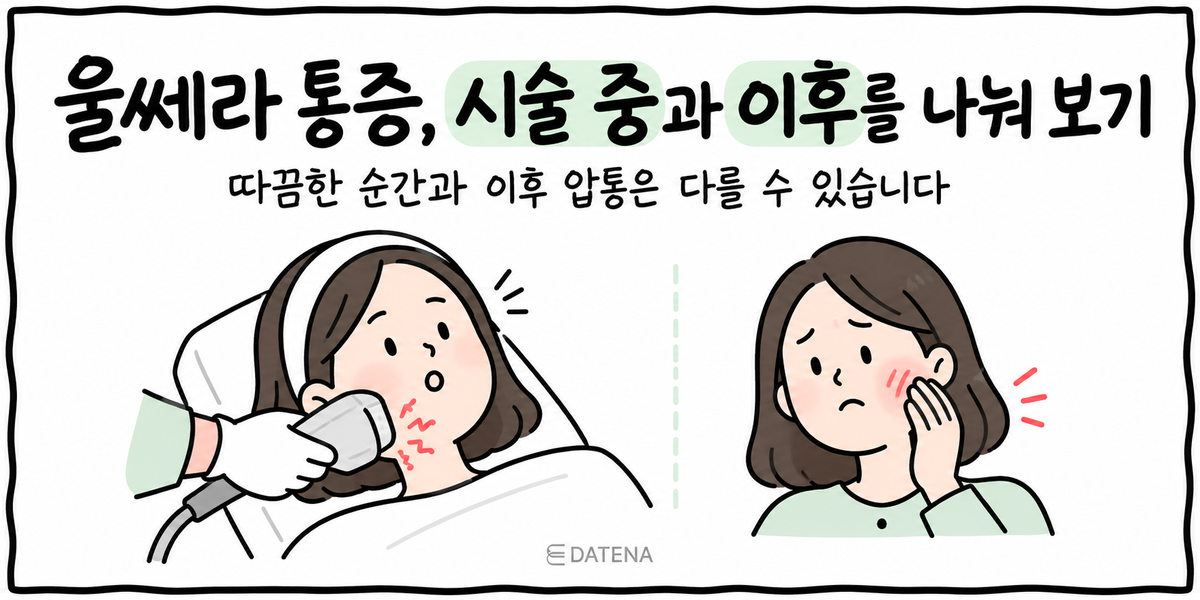
When looking into Ulthera, you may worry about how much it hurts during treatment and whether pain lingers afterward.
We separate sensations during treatment from signals during recovery and explain what to check to stay safe.
Today's summary
Ulthera delivers ultrasound energy.
How much pain you feel can vary by area.
Tenderness and swelling may appear after treatment.
Pain that gets worse or changes in sensation should be checked.
Hello, this is Datena Clinic.
If you search for Ulthera pain, reviews of the same treatment vary wildly, which can be confusing.
That's because facial areas, the tissue beneath the skin, treatment plans, and individual sensitivity all differ.
The idea that more pain means better results doesn't help you understand Ulthera.
What matters more is telling which sensations occur in which areas.
Breaking down when pain occurs helps you better understand how to prepare and which risks to watch for.
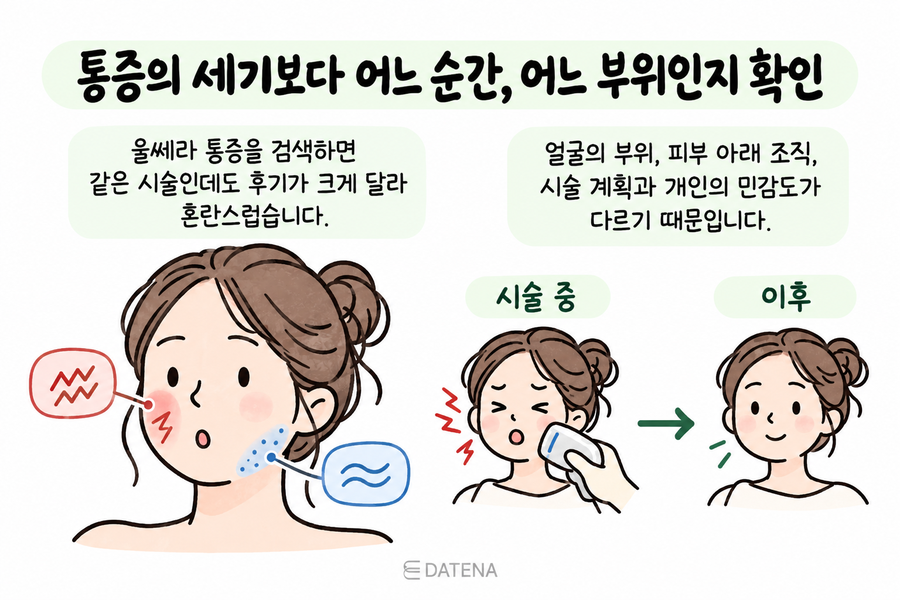
1. What it feels like when ultrasound energy is delivered
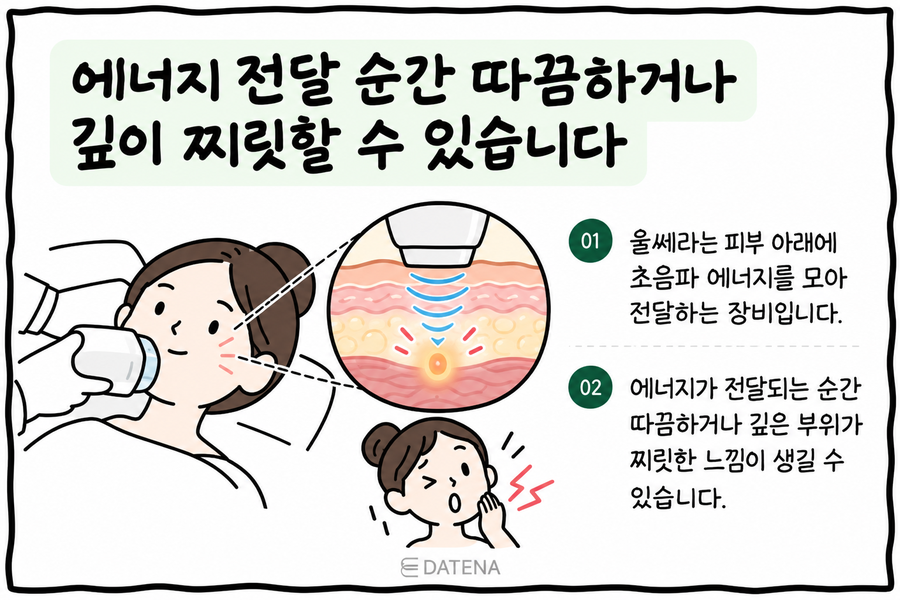
Ulthera is a device that focuses ultrasound energy and delivers it beneath the skin.
As the energy is delivered, you may feel a prickling sensation or a zinging feeling deep under the skin.
The brief sensation you feel while energy is being delivered is different from the tenderness you may feel when pressing on the area after treatment.
With Ulthera, the provider can view the layers beneath the skin on ultrasound imaging and plan the target depth.
That's why you should speak up right away if you feel unexpectedly strong pain at a particular spot during treatment.
Pain alone can't tell you whether the energy was delivered properly.
2. Why pain feels different from area to area
Areas close to bone may feel different from areas with thicker soft tissue.
Your past experience with skin treatments, your pain sensitivity, and whether there's any inflammation also play a role.
The vibrating sensation near the jawbone may not feel the same as the pressure you feel in the soft tissue of the cheeks.
Even on the same face, different areas can feel different.
So it's hard to apply someone else's pain rating directly to your own treatment.
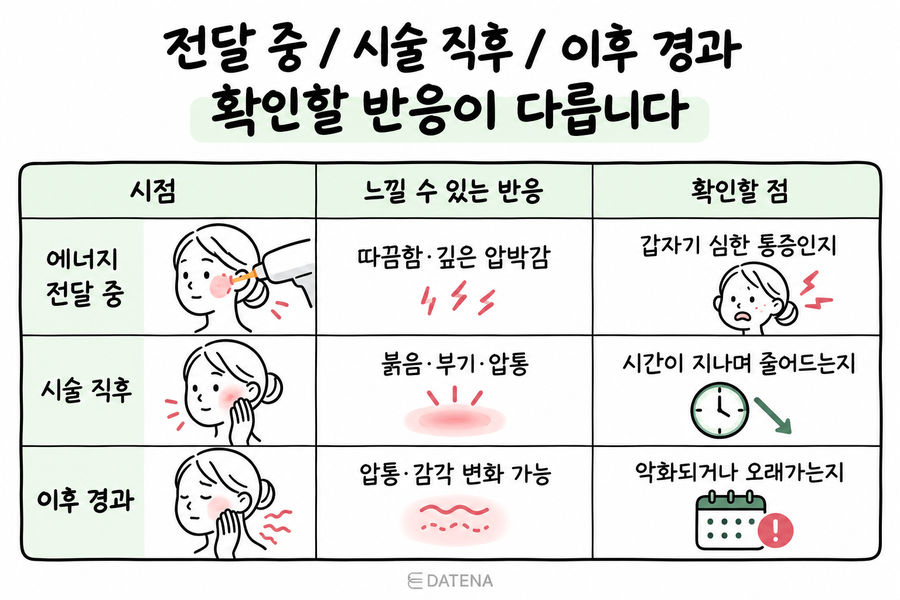
Timing | What you may feel | What to watch for |
|---|---|---|
During energy delivery | Prickling, deep pressure | Whether pain suddenly becomes severe |
Right after treatment | Redness, swelling, tenderness | Whether it eases over time |
In the following days | Possible tenderness or changes in sensation | Whether it worsens or lingers |
3. Preparing for pain and communicating before treatment
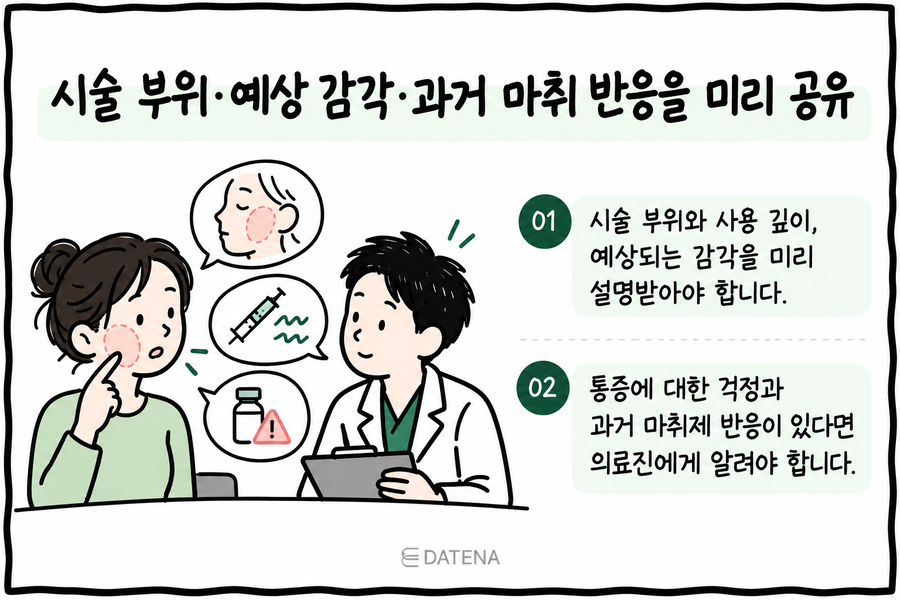
You should be told in advance which areas will be treated, the depths used, and what sensations to expect.
If you're worried about pain or have had reactions to anesthetics in the past, let the medical team know.
Rather than only asking about pain relief, ask first for an explanation of the treatment area and the sensations to expect.
If you've reacted to anesthesia before, it also helps to share the type and the symptoms in detail.
It's safer to tell us right away what kind of discomfort you're feeling during treatment than to force yourself to tough it out.
4. Tenderness and changes in sensation after treatment
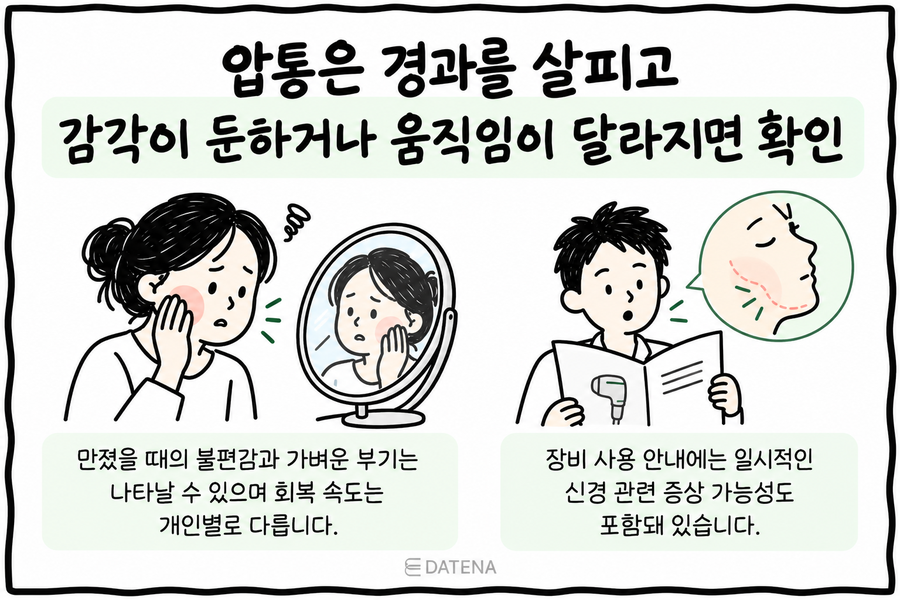
Discomfort when touched and mild swelling can occur, and recovery speed varies from person to person.
The device's instructions for use also note the possibility of temporary nerve-related symptoms.
After treatment, it helps to note whether one side hurts noticeably more and whether the discomfort is at the skin surface or deeper down.
Temporary changes in sensation are possible, but if symptoms persist or get worse, they shouldn't be treated as part of normal recovery.
If you notice numbness or anything unusual in how your face moves, see a doctor rather than waiting it out.
5. Also check skin color and facial movement
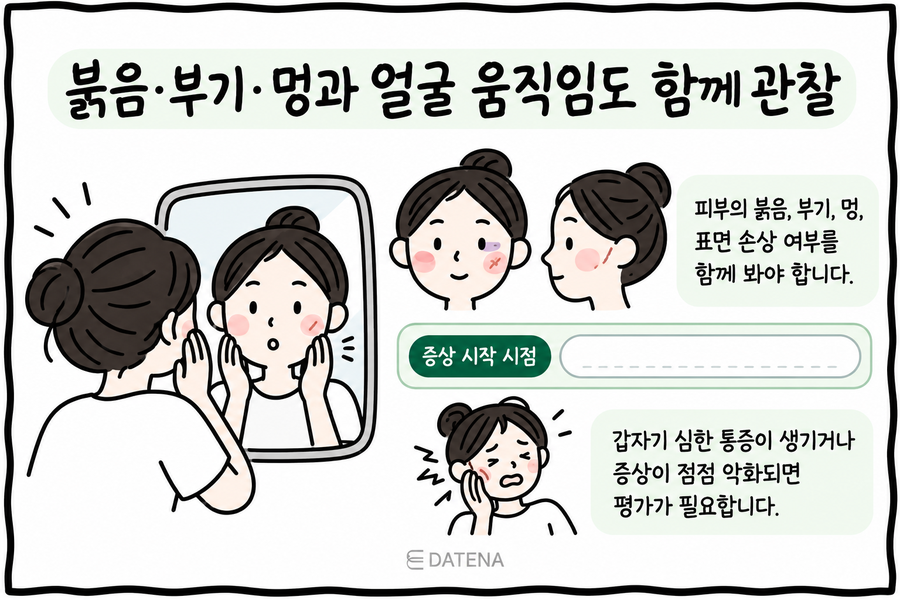
Look for redness, swelling, bruising, and any damage to the skin surface.
Sudden severe pain or symptoms that keep getting worse need to be evaluated.
Changes in sensation may bother you more than the redness you see in the mirror.
If anything feels different from usual when you move your face, tell us right away when it started and where you feel it.
Letting us know about past treatments and any skin conditions ahead of time also helps us plan safely.
6. Three questions to prepare before your consultation
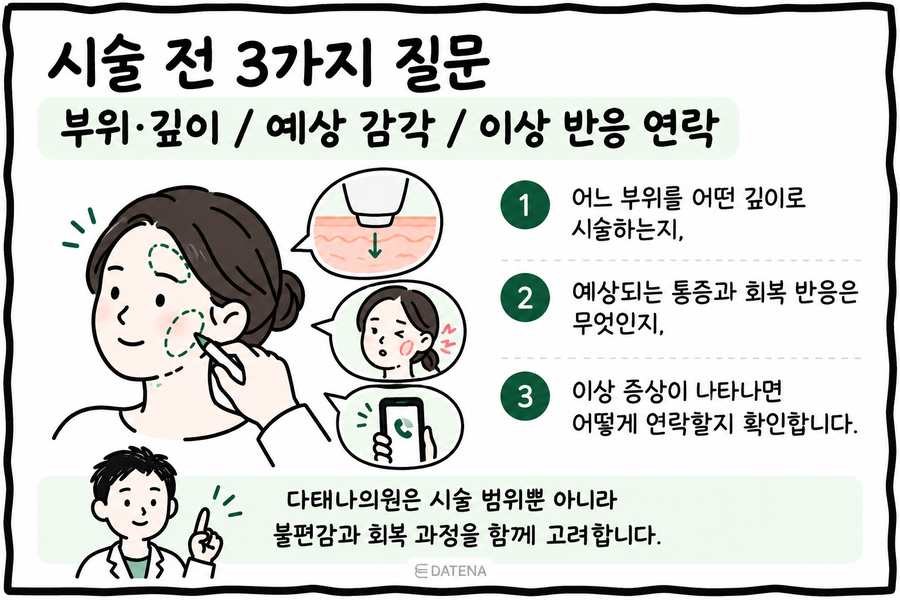
Ask which areas will be treated and at what depth, what pain and recovery reactions to expect, and how to reach us if any unusual symptoms appear.
At Datena Clinic, we consider not only the treatment area but also your comfort and the recovery process.
If you tell the medical team up front that you're worried about pain, you can also agree on how to communicate during the procedure.
Deciding in advance which sensations should prompt a pause and a check can also ease anxiety during the procedure.
Rather than treating pain as a measure of results, it's better to check whether the plan fits your current skin condition.
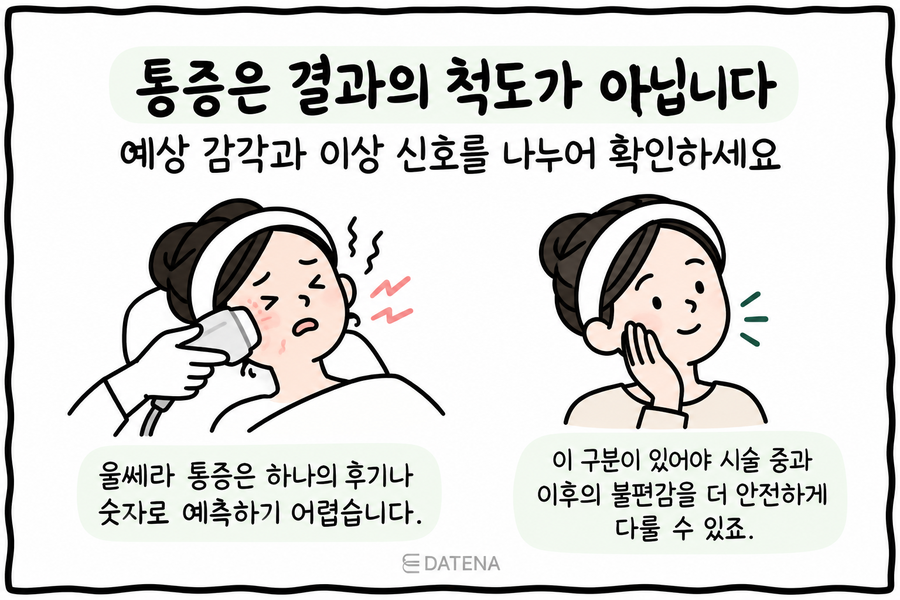
Ulthera pain is hard to predict from a single review or a number.
Ulthera pain varies from person to person, but you can separate the sensations you can expect from the reactions that need to be checked.
Making this distinction lets you handle discomfort during and after the procedure more safely.
Explanation before the procedure, communication during it, and monitoring of symptoms afterward should all go hand in hand.
You can find details on our treatments and directions on the Datena Clinic official website.