
Laser for facial flushing: why you should start by tracking when your face turns red
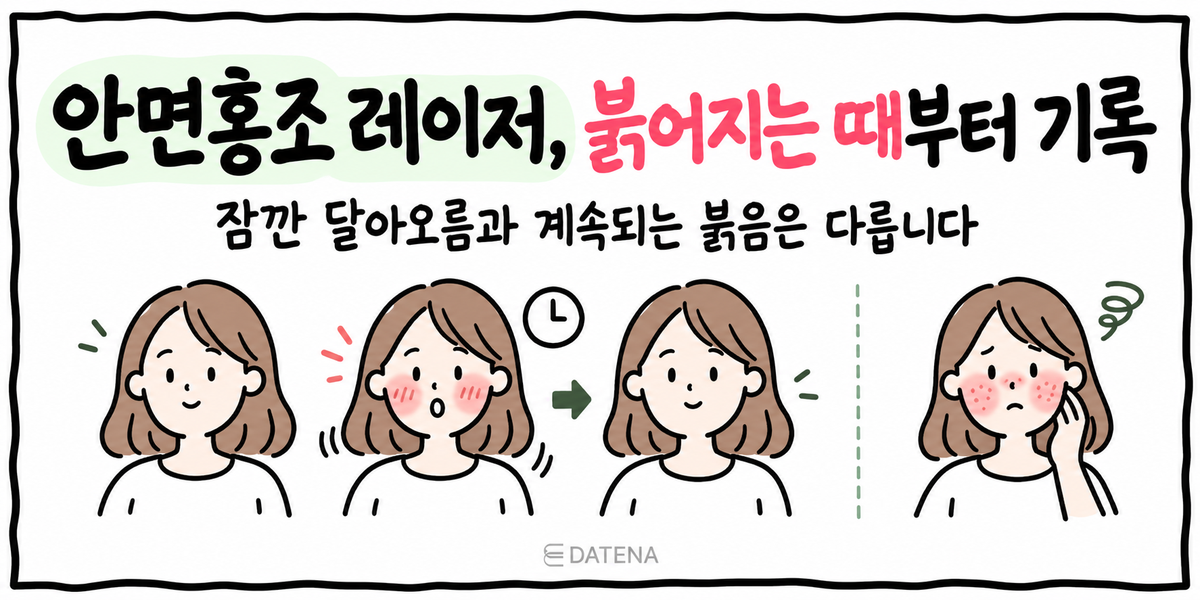
If your face often flushes or the redness lingers, you may start wondering whether you need a laser.
We'll sort out the pattern of your flushing and what makes it worse, and look at where a laser can actually help.
Today's summary
Temporary flushing and persistent redness are looked at differently.
Rosacea may be part of the picture.
Laser can help with visible blood vessels.
Managing triggers matters too.
Hello, this is Datena Clinic.
What people call facial flushing actually covers two things: the face suddenly heating up and then calming down, and redness that stays visible.
These two can have different everyday triggers and different treatment goals.
Even within facial flushing, a face that heats up in the moment and a face that stays red all day need to be assessed differently.
Which part of the face turns red can also be a clue.
Before a laser consultation, it helps to first look at when the redness happens and what other symptoms come with it.
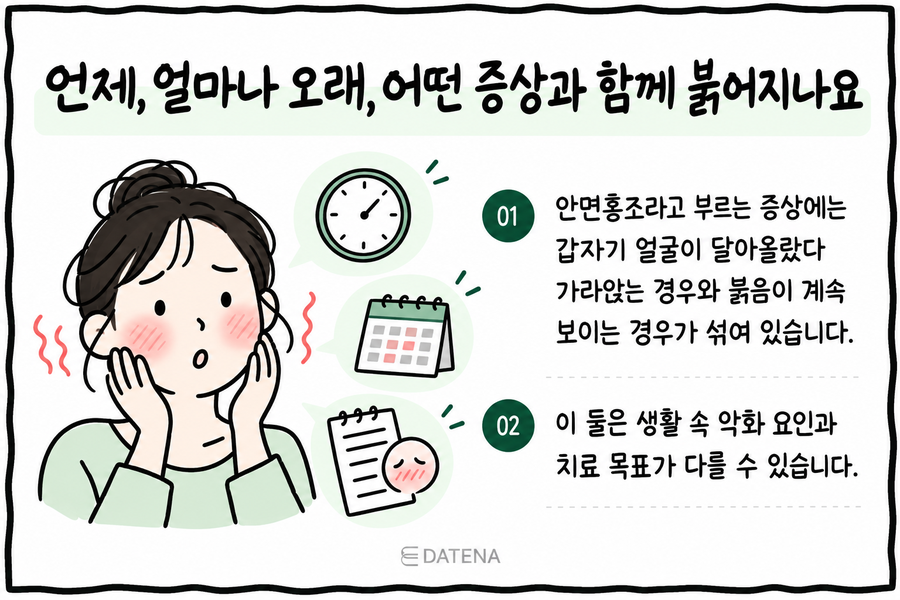
1. Temporary flushing vs. persistent redness
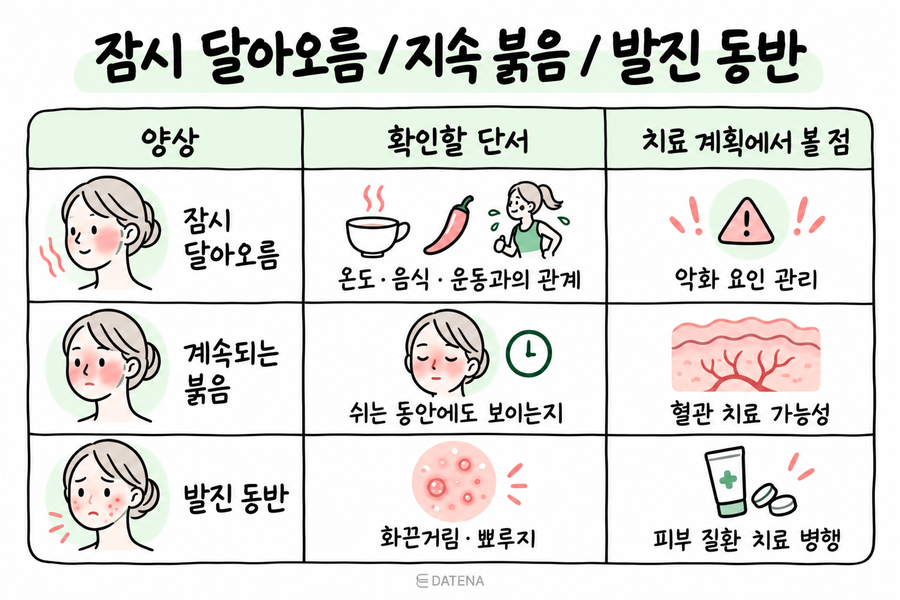
We check whether you turn red briefly after exercise, heat, or hot drinks.
It's just as important whether redness lingers even at rest, or whether small visible veins show.
Notice whether the redness centers on your nose and both cheeks, or spreads to your forehead and chin.
It's also a good idea to tell us if you have dry or bloodshot eyes along with it.
If burning, stinging, or acne-like bumps come with it, conditions such as rosacea need to be considered.
Pattern | Clues to check | What to consider in the treatment plan |
|---|---|---|
Brief flushing | Link to temperature, food and exercise | Managing triggers |
Persistent redness | Whether it shows even at rest | Possible candidate for vascular treatment |
Accompanied by a rash | Burning and breakouts | Treating the underlying skin condition alongside |
2. Visible blood vessels and the role of lasers
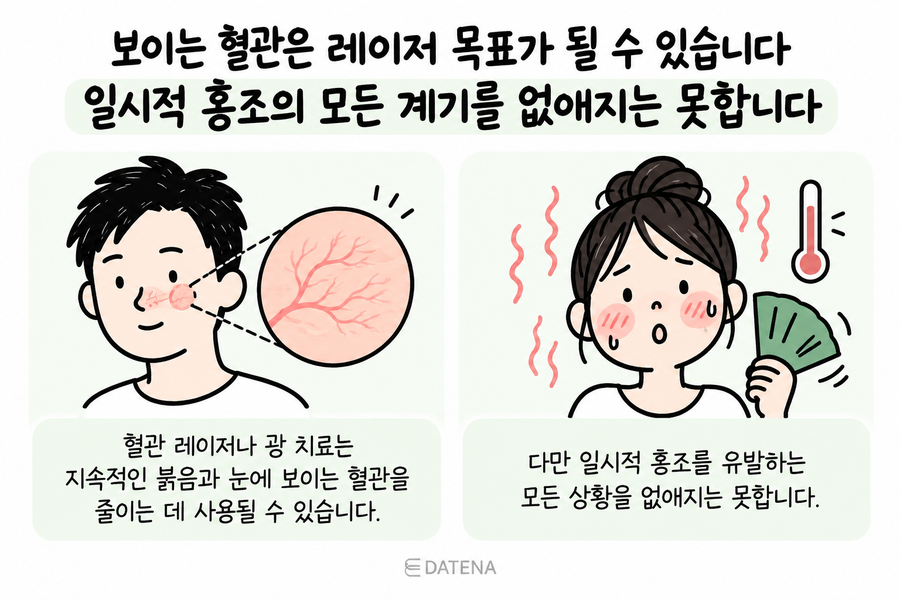
Vascular lasers and light-based treatments can be used to reduce persistent redness and visible blood vessels.
That said, they can't eliminate every situation that triggers temporary flushing.
With visible broken capillaries, the target for laser treatment is relatively clear.
On the other hand, if your face flushes briefly every time you walk into a hot room, you'll also need to manage the everyday triggers that make it worse.
If you have rosacea, you may need a combination of medication, skincare, and trigger management.
3. What to check first in sensitive skin
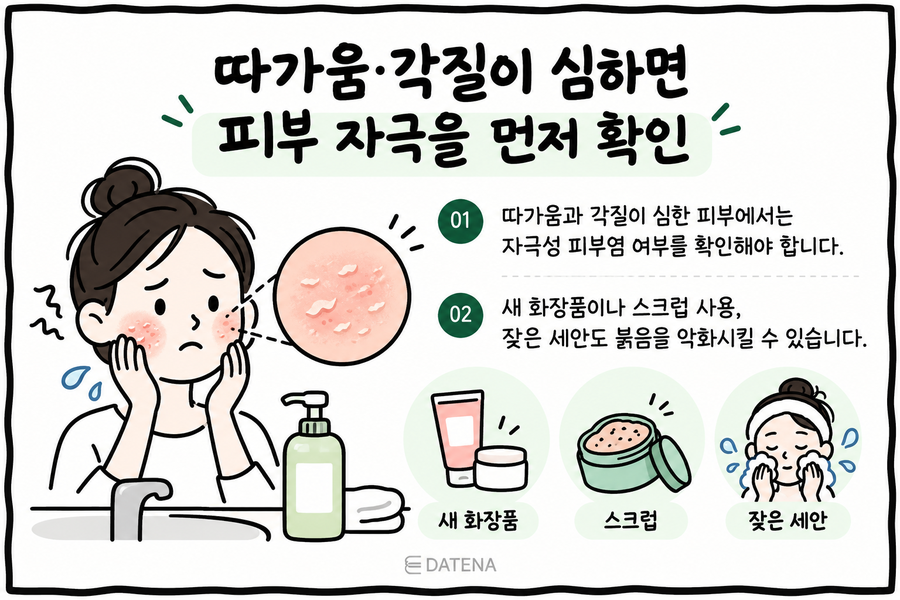
If your skin stings and flakes a lot, it's important to check for irritant dermatitis.
New cosmetics, scrubs, or washing your face too often can also make redness worse.
If your skin stings badly right after cleansing, take a look at the cleanser and exfoliating products you're using.
For skin that has become sensitized, simply adjusting your skincare routine can give a clearer picture of its condition before any treatment.
Planning laser treatment alone while inflammation is still uncontrolled can lead to more discomfort.
4. Watch for swelling and color changes after treatment
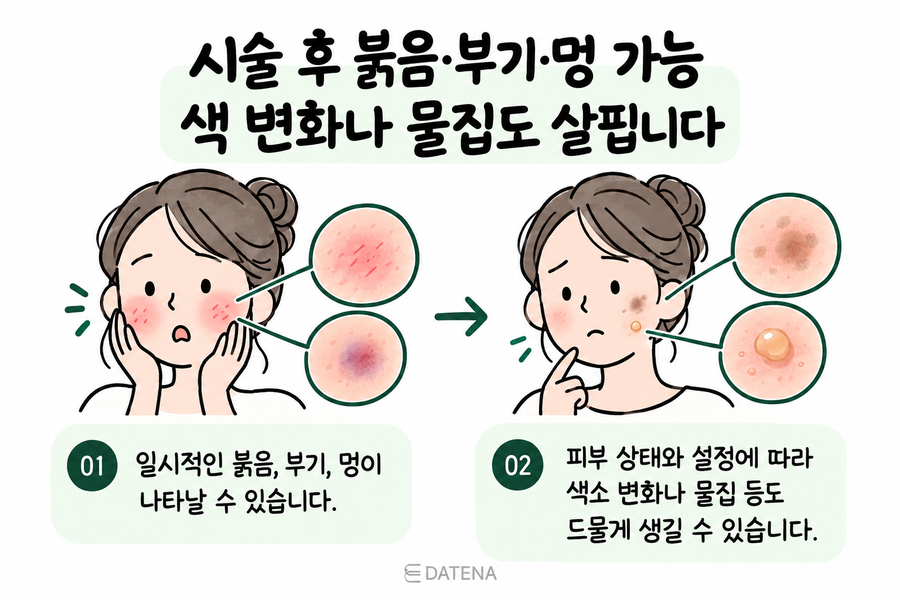
Temporary redness, swelling, and bruising can occur.
Depending on your skin condition and the settings used, pigment changes or blistering may also occur in rare cases.
If your skin color has ever changed after a previous laser treatment, let us know before your procedure.
Strong sun can raise the risk of color changes and make recovery more uncomfortable, so check how to protect your skin ahead of time.
After treatment, make sure you know how to limit UV exposure, excess heat, and friction.
5. Keep a record of when redness gets worse
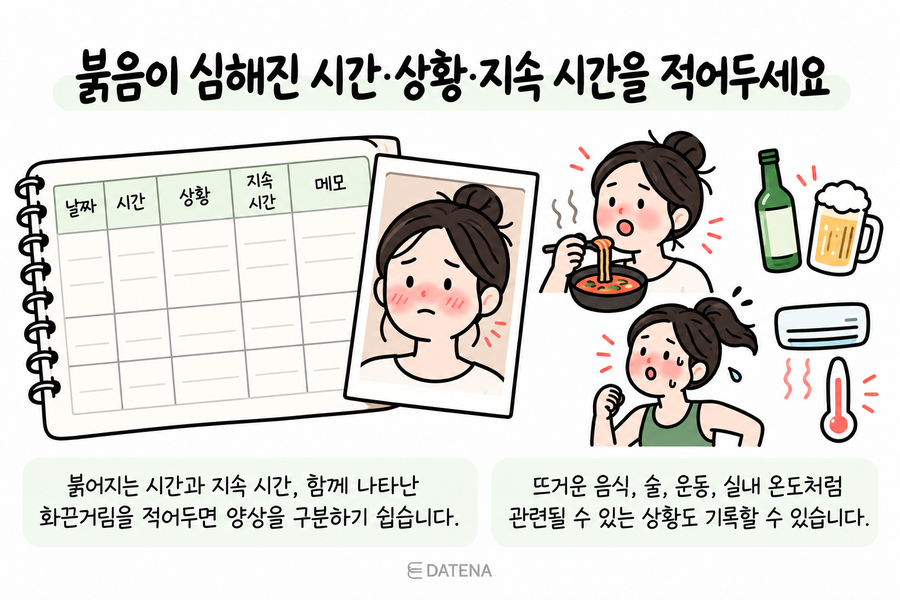
Noting when the redness appears, how long it lasts, and any burning that comes with it makes the pattern easier to identify.
You can also record situations that may be related, such as hot food, alcohol, exercise, or indoor temperature.
Writing down when and where your redness flares for about a week makes it easier to spot a pattern.
Taking photos on days when the redness is bad lets you show what it really looks like, even if it has calmed down by the time you're in the exam room.
That said, rather than avoiding every possible trigger no matter what, it's better to figure out which ones actually affect you.
6. Why you should mention eye symptoms too
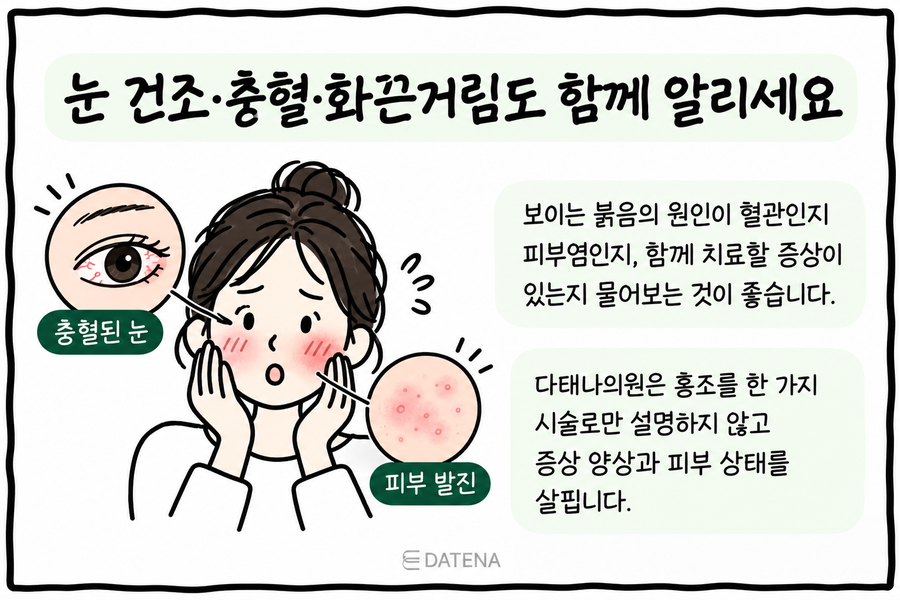
It's a good idea to ask whether the visible redness comes from blood vessels or dermatitis, and whether there are other symptoms that should be treated at the same time.
At Datena Clinic, we don't reduce facial redness to a single procedure. We look at your symptom pattern and overall skin condition.
Please tell us when the redness on your face started, along with any eye symptoms, burning, or rashes.
The number of visible blood vessels alone can't explain the cause of every case of facial redness.
The number of sessions needed and how you respond will vary from person to person.
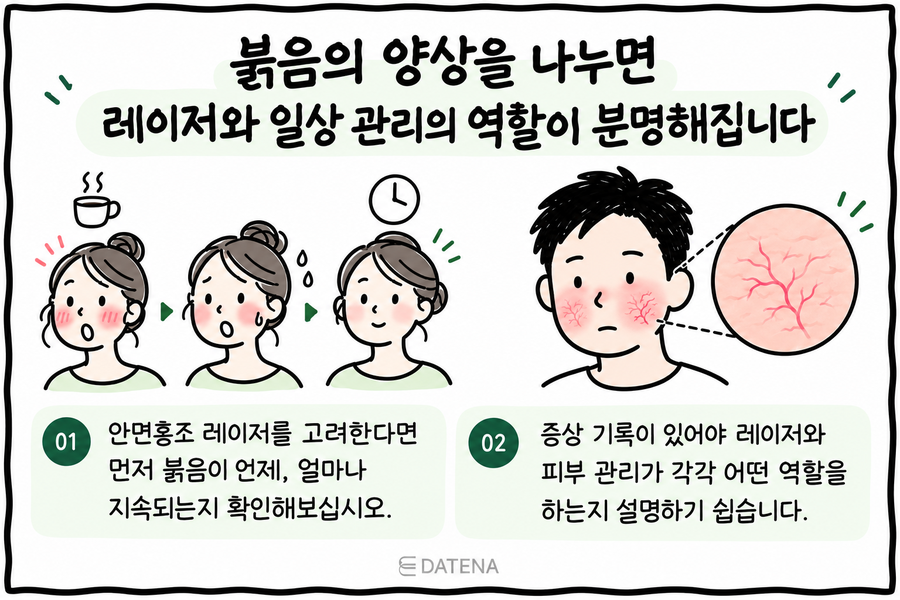
If you're considering laser treatment for facial redness, start by checking when the redness appears and how long it lasts.
Treating facial redness may involve more than a plan that targets the red color alone.
A record of your symptoms makes it easier to explain what role laser treatment and skincare will each play.
Separating out the causes also makes the roles of laser treatment and daily care clearer.
You can find details on our treatments and directions on the Datena Clinic official website.