
Jamsil Dermatology: Why Acne Keeps Appearing in the Same Spots on Your Face [Specialty: Dermatology]

Today's summary
If acne keeps coming back in the same area, oil production, irritation, and lifestyle habits are likely all playing a part
Breakouts on the forehead, cheeks and jaw have different causes, so each area needs its own approach
Touching or forcefully squeezing pimples can push inflammation deeper and leave marks
If breakouts keep coming back despite your efforts, having your skin checked can help
Hello, this is Datena Clinic.
Some people find that acne around the jaw or cheeks seems to calm down, only to flare up again in the same spot a few days later.
It's easy to brush it off at first as a one-off breakout from feeling run down, but if inflammation keeps showing up in the same areas, it's worth looking at several factors together, including oil production and daily habits.
In particular, if you keep switching skincare products or squeezing pimples by hand and the acne still won't go away, it's a good idea to check whether your current routine actually suits your skin.
Today, we'll look at why acne keeps returning in specific areas and when it might be worth seeing a doctor.
1. Why acne keeps coming back in the same spot
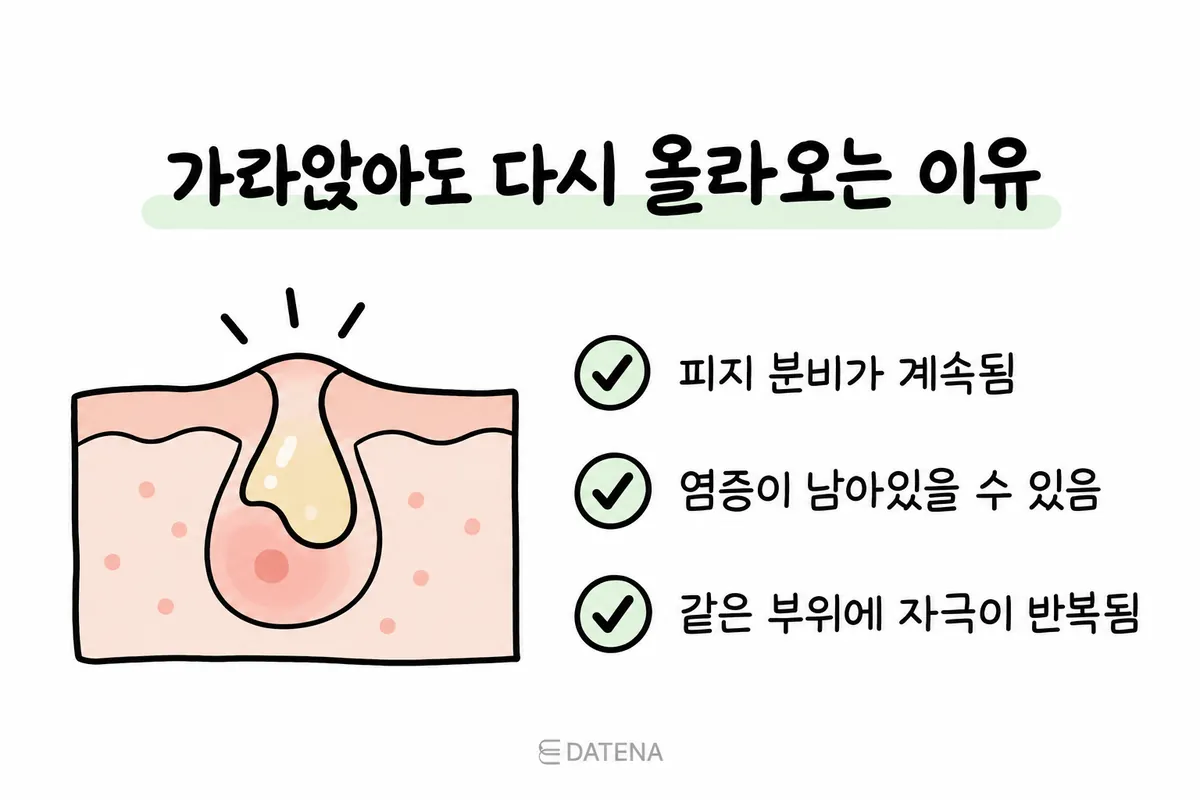
Recurring acne often isn't a single bout of inflammation. It tends to come back when the oil production and irritants in that area stay the same.
Even if a pimple has calmed down and looks fine on the surface, it can start up again in the same place if the inflammation deep inside the pore hasn't fully cleared.
When oil production, lingering inflammation and repeated irritation to the area all overlap, you end up with breakouts that keep appearing in one particular spot.
If it's not just one or two breakouts but something that's been recurring in the same spot for weeks or months, it's hard to chalk it up to simply feeling run down.
2. Why the causes differ for the forehead, cheeks and jaw
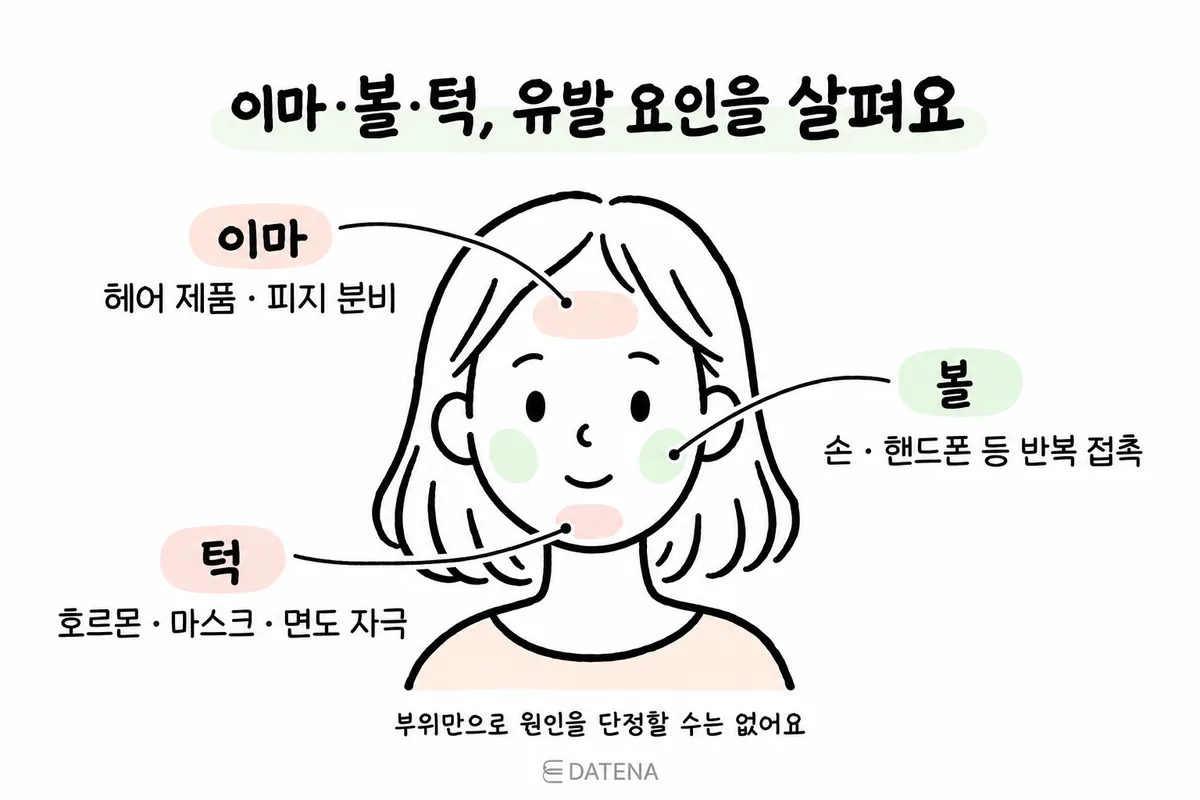
The forehead has well-developed oil glands, so it tends to be oily, and bangs or hair products that frequently touch it often clog the pores.
On the cheeks, how clean everyday objects like your phone, pillow and hands are, and how often they touch your face, often plays a role.
Jaw acne tends to be more closely linked to hormonal changes than other areas, so it easily becomes a recurring problem when irritation from wearing masks or shaving is added on top.
In women especially, breakouts around the jaw and mouth have been reported to follow the menstrual cycle.
Because the main cause differs from area to area, using the same routine on your whole face can make it hard to stop breakouts from coming back.
3. Problems caused by touching or squeezing pimples
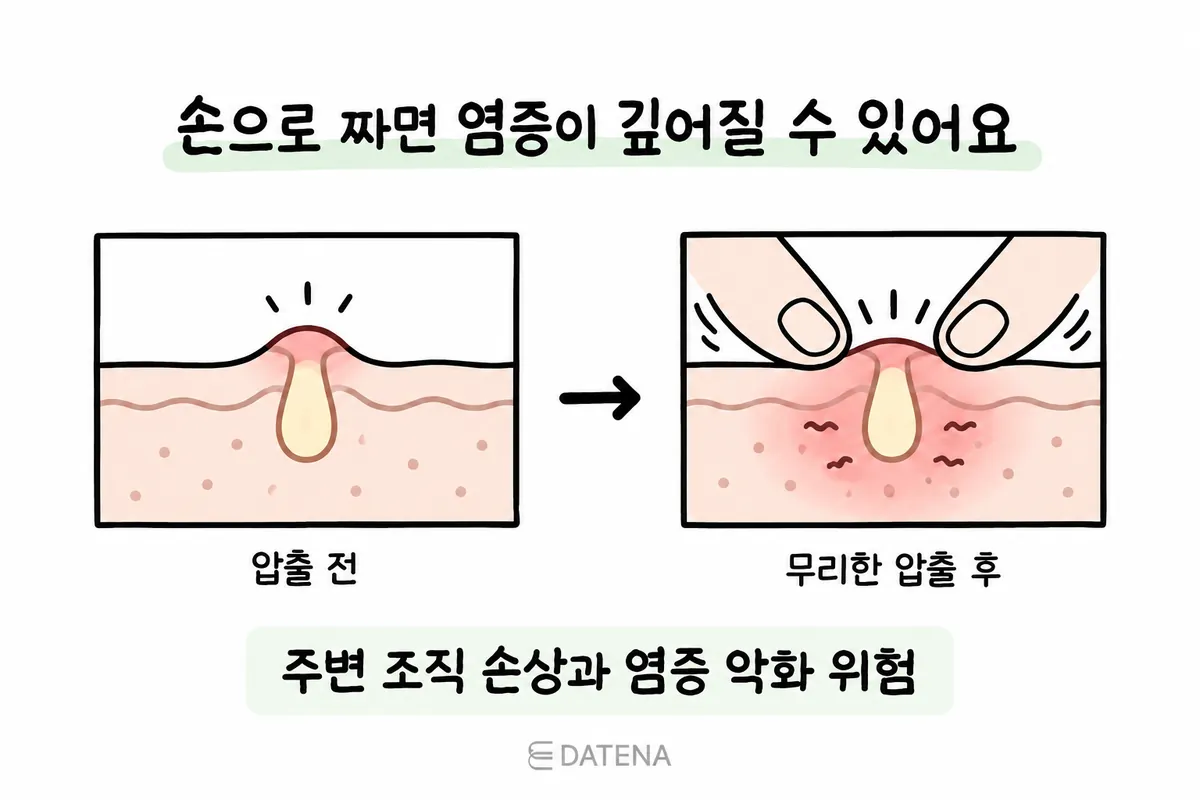
If you keep popping pimples yourself, pressing and squeezing without proper hygiene can spread the inflammation into deeper layers of the skin.
Even if the pimple on the surface seems to be gone, inflammation often starts again in the same spot if the surrounding tissue is still irritated.
The habit of frequently touching your face can also carry outside bacteria to your skin, so the more often an area breaks out, the more important it is to keep your hands off it.
4. Why recurring inflammation can lead to scarring
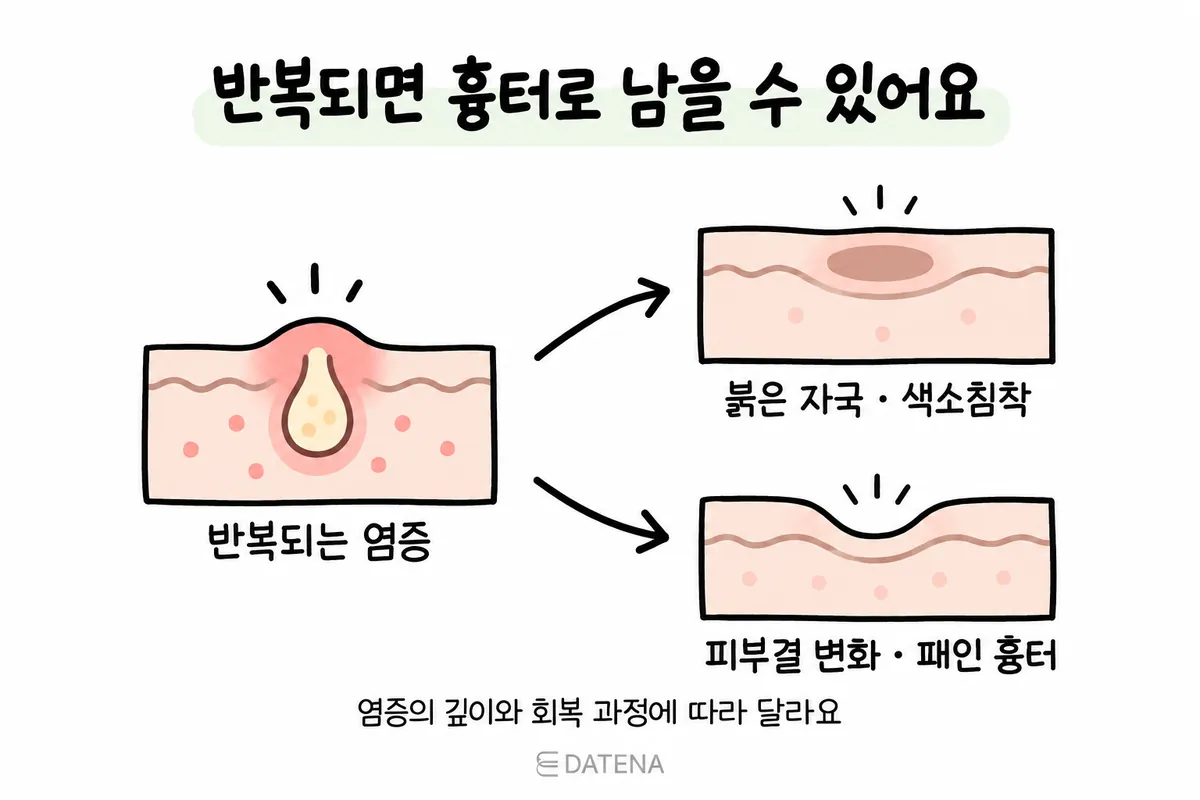
When acne inflammation spreads beyond the epidermis into the dermis, the healing process can produce excess pigment or regenerate tissue unevenly.
As this keeps happening, red marks can linger for a long time, and the chance of acne scars that leave the skin surface uneven increases.
It's good to know that inflammation recurring in the same area raises the risk of scarring more than a single episode does.
That's why getting to the bottom of the cause while breakouts are recurring also helps prevent scarring later on.
5. What to check when lifestyle changes alone aren't enough

Sometimes changing how you wash your face or switching products is enough, but if breakouts keep returning in the same spot after several weeks of care, it's worth reassessing your approach.
When internal factors like lack of sleep, stress and diet are also involved, surface-level care alone may only go so far.
In particular, if you keep getting hard, pus-filled breakouts, the inflammation often needs to be looked at in deeper layers than what's visible on the surface.
6. What a consultation can reveal and how care is planned
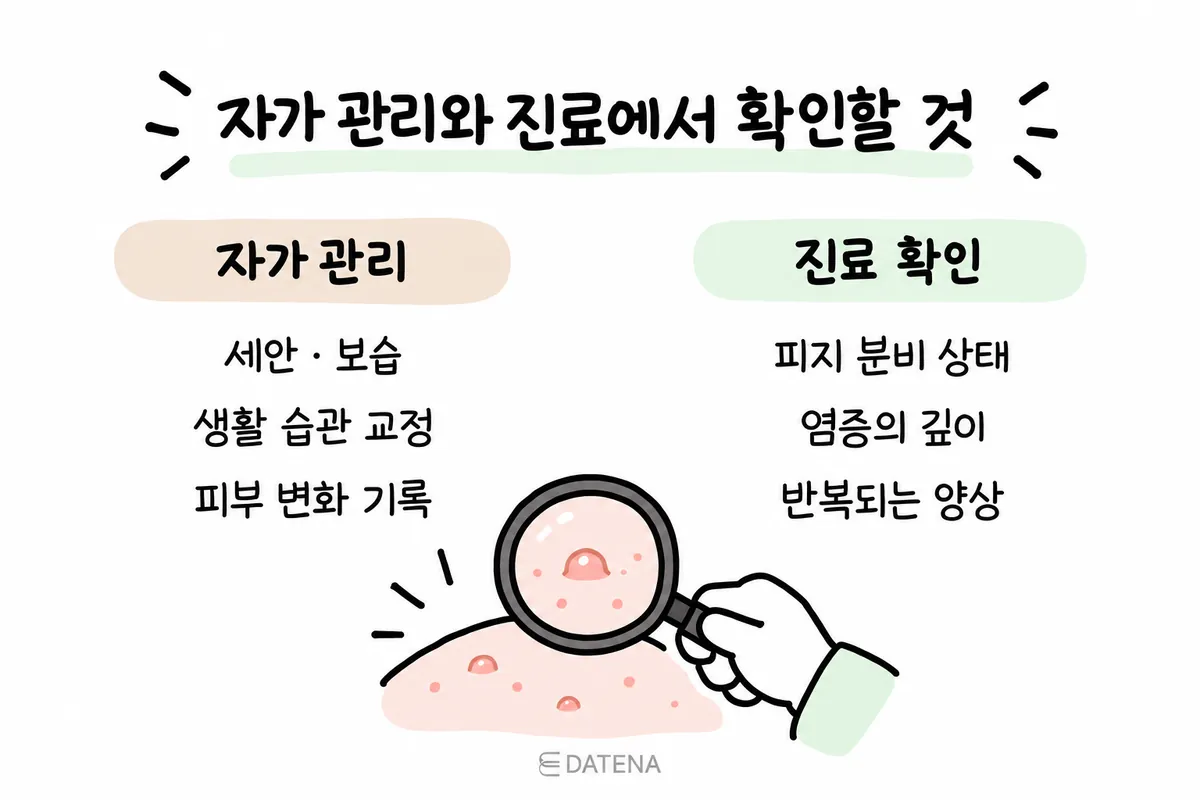
At a dermatology consultation, we look at your current oil production, how deep the inflammation goes and the pattern of where breakouts recur, so we can decide on a care plan that suits you.
Rather than constantly changing your routine on your own, identifying why breakouts keep returning and caring for your skin accordingly can make a difference in how quickly it recovers.
Checking things before they turn into scars, in particular, can help make later care much easier.
Type | Characteristics | What to check |
|---|---|---|
Self-care | Care focused on cleansing, moisturizing and adjusting daily habits | It helps to keep your own notes on whether breakouts recur and how the affected areas change |
Clinical check | We look at oil production, how deep the inflammation goes and the pattern of recurrence together | Suited to cases where breakouts have recurred for a long time or the inflammation is getting deeper |
Wrapping up
Why acne keeps coming back varies from person to person, so it's hard to pin it on a single cause.
If breakouts keep returning to the same area for a long time despite your care, having your current skin condition checked can help.
When choosing a clinic, look for one that takes the time to understand why your acne keeps recurring and what state your skin is in, rather than recommending a treatment based on symptoms alone.
At Datena Clinic, the doctor consults with you personally, and we place great importance on understanding both how much the issue bothers you and your current skin condition.
Medically reviewed by: Dr. Kang Dong-hyun (Datena Clinic) · Meet our doctors: /about.html