
Facial Acne Scars: Why Do They Look So Widespread?
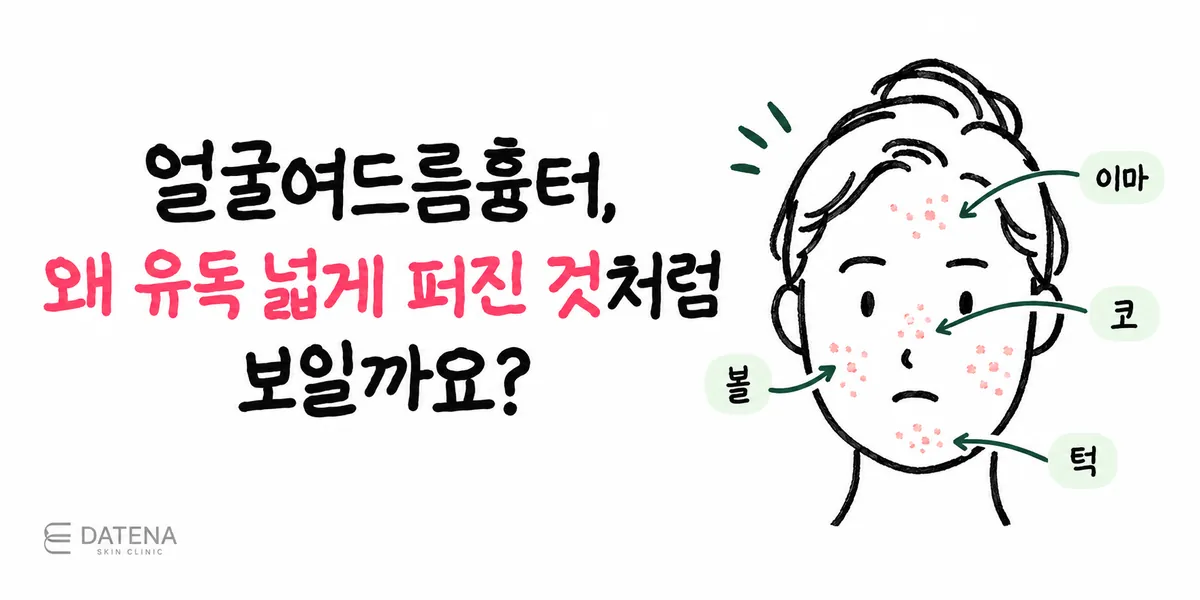
Today's summary
The face has lots of oil glands, which makes it prone to both acne and scarring
Oil production and skin thickness vary by area, so scars look different from area to area
When many small scars cluster together, they can look more widespread than they really are
Depending on how many scars you have and where, the plan may focus on specific areas or the whole face
"I have scars all over my face. Where should I start?"
"If I treat just one area, will the rest stay the same?"
I hear questions like these often.
Hello, this is Datena Clinic.
The face has more oil glands than other parts of the body, so acne develops easily there, and so do the scars it leaves behind.
That said, even within the same face, oil production and skin thickness differ from area to area, so the shape and severity of scarring often vary by area.
Today, let's walk through these differences by area, step by step, and what's worth checking when you plan treatment.
1. Why Acne Scars Form So Easily on the Face
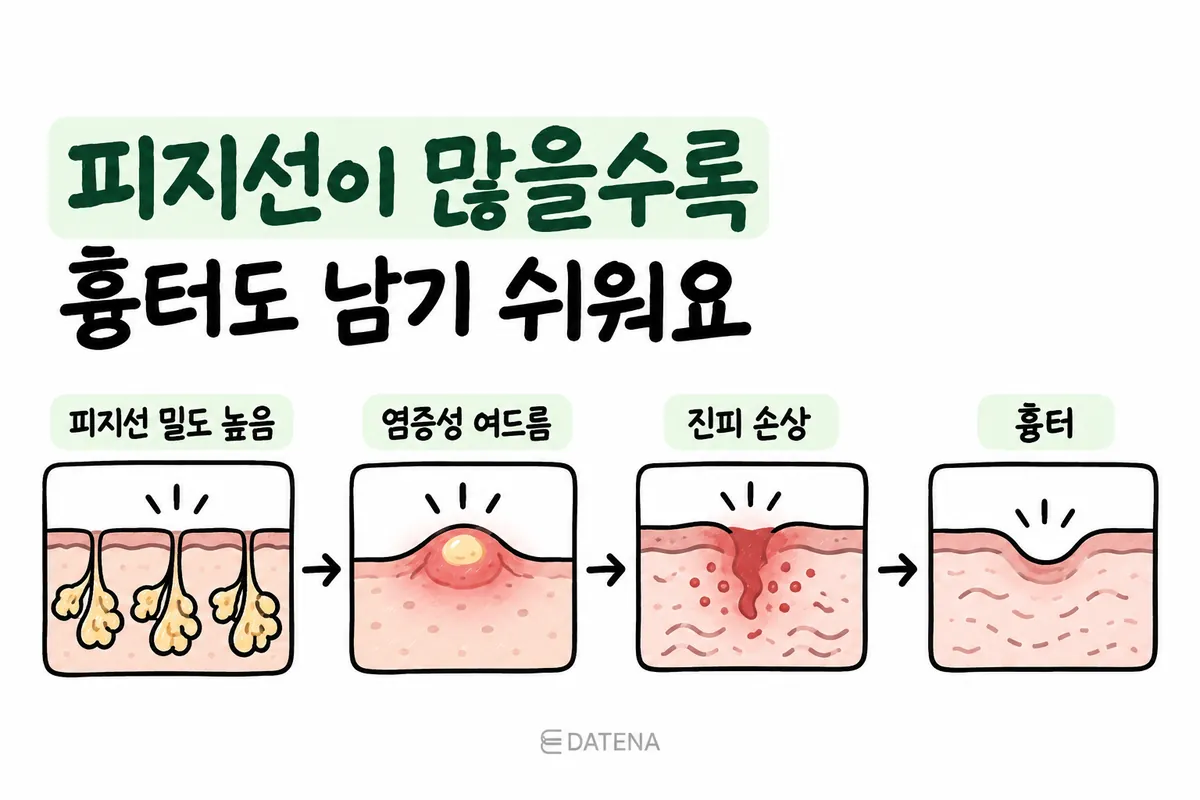
The face tends to have more oil glands per unit area than other parts of the body.
More oil glands means more active oil production, which creates an environment where inflammatory acne easily develops inside the hair follicles.
When inflammation spreads past the epidermis into the dermis, collagen tissue gets damaged, and wherever that damage doesn't fully heal, a scar is left behind.
Because the face has such a high density of oil glands, acne occurs more often there, and the chance of scarring rises along with it.
2. Scar Patterns Differ by Area
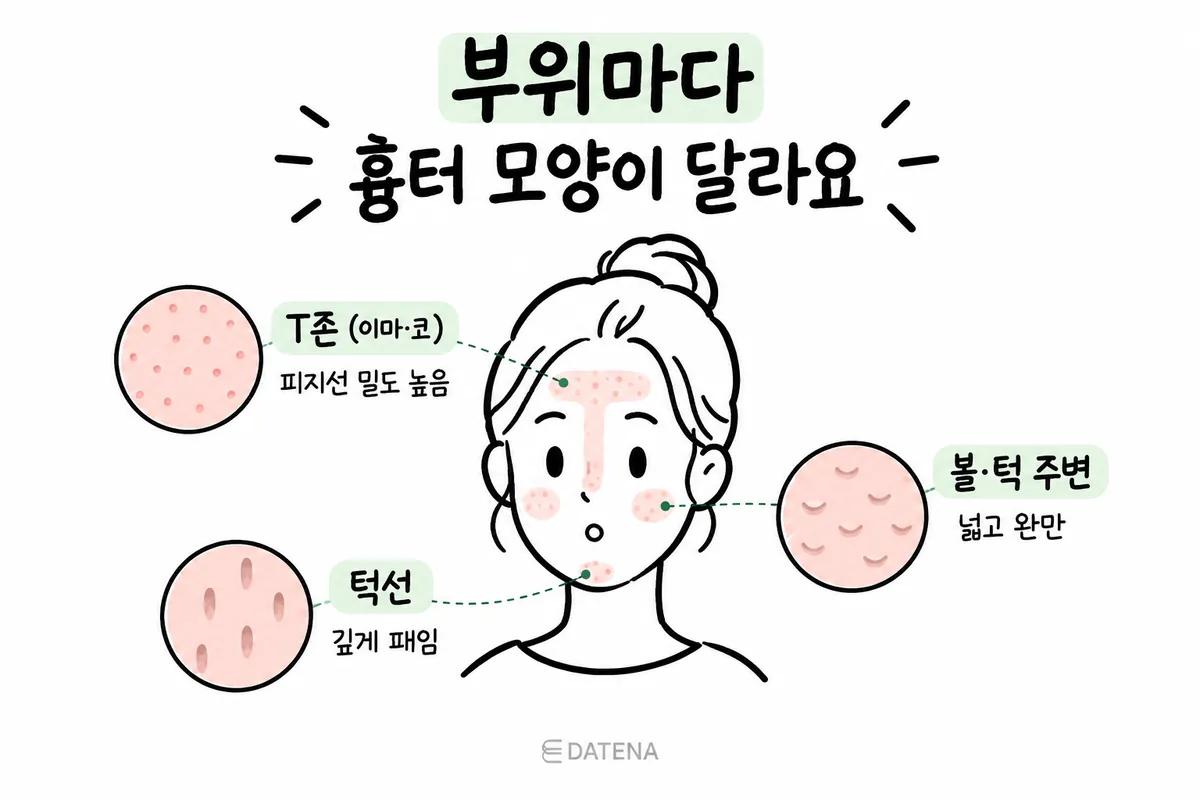
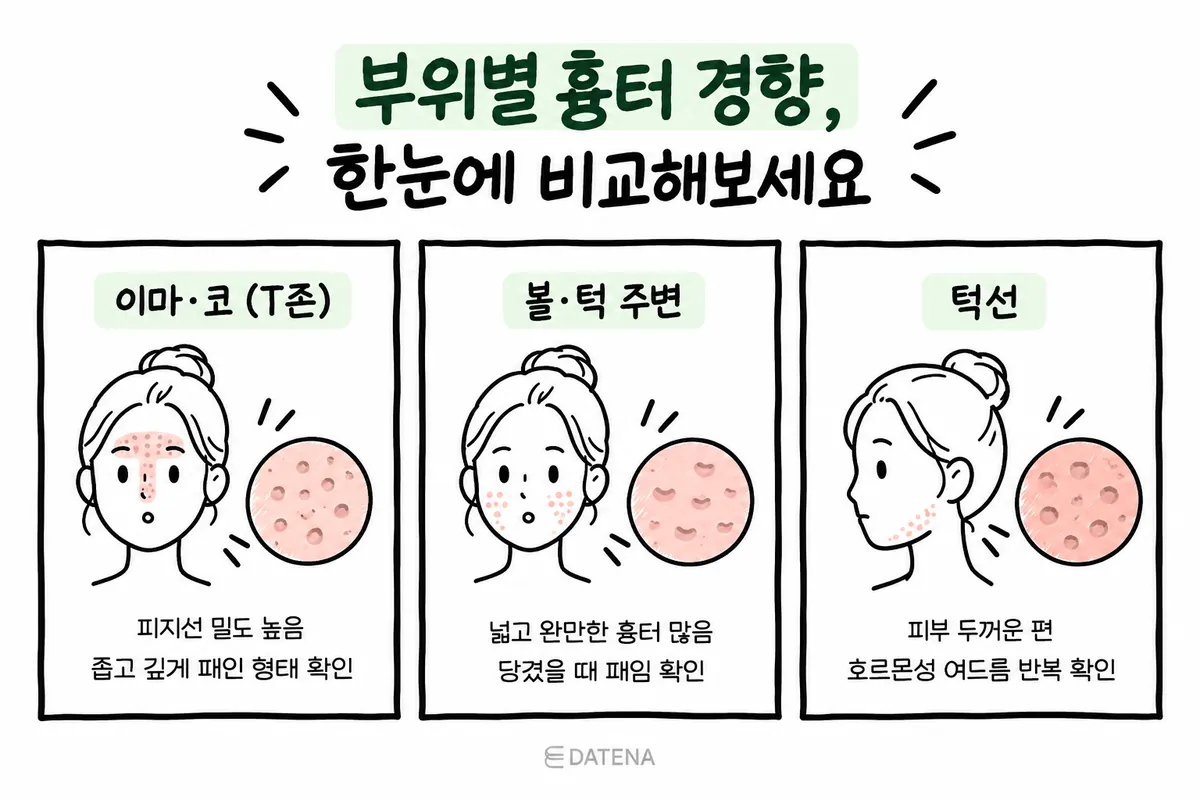
The T-zone, including the forehead and nose, has a particularly high density of oil glands, so inflammatory acne and scarring are commonly seen there.
The cheeks and jaw area produce less oil than the T-zone, but when inflammation keeps recurring, it often leaves wide, gently depressed scars.
Acne along the jawline is sometimes closely tied to hormonal changes, and because the skin there is relatively thick, deep inflammation can leave distinctly indented scars.
So even with the same acne scars, oil production, skin thickness, and how deep inflammation spreads differ by area, and so does the way the scars look on the surface.
3. Why Scars Can Look More Widespread Than They Are
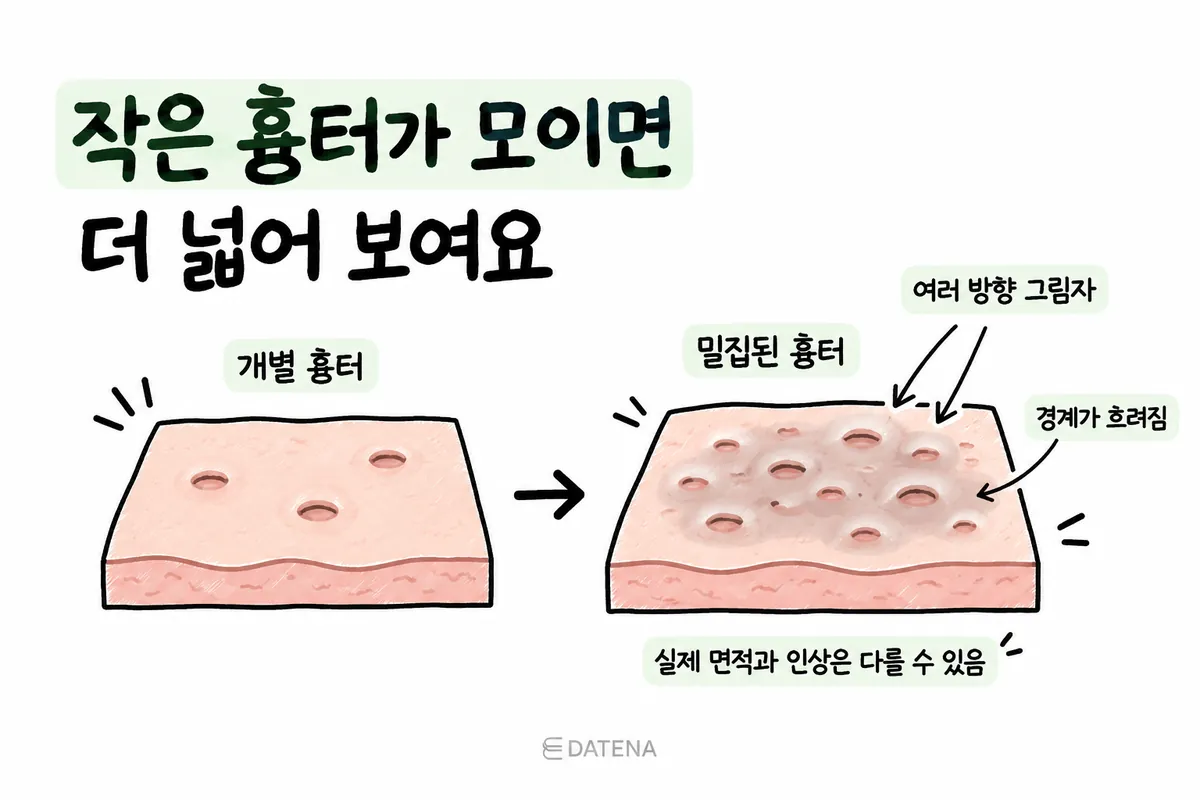
Even if each individual scar is small, a cluster of them packed closely together can make the skin look uneven overall.
Areas crowded with narrow, deep scars are especially tricky: light casts shadows from several directions, so the scarring can look far more widespread than its actual size.
When broad, gently sunken scars are mixed in as well, the edges of individual scars become hard to tell apart, which can leave the impression that the whole skin surface is uneven.
For this reason, scarring often looks larger than the area that's actually damaged, so what you see in the mirror and the area that truly needs treatment may not be the same.
4. Spot Treatment vs. Full-Face Treatment
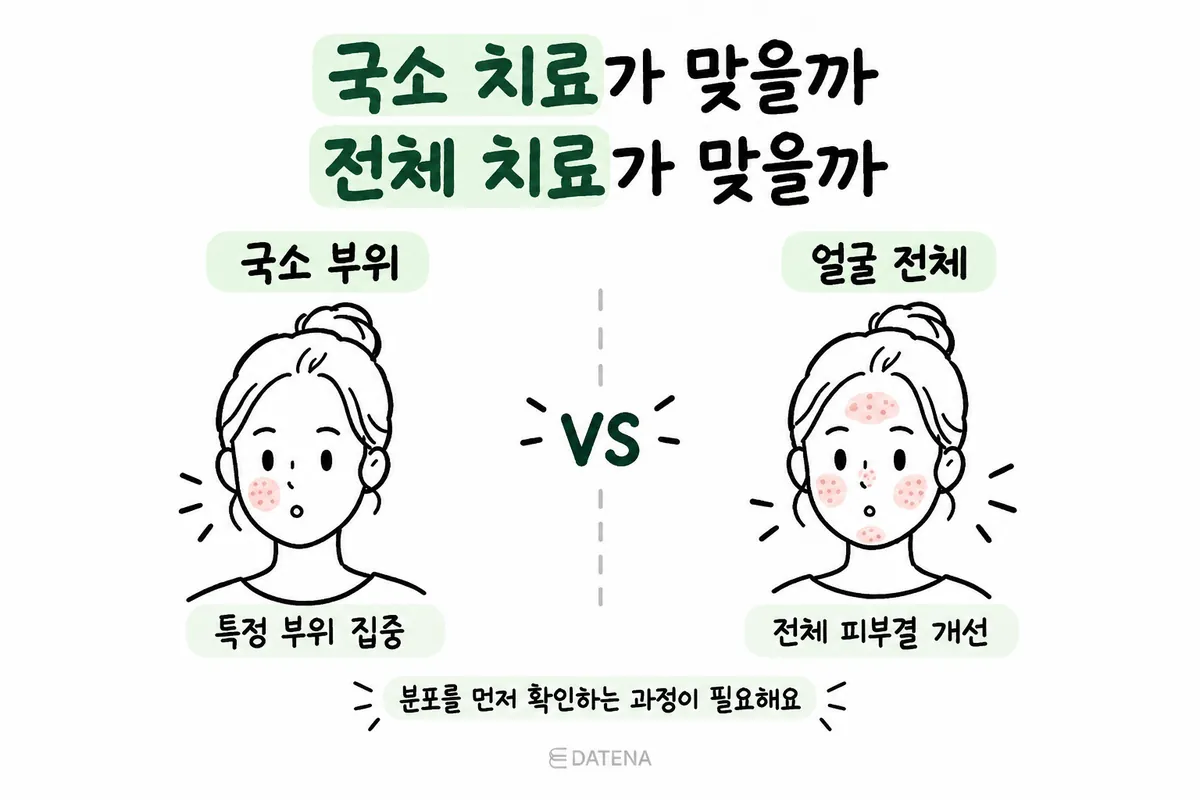
If the scars are limited to one specific area, focusing treatment on that area alone can bring a noticeable change.
On the other hand, if scars are spread fairly evenly across several areas of the face, we often work on improving skin texture across the whole face rather than treating spots in isolation.
That's because treating only one area can actually make the border with the surrounding skin stand out more; refining the overall texture together is what leads to a natural-looking result.
So before starting treatment, it's important to first check whether the scars are clustered in one area or spread across the face.
5. What We Check When Planning Treatment
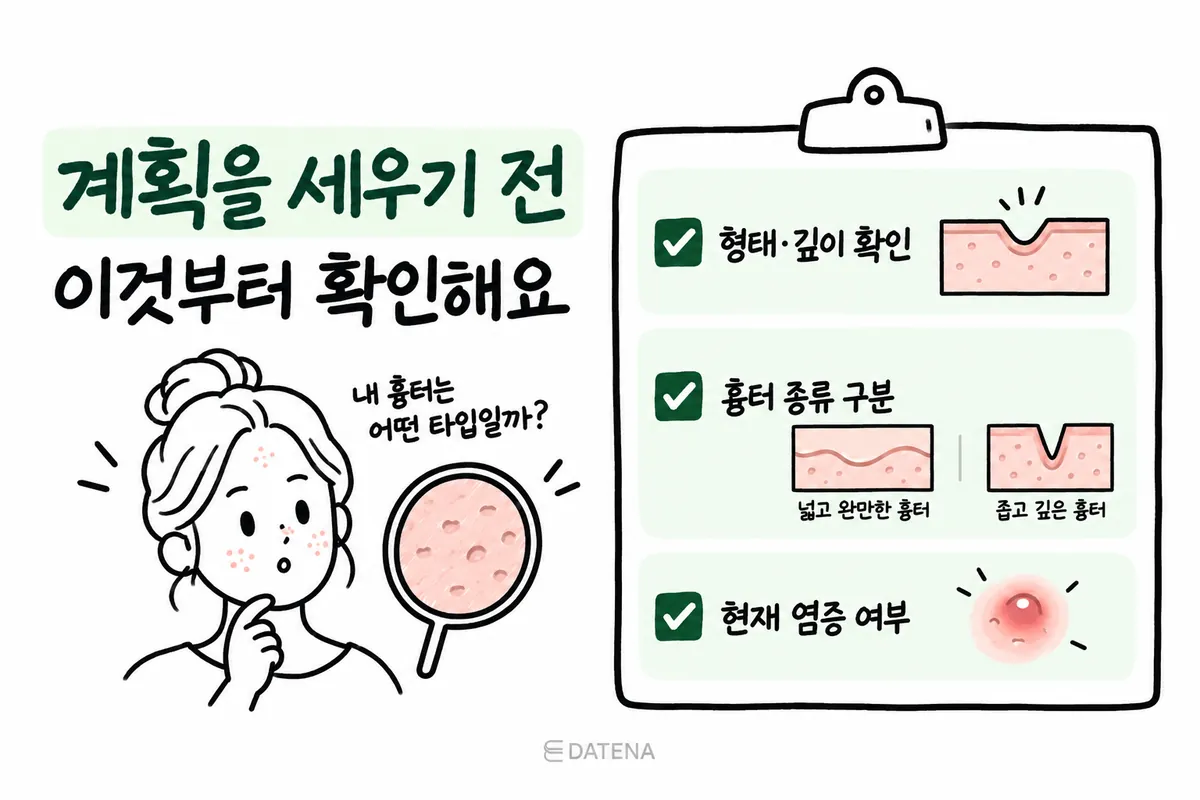
When planning treatment, we need to consider not just the number of scars but also their shape and depth.
Broad, gently sunken scars and narrow, deep scars call for different treatment depths and intensities, so we sometimes combine several methods even within a single area.
Also, if there are areas with active inflammatory acne, calming the inflammation may need to come before scar treatment.
Looking at the condition of the whole face and setting priorities this way is what allows us to plan the order and methods of treatment efficiently.
6. Scar Tendencies by Facial Area
Here's a summary of the area-by-area characteristics described so far.
Type | Characteristics | What to check |
|---|---|---|
Forehead & nose (T-zone) | High density of oil glands, so scars are commonly seen | Whether narrow, deep scars are mixed in |
Cheeks & around the chin | Repeated inflammation often leaves broad, gently sunken scars | Whether the depressions remain when the skin is stretched |
Jawline | Skin tends to be thicker; scars easily end up deep | Whether hormone-related acne keeps recurring |
Scar patterns can differ from area to area even on the same face, so it's hard to judge the whole picture by any single criterion in the table.
Because acne scars on the face differ in cause and shape from area to area, looking at the overall distribution helps guide the treatment approach.
Rather than deciding the treatment area based only on how things look, it may help to have each area assessed in person.
At Datena Clinic, even in acne scar consultations, the doctor personally examines each area of the face and reviews the full treatment plan with you.
Medically reviewed by: Dr. Kang Dong-hyun (Datena Clinic) · Meet our doctors: /about.html