
Dermatology near Jamsil Saenae Station: when to consider treatment for sagging skin

Today's summary
How fast skin sags depends more on skin thickness and collagen condition than on age
Skincare helps hydrate the surface, but it can't really lift sagging skin
Gently pinching your skin and seeing how much gathers can help you gauge how much it has sagged
The right approach and number of sessions can vary with the degree of sagging
Can switching skincare products fix sagging skin? It's a question we hear a lot.
Hello, this is Datena Clinic.
Some people notice, every time they look in the mirror, that their cheeks or smile-line area look saggier than before.
If you've been using anti-aging products consistently without seeing much change, it's natural to wonder whether you might need a treatment at this point.
That said, sagging shouldn't be judged by age alone. It needs to be assessed together with skin thickness and how much elasticity has been lost, which makes it hard to judge on your own.
Today, we'll go over why skin sags and the criteria for when a treatment may be worth considering.
1. Why skin loses elasticity
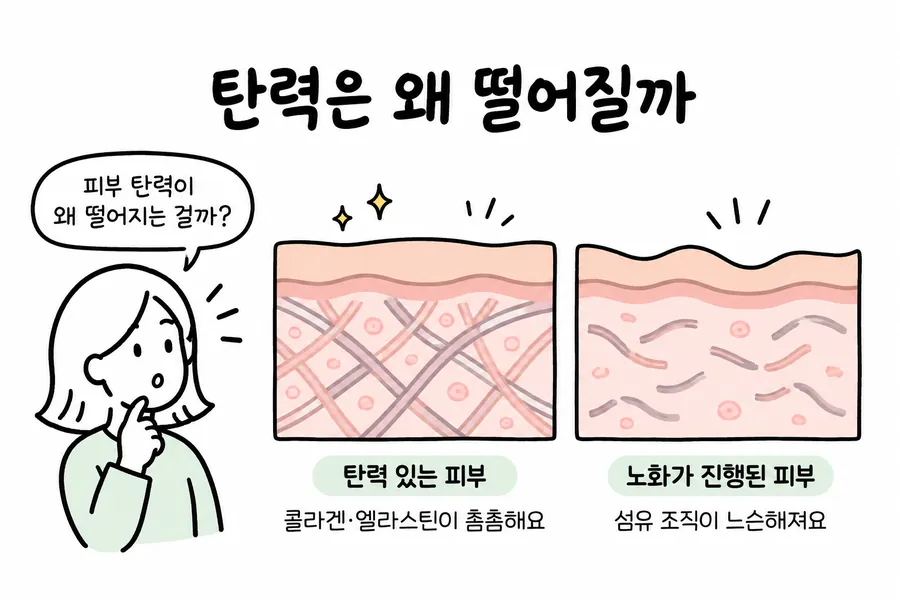
As we age, our skin produces less collagen and elastin, and the existing fibers gradually loosen, leading to a loss of elasticity.
Cumulative sun exposure damages collagen faster, and when smoking or rapid weight changes are added to the mix, the loss of elasticity can become even more noticeable.
Even at the same age, when sagging becomes noticeable differs from person to person depending on skin thickness and past skin care.
2. Why skincare alone has its limits
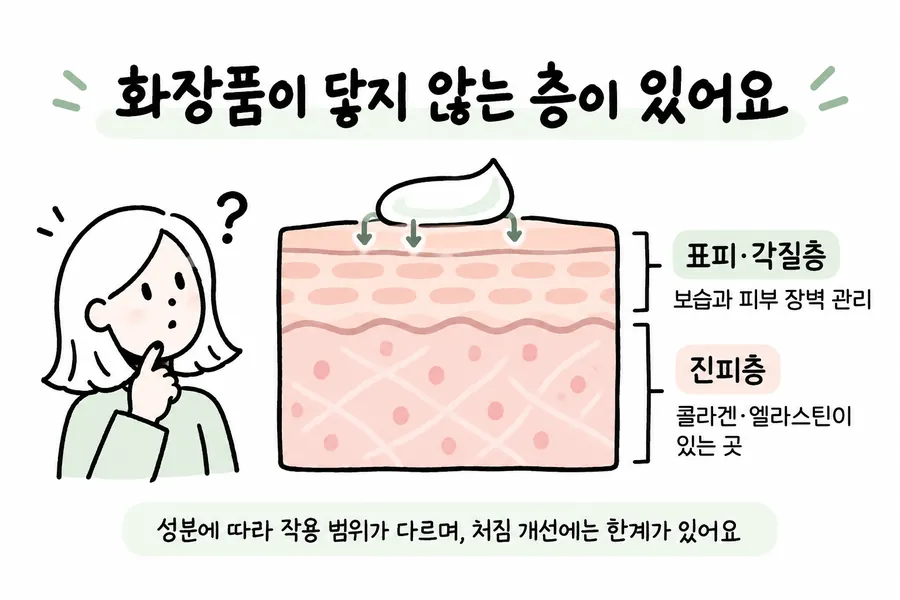
Most anti-aging products work on the outermost layer of the skin, so they can help with hydration and texture.
But the collagen loss and fiber loosening behind sagging happen in the deeper layers, so topical products alone often can't restore the skin to how it was.
If skincare isn't giving you noticeable improvement, it's worth looking for the cause in the deeper layers rather than on the surface.
3. How to check sagging yourself
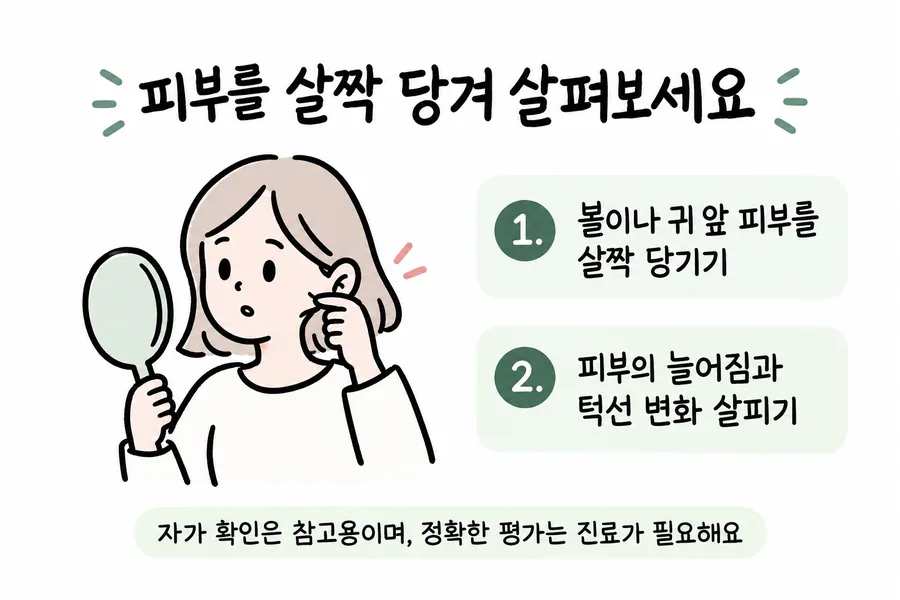
One self-check is to gently pinch the skin on your cheek or in front of and behind your ear, lift it upward, and see how much skin gathers in your fingers.
If only a little skin is left over when you gently pull it back, the sagging is often within the range that non-surgical treatments can improve. If there's a lot of excess skin, treatments alone may have their limits.
This check is only a rough guide. An accurate assessment is best made after your skin has been examined in person.
4. What lifting treatments can realistically improve
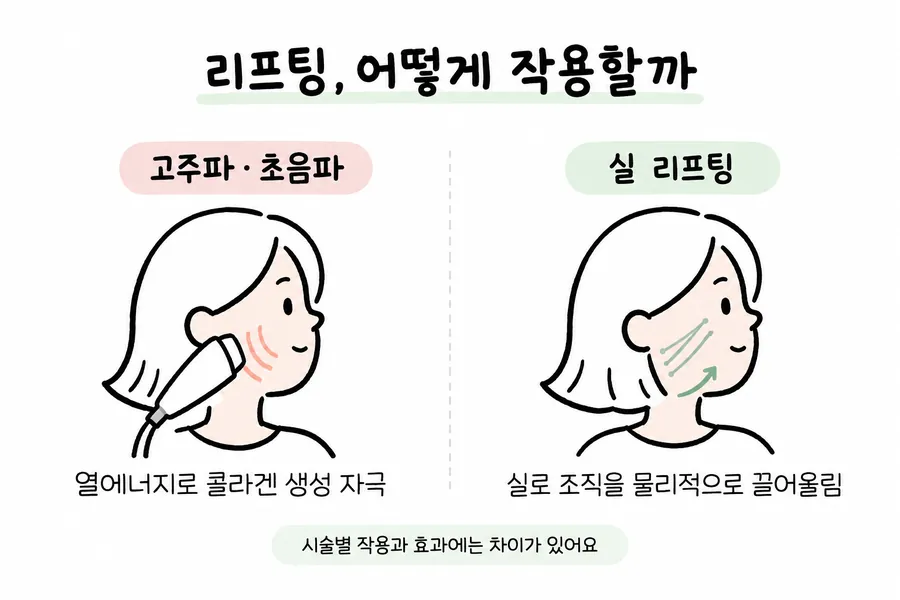
Lifting treatments are generally divided into those that use radiofrequency or ultrasound energy to stimulate collagen production deep in the skin, and those that insert threads to physically lift the tissue.
With both approaches, firmness usually improves gradually over time rather than right away, and depending on how much sagging there is, several sessions may be needed.
In your 20s and 30s, the focus is often on preventing sagging and refining facial contours; from your 40s on, the approach tends to shift toward addressing deeper wrinkles and sagging together.
5. Possible reactions and recovery after treatment

Right after treatment you may notice mild redness or swelling, and some methods can also cause bruising.
In many cases you can wash your face and wear light makeup the same day, but moisturizing and sun protection deserve special attention throughout recovery.
Lifting results often appear gradually over weeks to months rather than immediately, so not seeing a big change right away doesn't necessarily mean the treatment isn't working.
Recovery speed and the degree of reaction can vary from person to person.
6. Why the right approach depends on how much sagging there is
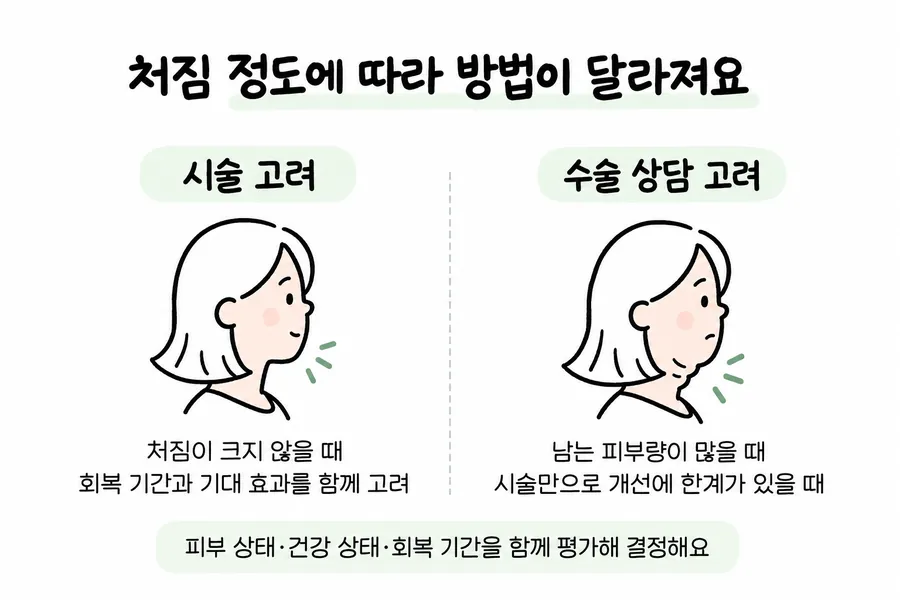
If the sagging isn't significant yet, non-surgical treatments can often bring meaningful improvement. But when nasolabial folds are deep or the area around the mouth sags considerably, treatments alone may not give you the change you're hoping for.
In those cases, surgical options such as a facelift may also be considered. Which approach suits you is best decided after your current skin condition has been checked in person.
Type | Characteristics | What to check |
|---|---|---|
Non-surgical treatment | Uses radiofrequency or ultrasound energy to stimulate collagen and gradually improve firmness | Consider when sagging is mild and you want a short recovery period |
Surgery | Removes the sagging skin itself, for a relatively noticeable change | Consider when there's a lot of excess skin when pulled back, or when treatments have reached their limits |
Sagging depends more on your individual skin thickness and how quickly your skin loses elasticity than on age, so reaching a certain age doesn't mean the same approach is right for everyone.
If sagging still bothers you despite your skincare routine, it may be worth checking whether your current condition is within the range that treatments can improve.
When choosing a clinic, it's a good idea to make sure they carefully assess your degree of sagging before recommending an approach.
At Datena Clinic, we believe it matters that the doctor examines your skin personally and honestly explains what you actually need.
Medically reviewed by: Dr. Kang Dong-hyun (Datena Clinic) · Meet our doctors: /about.html