
Lasers for Red Acne Marks: What to Treat First When You're Still Breaking Out
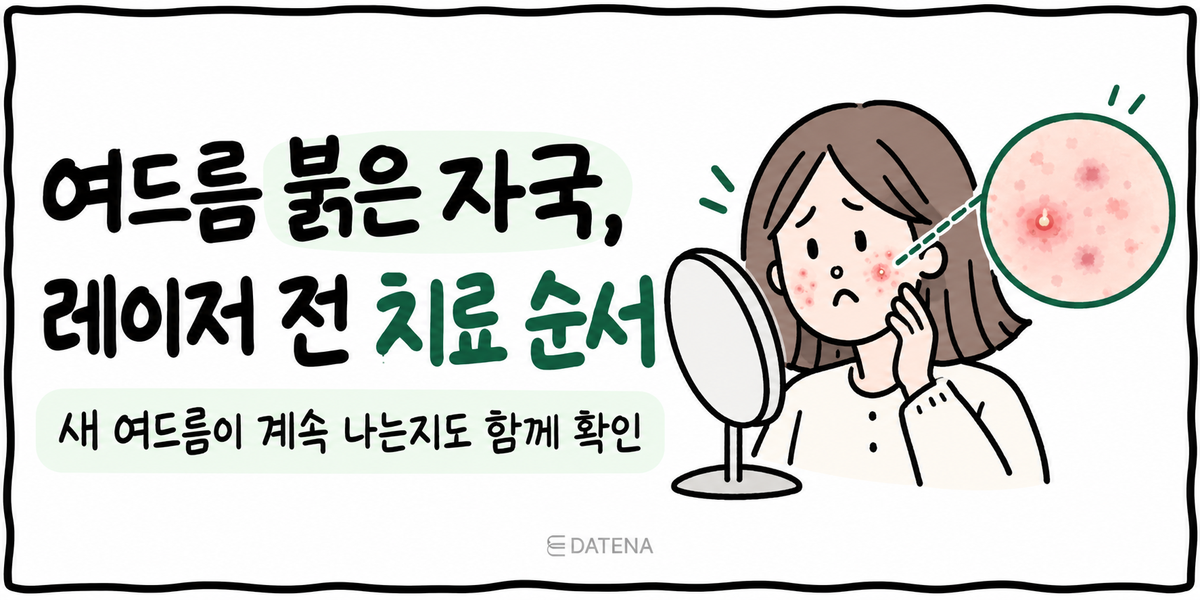
Sometimes the acne has calmed down, but red spots are left behind, and people start looking into lasers.
Here we explain what to look at first when you're planning to treat marks while new breakouts keep appearing.
Today's summary
Red marks and brown marks are different.
If new inflammation keeps coming back, the marks can multiply too.
Vascular lasers are used for some red marks.
The order of treatment depends on the current state of your acne.
Hello, this is Datena Clinic.
When red marks linger, it's easy to worry that you've waited too long to treat them.
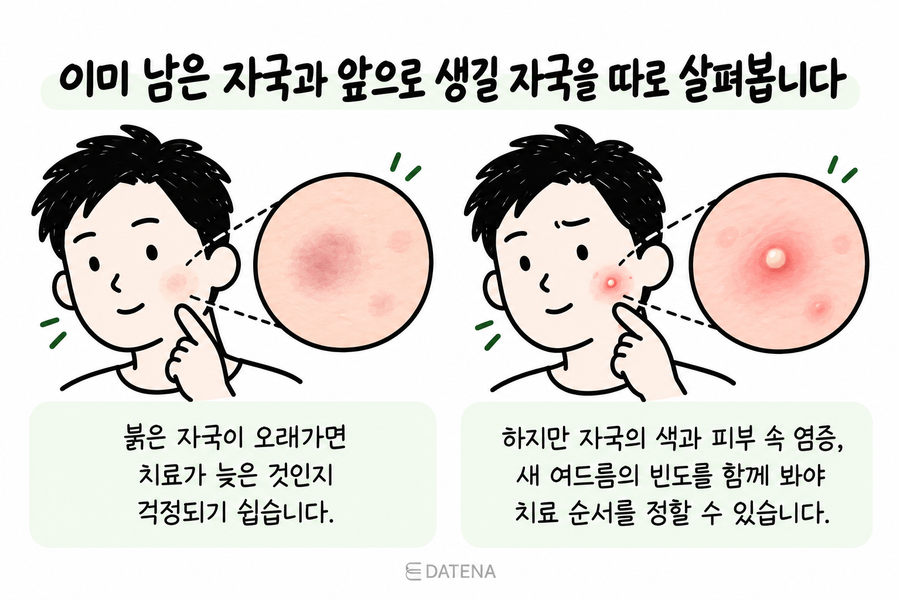
But the right treatment order can only be set by looking at the color of the marks, the inflammation beneath the skin, and how often new breakouts appear, all together.
Even if you want the red marks gone quickly, you'll need to rethink the order if new acne keeps showing up.
That's because the marks you already have and the marks that may form in the future need to be handled separately.
Rather than asking whether to rush into lasers, let's look at what needs to be managed at the same time.
1. Red vs. Brown vs. Depressed Marks
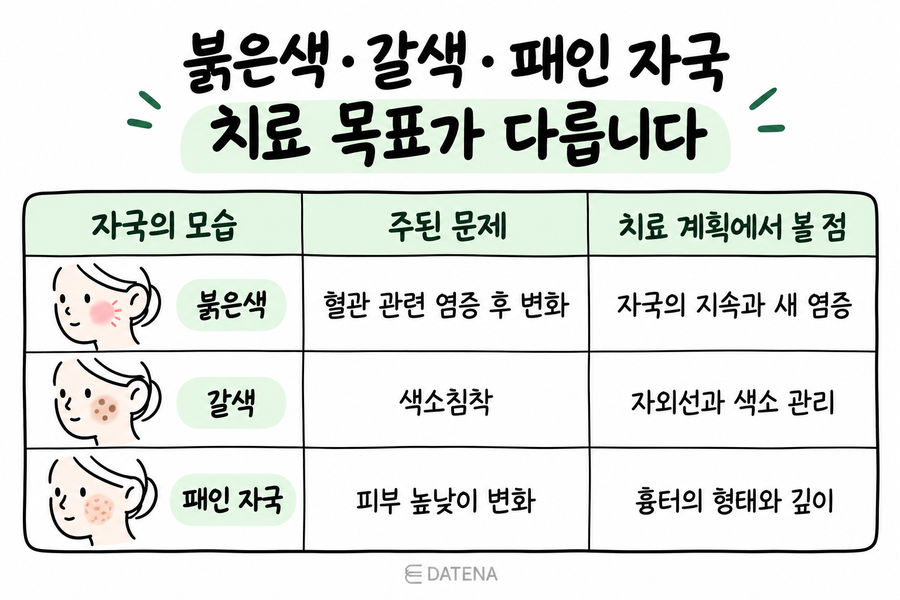
Red marks left after acne are called post-inflammatory erythema.
Marks that stay brown are post-inflammatory hyperpigmentation, and pitted, depressed scars are a different issue altogether.
Red marks can stick around for a while even after the acne has settled.
When brown pigment overlaps the redness, or small depressions are also present, a single type of laser can't account for everything.
Even if they look similar in photos, the treatment goals differ, so an in-person assessment is needed.
How the mark looks | Main issue | What to consider in the treatment plan |
|---|---|---|
Red | Vascular post-inflammatory change | How long the mark lasts and any new inflammation |
Brown | Hyperpigmentation | Sun protection and pigment care |
Depressed marks | Changes in skin surface level | Shape and depth of the scar |
2. Treatment Order When New Breakouts Keep Coming
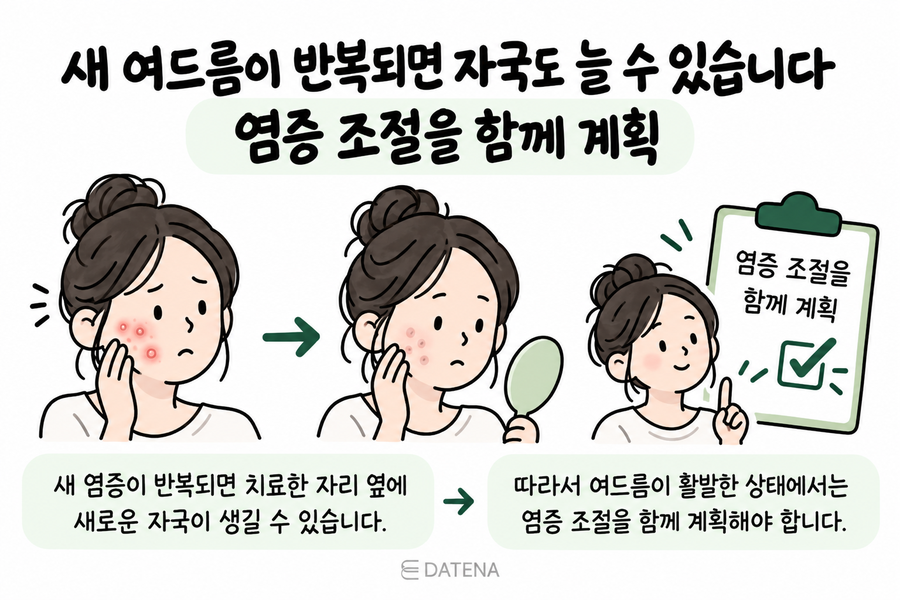
If inflammation keeps recurring, new marks can form right next to areas you've already treated.
So when acne is active, controlling the inflammation needs to be part of the plan.
If you keep squeezing or touching your skin, inflammation can linger longer in the same spot.
If marks are piling up quickly, reducing how often new acne appears is a key part of the treatment plan.
Treating marks alone can't stop acne from coming back.
3. When to Consider a Vascular Laser for Red Marks
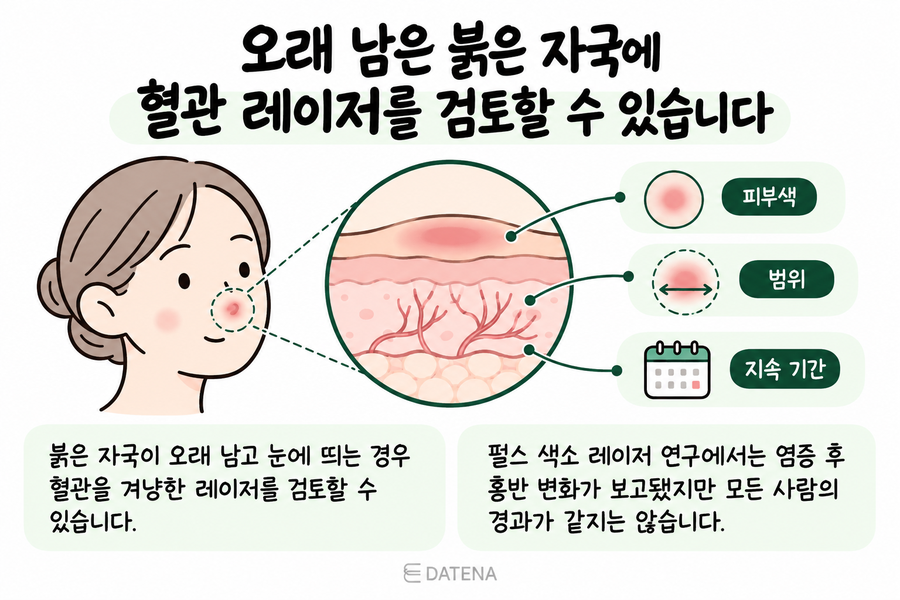
If red marks linger and are noticeable, a laser that targets blood vessels may be an option.
Studies of pulsed dye laser have reported changes in post-inflammatory redness, but not everyone's course is the same.
Vascular laser studies usually assess changes in redness along with photos of the skin.
Even marks that look exactly the same color can differ in depth and how long they've been there, so it's hard to pin down the number of sessions in advance.
Settings and the treatment plan vary depending on your skin tone and how widespread the marks are.
4. How to track natural fading
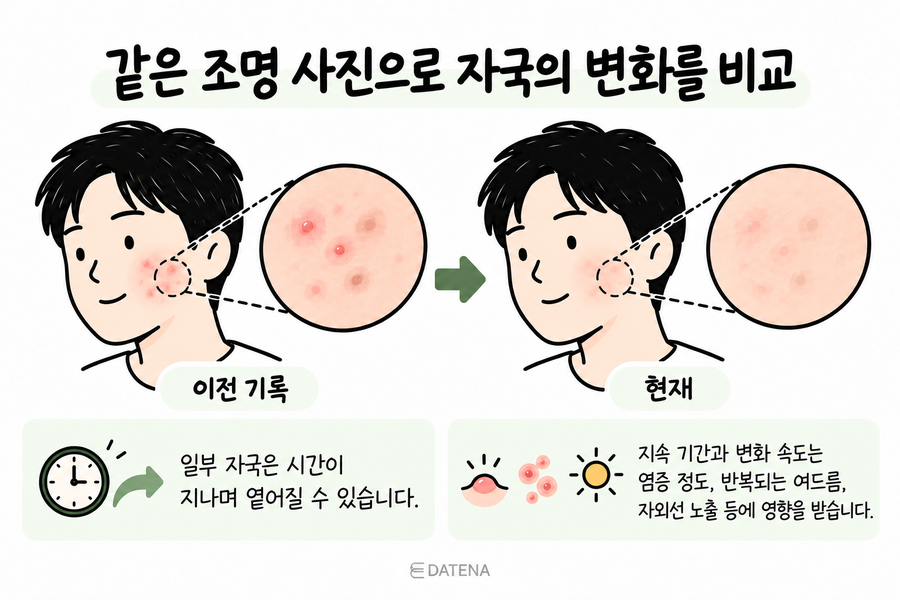
Some marks can fade on their own over time.
How long they last and how quickly they change depend on factors like the degree of inflammation, recurring breakouts and sun exposure.
When tracking natural fading, it helps to compare photos taken under the same lighting as a month earlier.
Looking in the mirror every day makes small changes hard to notice, and it's easy to confuse new marks with old ones.
A mark lasting a long time doesn't by itself mean you need one particular procedure.
5. Skin irritation and side effects after laser
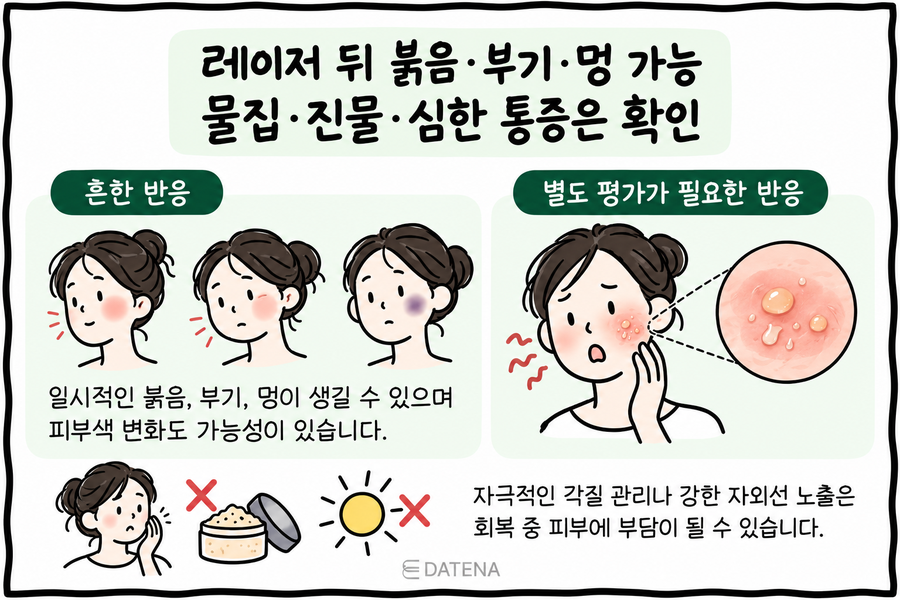
Temporary redness, swelling and bruising can occur, and changes in skin color are also possible.
Harsh exfoliation or strong sun exposure can put extra stress on skin while it's healing.
Depending on the settings, you may see bruise-like changes after the procedure.
While your skin recovers, picking at flakes or pressing on the marks can cause further irritation.
If you develop pain, blisters or oozing, you should be assessed by the clinic where you had the procedure.
6. Helpful records to bring to your consultation
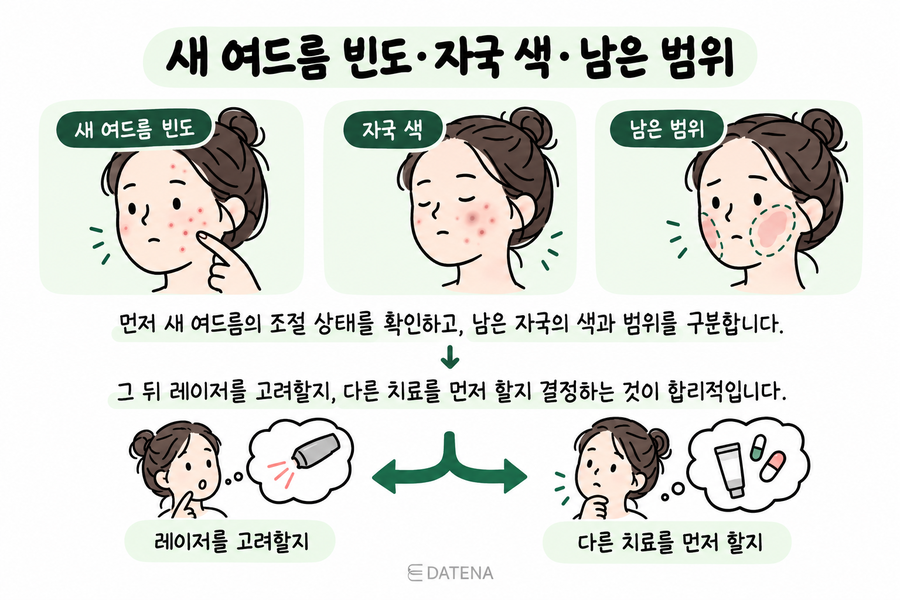
First, we check how well new breakouts are under control, then distinguish the color and extent of the remaining marks.
After that, it makes sense to decide whether to consider laser or start with a different treatment first.
Please tell us specifically how often new breakouts appear and which areas the red marks are concentrated in.
This information helps decide whether to treat just the marks or address the acne at the same time.
At Datena Clinic, we don't look at a single mark in isolation; we evaluate your current acne as well.
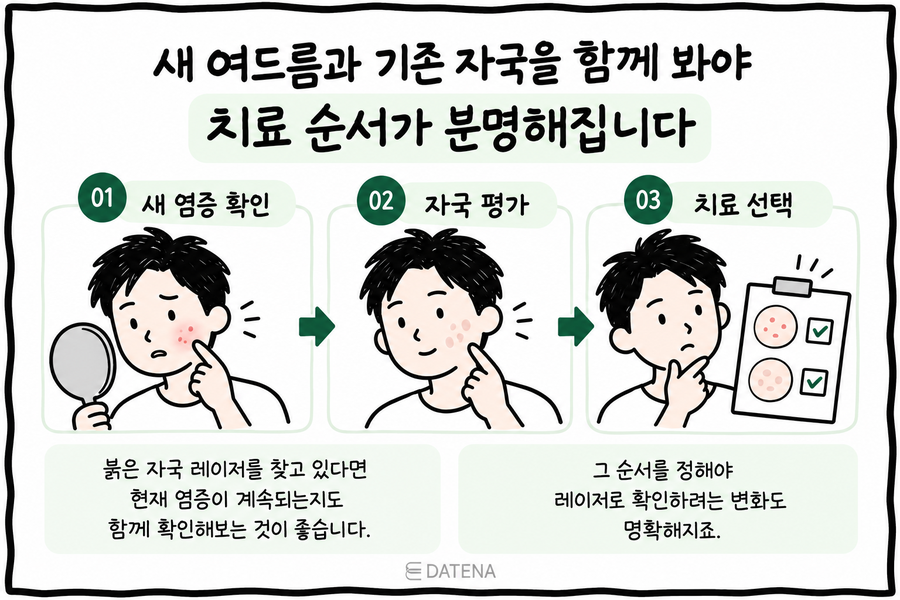
If you're looking into laser for red marks, it's a good idea to also check whether inflammation is still ongoing.
Treating red marks should take into account the pattern of acne that's still forming.
Setting that order also makes it clearer what changes the laser is meant to achieve.
With the right treatment order, both the marks and new breakouts can each be addressed properly.
You can find details on our treatments and directions on the Datena Clinic official website.