
Vbeam Laser: What to Tell Apart When You See Red Marks vs. Visible Vessels
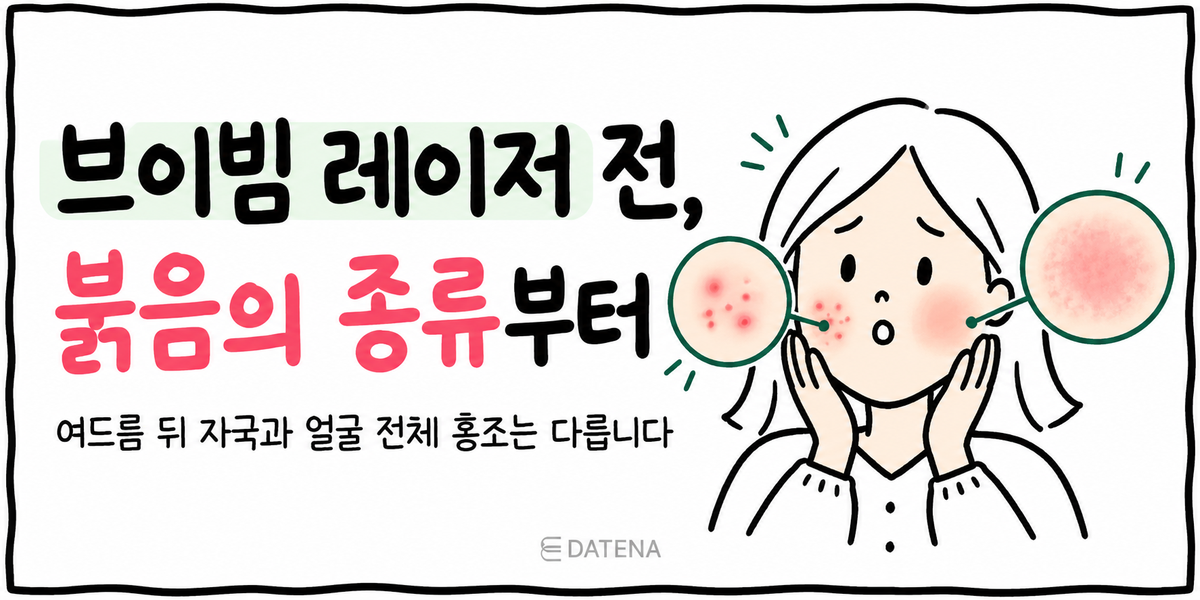
Even if your face looks red and you're looking for Vbeam, redness doesn't always have the same cause.
Let's look at how to tell red post-acne marks apart from persistent flushing, and what to check before treatment.
Today's summary
Red marks and flushing have different causes.
Vbeam is a laser that targets blood vessels.
Any active inflammation needs to be checked too.
We check the risk of bruising, swelling, and color changes.
Hello, this is Datena Clinic.
People searching for Vbeam laser are often interested because of acne marks or redness across the whole face.
But a mark left in one spot and flushing that worsens with temperature changes call for different checks during a consultation.
Rather than settling on Vbeam by name first, it's important to find out when the redness started and what color it has stayed.
Especially if you keep getting new breakouts, the marks and the inflammation need to be looked at together.
Before choosing a laser, let's first sort out what kind of redness it is.
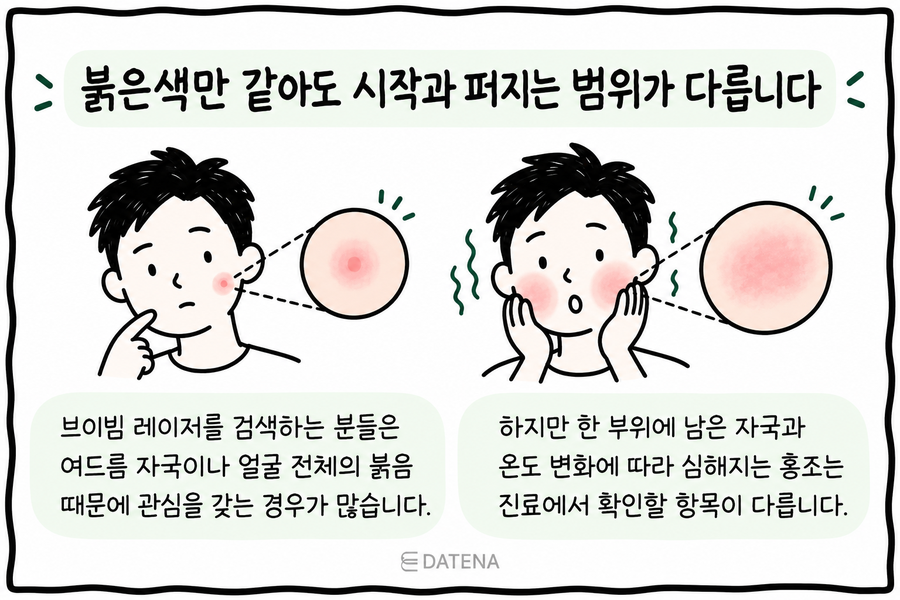
1. Telling Red Marks Apart from Facial Flushing
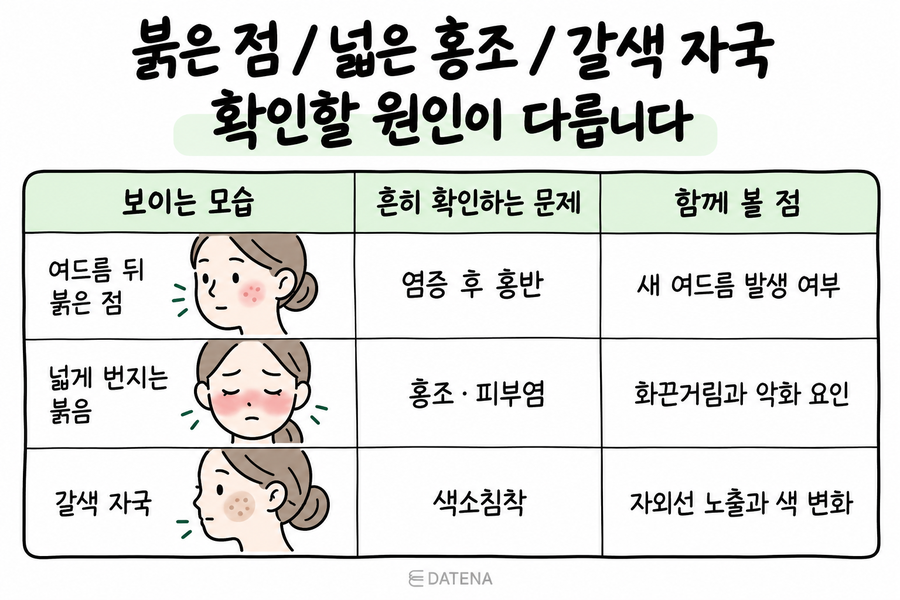
Redness left behind where a pimple used to be may be post-inflammatory erythema.
On the other hand, recurring facial flushing and persistent redness may be linked to other conditions, such as rosacea.
Start by noticing whether the redness sits in a single spot or spreads across your whole cheek.
It also helps narrow down the cause if you can tell us when the marks first appeared and whether their color changes in hot places.
Brown marks are a pigment issue, so they aren't what a vascular laser is designed to target.
What you see | What we commonly check | What else to check |
|---|---|---|
Red spots after acne | Post-inflammatory erythema | Whether new breakouts are still appearing |
Widespread redness | Flushing / dermatitis | Burning sensation and triggers |
Brown marks | Hyperpigmentation | Sun exposure and color changes |
2. The Kind of Redness Vbeam Targets
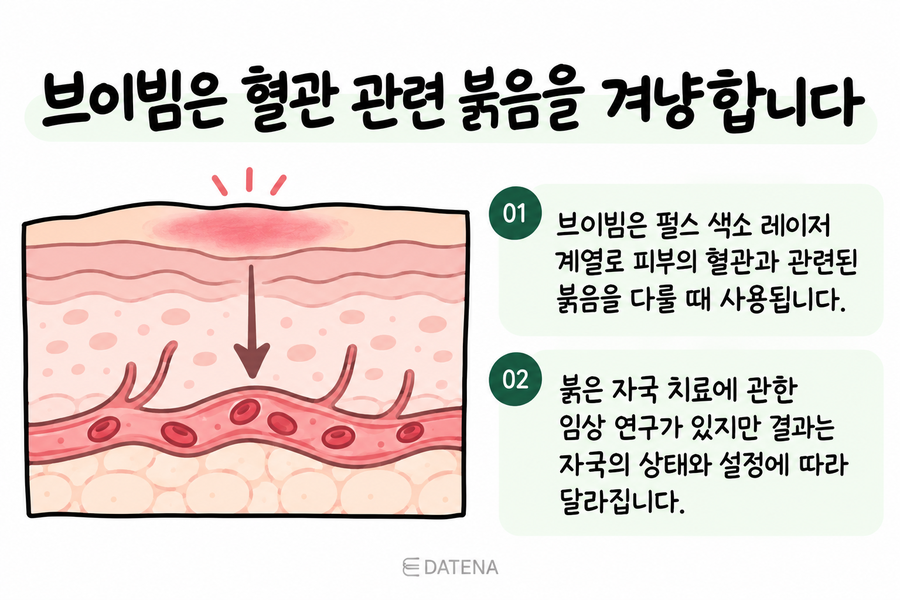
Vbeam belongs to the pulsed dye laser family and is used to address redness related to blood vessels in the skin.
There is clinical research on treating red marks, but results vary depending on the condition of the marks and the settings used.
Pulsed dye lasers target the hemoglobin inside blood vessels.
Depending on the settings, the degree of bruise-like reaction can vary, so your recovery schedule should be discussed as well.
Not every acne mark is a candidate for this laser.
3. Marks Left by New Breakouts
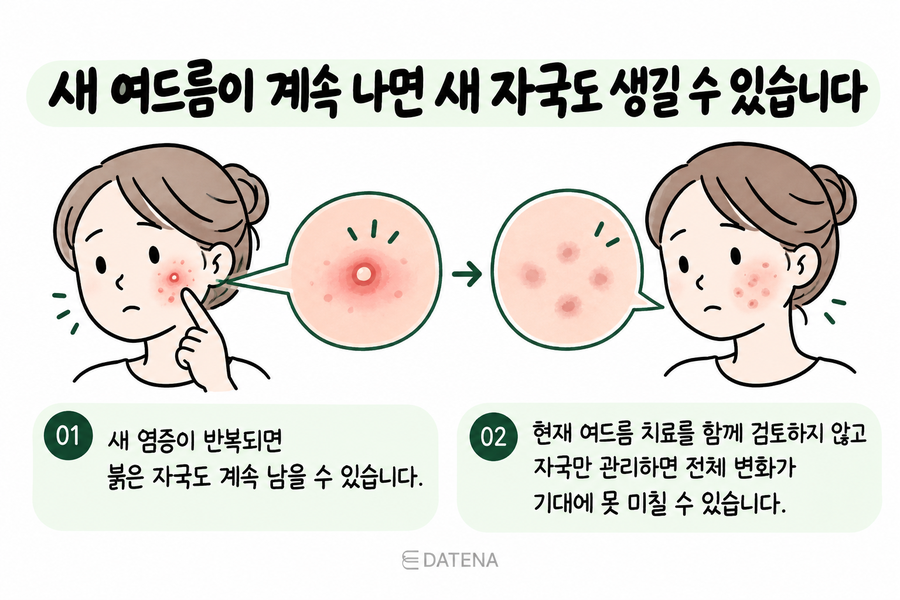
If new inflammation keeps coming back, red marks can keep forming too.
If only the marks are treated without also reviewing your current acne care, the overall improvement may fall short of what you hope for.
For example, a fresh pimple and an older red mark can sit in the same area.
If active lesions aren't identified in that case, new marks can appear after the laser, making it hard to judge the results.
We need to check not only the color and shape of the marks but also any ongoing inflammation.
4. Redness, Bruising and Swelling After Treatment
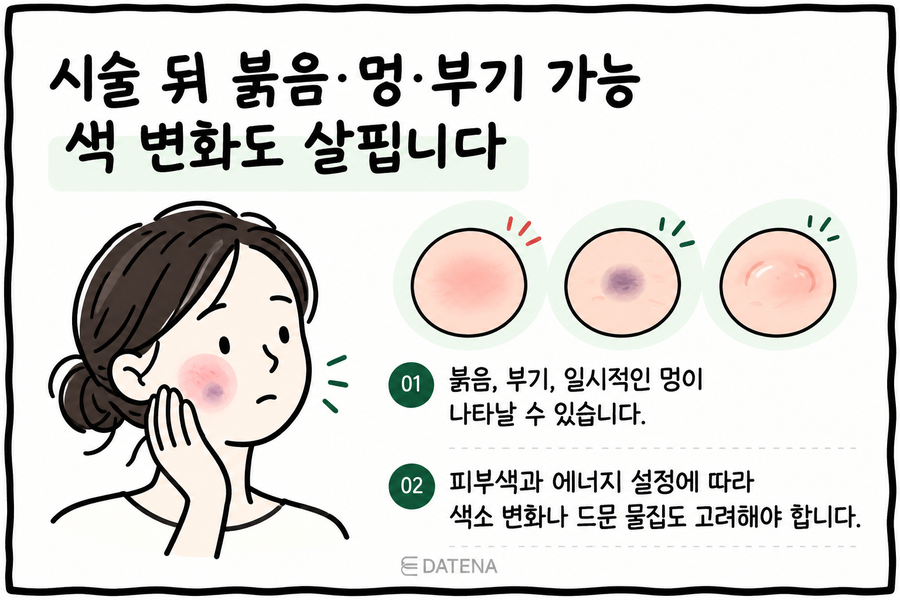
Redness, swelling and temporary bruising may occur.
Depending on your skin tone and the energy settings, pigment changes or, rarely, blistering should also be considered.
It's good to know before an important event that your skin may look redder for a little while.
The rare risk of color change can depend on your skin tone, recent sun exposure and the treatment settings.
After treatment, it's best to get guidance on how to limit strong sun exposure and skin irritation.
5. Accompanying Symptoms That Suggest Dermatitis
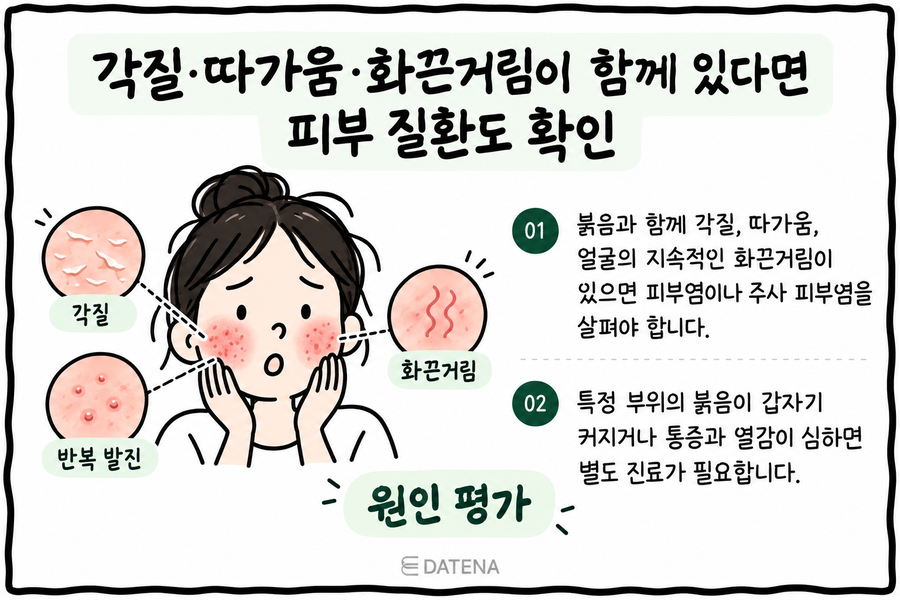
If redness comes with flaking, stinging or a persistent burning feeling on the face, dermatitis or rosacea should be evaluated.
If redness in one area suddenly spreads, or if pain and warmth become severe, you'll need a separate medical exam.
With rosacea, you may also notice facial warmth, stinging, and recurring breakouts.
Comparing photos from days with and without a flare-up helps separate changes in redness from the course of the underlying skin condition.
A laser alone can't manage every skin condition that causes redness.
6. What to tell us about your redness at your consultation
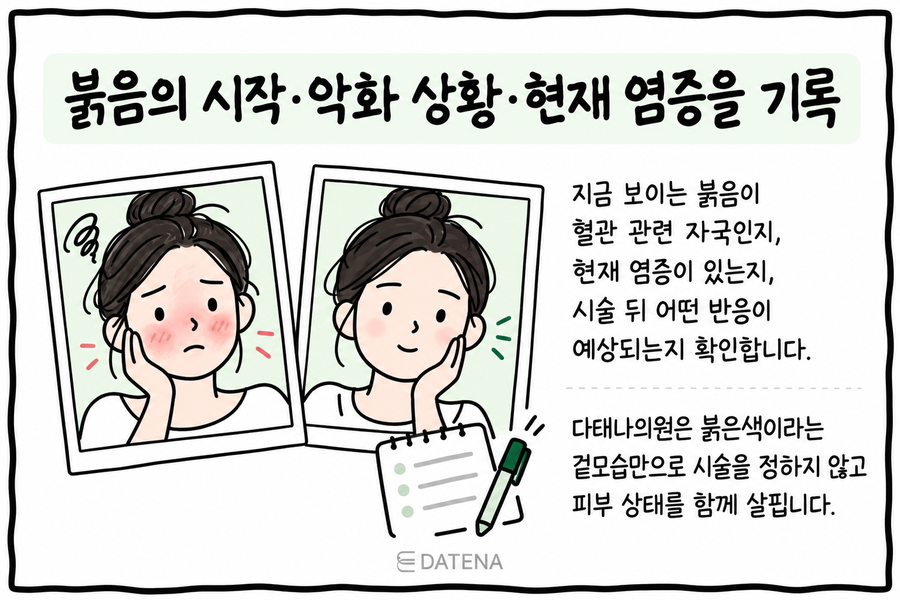
We check whether the redness you see is a vascular mark, whether there's active inflammation, and what reaction to expect after treatment.
At Datena Clinic, we don't choose a treatment just because something looks red; we look at the overall condition of your skin.
If you have photos of the red areas, please also tell us when they got worse.
If your redness on a typical day differs from how it looks on treatment day, a single look isn't enough to judge your skin.
The number of sessions and how your skin responds can vary from person to person.
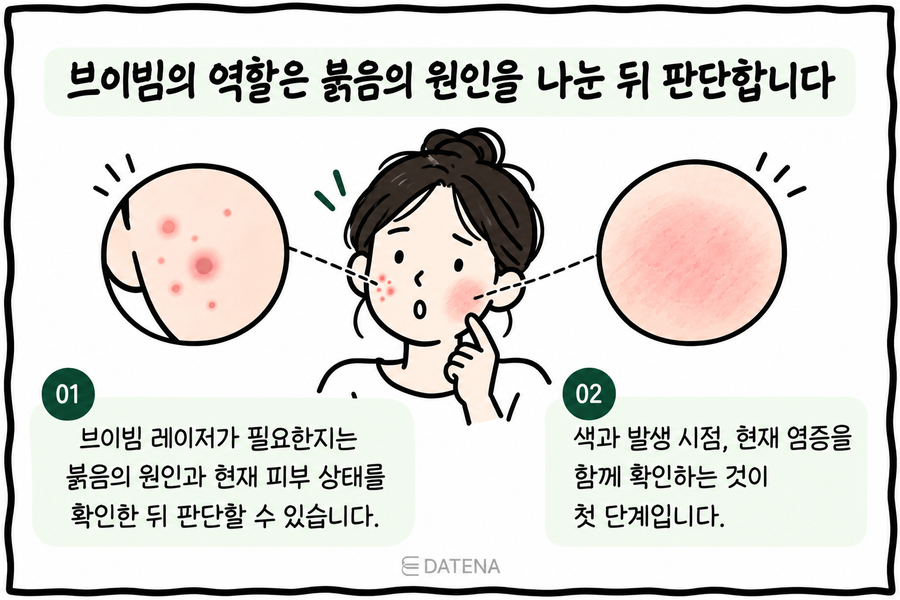
Whether you need a Vbeam laser can be decided after checking the cause of the redness and your current skin condition.
Vbeam's role becomes clear when the red marks are related to blood vessels.
The first step is to look at the color, when it appeared, and whether there's active inflammation.
Identifying the cause also helps us spot cases where a different treatment should come first.
You can find details on our treatments and directions on the Datena Clinic official website.