
Types of Acne Scars: How to Tell Them Apart by Shape
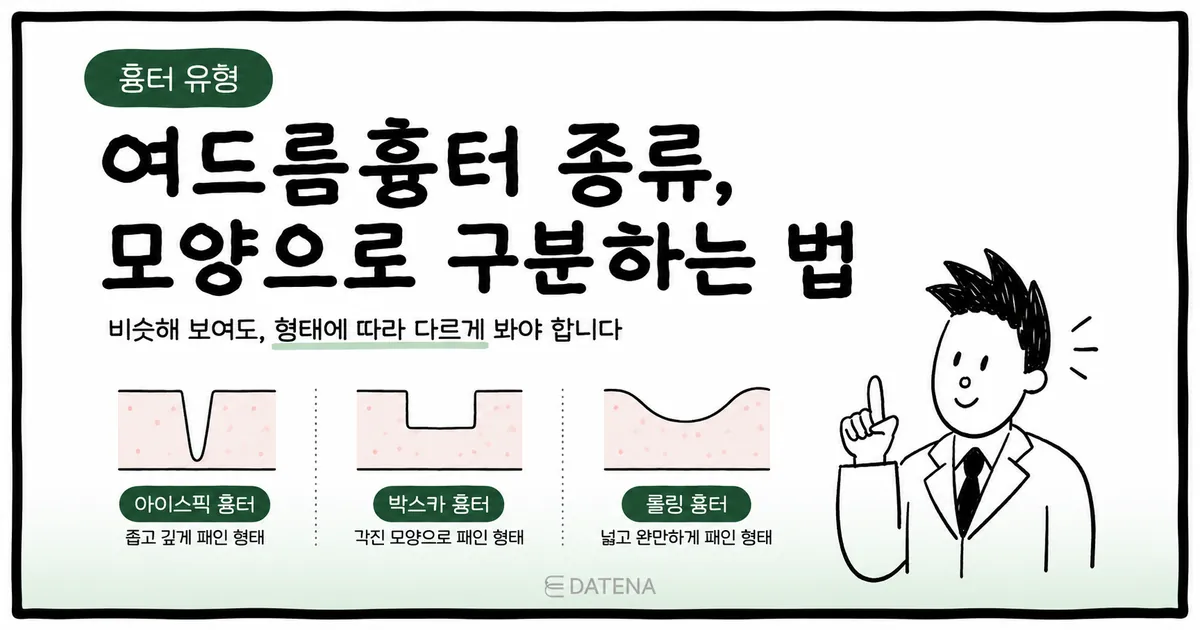
📌 Today's takeaways
Depressed scars fall into three main types based on shape
Narrow deep scars, angular scars and rolling scars each form for different reasons
Several types can appear on the same face
Telling them apart accurately requires an in-person exam by a specialist
Hello, this is Datena Clinic.
"What type of scars do I have?" "Is this a depressed scar too?"
We hear these questions all the time during consultations. Depressed acne scars may all look alike at first glance, but in reality each one differs in shape and in the condition of the tissue beneath it.
This is an informational guide to telling scar types apart—useful to know before a consultation, whichever clinic you choose.
So today's post is for:
Anyone curious about what shape their scars are
Anyone who wants to know why scars form differently
Anyone who wants to understand the basics before a consultation
If that sounds like you, read on.
1. What do narrow, deep scars look like?
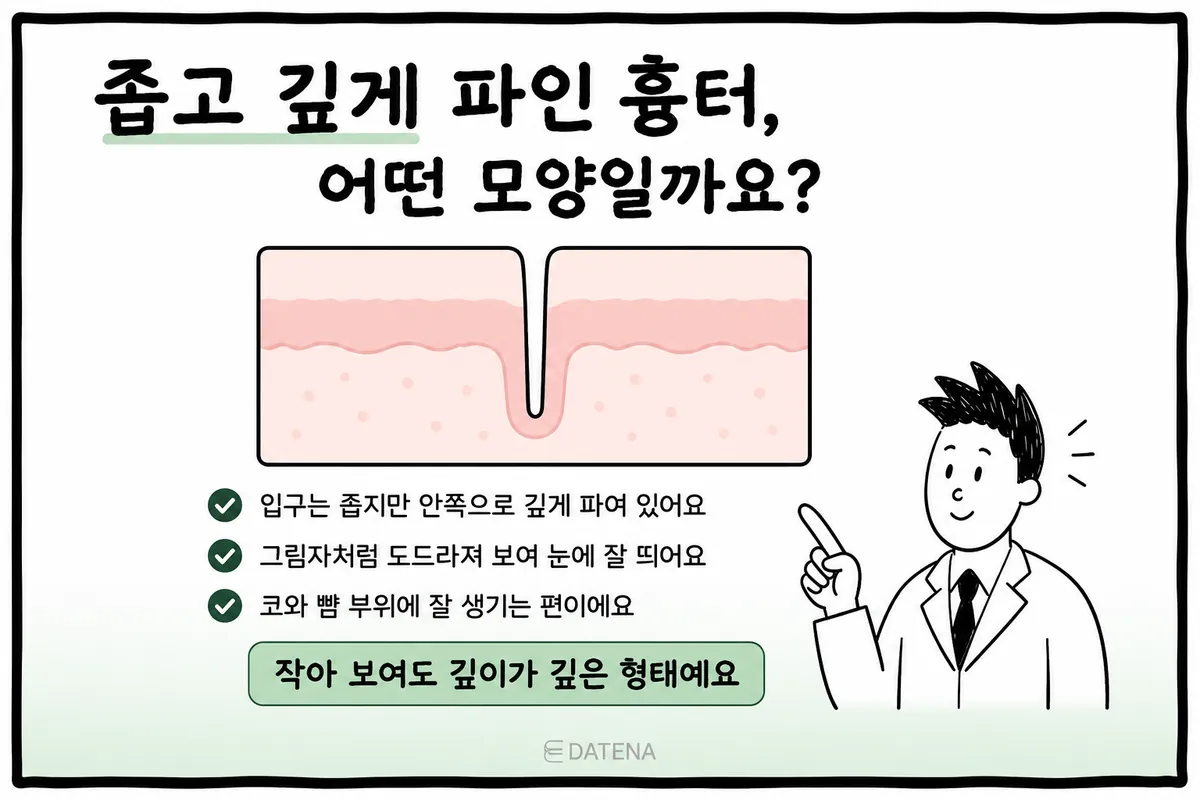
These scars have a small diameter and dig almost straight down from the skin's surface deep into the dermis.
The opening is small but the scar gets deeper as it goes down, so even under makeup the spot often stands out like a shadow.
These scars usually form on the nose and cheeks, where oil production is highest. Each one covers only a small area, but because they're deep, they're easy to notice.
2. How to recognize scars with sharp, angular edges
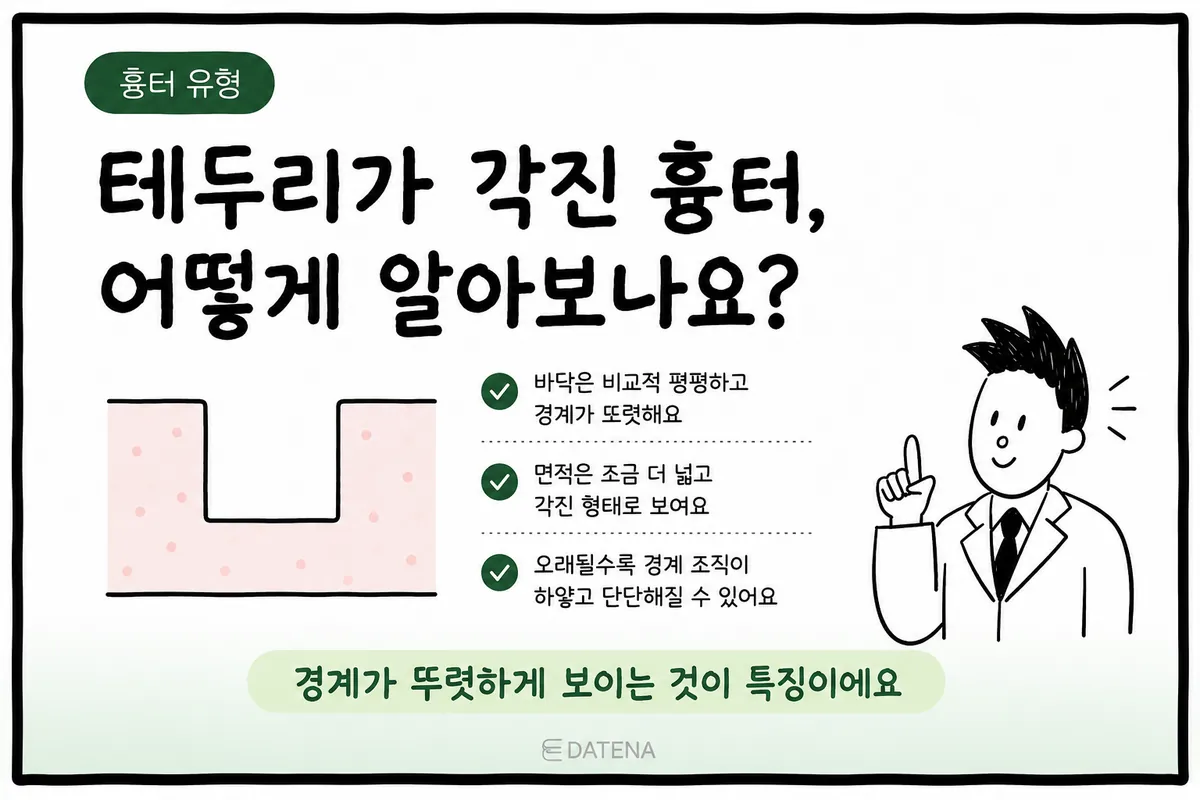
These scars have a flat base and crisp, angular edges that look almost as if they were cut with a knife. Unlike the narrow, deep scars described above, they cover a slightly wider area and have clearly defined borders.
Over time, the tissue along the scar's border often turns white and firm, so the longer a scar is left untreated, the more sharply its edges tend to stand out.
3. Why do wave-like depressed scars look so uneven?
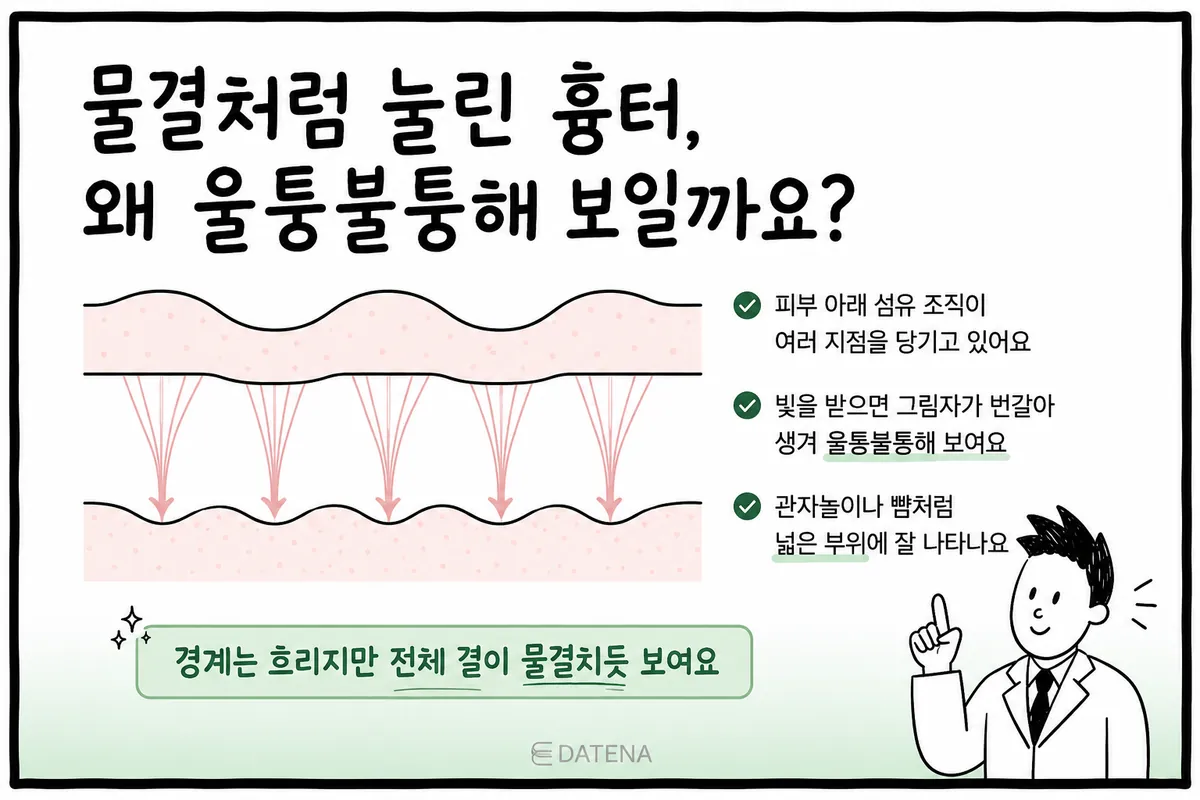
In these scars, fibrous tissue beneath the skin is pulling down on multiple points across the face. Each point where the skin is tethered sinks in slightly, so when light hits the face, shadows alternate in a wave-like pattern and the whole area looks bumpy and uneven.
They tend to appear on broader areas like the temples and cheeks, and the edges of each individual scar are usually softer and less defined than with the first two types.
4. Can one face have several types of scars at once?
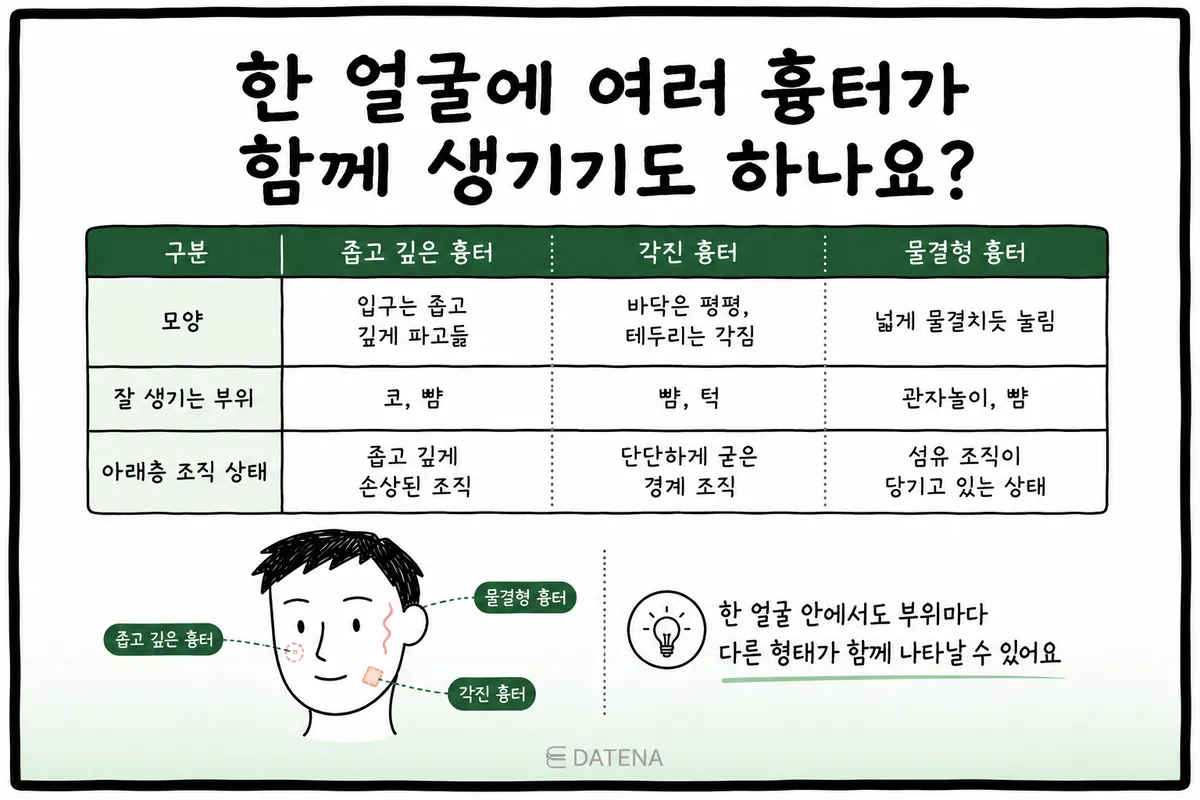
If you've had acne in several areas over a long time, again and again, it's not unusual for all three types to show up on the same face. Because the depth and progression of inflammation differed from area to area, you might have wave-like scars on your cheeks alongside narrow, deep scars around your nose.
The table below lets you compare the three types at a glance.
Type | Narrow, deep scars | Angular scars | Wave-like scars |
|---|---|---|---|
Shape | Small opening that cuts deep | Flat base with angular edges | Broad, wave-like depressions |
Common areas | Nose, cheeks | Cheeks, jaw | Temples, cheeks |
Underlying tissue | Narrow, deeply damaged tissue | Firm, hardened border tissue | Fibrous tissue pulling the skin down |
5. Can you tell scar types apart just by looking?
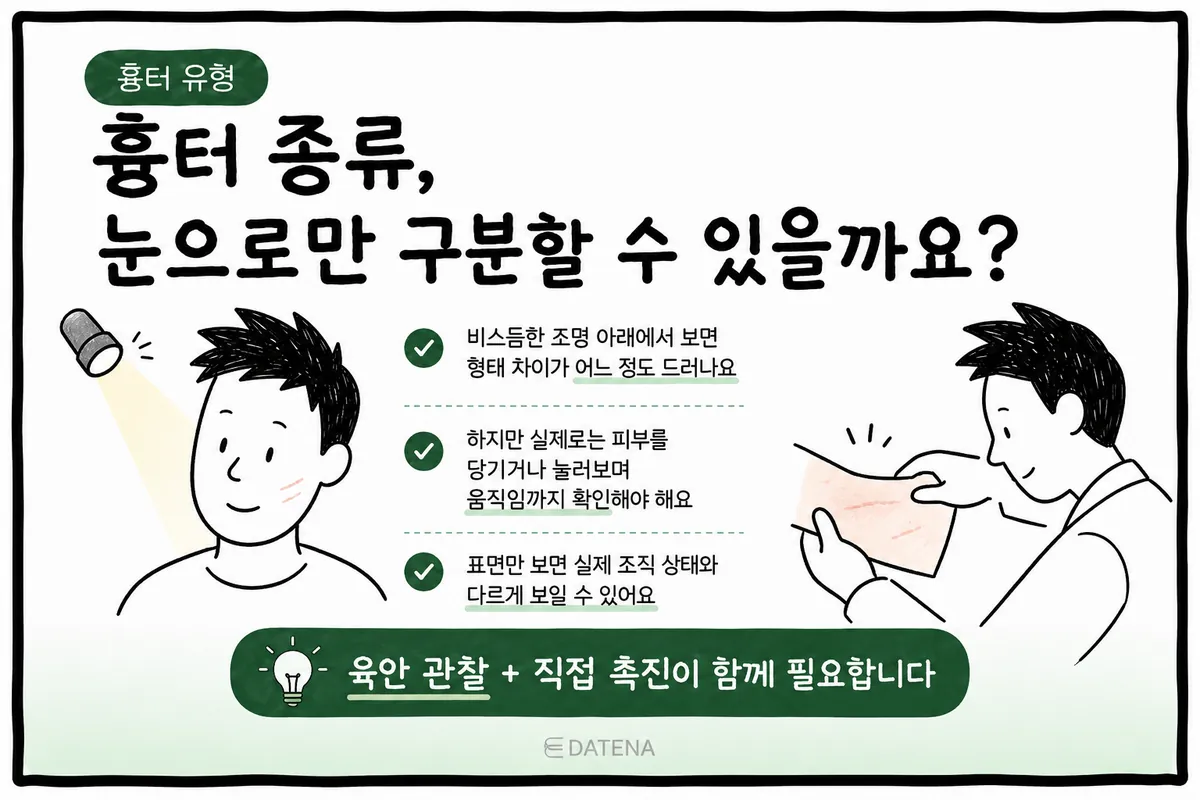
Shining a bright light across the face at an angle reveals the differences in shape to some extent. In practice, though, an accurate assessment also requires stretching and pressing the skin by hand to see how the tissue beneath each scar moves.
Judging by the surface alone can sometimes lead to a read that doesn't match what's actually going on in the tissue, so a hands-on examination is needed alongside a visual one.
6. Why does treatment differ depending on scar type?
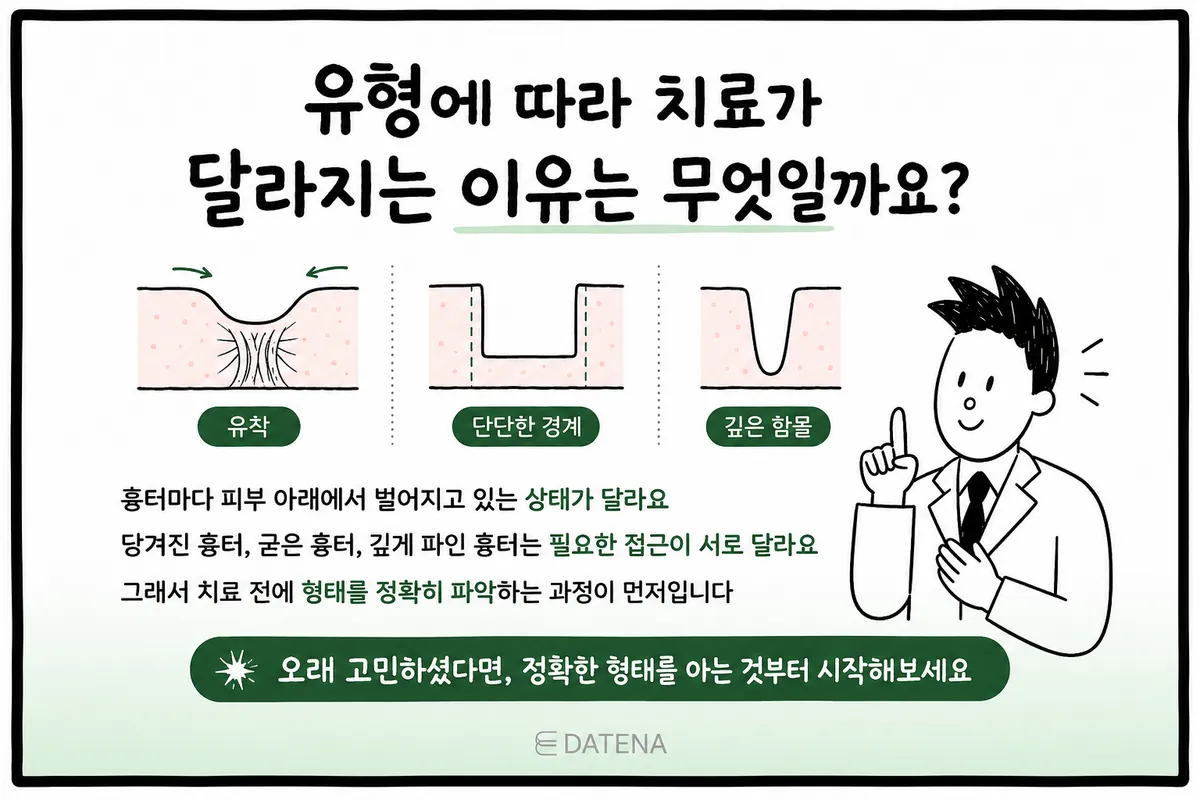
Because something different is happening beneath the skin with each scar. Scars where tissue is being pulled down, scars where tissue has hardened, and scars that are narrow and deep each call for a different approach.
If a scar that needs its tethering released only gets a treatment that refines its edges, or vice versa, the results may fall short of what you hoped for. That's why accurately identifying the scar type comes first, before any treatment.
When you go for a consultation, it's worth checking whether the clinic actually walks you through the specific shape of your scars.
Personally, I believe I can only recommend a treatment plan after examining the shape of each scar and the condition of the tissue beneath it myself.
If this is something you've been struggling with for a long time, I'd encourage you to start by understanding exactly what type of scars you have.
Medically reviewed by: Dr. Kang Dong-hyun (Datena Clinic) · Meet our doctors: /about.html