
Acne Scars vs. Acne Marks: The Real Difference, Explained
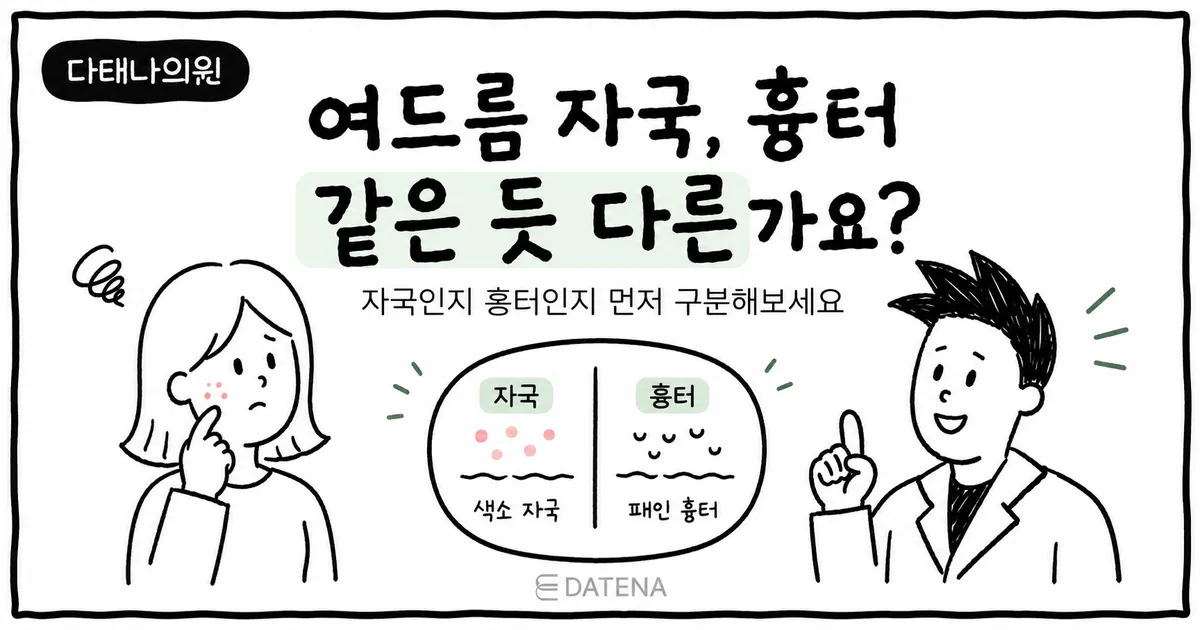
📌 Today's takeaways
Acne marks are a color issue; acne scars are a texture issue, where the skin is actually indented
Marks can fade over time, but scars don't fill themselves in
Lightly feeling your skin with your fingers can give you a fair idea of whether it's a mark or a scar
The longer scars are left alone, the firmer they can become
Hello, this is Datena Clinic.
"My acne has completely calmed down, so why won't the marks go away?"
We hear this question all the time during consultations.
Many people also ask, "Is this just a mark, or is it a scar?"
This article isn't meant to recommend any particular treatment.
We put it together to help you tell marks and scars apart on your own, and to figure out what your skin actually needs right now.
1. Acne Marks vs. Acne Scars: What's the Difference?
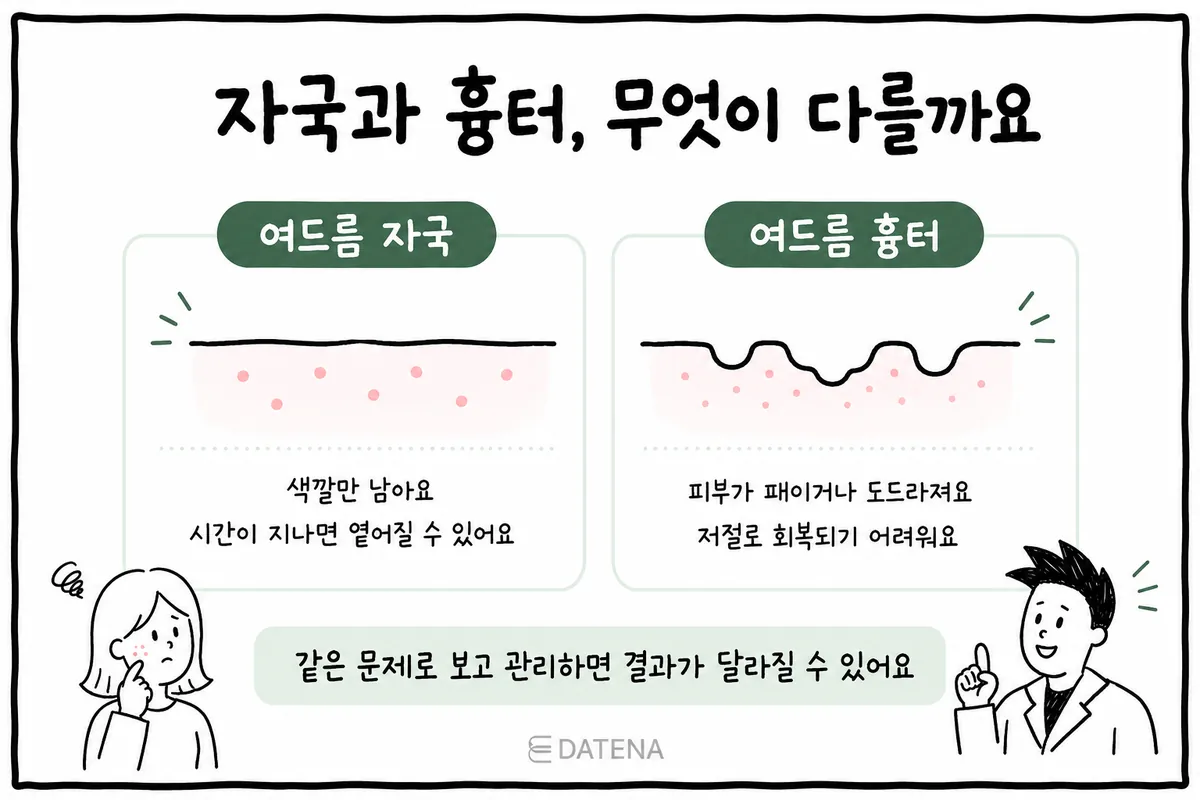
The traces acne leaves behind after it settles generally fall into two categories.
One is a mark, where only discoloration remains; the other is a scar, where the skin surface is indented or raised.
Marks often fade as time passes.
Scars, however, mean the skin's texture itself has changed, so they rarely recover on their own.
If you treat the two as the same problem, you may not get the results you were hoping for.
2. Why Do Pigmented Marks Form, and How Do They Fade?
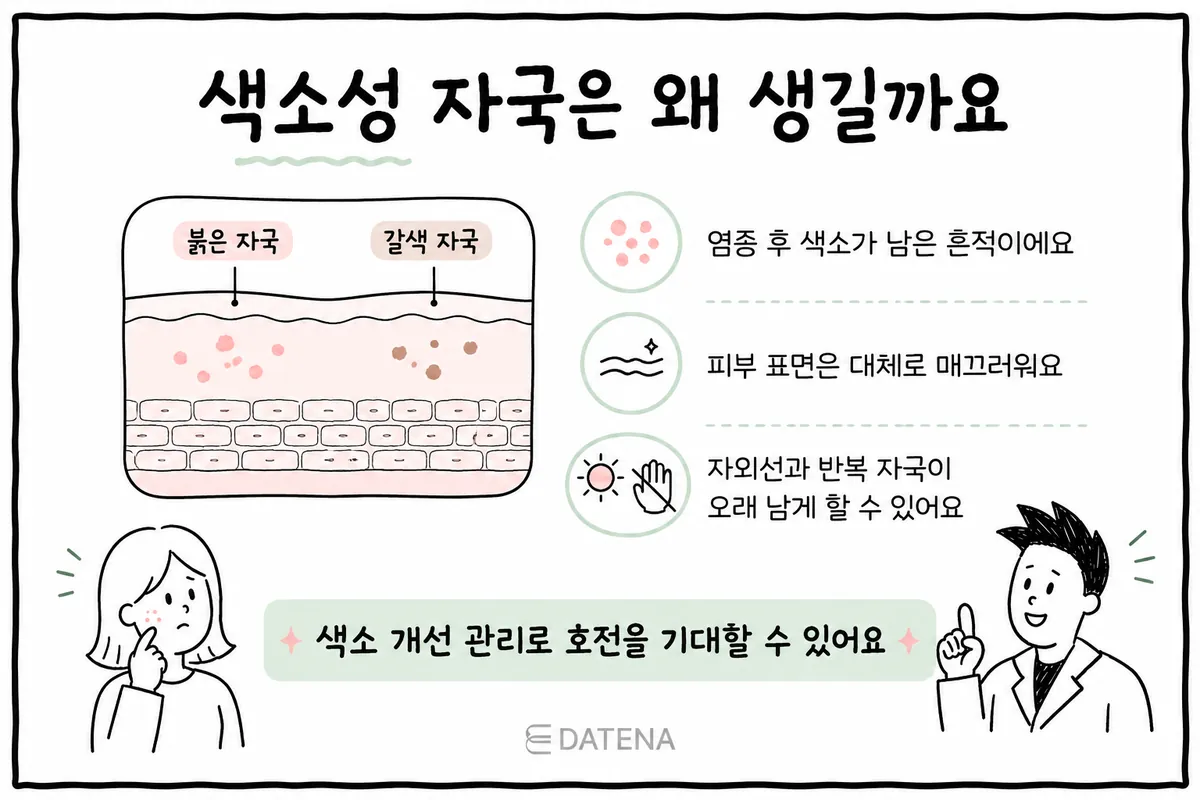
Acne marks are red or brown traces left behind when pigment builds up where inflammation used to be.
In many cases, the skin surface itself stays smooth.
They also tend to fade naturally over time.
However, sun exposure or repeatedly touching and irritating inflamed spots can make the pigment linger longer.
In these cases, care that helps improve pigmentation can be enough to expect a real improvement.
3. Why Don't Atrophic Scars Go Away on Their Own?
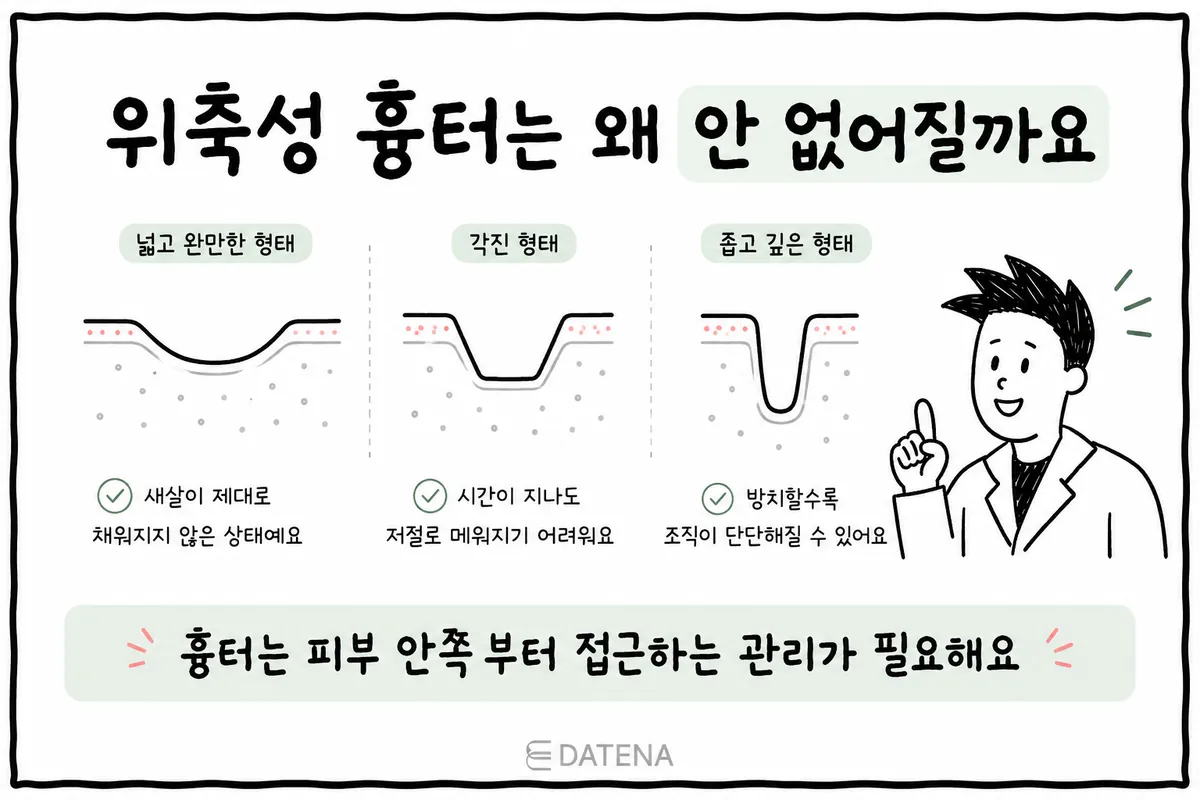
A scar forms when new tissue doesn't fully fill in an area that was badly inflamed, leaving the skin sunken or pitted.
Some scars are broad, gently sloped depressions; others have sharp, angular edges or are narrow and deep.
Scars like these don't fill in on their own over time.
In fact, the longer they're left alone, the firmer the tissue can become.
That's why, unlike marks, scars need care that works from deeper within the skin.
4. Acne Marks vs. Scars at a Glance
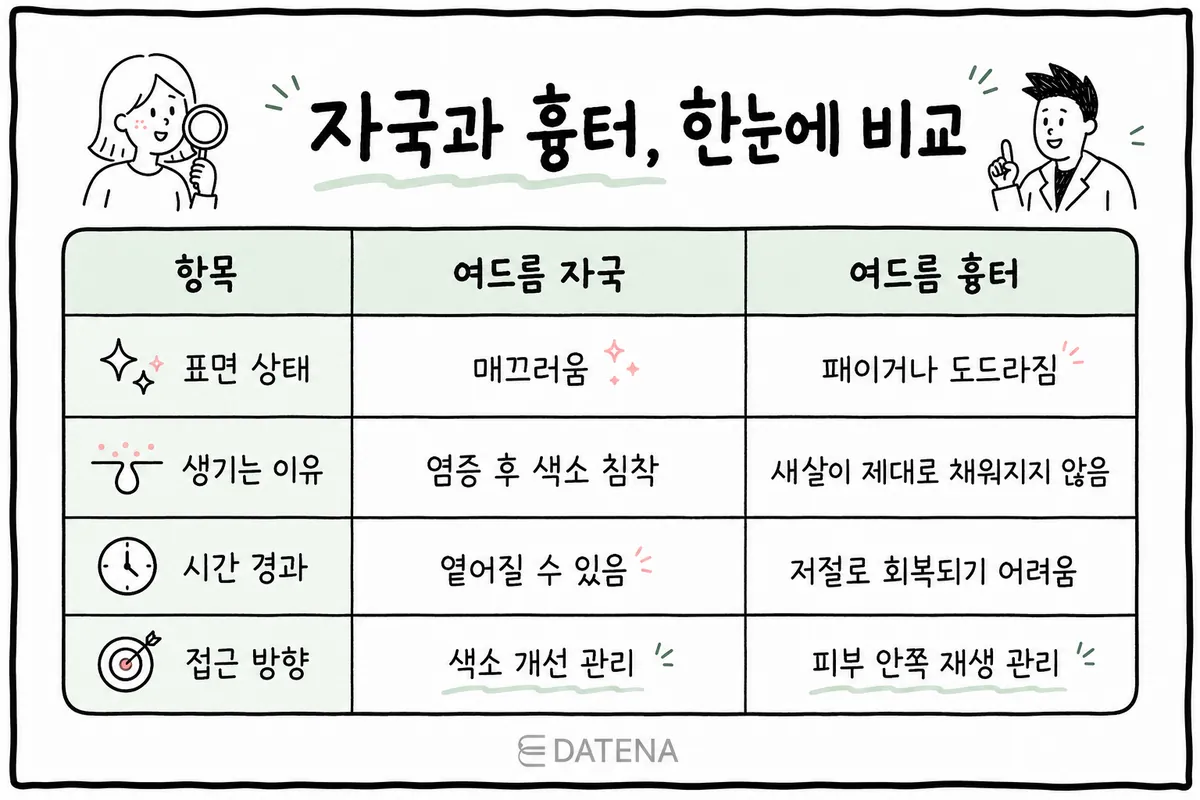
Category | Acne marks | Acne scars |
|---|---|---|
Surface | Smooth | Pitted or raised |
Cause | Post-inflammatory pigmentation | New tissue didn't fill in properly |
Over time | Can fade | Hard to recover on their own |
Approach | Pigment-focused care | Regenerative care beneath the surface |
5. How to Check for Yourself in the Mirror
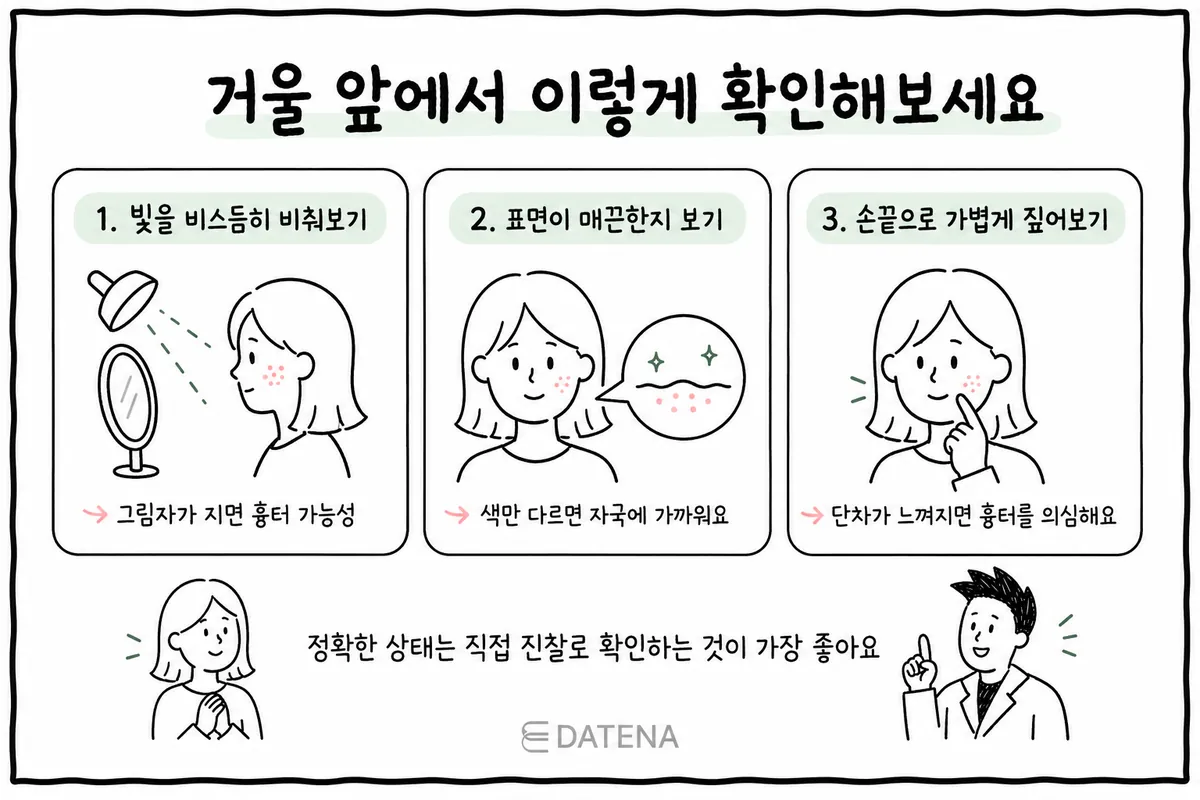
In good light, shine a light across your skin at an angle and you can tell marks and scars apart to some degree.
If shadows appear as the light grazes across, the surface is indented.
In that case, it may be a scar.
On the other hand, if only the color is different and the surface is smooth, it's more likely a mark.
If you feel a dip or ridge when you lightly run your fingertips over it, it could be a scar.
That said, this check is only a rough guide; it's best to have your skin examined in person to know for sure.
6. Don't Leave Them Untreated!
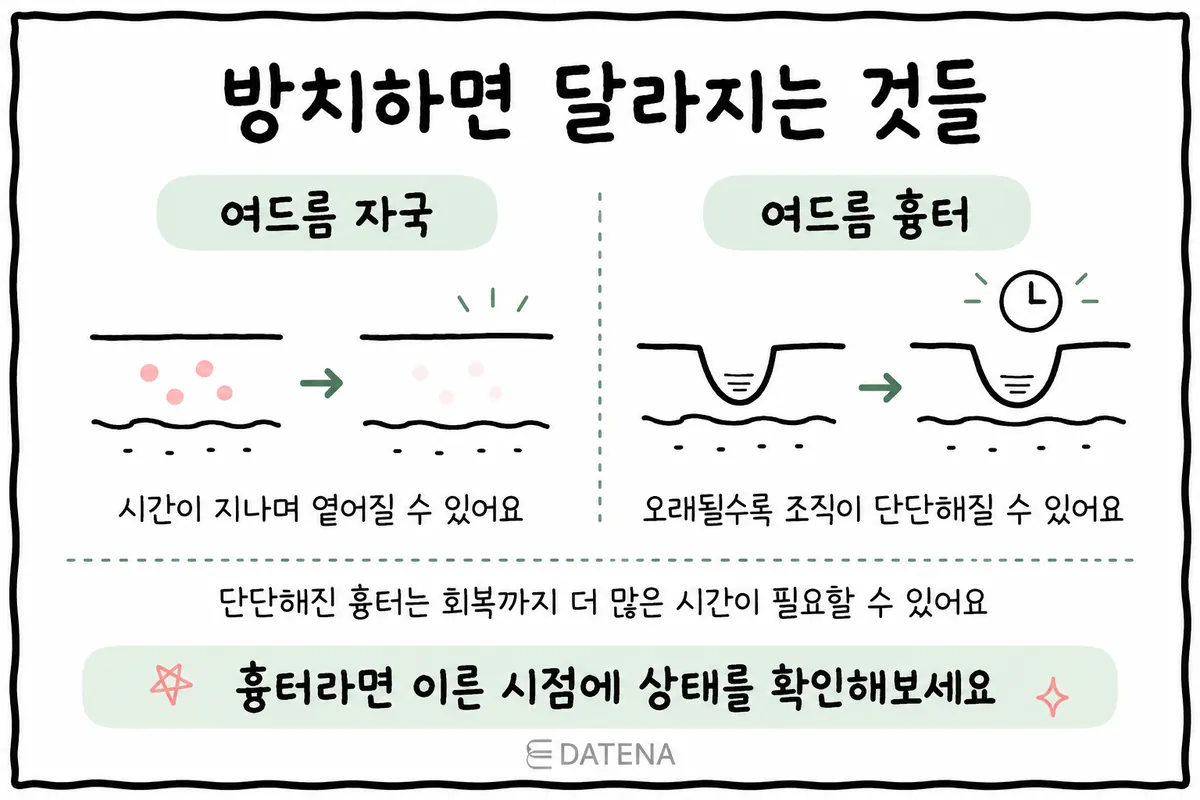
Marks can fade over time.
Scars, however, often grow firmer the longer they're left untreated.
Once a scar has hardened, recovery may take longer even after you start treatment.
Scars that are still relatively new, on the other hand, tend to respond better.
So we recommend first figuring out whether it's a mark or a scar, and if it's a scar, getting it checked early.
What we've covered today may not be enough to tell marks and scars apart perfectly.
If you're unsure, the most reliable option is a proper examination at a dermatologist or clinic near you.
Whichever clinic you choose, we suggest looking for one that first accurately determines whether you have marks or scars, then recommends an approach that fits.
I don't judge a patient's skin by its color or how deep the indentations are alone.
I also try to understand how long those marks have been weighing on you, and let that guide how I treat you.
That feeling is also the reason I'm writing this today.
Medically reviewed by: Dr. Kang Dong-hyun (Datena Clinic) · Meet our doctors: /about.html