
Acne in Jamsil: Treatment Depends on the Type
Today's summary
Acne happens when oil production, clogged follicles and inflammation all overlap
Non-inflammatory and inflammatory acne start at different levels of the skin, so they're treated differently
The deeper the inflammation, the higher the risk of scarring
The first step is figuring out whether your current acne is something you can manage on your own
Hello, this is Datena Clinic.
"Will my acne just go away with time?" "Is an ointment enough, or should I see a doctor?"
These are questions we hear all the time from people struggling with acne. The answer depends on what form your acne takes right now and how deep the inflammation goes. This isn't a promotional post. Instead, we want to walk you through everything from causes to treatment timing, so you can get a sense of your own acne type and stage.
1. Why does acne happen?
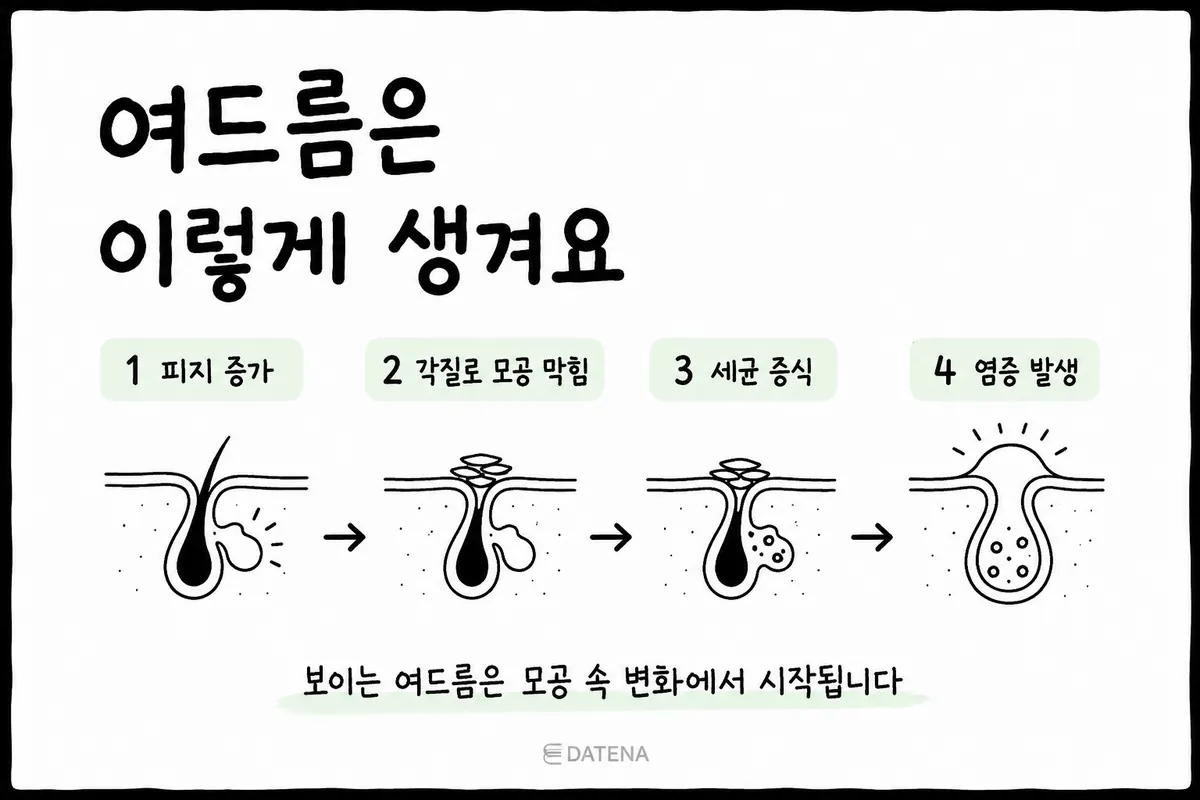
Acne starts in a structure called the pilosebaceous unit, made up of the hair follicle and the sebaceous (oil) gland. When the gland produces too much oil and, at the same time, dead skin cells build up thicker than normal at the follicle opening, the pore gets clogged. Oil trapped inside that clogged pore creates the perfect environment for Cutibacterium acnes, the bacteria commonly known as the acne bacteria, to multiply.
As these bacteria multiply, they release byproducts, and the area around the follicle reacts with inflammation. That's how acne turns red and painful. In short, acne is the result of four overlapping factors: oil production, abnormal shedding of skin cells, bacterial growth and inflammation.
2. Non-inflammatory vs. inflammatory acne: two different problems
Acne falls into two broad groups, depending on whether inflammation is involved.
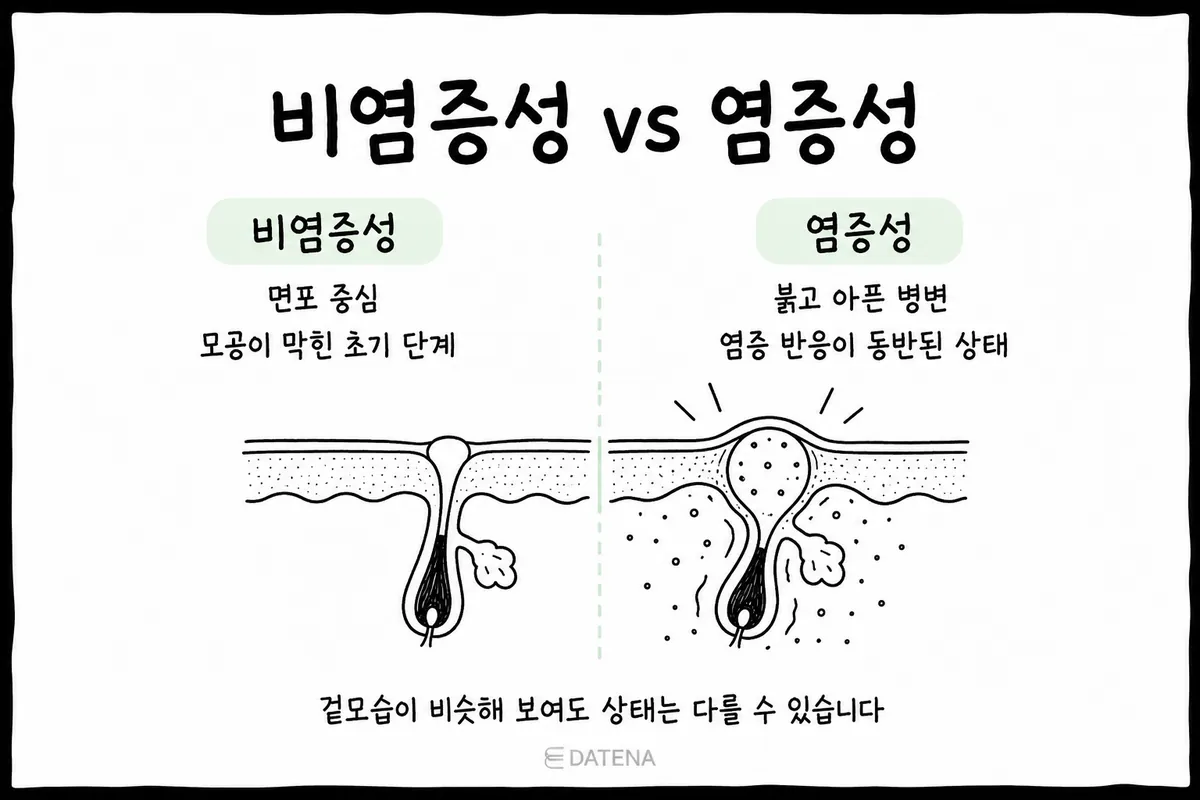
Non-inflammatory acne is a clogged pore filled with a plug of dead skin and oil, before any inflammation has started. It comes in two forms: open pores that look dark (blackheads) and closed pores that show up as white bumps (whiteheads). At this stage there's little to no pain when you touch it, and pressing on it doesn't cause much swelling or redness.
Inflammatory acne happens when the clogged follicle wall can't take the pressure and ruptures, spilling oil and bacteria into the surrounding dermis and triggering a full inflammatory response. Depending on how deep the inflammation goes, it can appear in several stages: red swollen bumps, pus-filled bumps, and deeper still, firm lumps or soft, fluid-filled pockets.
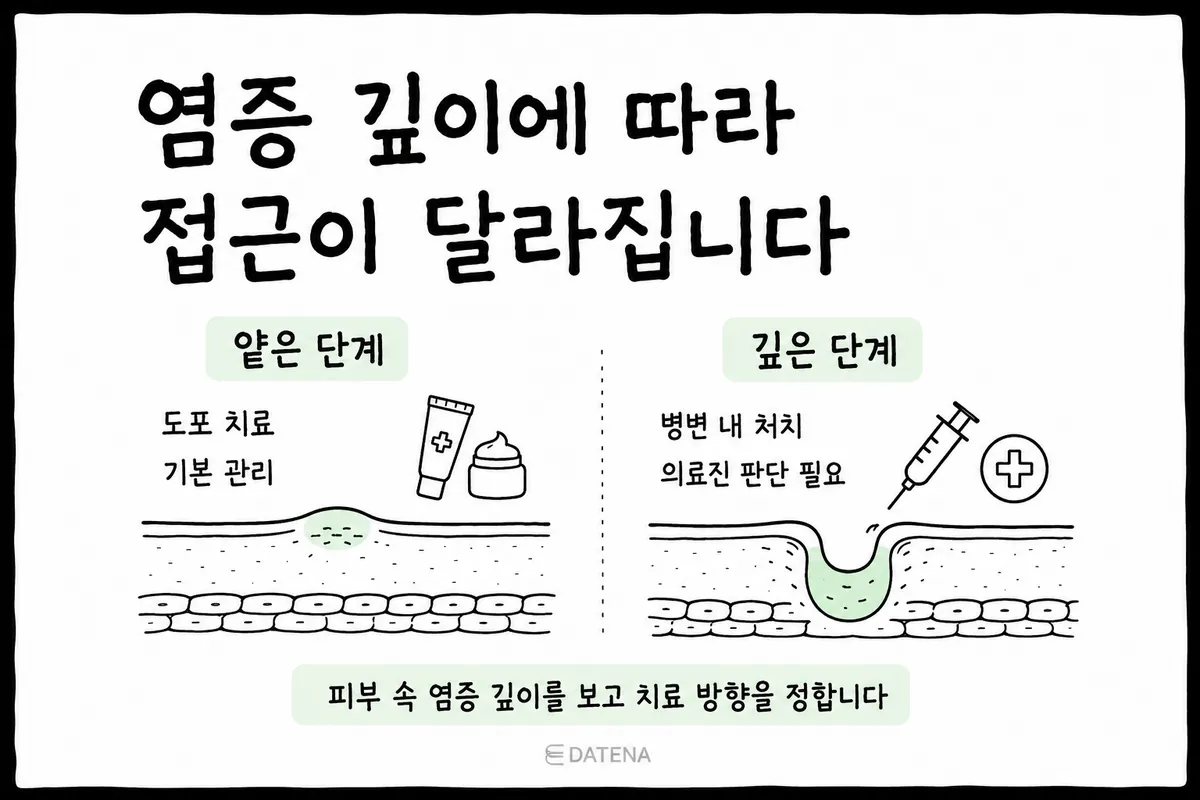
3. Treatment depends on the stage of inflammation
Even within inflammatory acne, shallower and deeper stages are approached differently.
For early, relatively shallow inflammation, like mild redness or pus-filled bumps, treatment usually focuses on topical ingredients that help control oil production and support healthy skin cell turnover. When needed, a topical that suppresses bacterial growth may be added.
Deep inflammation, on the other hand, where lesions form firm lumps or soft pockets deep in the dermis, often doesn't settle down with topicals alone. Because the inflammation has spread into the deeper layers of the dermis, treatments that work directly inside the lesion or oral medication may be needed. With deep inflammation, the longer treatment is delayed, the wider the damage to surrounding tissue becomes.
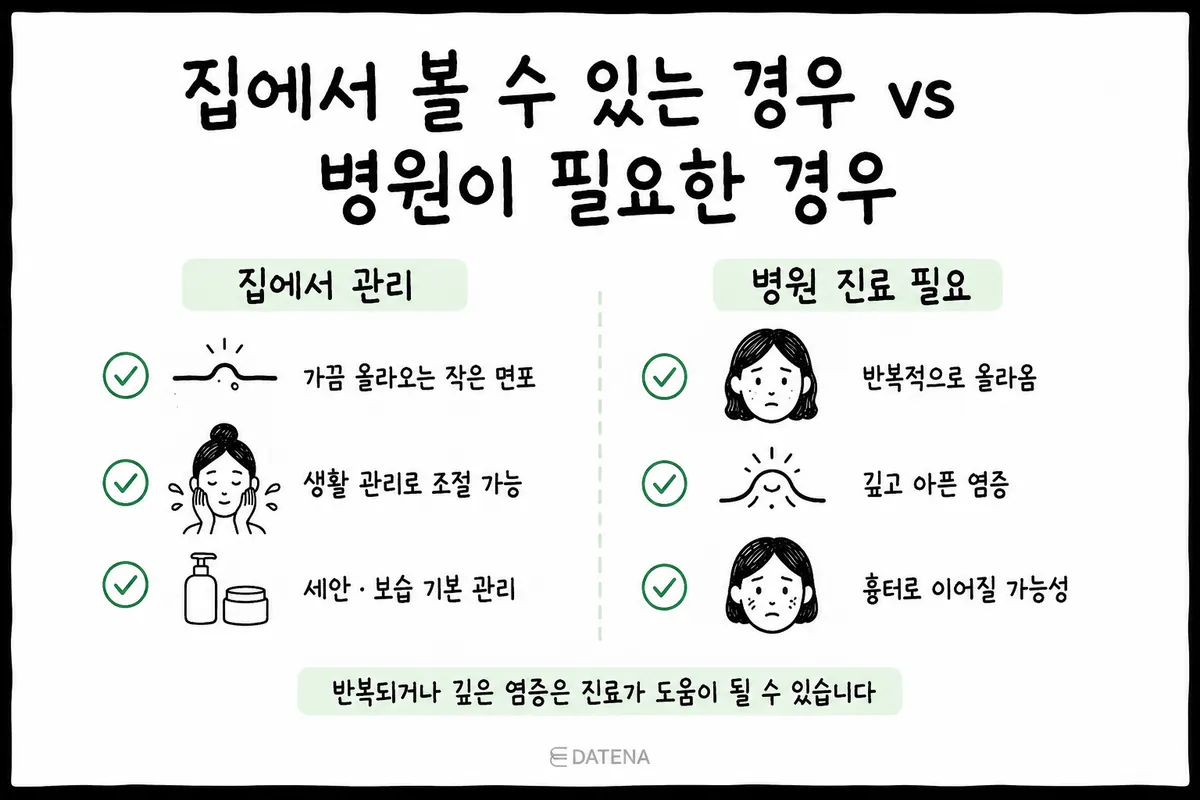
4. When home care is enough, and when to see a doctor
If you have just a few non-inflammatory spots with little to no pain or redness, gentle cleansing, moisturizing and cutting down on irritation are often enough to see improvement.
But if inflammatory acne keeps coming back, or you also have deep lesions that feel firm or soft and fluid-filled, home care may only go so far. Especially if inflammation keeps recurring in the same spot, another breakout is likely to follow even after the current one calms down, so it's worth seeing a doctor to look into the underlying cause.
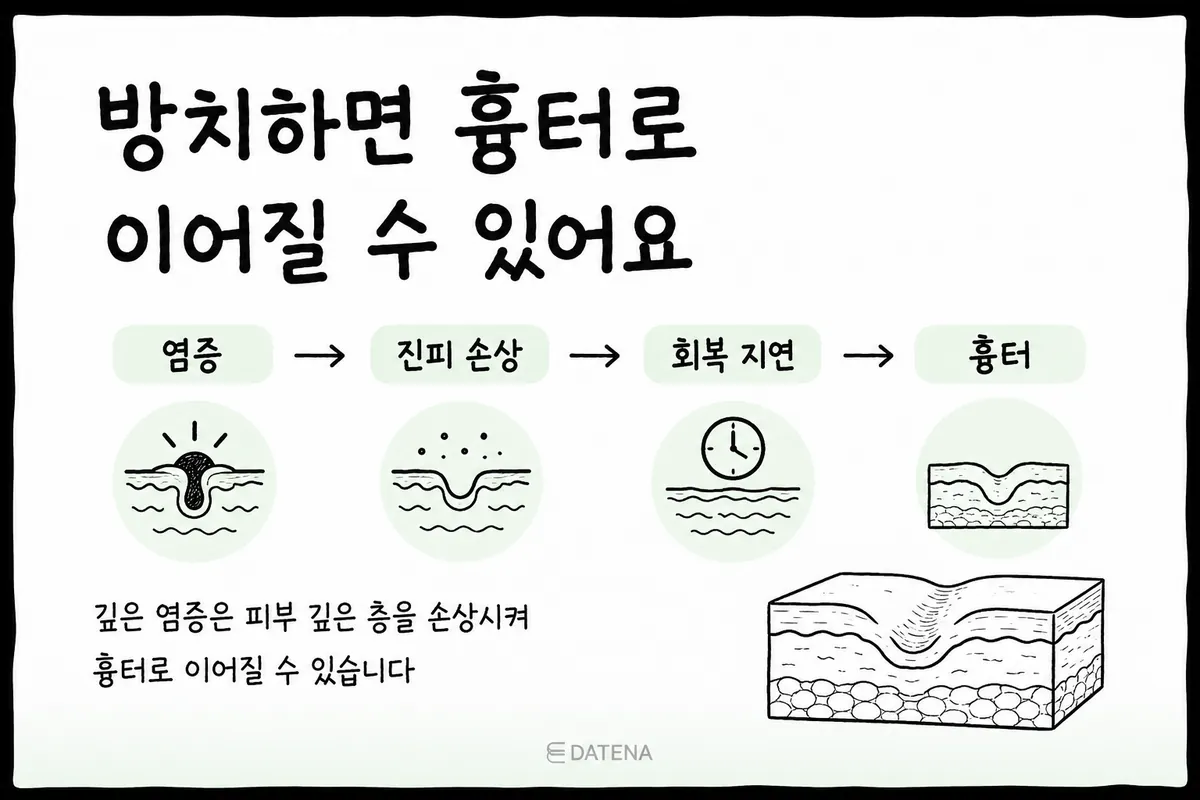
5. Why untreated acne can lead to scars
When inflammation is shallow and short-lived, skin usually heals without leaving much of a mark. The problem is inflammation that's deep and lasts a long time. When the follicle wall ruptures and the dermis is damaged too, collagen can regenerate unevenly, or even be lost, as the skin repairs itself. That's how scars form.
Add physical irritation like squeezing or picking, and the inflammation can spread even deeper, raising the risk of scarring. That's why, especially with deep inflammatory acne, getting the right treatment early to shorten how long the inflammation lasts plays a key role in preventing scars later on.
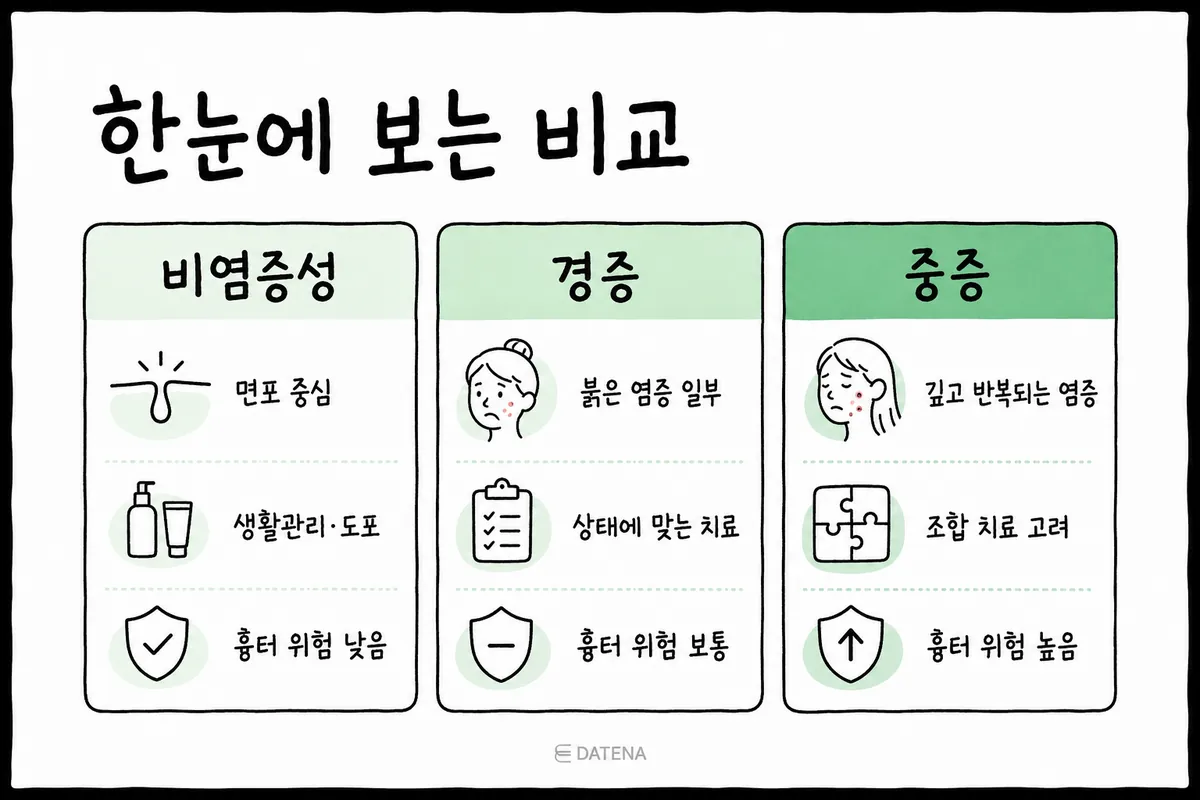
6. Comparing features and approaches by stage
Here's a step-by-step summary of everything we've covered so far.
Type | Non-inflammatory (comedones) | Mild inflammatory (papules and pustules) | Severe inflammatory (nodules and cysts) |
|---|---|---|---|
Characteristics | Clumped dead skin and oil, little to no pain | Red and swollen, or filled with pus | Firm or soft pockets deep in the dermis |
Scarring risk | Low | Moderate | High |
Approach | Lifestyle care, regulating skin cell turnover | Topical treatments, plus antibacterial care if needed | In-lesion treatment, with oral medication considered |
If left untreated | Usually heals without a trace | Inflammation can go deeper if it keeps recurring | High risk of scarring due to dermal damage |
If inflammatory acne keeps coming back, or you have deep breakouts alongside it, we recommend getting a consultation to look into the cause before it turns into scarring. Knowing exactly where your skin stands right now is the surest way to worry less about scars later.
At Datena Clinic, the doctor personally checks the inflammatory stage of your acne, and we take ample time in consultation to explain what approach you need right now. With acne, how your skin looks later can depend on how it's handled now, not after it has passed.
Medically reviewed by: Dr. Kang Dong-hyun (Datena Clinic) · Meet our doctors: /about.html