
Why Brightening Products Don't Work on Red Acne Marks

Today's summary
Red marks aren't pigment; they're dilated blood vessels showing through the skin
Brightening ingredients target melanin, so they have limited effect on red marks
The thinner or more sensitive your skin, the longer redness tends to linger
Red marks need a separate approach that targets blood vessels

Hello, this is Datena Clinic.
"Why do my red marks stay the same even with brightening cream?" "My acne marks are red, not brown. Is this still hyperpigmentation?"
Many people find that after a breakout calms down, the redness alone sticks around for a long time. The short answer: red marks aren't a buildup of pigment, so methods designed for pigment will inevitably be slow to help. This isn't a promotional post. We simply want to explain, from the basics, why red marks form and why they're so stubborn.
1. Red acne marks are a different problem from hyperpigmentation
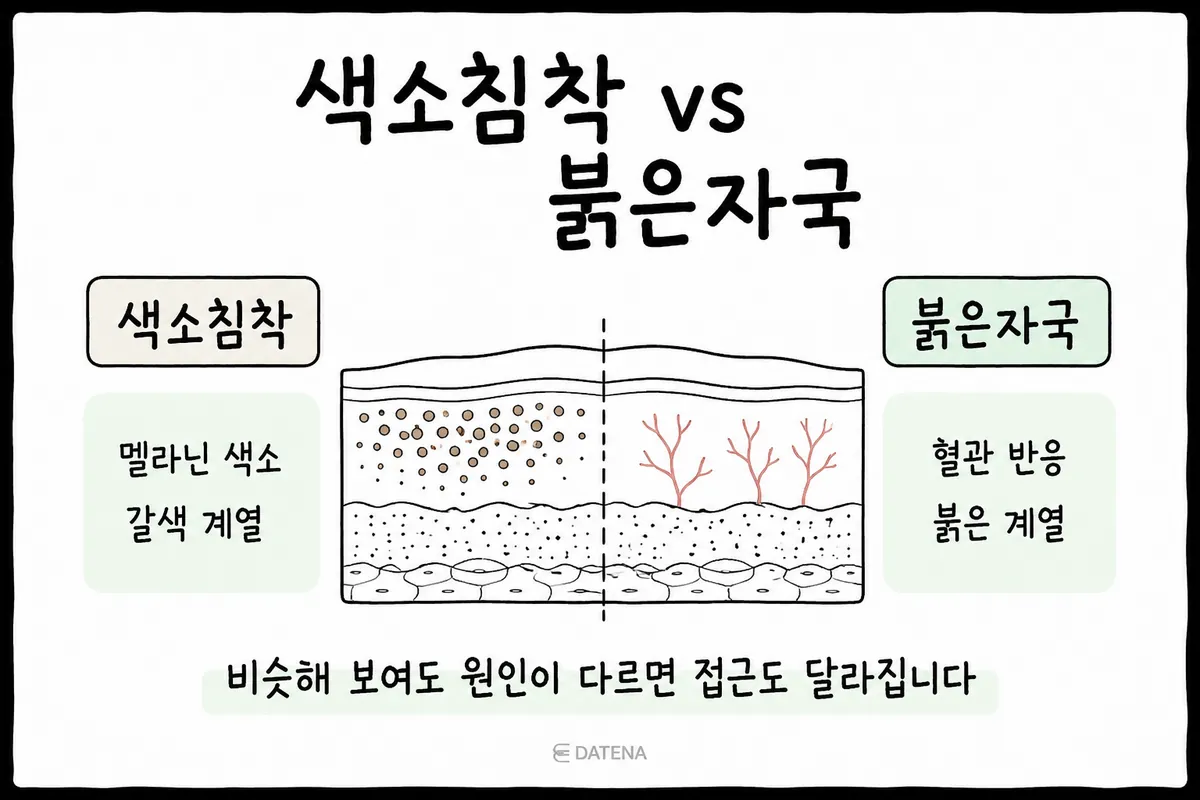
Marks left behind by acne fall into two broad groups based on color. Brown or darker marks are hyperpigmentation, a buildup of melanin. Red or pink marks aren't pigment at all; they're blood vessels beneath the skin showing through.
To the eye, both just look like "marks," but what's happening inside the skin is completely different. Hyperpigmentation is pigment accumulated inside cells, while a red mark is a change in the state of the blood vessels themselves. If you keep applying only pigment products without knowing this difference, the underlying vessel issue stays exactly as it was.
2. Why do they stay so red?
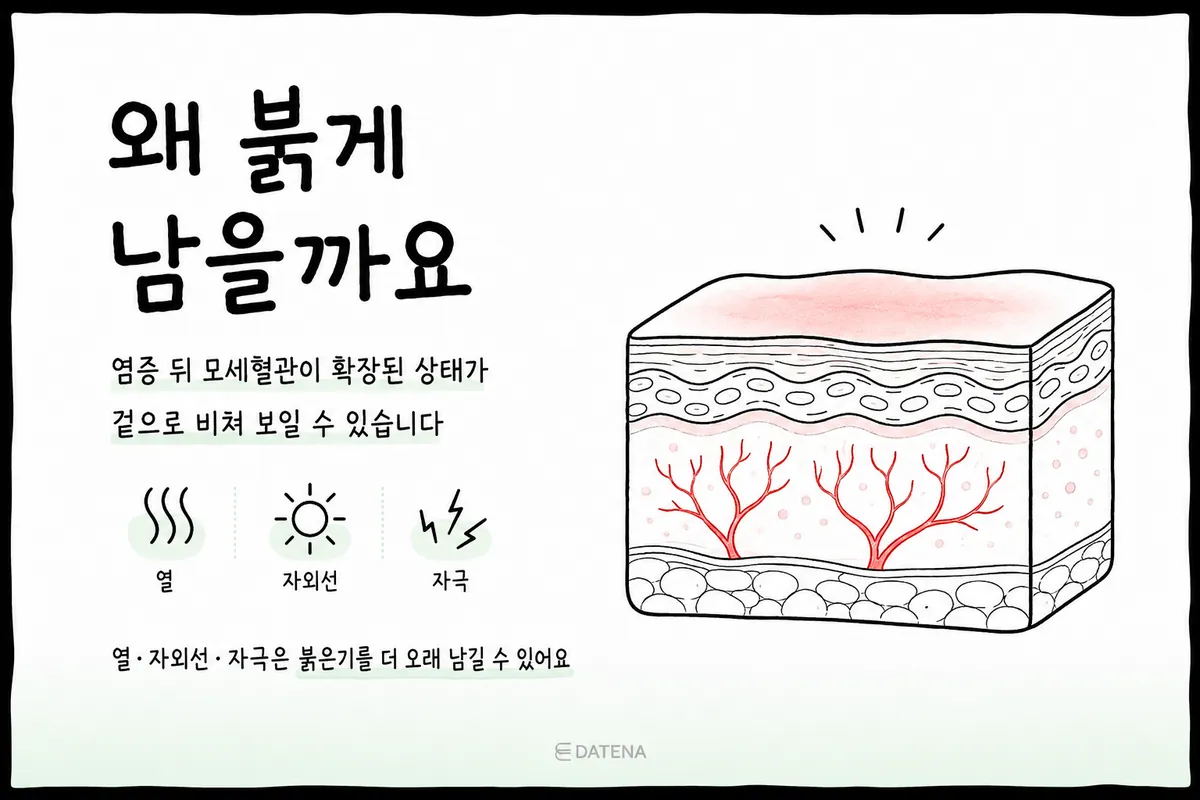
While acne inflammation is active, blood rushes to the area to repair damaged tissue, and the capillaries dilate. If those vessels don't fully return to their original size after the inflammation settles and stay widened under the skin, the red vessels show through the thin outer layer and appear as a red mark.
This tends to be more noticeable where the skin is thin or where blood vessels sit close to the surface. Repeated sun exposure, washing your face with hot water, or heat such as saunas can dilate the vessels again and make the redness look deeper. In other words, a red mark isn't new pigment forming; it's closer to already-widened vessels becoming more prominent in response to triggers.
3. How long until they fade?

Widened vessels need time to contract and return to normal size. Mild cases sometimes fade naturally within a few weeks to a few months, but if the vessels have stayed dilated for a long time, they may return on their own very slowly, or show hardly any visible change.
In particular, when acne keeps coming back in the same spot and the blood vessels dilate again each time, the vessel walls themselves can become fixed in a stretched state, making natural recovery hard to expect. If the redness hasn't changed after several months, it may be time to look into the cause rather than waiting for it to fade on its own.
4. Why Brightening Products Don't Work Well
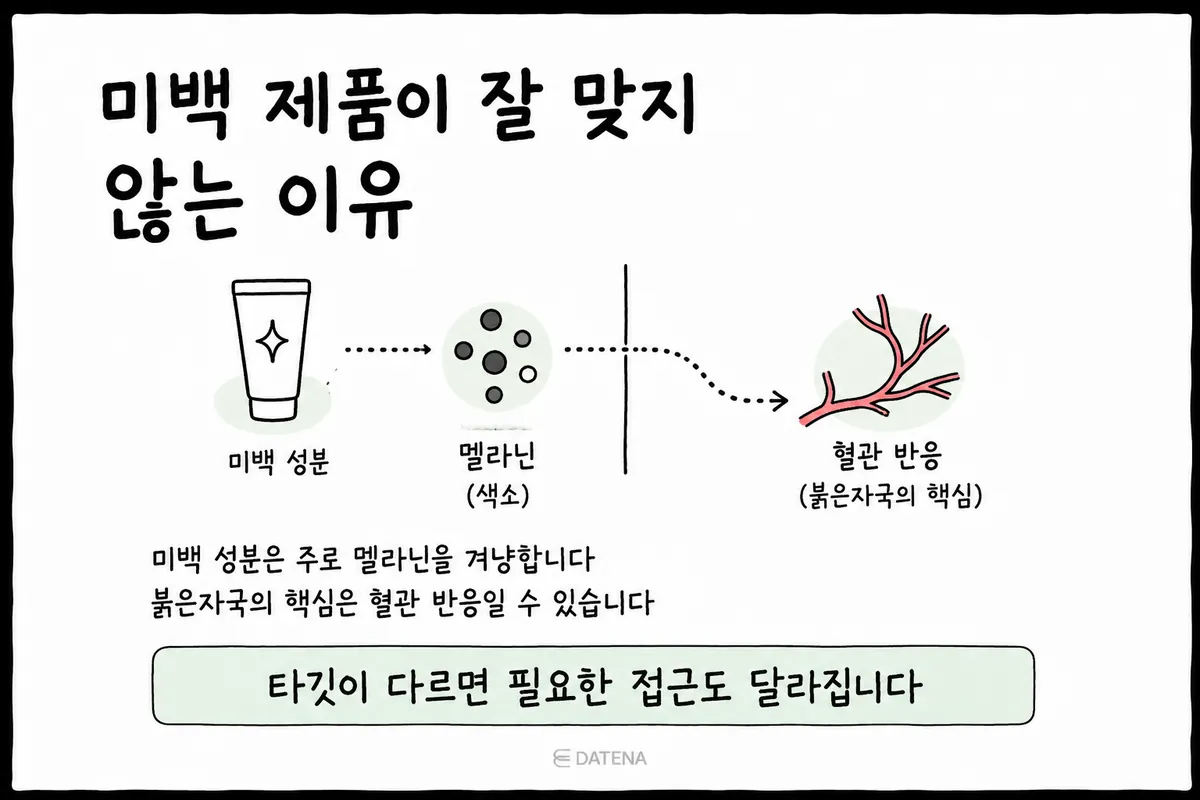
Most products labeled as "brightening" or "whitening" work by suppressing melanin production or blocking the transfer of pigment that's already been made. In other words, their ingredients target pigment cells and the pigment itself.
Red marks are caused by blood vessels, not pigment cells, so these ingredients simply have nothing to act on. No matter how consistently you apply a brightening product, it can't affect the dilated vessels themselves, which is why the redness doesn't fade much. What red marks need isn't an approach that breaks down pigment, but one that addresses the dilated vessels directly.
5. How Are Red Acne Marks Treated?
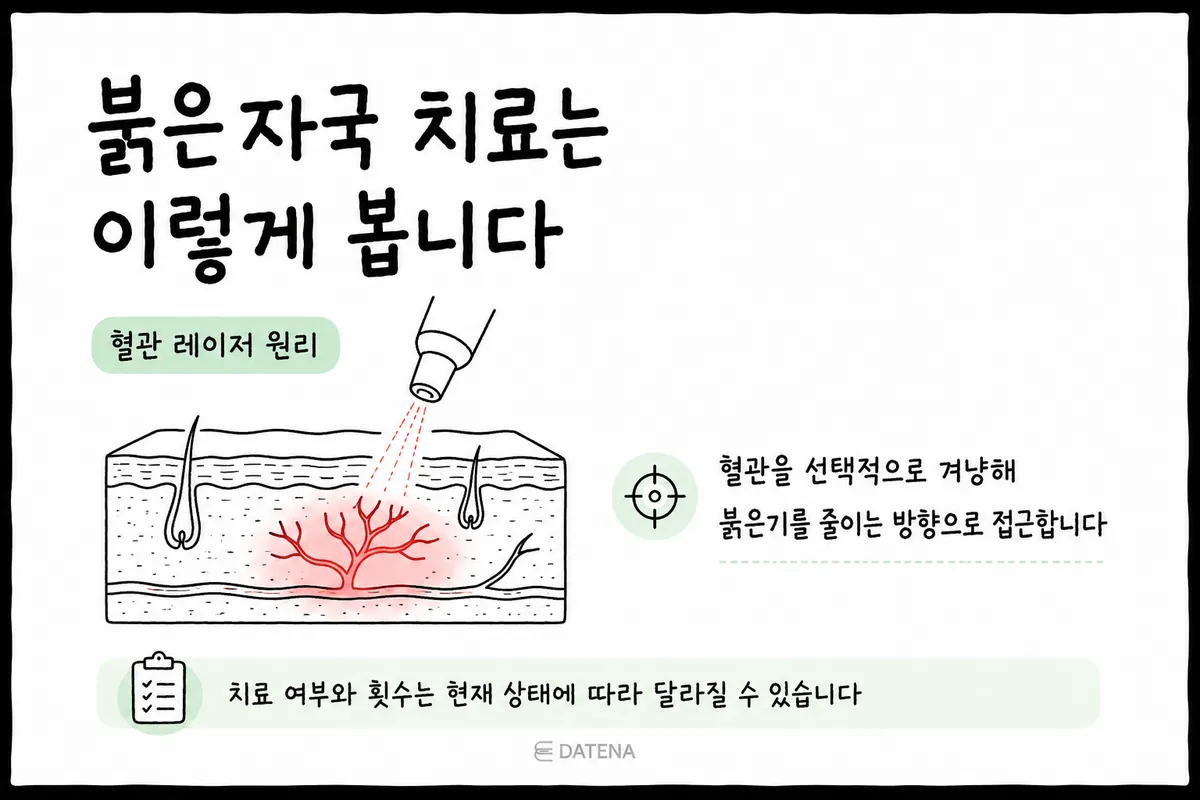
Red marks are treated with methods that target blood vessels. A typical example is a pulsed dye laser in the 585–595 nm wavelength range. This wavelength is selectively absorbed by hemoglobin in the blood, so when energy reaches the dilated vessel walls, the vessels coagulate and the body then naturally reabsorbs them, causing the redness to fade.
Broad-spectrum light (IPL-type) treatments are also used, and they tend to work well on vessels that sit relatively close to the surface. Whichever method is chosen, repeating gentle, low-intensity sessions over several visits, rather than trying to finish in one, is better for gradual improvement without straining the vessel walls.
After treatment, you'll also need to protect your skin from UV and avoid heat. Repeated exposure to sunlight or heat can cause the healing vessels to dilate again.
6. Pigment Marks vs. Red Marks

Here's a summary of everything above in a table.
Type | Pigment marks (brown) | Red marks |
|---|---|---|
Cause | Melanin pigment builds up in the epidermis/dermis | Dilated capillaries showing through the skin |
Response to triggers | Color darkens with UV exposure | Redness becomes more noticeable with heat/UV |
Response to brightening products | Somewhat helpful | Limited effect |
Treatment approach | Lasers and topicals that target melanin | Lasers that target blood vessels |
Natural course | Superficial marks may fade within a few months | Once set in for a long time, natural recovery is slow |
If your red marks have stayed the same for months, you may need an approach that addresses the blood vessels rather than pigment care. Accurately telling whether your remaining marks are pigment or a vascular issue is the first step toward cutting down on unnecessary products.
At Datena Clinic, the doctor personally checks whether your marks are caused by pigment or blood vessels, then guides you toward the approach that fits. We believe the path to skin without redness begins with knowing the exact cause.
Medically reviewed by: Dr. Kang Dong-hyun (Datena Clinic) · Meet our doctors: /about.html