
Finding a Good Acne Scar Clinic: What to Check Before Treatment Names

Today's summary
If you choose an acne scar clinic based only on reviews or device names, you may miss something important
Even scars of the same type, like boxcar or rolling scars, differ from person to person
The treatments considered first depend on the scar type, and one treatment alone often isn't enough
Your plan may be adjusted as your skin is re-evaluated during treatment
Hello, this is Datena Clinic.
If your acne has calmed down but left pitted marks behind, you've probably searched for an acne scar dermatologist or the best place for acne scar treatment.
But every clinic lists different devices and treatment names, which can make it hard to know how to judge them.
Review counts and device names alone often can't tell you whether a treatment actually suits your scars.
Today, we'll walk through what's worth checking before treatment names when deciding where to get acne scar treatment.
1. Common criteria for choosing an acne scar clinic, and what's easy to overlook
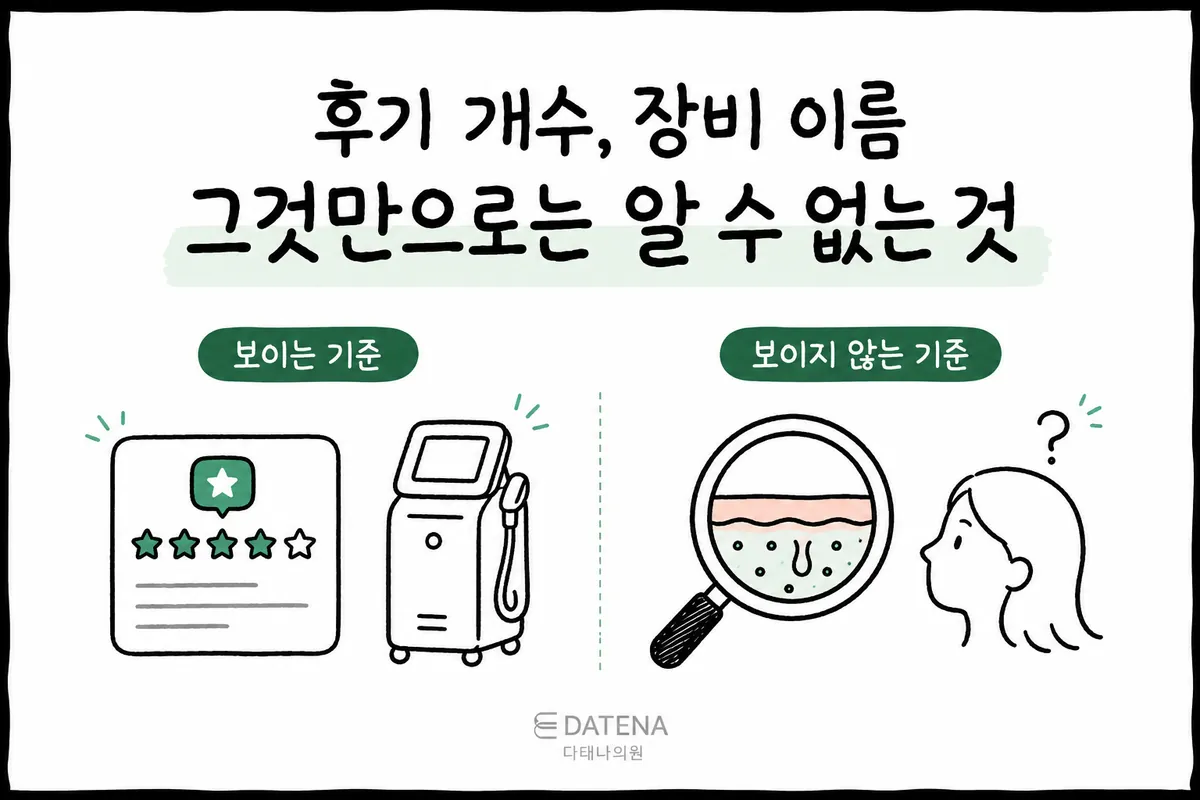
When people search for an acne scar clinic, they usually look at the number of reviews, the devices available and the doctor's experience, in that order.
These are useful starting points, but on their own they don't tell you whether you'll get treatment that fits your scars.
Even with the same device, results can vary depending on which scars it's used on, at what depth and in what combination.
Acne scar treatment in particular isn't set in a single visit; it requires ongoing assessment of scar type and skin condition to build the plan.
So rather than starting with reviews or device names, it's more helpful to look at how the clinic evaluates your scars and designs your treatment.
2. Why Scars With the Same Name Can Behave Very Differently
Acne scars are usually described in a few categories: narrow, deep pitted scars; angular, sunken scars; and wide scars with a wavy, rolling contour.
These categories help you understand the general shape of a scar, but in real clinical practice, a name alone often doesn't tell the whole story.
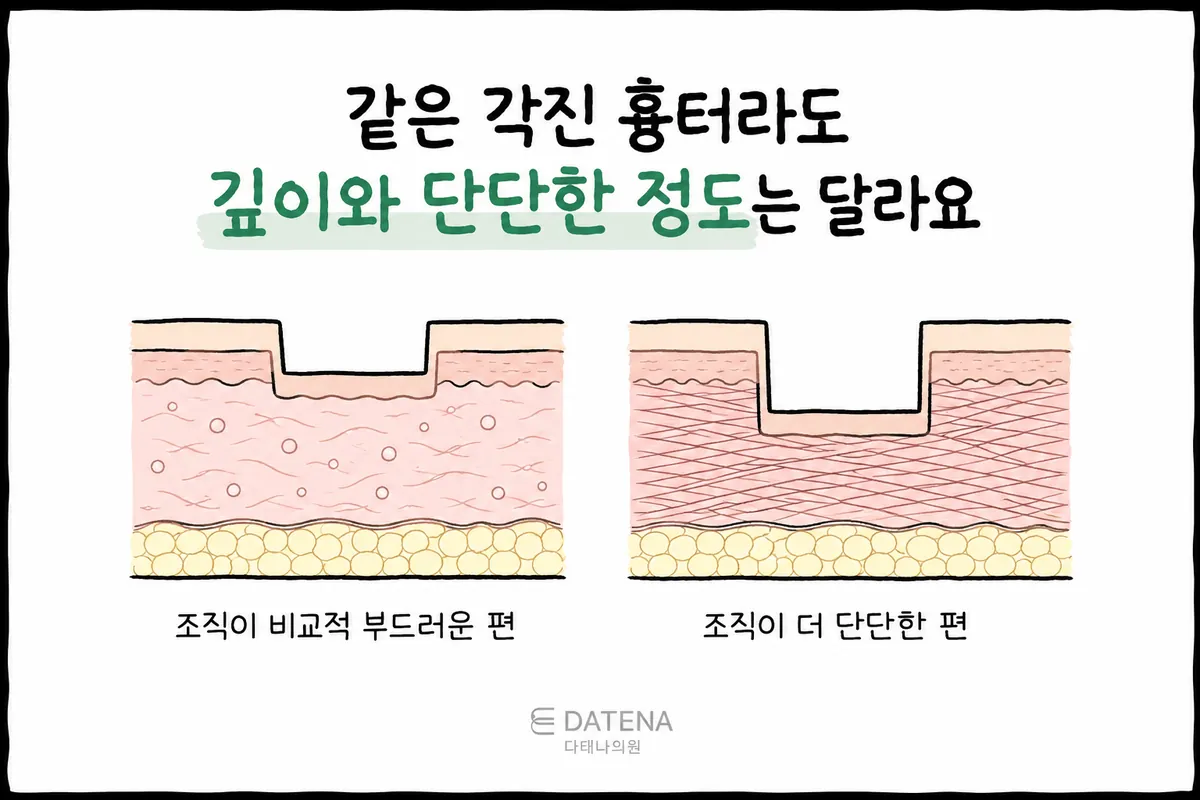
Two angular scars can respond very differently: one may improve noticeably after just a few sessions, while another may show only modest change even after repeated treatments at a similar intensity.
These differences come from several factors working together: not just how deep the scar is, but how tightly the tissue underneath is tethered, how thick and elastic the surrounding skin is, and how long the scar has had to harden.
That's why, rather than simply labeling a scar, the first step should be a close assessment of its current condition, by touch as well as by eye.
3. How Scar Type Shapes Which Treatments Are Considered First
The shape of a scar is an important guide when deciding how to treat it.
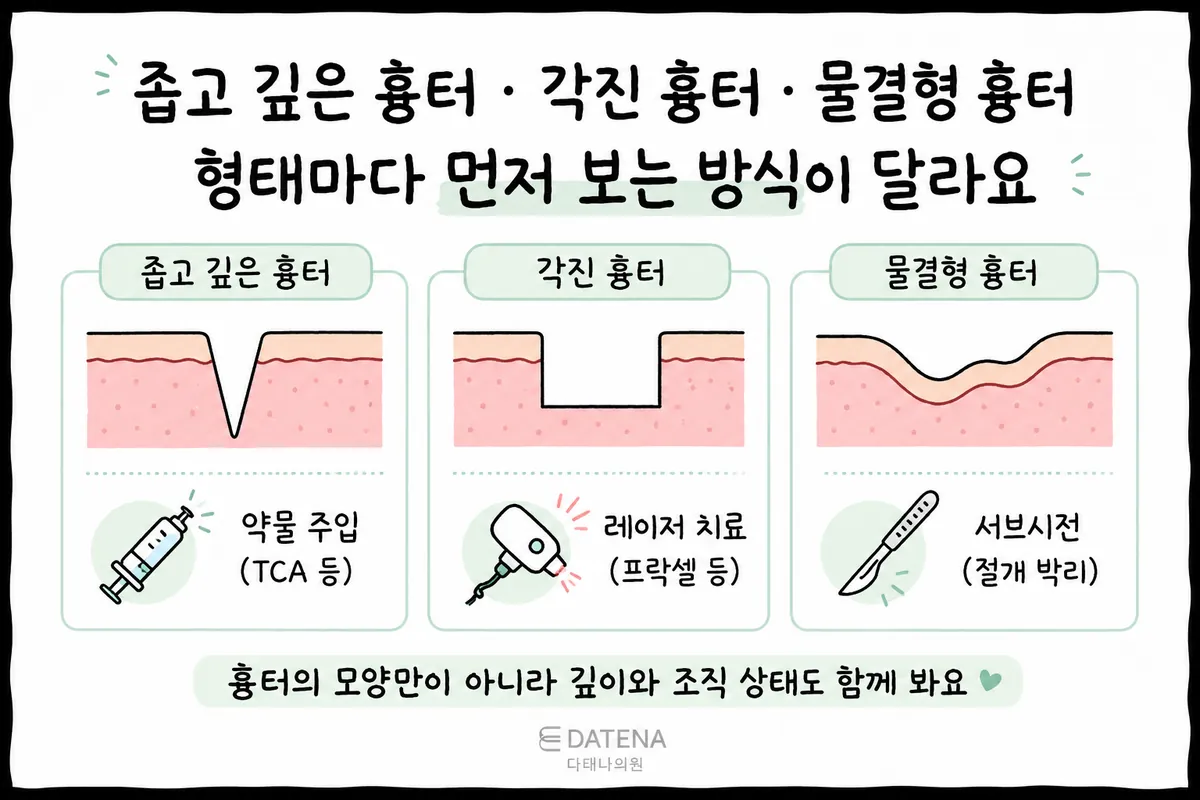
Narrow, deep pitted scars often extend into the deeper layers of the skin, so standard needle-based or surface treatments may not deliver medication deep enough to where it's needed.
In these cases, we first consider a needle-free device that uses high pressure to deliver medication precisely into the dermis, filling the scar from the inside with ingredients that support collagen production.
Angular, sunken scars tend to have relatively well-defined edges, so we also consider laser treatments that carefully refine those hardened borders, creating conditions for the skin to fill in new tissue and smooth out.
Wide, rolling scars are often caused by fibrous bands beneath the skin pulling the scar downward, so a procedure that releases these bands, allowing the scarred area to lift up naturally, is usually considered first.
Because priorities shift depending on scar type, the same procedure isn't applied the same way to every scar.
4. When a Single Treatment Isn't Enough
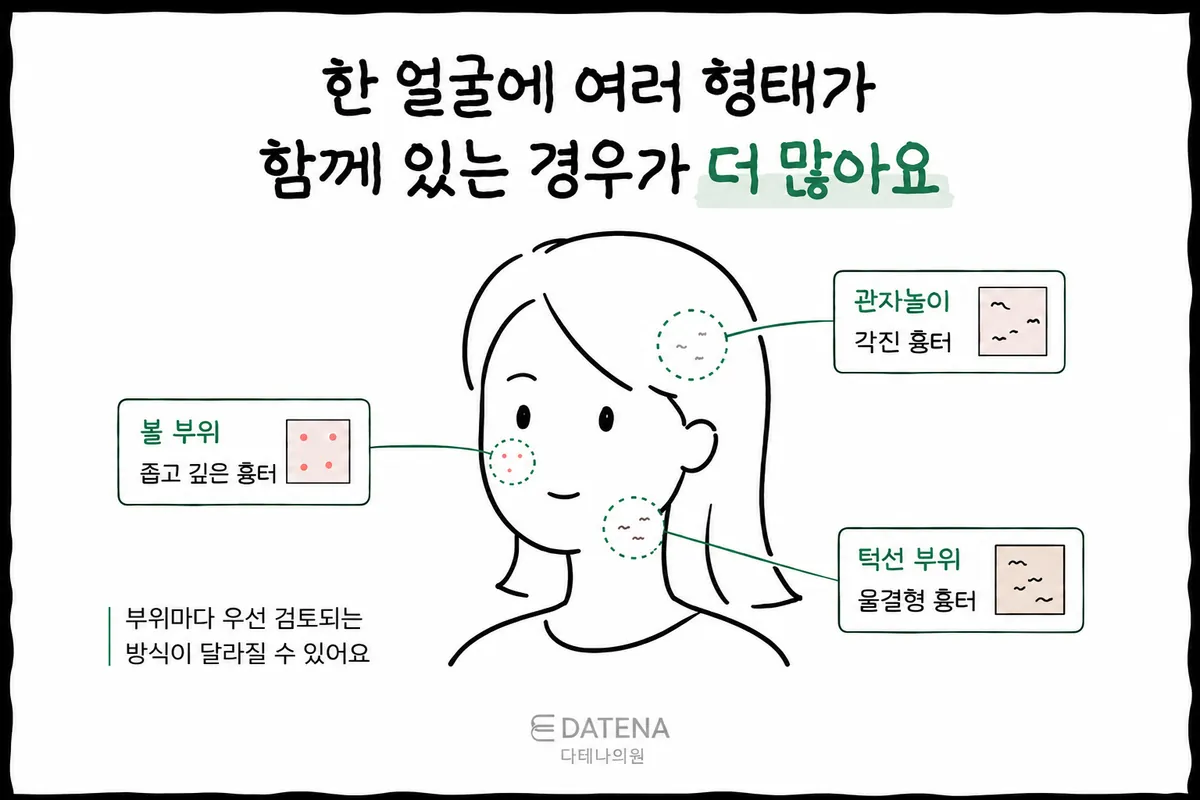
In practice, it's actually more common to see narrow deep scars, angular scars and rolling scars all on the same face than to see just one type.
With this kind of mixed picture, releasing fibrous bands alone may not fully restore lost volume, and filling with medication alone may not smooth out firm, hardened scar edges.
So when scars come in a mix of types, we often plan tissue release, medication delivery and surface-refining laser together, as needed.
Because several procedures are done together, you may see temporary redness, swelling or slight bruising right afterward, and recovery time varies depending on which treatments are combined.
Also, if you still have active inflammatory acne or your skin is prone to keloids, these need to be checked before treatment to decide whether to proceed. Healing responses vary from person to person, so results are not the same for everyone.
5. Why the Plan May Change as Treatment Progresses
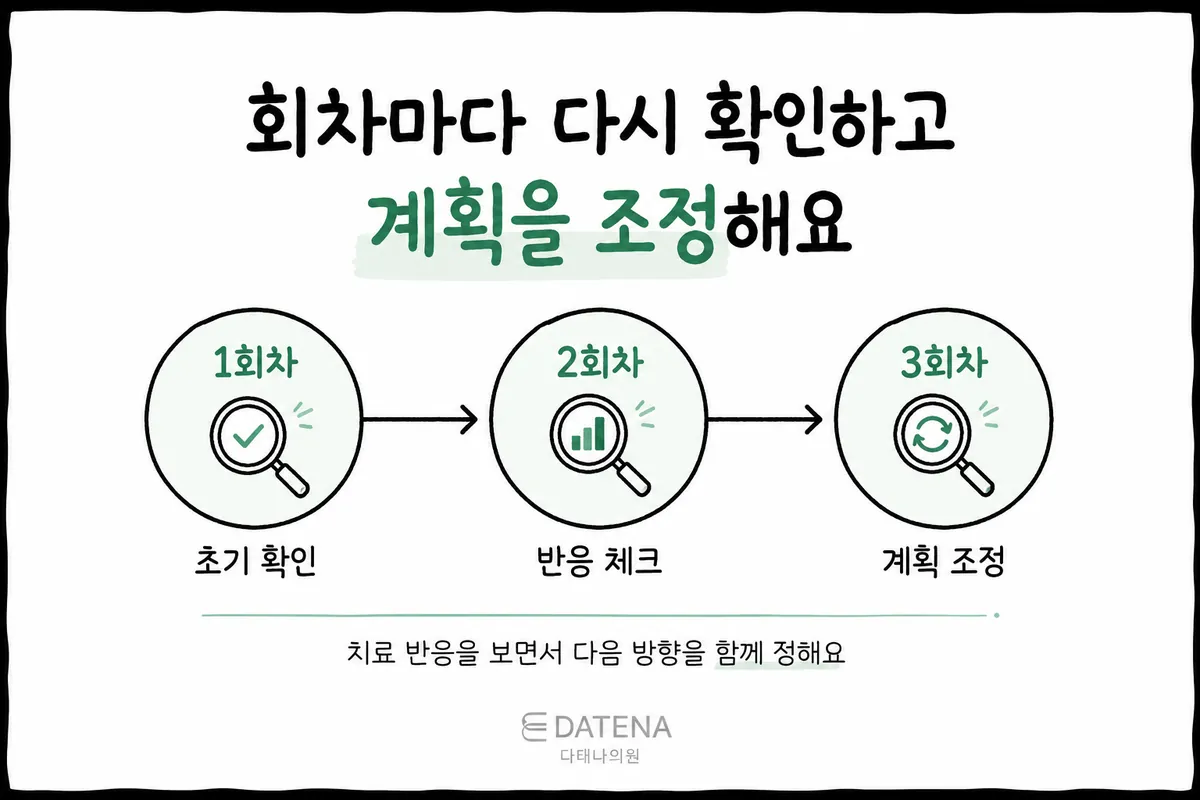
Rather than sticking rigidly to the plan made at the first visit, acne scar treatment is often adjusted session by session to match how the scars are changing.
How quickly new collagen fills in and how much tethering releases differ from person to person, so some areas may improve faster than expected while others need more time.
That's why we recheck scar depth and tissue condition at every session and adjust the method or intensity of the next treatment accordingly.
Fine-tuning treatment while watching how your skin recovers, rather than pushing one fixed plan to the end, often leads to better overall improvement.
6. What to Actually Look For When Choosing a Clinic for Acne Scar Treatment
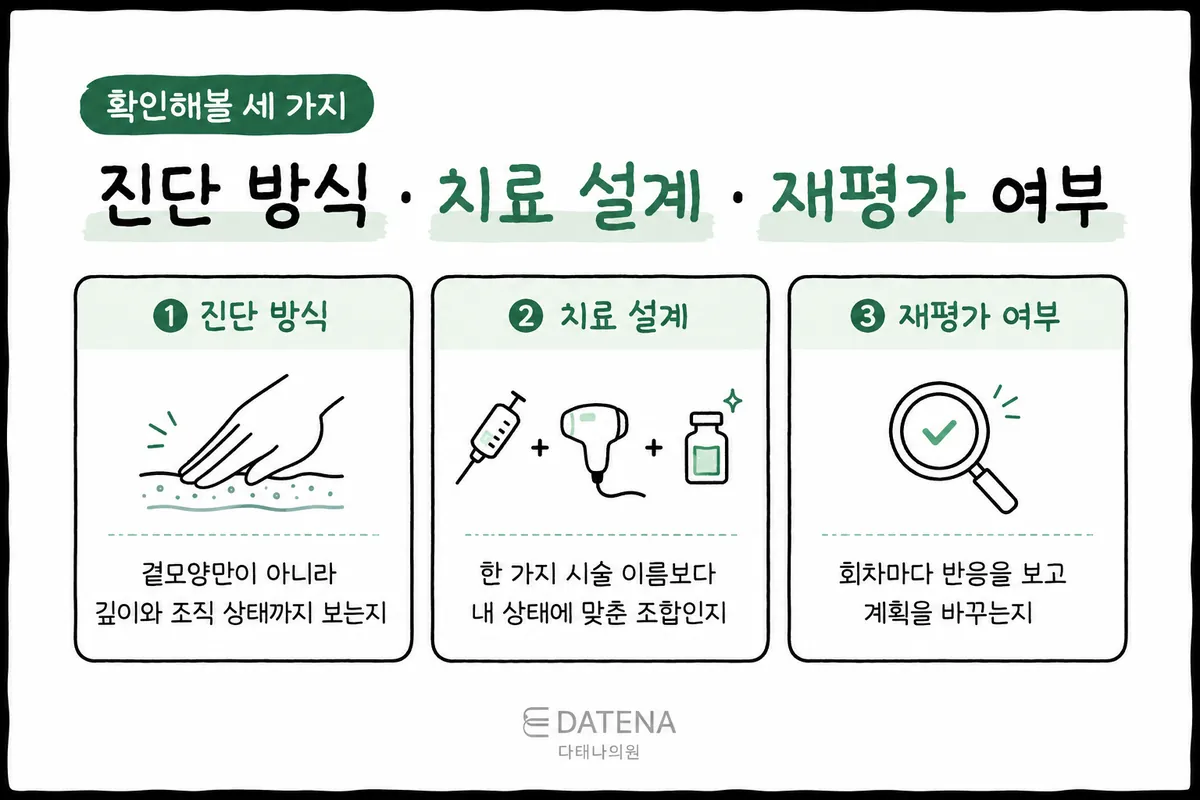
Based on everything above, here's a summary of what's genuinely worth checking when you're researching dermatology clinics for acne scars.
What to check | What to look for | Why it matters |
|---|---|---|
Diagnosis | Do they go beyond looking at photos and actually feel the skin to check tethering and depth? | Because the condition of tissue under a scar is hard to judge accurately by eye alone |
Treatment planning | Do they recommend just one procedure, or plan different approaches for different scar areas? | Because many people have a mix of scar types, and a single procedure may have its limits |
Re-evaluation | Whether your scars are rechecked at every session and the treatment plan adjusted | Because collagen regeneration speed and recovery can change from session to session |
These three things are hard to judge from a clinic's reviews or equipment pages alone, so it helps to ask about them directly during your consultation.
Even when acne scars look similar in symptoms and shape, the treatment each person actually needs has to be designed individually, so it's not easy to decide on treatment by yourself based on this information alone.
When researching clinics, rather than focusing only on which devices they have, it's worth looking at how they assess your scars and how they explain the treatment direction to you.
At Datena Clinic, we place great importance on the doctor personally examining your scars, listening to how much they bother you, and deciding on the right direction together with you.
That said, this doesn't mean you should choose any particular clinic. We recommend confirming your treatment direction through a diagnosis and consultation suited to your current condition.
Before or during your consultation, ask how the shape and depth of your scars were assessed, why the proposed treatment was chosen, and what the recovery process and criteria for evaluating the next session are. Going over the expected changes and precautions after hearing the explanation will help you understand your treatment plan.
Medically reviewed by: Dr. Kang Dong-hyun (Datena Clinic) · Meet our doctors: /about.html