
Combination Acne Scar Treatment: How Does One Session Work?
Today's summary
One session of combination treatment includes procedures with different roles.
Whether you get them on the same day or on separate days depends on your skin.
The mix of procedures often changes as sessions go on.
When the mix changes, downtime can also feel different from session to session.
Hello, this is Datena Clinic.
If you look into combination acne scar treatment, you'll see names like subcision, injections and laser come up together.
But what you really want to know isn't the names; it's what comes next. Do you get all of these in one visit, or one at a time on separate days? What order are they done in? Many people say this is rarely explained, making it hard to decide before booking.
People who continue through multiple sessions have other questions too. Why was session 1 different from session 3? Why did one session settle down in a few days while another left scabs that lasted much longer?
These two questions are actually connected. Combination treatment isn't about repeating the same thing every session; it's about reworking the plan to match your skin at that point.
In this article, we'll walk you step by step through how one session of combination treatment works, what differs between getting procedures on the same day versus separately, and what changes as sessions go on.
What's included in one session of combination acne scar treatment?
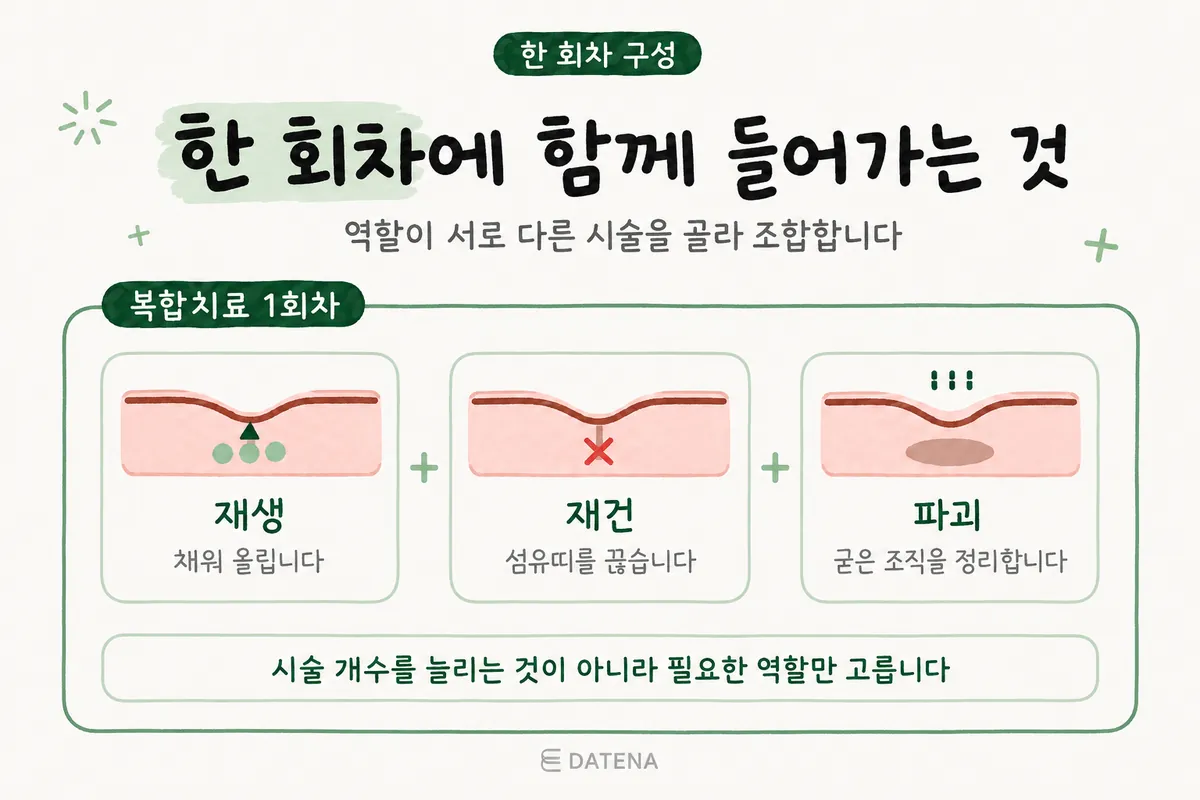
One session of combination treatment includes procedures that play different roles.
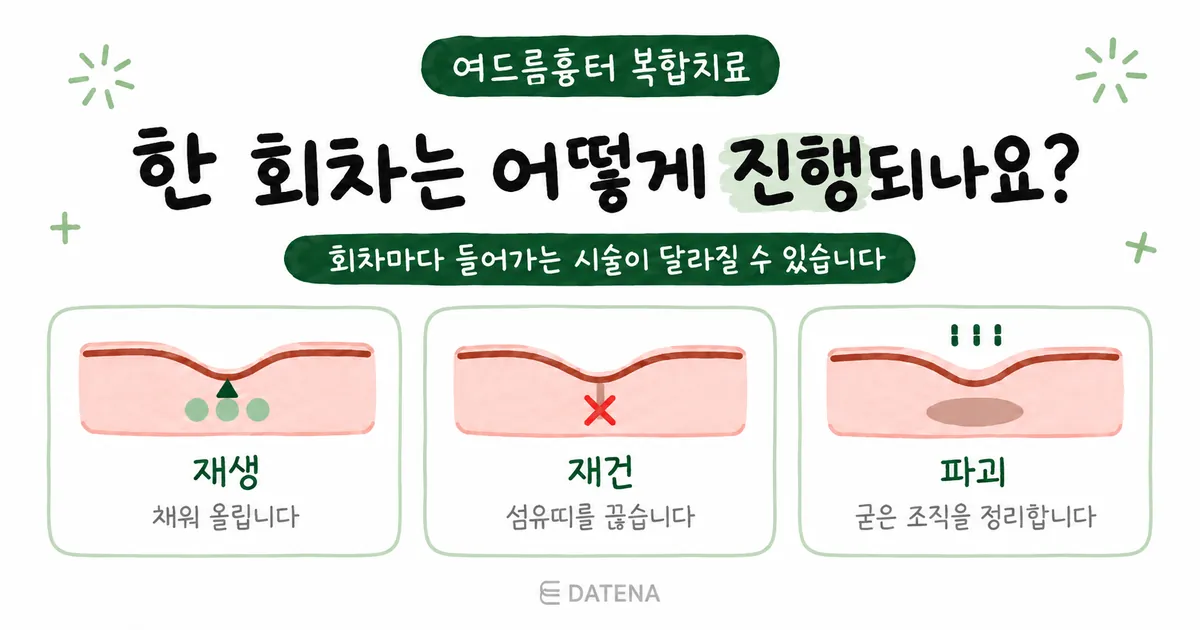
Treating depressed scars mainly involves three roles: filling in and lifting sunken areas, cutting the fibrous bands beneath the skin that hold scars down, and breaking down old, hardened tissue.
At Datena Clinic, we divide these into regeneration, reconstruction and destruction.
Regeneration — A skin booster that supports collagen formation is injected beneath the scar.
Reconstruction — Subcisional injection and an injector device are used to cut the fibrous bands and deliver medication.
Break down — A fractional CO2 laser works through hardened scar tissue.
A single session may include all three of these, or just two. Which ones go in depends on the current state of your scars.
This is where a common misunderstanding comes in. Combination treatment isn't about piling on more procedures. It's closer to choosing and combining only the roles you need right now, and we leave out anything you don't need.
Getting several treatments on the same day vs. spreading them out
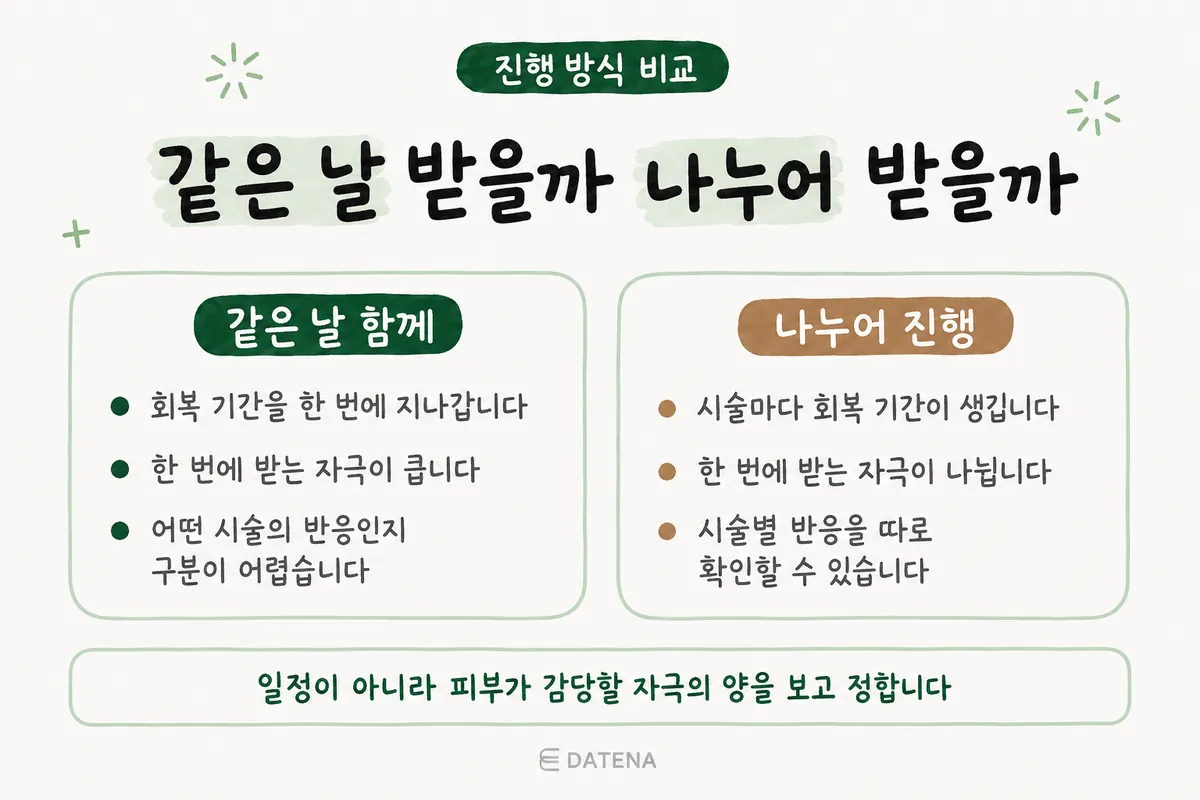
Combination treatment doesn't always mean doing everything on the same day. Whether to combine them in one visit or split them across different dates depends on how much stimulation your skin can take at once.
Type | Same day | Separate days |
|---|---|---|
Recovery period | You recover from everything at once, so the overall downtime can be shorter | Each treatment comes with its own recovery period |
Stimulation per visit | Multiple treatments overlap, so the stimulation is greater | The stimulation is spread out |
Checking your skin's response | It's hard to tell which treatment caused which reaction | You can check how your skin responds to each treatment separately |
Number of visits | Fewer | More |
When we consider it | Scarring covers a wide area and your skin tolerates stimulation well | Your skin is sensitive, or you're just starting treatment |
As the table shows, it's hard to say one approach is better than the other. It's a decision based on your skin first, not your schedule.
When you're just starting, we sometimes split the treatments to see how your skin responds, then combine them from later sessions on. On the other hand, if you'd rather get through recovery all at once, we may consider same-day treatment after checking your skin.
How is the treatment order decided?
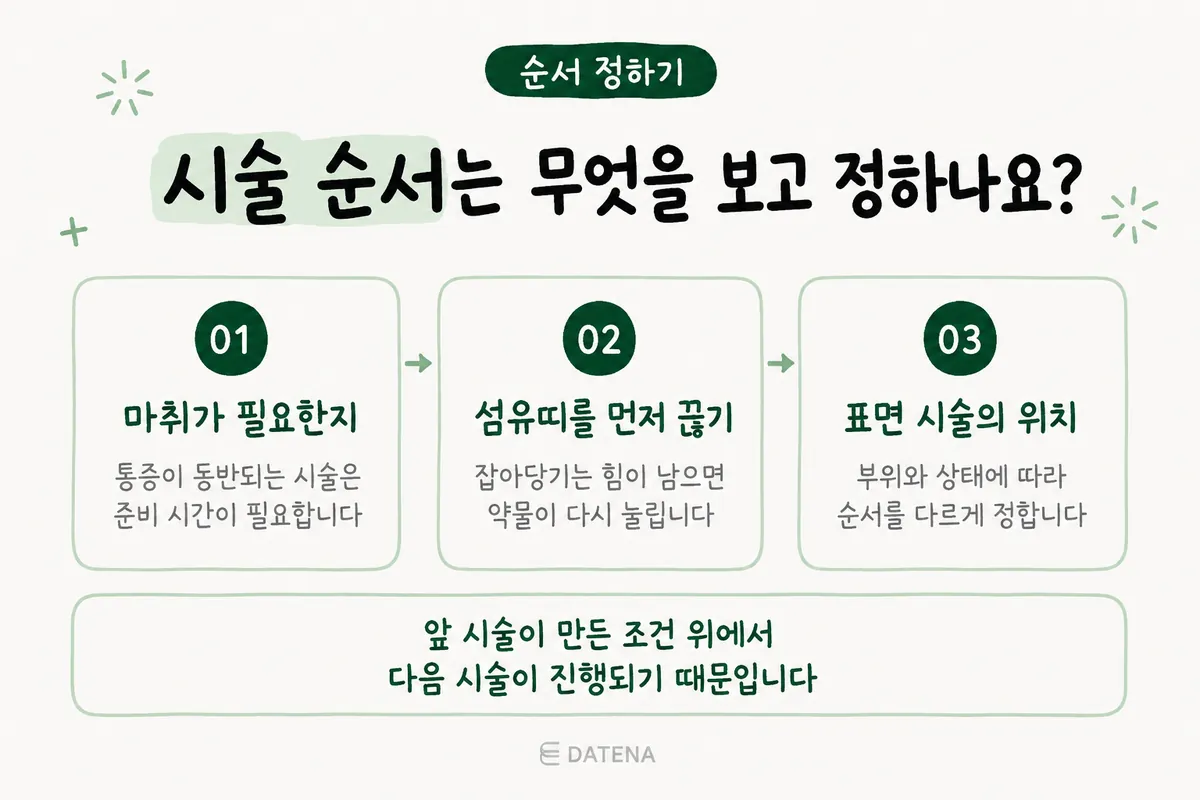
When several treatments are done on the same day, there's an order to them. Here's what we look at when deciding it.
First, whether anesthesia is needed. Treatments that involve pain, like subcision injection, need time for anesthesia to take effect, so we factor them in early in the schedule.
Second, the order of cutting fibrous bands and injecting. If the fibrous bands pulling the scar down from underneath are still there, the scar can be pressed back down even after injection. So we consider cutting the bands first to create space, then injecting.
Third, where surface treatments fit in. Lasers create a reaction on the skin's surface, so their order relative to injections varies by area and skin condition. Sources differ on this, so rather than fixing one rule, we decide based on your skin that day.
Fourth, splitting by area. Instead of applying the same order to the whole face, we may use one combination for the cheeks and another for the jawline.
There's one reason the order matters: each treatment builds on the conditions created by the one before it.
Why the treatment mix changes from session to session
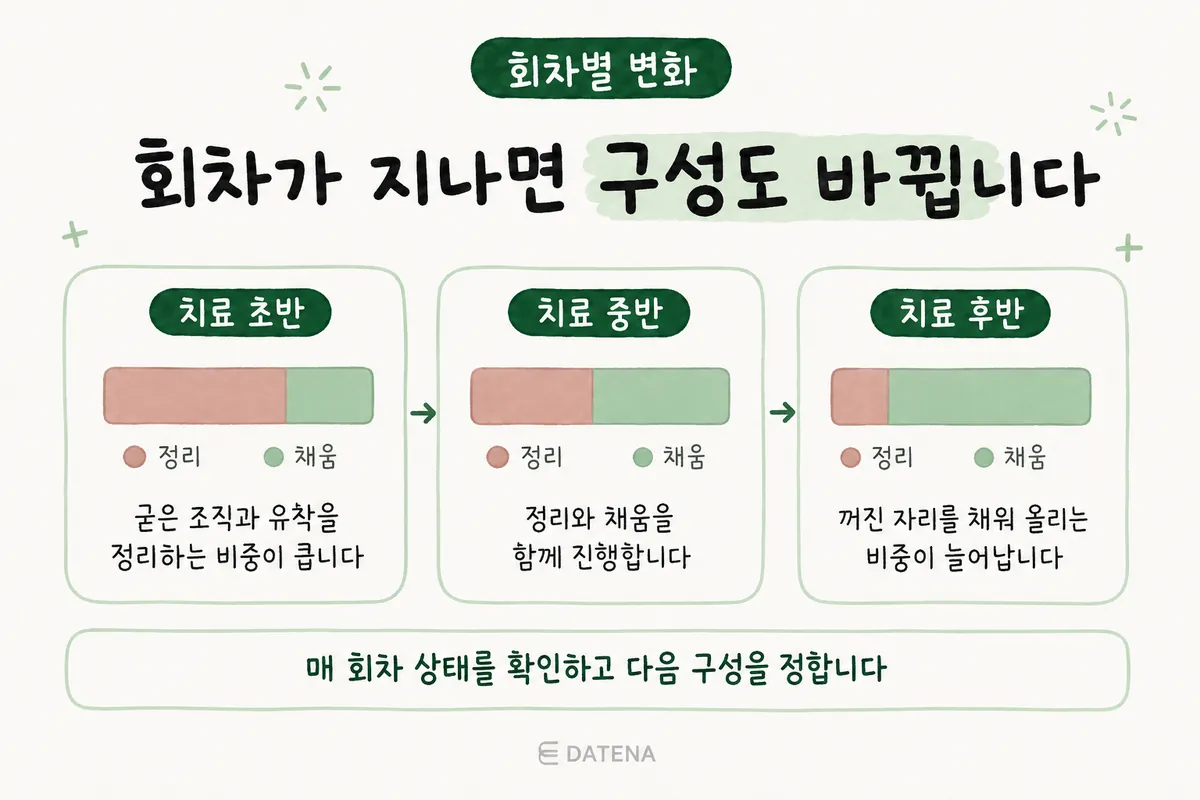
If you received different treatments in session 1 and session 4, it's usually not because the plan changed, but because your skin changed.
In the early stages, more of the focus tends to go toward breaking down hardened tissue and releasing tethered scars. If these remain, injections may only fill the area so much.
As sessions go on and tethering releases and the surface smooths out, the focus often shifts toward filling and lifting depressed areas. Even the same scar looks different at the start of treatment than it does a few sessions in.
Each session also reveals areas that respond well and areas that change more slowly. For areas that responded well, we reduce stimulation in the next session and shift the focus to the slower ones.
That's why, in combination treatment, we don't stick with the first session's plan all the way through. We check your skin at every session and decide the next mix from there.
This is where keeping a record helps. If you take photos at the same angle and under the same lighting at every session, it becomes much easier to see with the clinic which areas have changed and by how much.
Why downtime can feel different from session to session
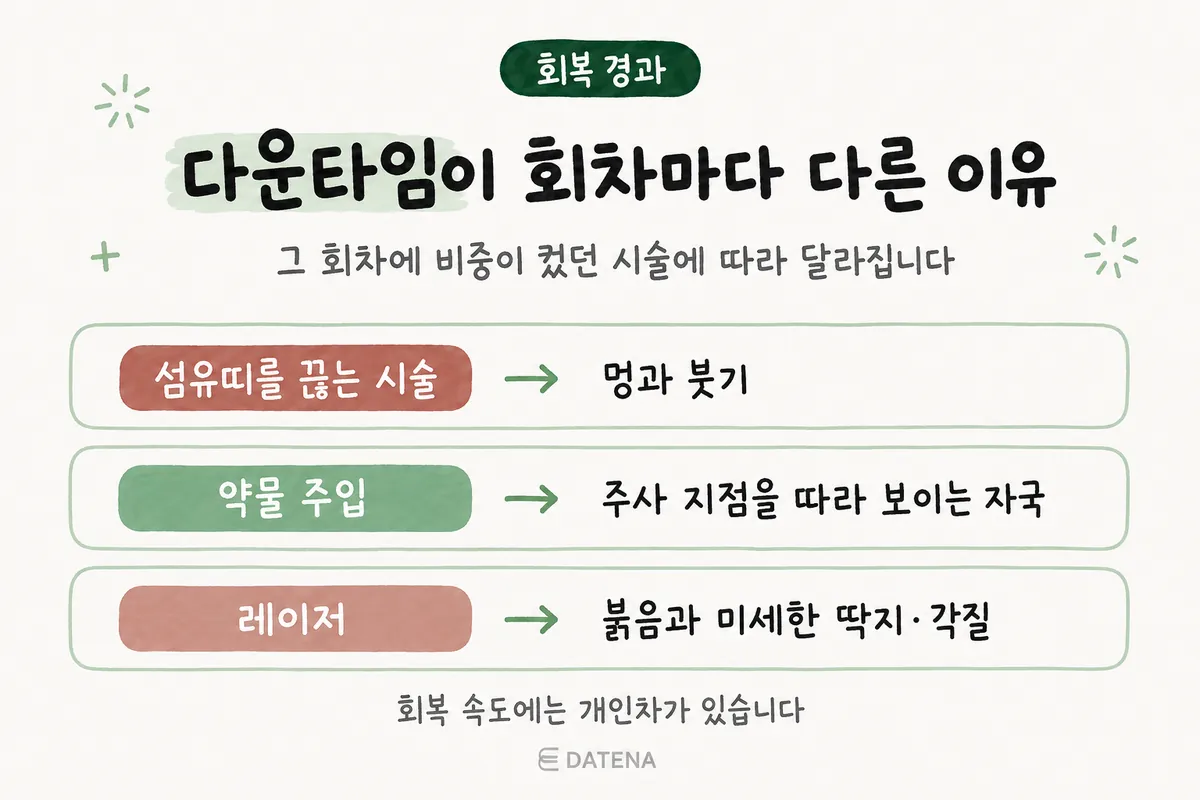
If you've had the same combination treatment but one session felt fine after two days while another bothered you for more than a week, there's a good chance those sessions were built differently.
That's because each procedure causes its own kind of reaction.
Sessions focused mainly on releasing fibrous bands (subcision): bruising and swelling are the main reactions. In areas where the skin is thin, marks may linger a little longer.
Sessions focused mainly on injections: you may see small bumps along the injection points, which usually settle within a few days.
Sessions focused mainly on laser: you'll go through a phase of redness along with tiny scabs or flaking that form and then fall off.
On top of this, everyone heals at a different pace. Even with the same treatment plan, recovery time can vary depending on how you're feeling that day, how well you sleep, and how much sun you get.
So when you schedule your next session, it helps to let us know which procedure was the main focus this time and when you have any important events coming up.
Symptoms that need a follow-up check after treatment
Redness or swelling that lasts longer than expected
Pain that gets worse over time
Warmth along with pus or oozing
A hard lump you can feel under the skin
What's worth checking during combination treatment
Because combination treatment runs over several sessions, we also look at how you take care of your skin in between treatments.
Aftercare to follow during recovery
Don't rub the treated area or pick at scabs
Use sunscreen consistently
Avoid saunas, jjimjilbang (Korean bathhouses) and hot baths
Avoid scrubs and peels while you're recovering
Use a cold compress if you feel redness or heat
When treatment may not be suitable or may need to be rescheduled
Acute inflammation or infection in the treatment area
Active, inflamed acne breakouts
A history of thick, raised scarring such as keloids
Recent strong sun exposure
Pregnancy or breastfeeding
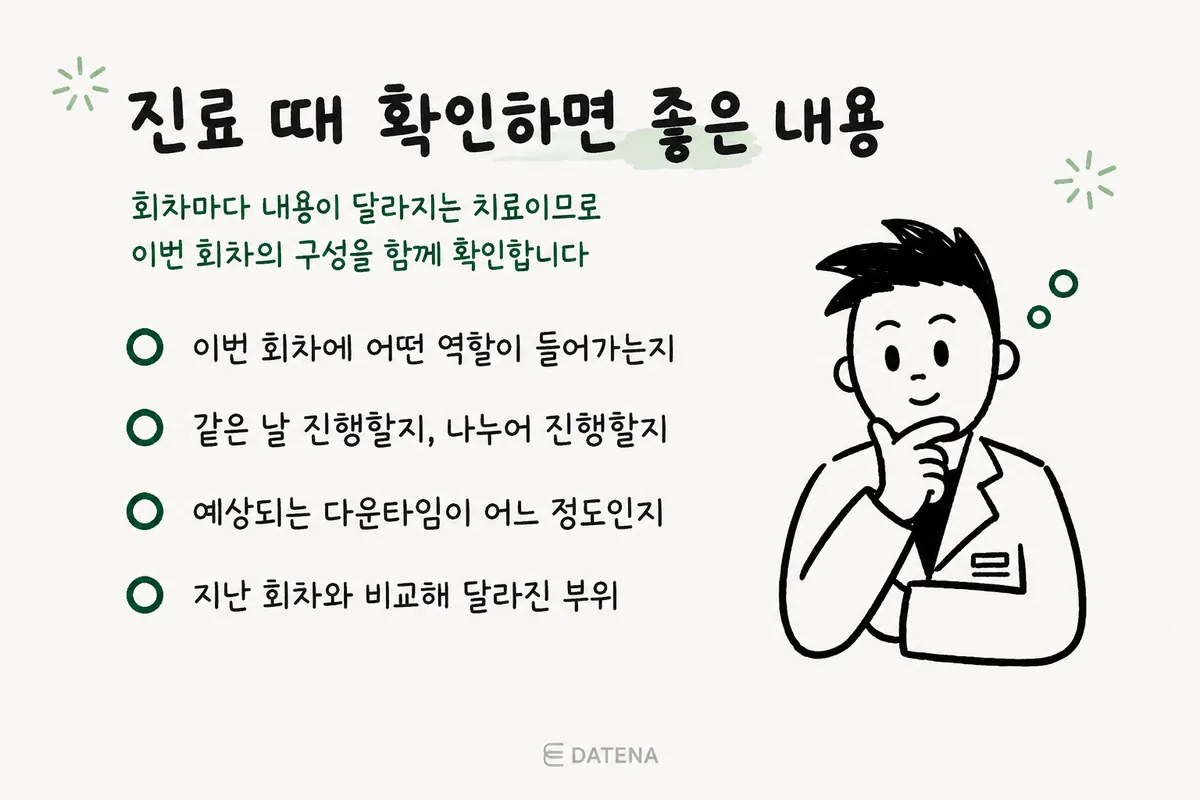
Things worth going over at your appointment
What role each procedure plays in this session
Whether everything is done on the same day or split up
How much downtime to expect
Which areas have changed compared to the last session
What we consider when planning combination treatment
Combination treatment for acne scars isn't a set formula repeated every session. We look at the state of your scars at the time, choose and combine the procedures that are needed, and then decide again at the next session.
Whether procedures are done on the same day, in what order, and what goes into a given session all depend on the condition of your scars and how much stimulation your skin can handle. That's why, from the patient's side, each session can look a bit different.
When choosing a clinic, it helps to look beyond procedure names and session counts, and check whether they explain what role each procedure plays in a given session, why things are done in that order, and what has changed since last time.
At Datena Clinic, we check your skin at every session and take photos under the same conditions, then plan the next session together with you. If you're partway through treatment and have wondered why each session looks different, it may help to review your current condition along with how your skin responded last time.
Medically reviewed by: Dr. Kang Dong-hyun (Datena Clinic) · Meet our doctors: /about.html