
Acne Scar Treatment Intervals: Is Shorter Always Better?

Today's summary
Scar treatment is spaced out because it takes time for new collagen to form
Laser, microneedling and subcision work at different depths, so each needs a different amount of recovery time
Shortening the interval on your own can build up irritation and actually raise the risk of hyperpigmentation or inflammation
Rather than sticking to a fixed number, it's important to adjust the interval based on how your skin is recovering each time

Hello, this is Datena Clinic.
"If I get scar treatments once a month, won't I improve faster?"
"Every clinic tells me a different interval, so I don't know which one is right."
If you search for acne scar treatment intervals, you'll see different numbers like 4, 6 or 8 weeks depending on the clinic and the procedure, which can be confusing. There's a reason the intervals differ: the recovery time needed actually varies depending on the type of procedure and the depth of the scars. Today we'll walk through the reasons, procedure by procedure.
1. Why can't acne scar treatment be done in one session?
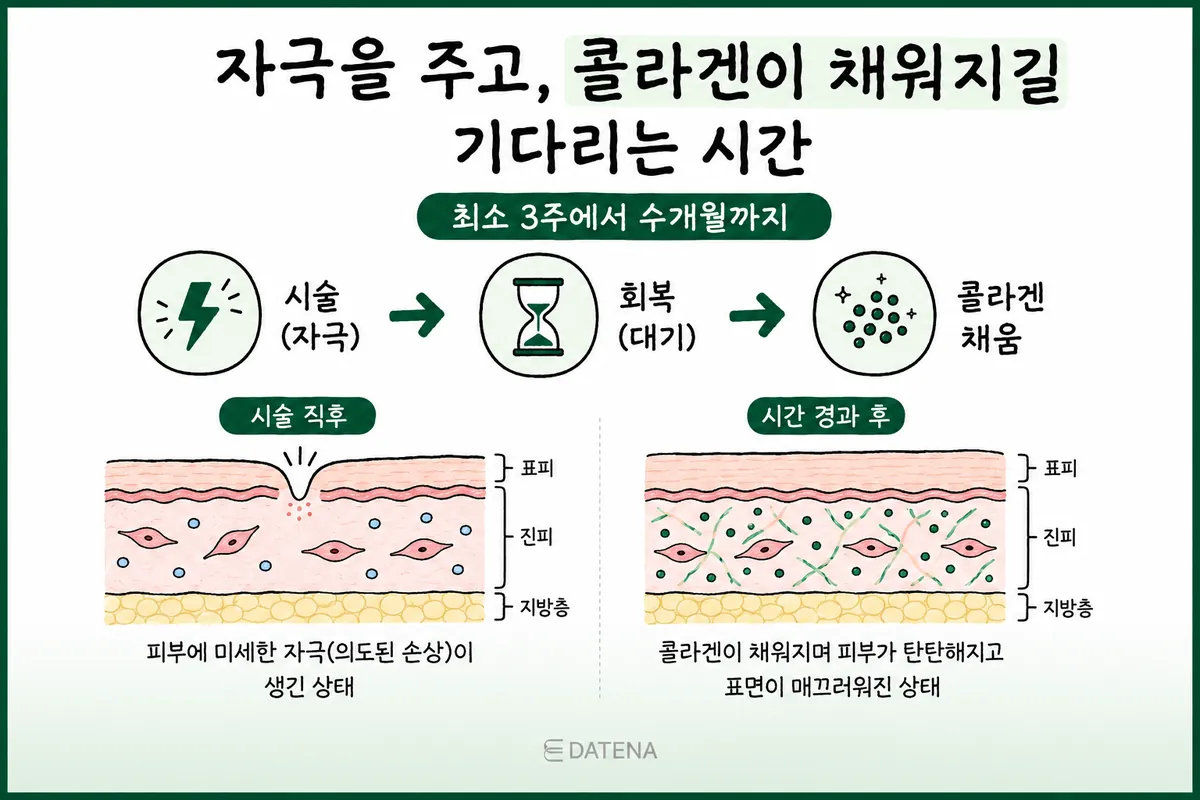
Most acne scar treatments work by intentionally creating tiny injuries in the skin to trigger a regenerative response.
Lasers stimulate the dermis with heat energy, subcision cuts the fibrous bands that pull scars down, and microneedling uses fine needle stimulation to boost collagen production.
It takes at least 3 weeks, and up to several months, for this stimulation to actually turn into new collagen.
If you stimulate the skin in one session and then jump straight into the next, you're essentially adding new damage before the previous stimulation has had a chance to turn into collagen.
That's why treatment is usually split into several sessions, with recovery time factored in.
2. Why intervals vary by procedure type
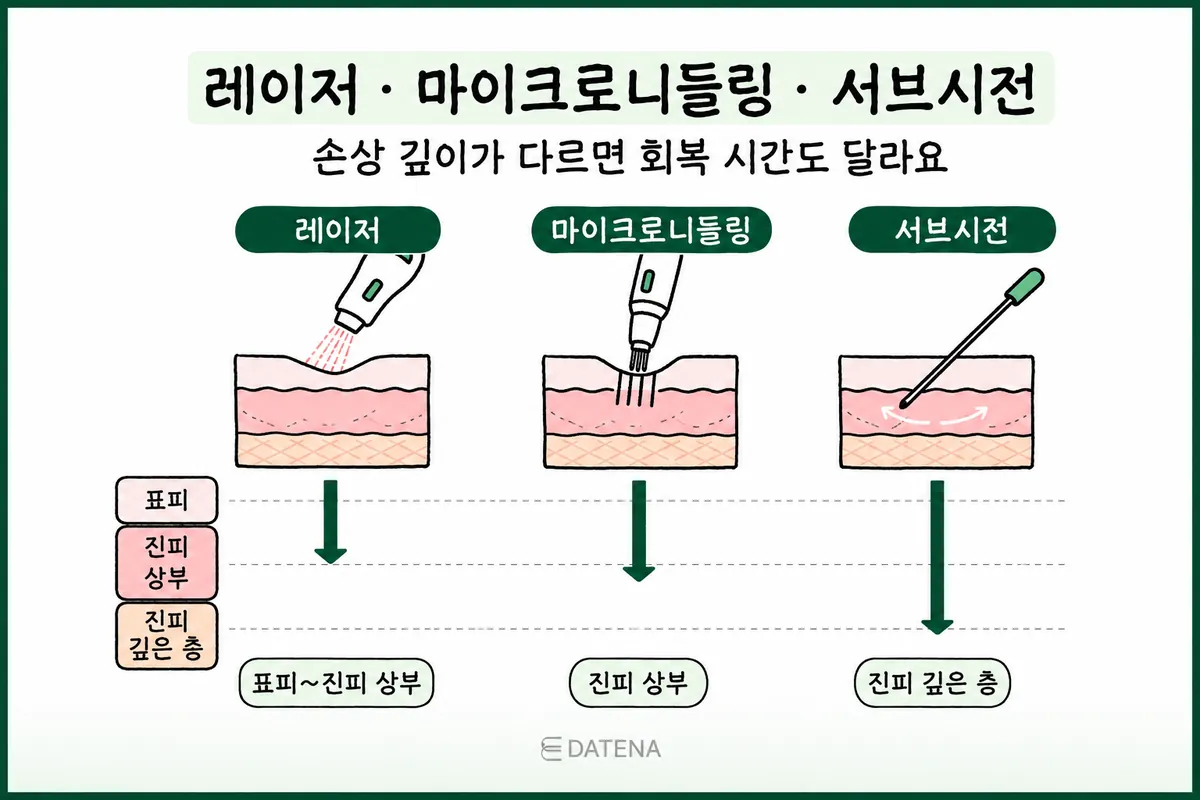
Even within acne scar treatment, the depth of skin injury and speed of recovery depend on the method, so the recommended intervals differ as well.
Methods like Fraxel or CO2 lasers, which remove part of the epidermis while stimulating the dermis, tend to have longer downtime and deeper injury, so the skin needs more time for the epidermis to regenerate and redness to calm down.
On the other hand, radiofrequency microneedling causes less damage to the epidermis and has shorter downtime, but because it builds collagen through cumulative stimulation over multiple sessions, the stabilization period between sessions is important.
Subcision cuts fibrous tissue deep in the skin, so bruising or swelling may linger in the treated area, and we also need to allow time for the space beneath the released tissue to settle in stably.
3. What can go wrong if you shorten the interval on your own?
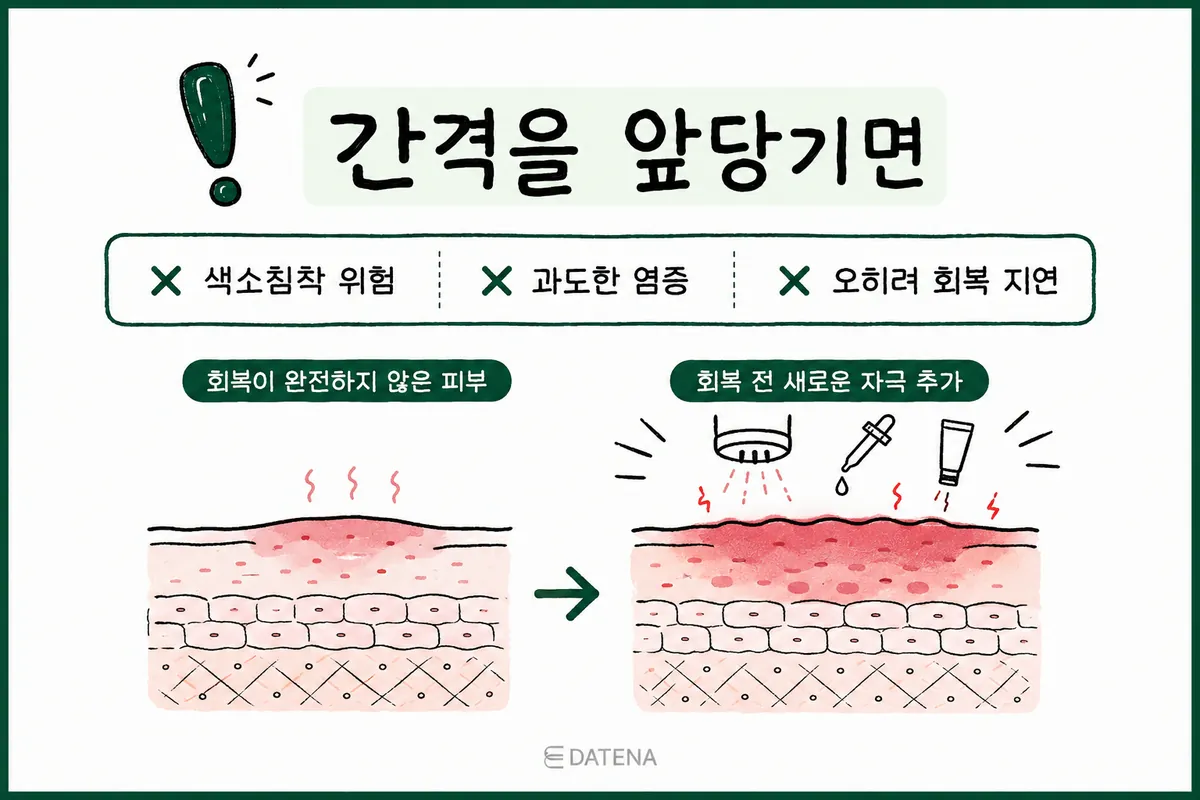
Some patients hope for faster results and want their next session sooner than recommended.
When new stimulation is added to skin that hasn't finished recovering, it can trigger an excessive inflammatory response instead of normal regeneration.
In that case, temporary redness may last much longer, or pigment cells that are still recovering may be irritated, actually making pigmentation darker.
There are also reports that when the dermis is repeatedly injured, collagen can't settle into its normal arrangement, and the scarred area may instead become firm and hardened.
It's good to know that shortening the interval may not speed up results; instead, it can interfere with recovery and end up lengthening your overall treatment period.
4. Does waiting too long between sessions reduce the effect?
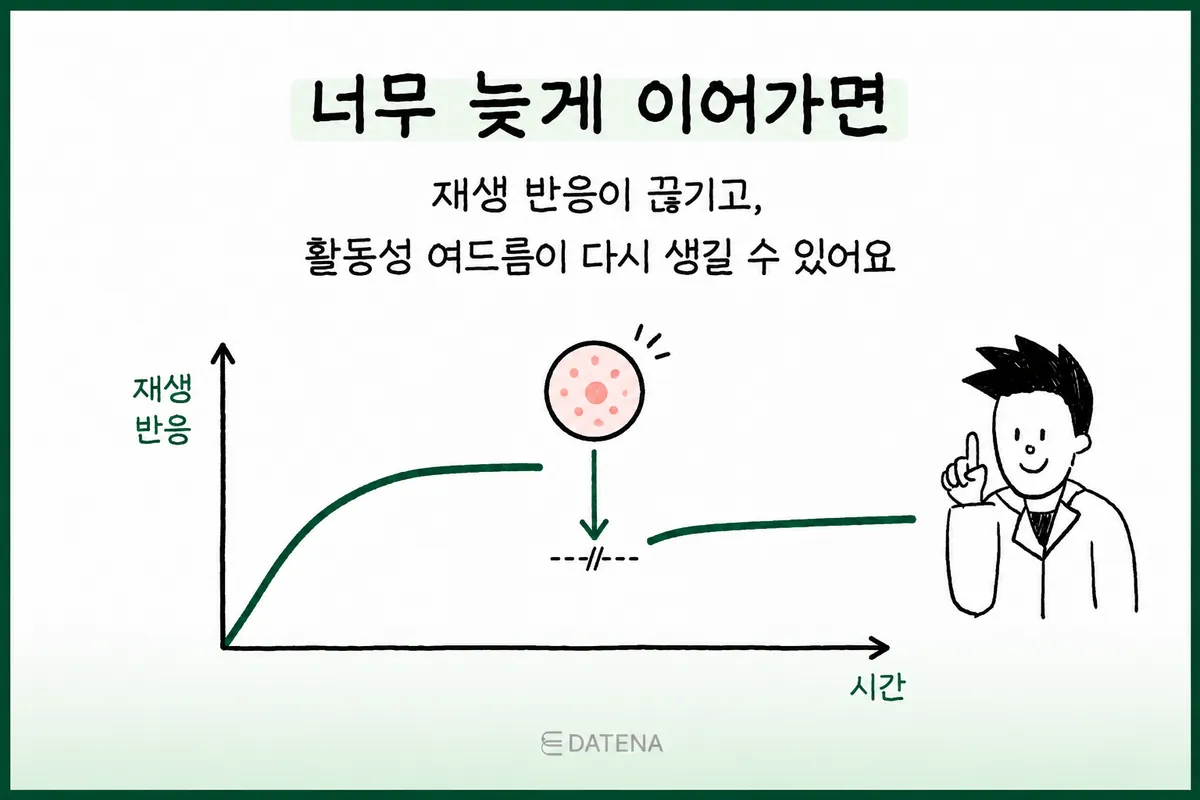
Leaving an overly generous gap isn't always better, either.
Collagen regeneration progresses gradually right after a procedure, and tends to level off after a certain point.
If you put off your next session too long even after you've fully recovered, the regenerative response built up so far can't carry over and gets interrupted, which may only lengthen the overall treatment period.
Especially if you still have active acne, simply spacing out treatments widely means you also have to consider the chance that new inflammation will keep recurring in the meantime and create new scars.
5. What determines the interval between sessions?

Rather than mechanically applying a fixed number, acne scar treatment intervals are usually adjusted by checking your skin at every session.
We decide on the timing of your next session after checking whether redness and swelling in the treated area have fully subsided, whether scabs and flaking have cleared naturally, and whether any tenderness remains when pressed.
Even with the same procedure, recovery speed varies with each person's skin regeneration ability, age and usual skin barrier condition, so the time needed before the next session can differ from person to person.
So even if you were given an approximate interval at your consultation before the first session, your next appointment may be adjusted during treatment based on how you're recovering.
6. Average intervals by procedure type
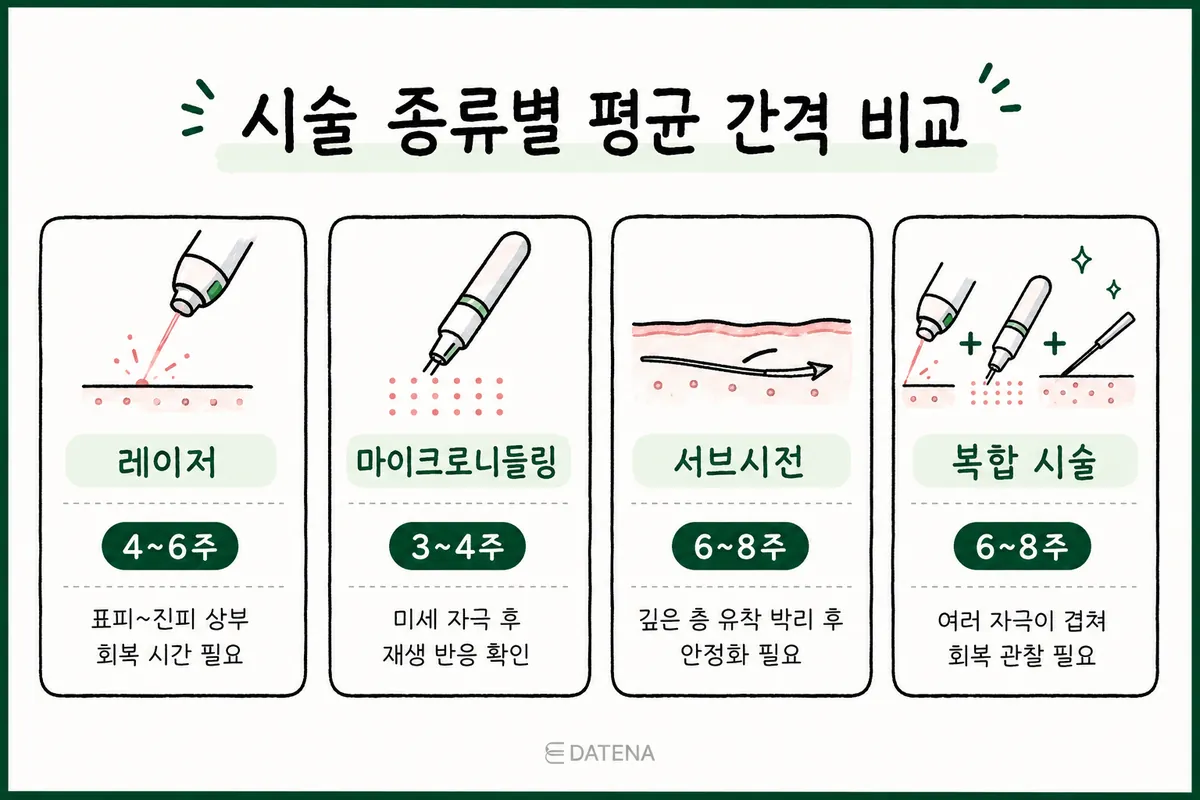
Here's a summary of everything we've covered, organized by procedure type.
Type | Average interval | Why the interval matters |
|---|---|---|
Laser (Fraxel / CO2 type) | 4–6 weeks | Time is needed for the epidermis to regenerate over micro-injured areas and for collagen to form in the dermis |
RF microneedling | 3–4 weeks | Downtime is short, but the skin needs to settle before stimulation builds up |
Subcision | 6–8 weeks | Time is needed for bruising and swelling to heal where adhesions were released, and for the tissue to reorganize |
Combination treatment (laser + subcision + injectables) | 6–8 weeks | Because several layers of stimulation overlap, a longer recovery window is needed |
As the table shows, the interval depends not only on the nature of a single treatment, but also on whether several treatments are being done together.
Even within the same 6–8 week interval, the total treatment period can vary from person to person depending on which treatments are combined and how deep the scars are.
With acne scar treatment, rushing with short intervals won't get you results faster, and simply stretching the intervals out doesn't automatically make it safer.
What matters more for your results is checking what kind of treatment you're actually getting, and whether your skin is being given enough time to recover.
If clinics seem to have different standards for intervals, it can help to look for one that clearly explains which treatment is being done on which schedule, and why.
Medically reviewed by: Dr. Kang Dong-hyun (Datena Clinic) · Meet our doctors: /about.html