
Rejuran Pain: Why It Can Still Sting After Numbing, and What to Check
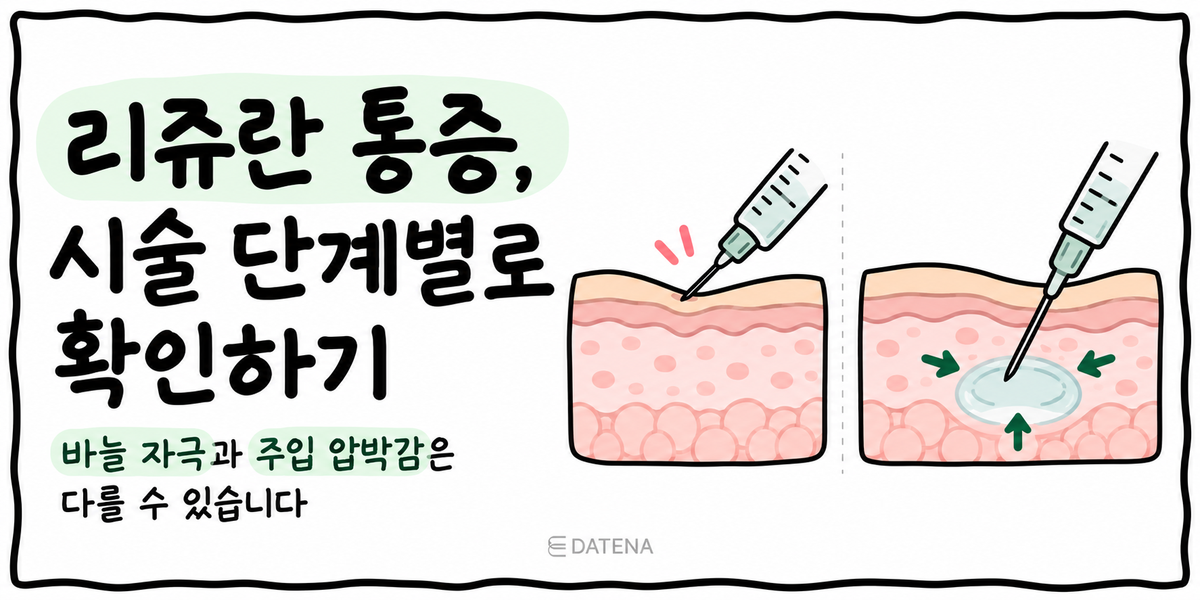
When people consider Rejuran, one of the first things they worry about is how painful the treatment will be.
Here we'll explain what causes the pain and the safety signs to watch for before and after treatment.
Today's summary
Pain can come from the needle itself and from the injection process.
How it feels depends on the area and the formulation.
Numbing cream doesn't take away every sensation.
Pain that gets worse may need medical attention.
Hello, this is Datena Clinic.
With injection treatments, pain isn't just a matter of how tough you are.
Whether the skin in that area is thin, how large the treated area is, and whether your skin is currently inflamed all play a role.
It's hard to predict Rejuran pain from a single line in someone's review.
Even the feeling of the needle going in can differ from the feeling of the product being injected.
Rather than seeing it as something you simply have to endure, it helps to find out what kind of pain to expect and when.
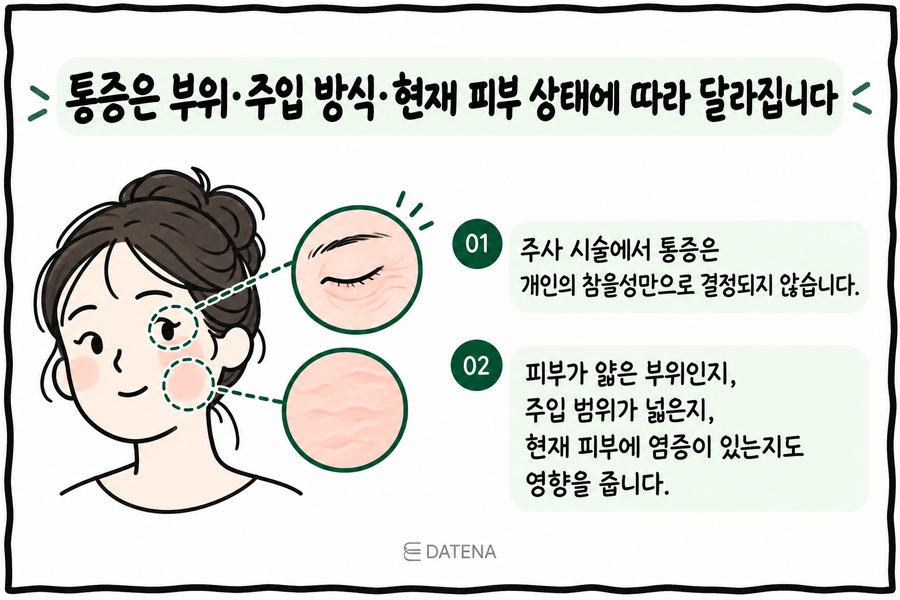
1. Pain from the needle and the injection process
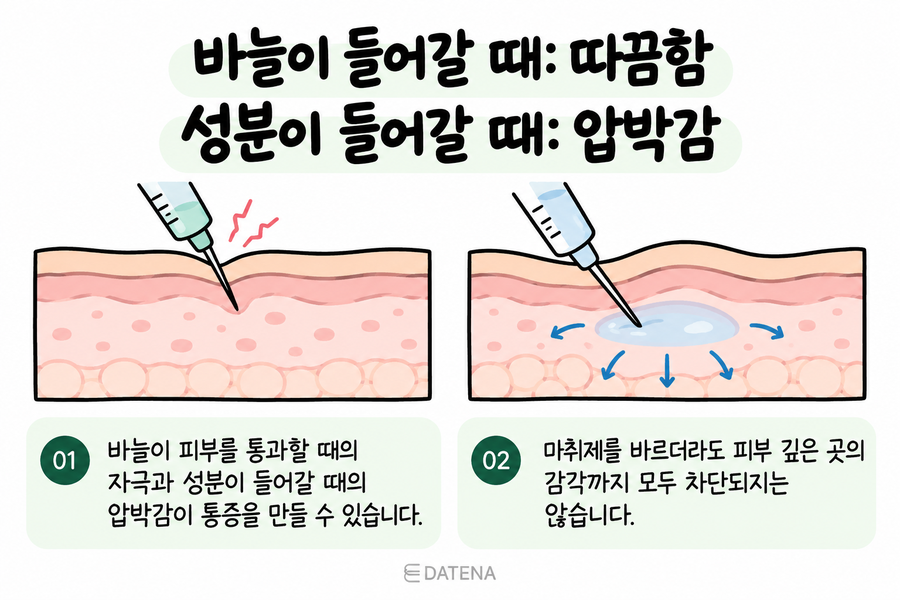
Pain can come from the needle passing through the skin and from the pressure as the product goes in.
Even with numbing cream, sensation in the deeper layers of the skin isn't completely blocked.
The type of discomfort also differs between injecting deeply at one point and spreading injections across many points.
It helps to tell us whether your whole face hurts or whether one particular area is especially painful.
Different skin conditions and areas can make the same treatment feel different.
2. Why pain feels different around the eyes versus the cheeks
Thin-skinned areas like around the eyes may call for a different injection plan than the broad area of the cheeks.
Even under the Rejuran name there are different formulations, so it's worth confirming which product is being used.
Areas that move a lot, like around the eyes and mouth, may still feel sensitive after treatment.
That's why it's important to review both the product's instructions and the actual injection plan.
Ways to reduce pain also need to take into account both the product's characteristics and your skin condition.
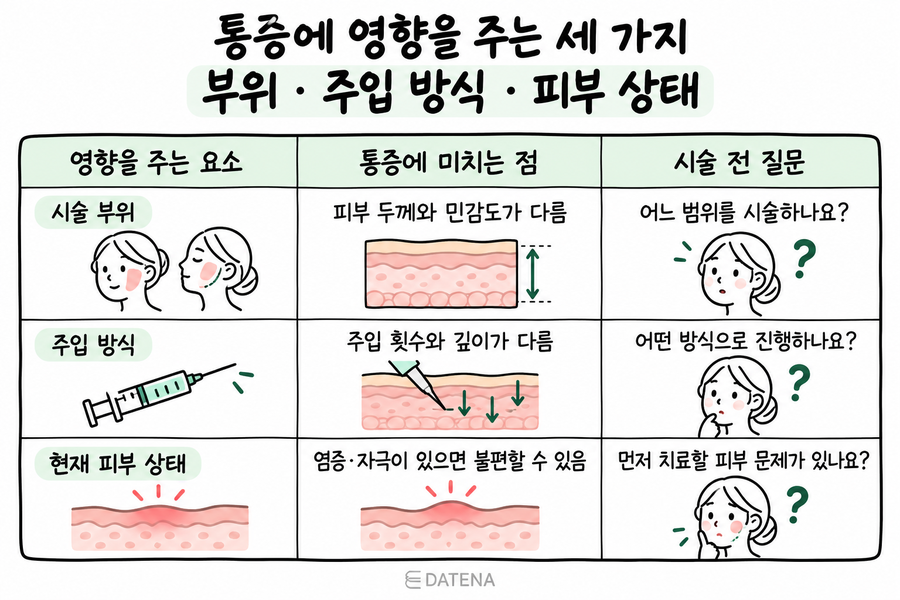
Factor | Effect on pain | Question to ask before treatment |
|---|---|---|
Treatment area | Skin thickness and sensitivity vary | Which areas will be treated? |
Injection method | Number and depth of injections vary | How will the treatment be done? |
Current skin condition | Inflammation or irritation can add discomfort | First, is there a skin concern that actually needs treating? |
3. Check allergies and current medications before numbing
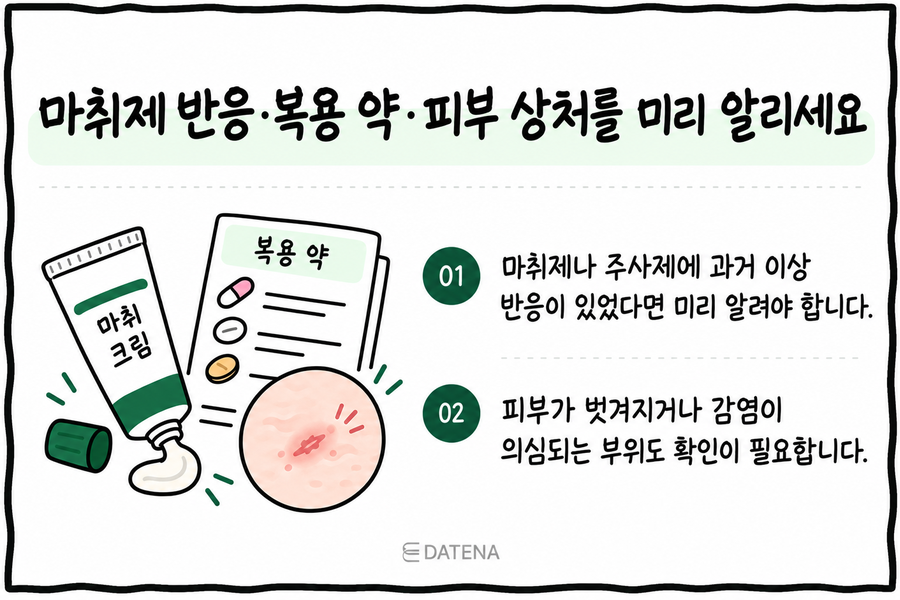
If you've ever had a bad reaction to an anesthetic or an injectable, tell us ahead of time.
Areas where the skin is peeling or might be infected also need to be checked.
If numbing cream has ever made you itchy or given you a rash, mention it, even if the reaction seemed minor.
Don't stop any painkillers or medications that affect blood clotting on your own; check with the medical team first.
If you're really worried about pain, it's best to bring it up while we're planning your treatment.
4. Pain you should mention right away during treatment
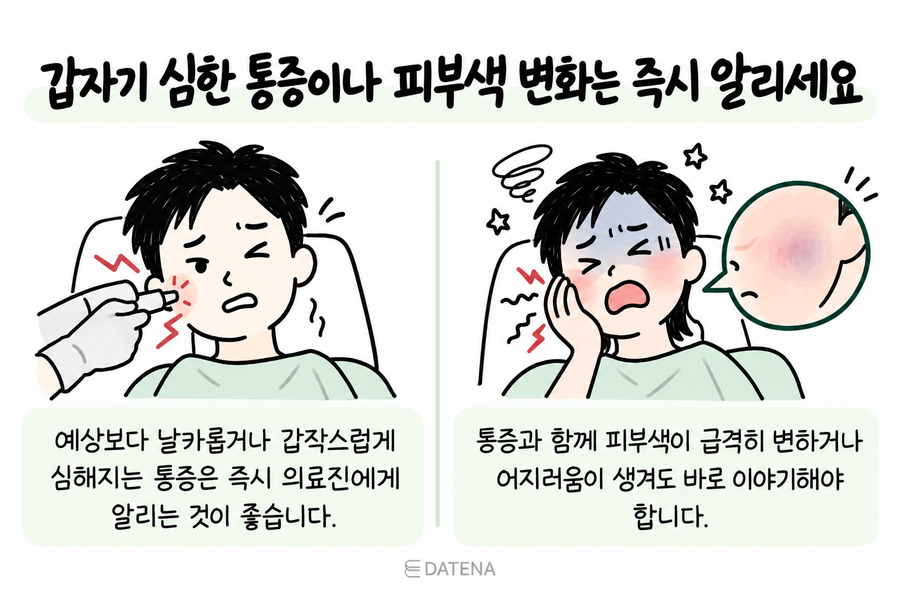
Pain that's sharper than expected or suddenly gets much worse should be reported to the medical team right away.
If the pain comes with a sudden change in skin color or you feel dizzy, speak up right away too.
It also helps to notice whether a tingling, zapping sensation passes in a moment or keeps getting stronger.
When you share discomfort as it happens, we can check the injection site and how your skin is responding on the spot.
Toughing it out doesn't guarantee a better result.
5. Tenderness after treatment vs. warning signs
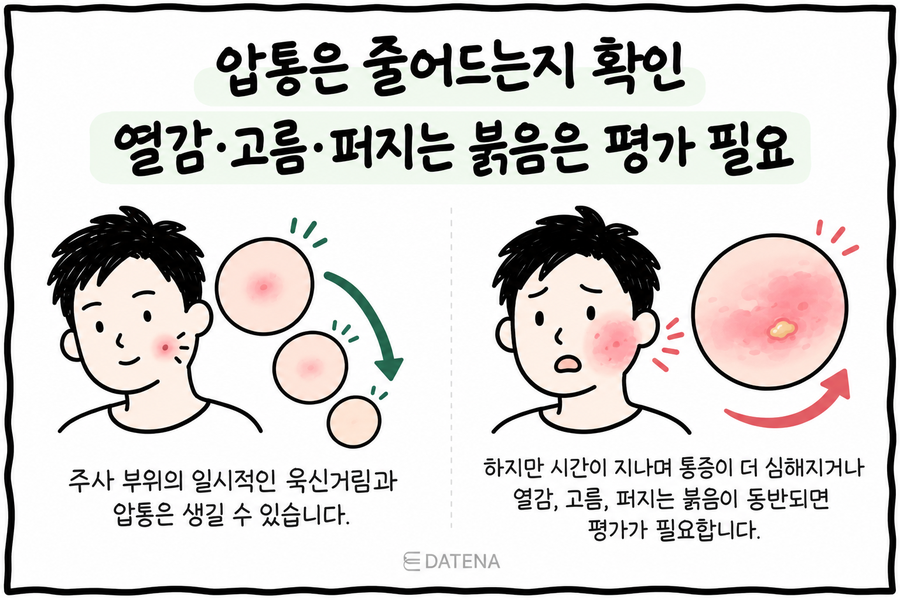
Temporary throbbing and tenderness at the injection sites can happen.
But if the pain gets worse over time, or comes with warmth, pus or spreading redness, it needs to be evaluated.
The key with tenderness from the needle is whether it's gradually easing.
If new or worsening pain shows up a few days later, the cause needs to be looked at separately.
Rather than rubbing hard or applying harsh products on your own, follow the aftercare instructions you were given.
6. Separating pain worries from whether you need the treatment
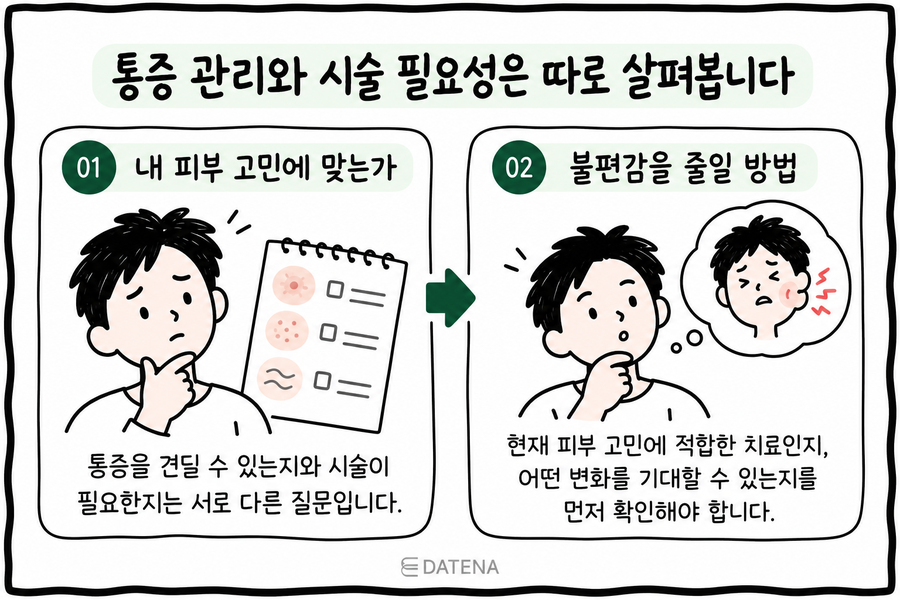
Whether you can handle the pain and whether you need the treatment are two different questions.
First, confirm whether it's the right treatment for your skin concern and what changes you can realistically expect.
There's no need to pick a treatment that doesn't fit your goals just because you're afraid of pain.
The natural order is to decide whether you need the treatment first, then talk about ways to reduce discomfort.
At Datena Clinic, we explain what discomfort to expect and also look carefully at whether the treatment is truly needed.
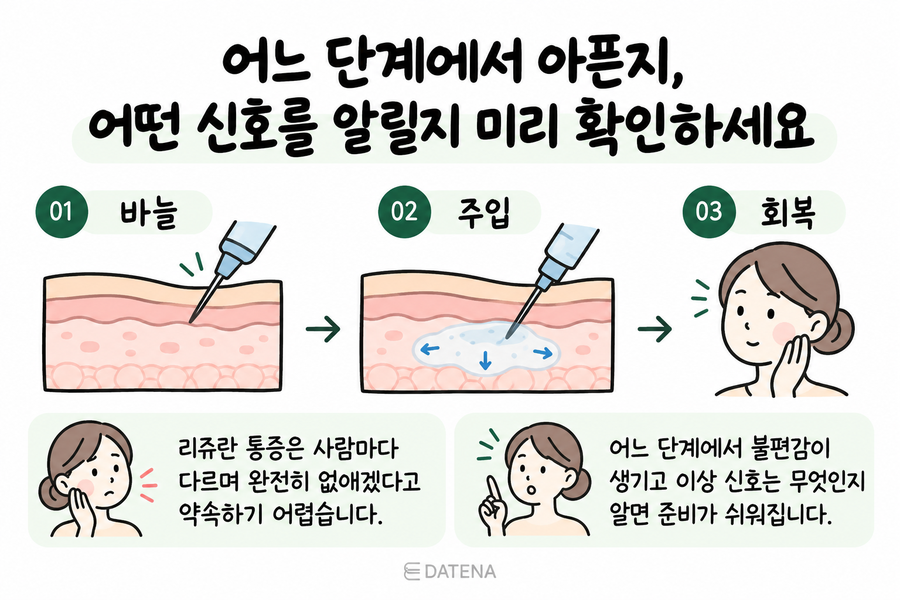
Rejuran pain varies from person to person, and no one can promise to eliminate it completely.
Before your treatment, go one step further than just asking whether you can tolerate the pain.
Knowing at which stage discomfort tends to occur and what counts as a warning sign makes it easier to prepare.
Sharing what you're nervous about and any past reactions before treatment helps us plan safely.
You can find details on our treatments and directions on the Datena Clinic official website.