
Men's beard laser hair removal: what to check when red bumps keep coming back after shaving
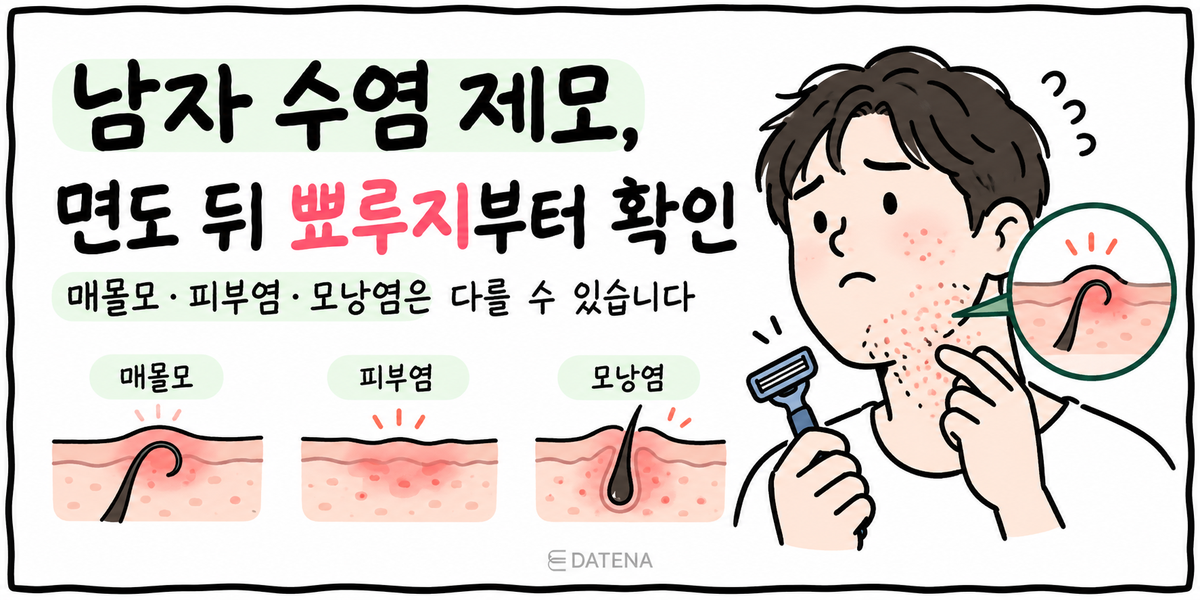
If red bumps keep appearing on your chin and neck after shaving, you may wonder whether beard hair removal could help.
We look at how to tell ingrown hairs from dermatitis, and what to keep in mind before and after laser hair removal.
Today's summary
Bumps after shaving can have several causes.
If ingrown hairs keep recurring, hair removal may be worth considering.
Laser treatment may take several sessions.
We also check for the risk of pigment changes and folliculitis.
Hello, this is Datena Clinic.
The amount of beard isn't the only reason men look into beard hair removal.
Some men get bumps on the chin every time they shave, or keep dealing with hairs growing back into the skin on the neck.
Men often come to beard hair removal with a mix of goals: cutting down on shaving time and reducing inflammation along the jaw.
Depending on the goal, the plan for which areas to treat and how much beard to leave changes too.
That said, not every red bump has the same cause, so the first step is figuring out what's going on.
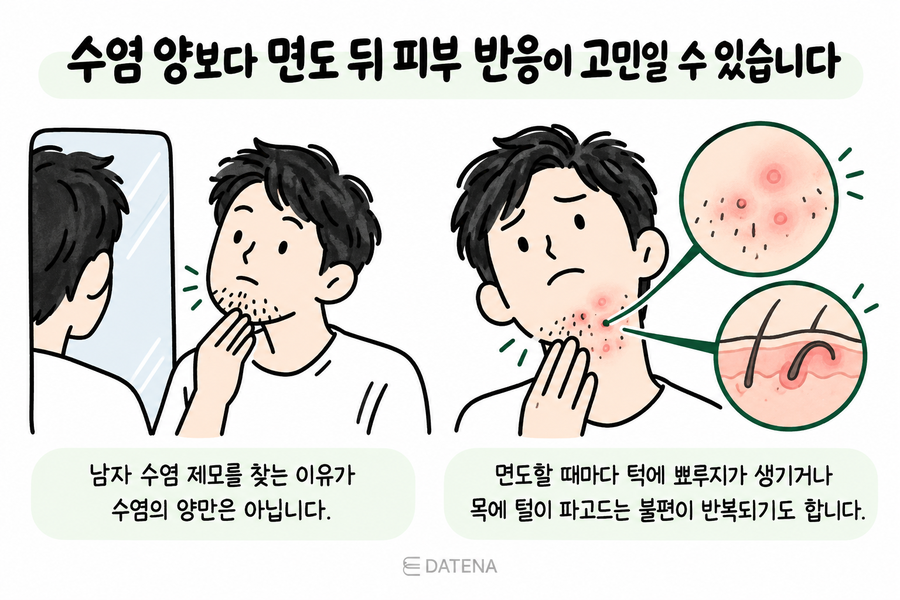
1. Sorting out the causes of bumps after shaving
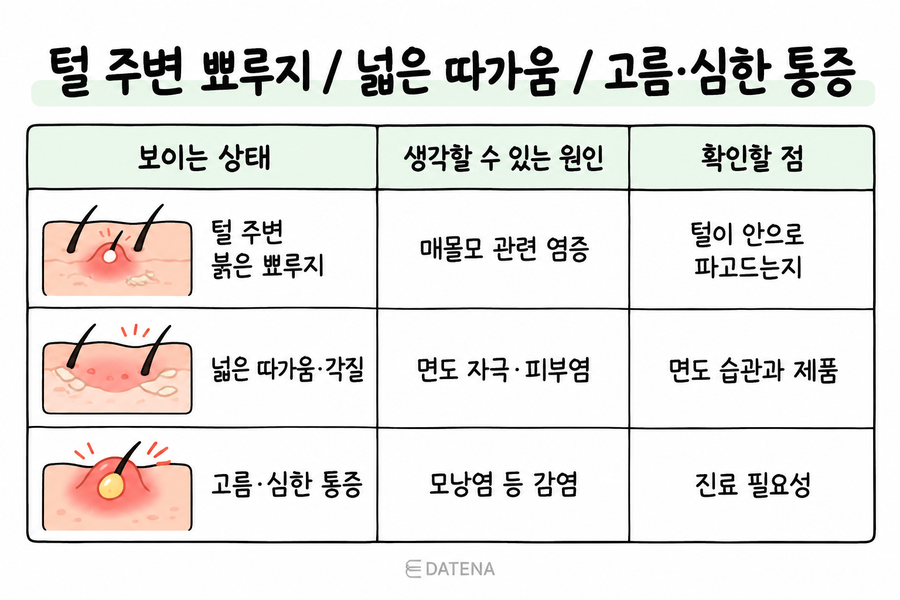
When a hair grows back into the skin, it can cause inflamed bumps related to ingrown hairs.
Dermatitis from shaving irritation or infectious folliculitis can look very similar.
When curved hairs under the chin keep burrowing back into the skin, small bouts of inflammation can keep recurring.
It helps to tell whether the bumps form around individual hairs or whether the whole shaved area stings.
Checking for pus, pain and whether bumps keep coming back in the same spots helps pin down the cause.
What you see | Possible cause | What to watch for |
|---|---|---|
Red bumps around hairs | Inflammation from ingrown hairs | Whether hairs are growing back into the skin |
Widespread stinging and flaking | Shaving irritation or dermatitis | Your shaving habits and products |
Pus or severe pain | Infection such as folliculitis | Whether you need to be seen |
2. Considering laser hair removal for ingrown hairs
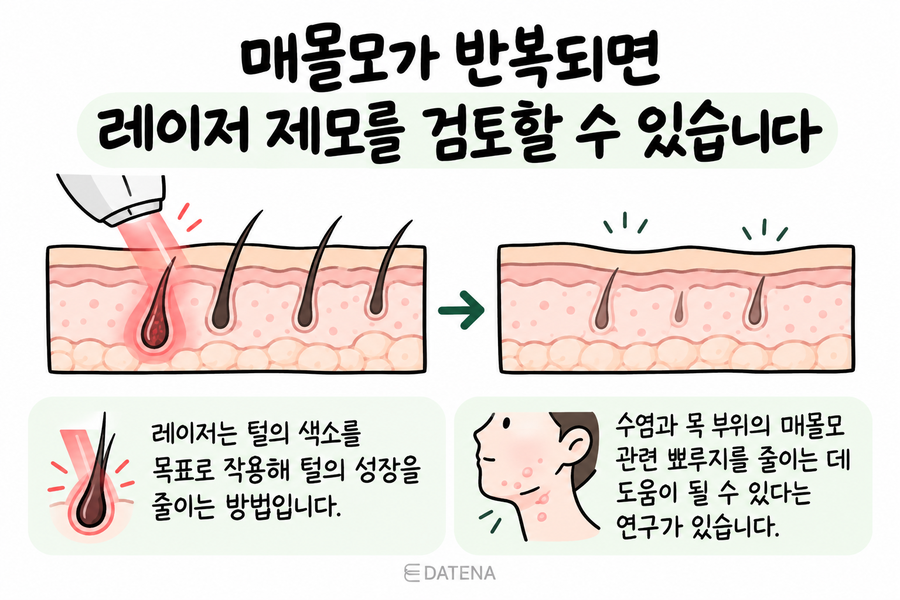
Laser targets the pigment in the hair to reduce hair growth.
Studies suggest it may help reduce ingrown-hair bumps in the beard and neck area.
The upper lip, chin and neck differ in beard density and thickness, so each area's response needs to be assessed separately.
Dark and white hairs respond to laser differently, so your beard color needs to be checked too.
Not all hairs respond at once, so multiple sessions are usually planned.
3. Shaving habits that reduce irritation
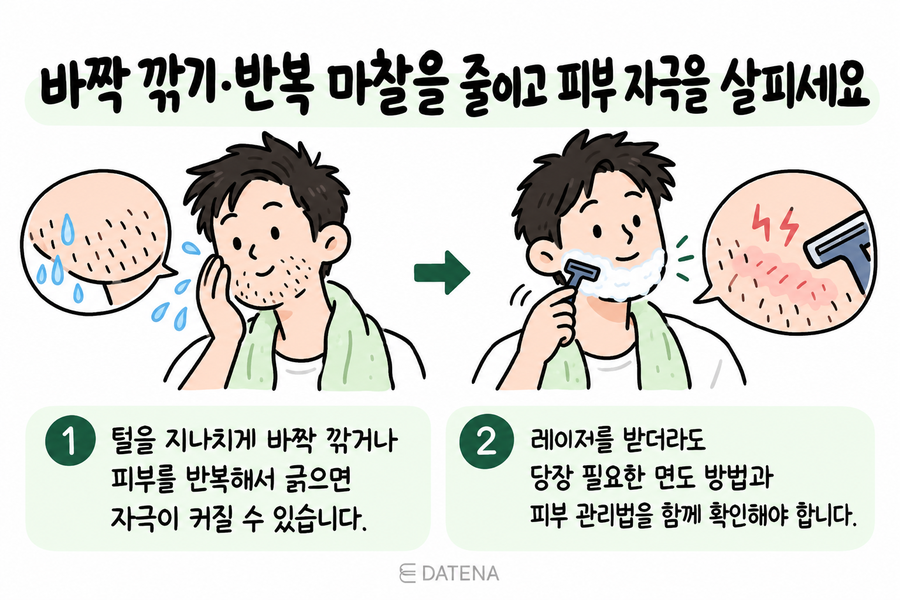
Shaving too close or repeatedly scraping the skin can make irritation worse.
Even if you're getting laser treatment, you'll still need to go over how to shave and care for your skin in the meantime.
Thoroughly wetting your skin and hair before shaving and using a gentler method can also help.
Also check whether a habit of running the blade over the same spot again and again is adding to friction on your skin.
If an area is actively inflamed or has open wounds, the timing of treatment may be adjusted.
4. Planning treatment around skin tone and beard color
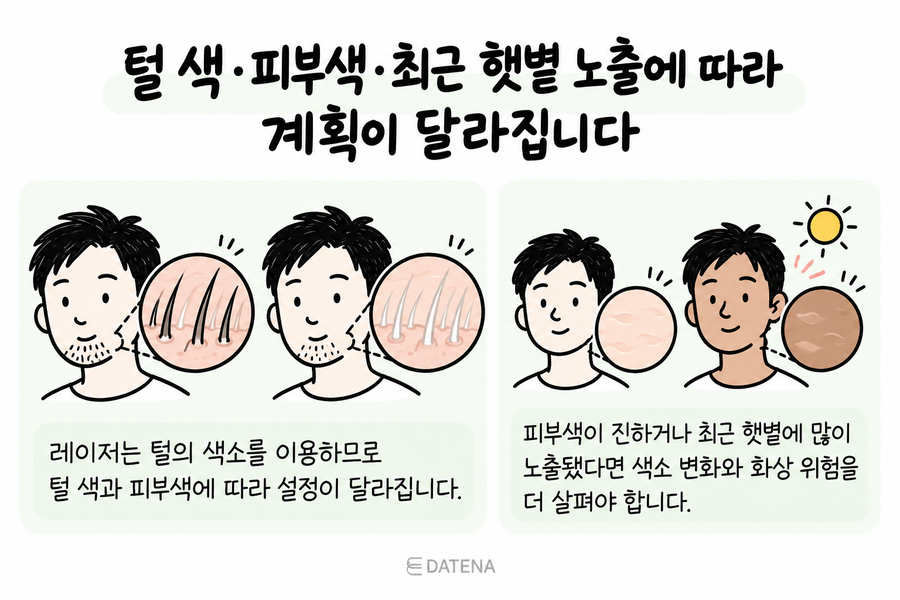
Because laser relies on hair pigment, settings vary depending on hair color and skin tone.
If you have darker skin or have had a lot of recent sun exposure, the risks of pigment changes and burns need closer attention.
If you've had pigmentation after a previous hair removal treatment, please tell us how your skin reacted then.
That history helps when we discuss cooling and energy settings.
Before treatment, you should let us know about any tanning and the hair removal methods you've used before.
5. Watching for redness and folliculitis after hair removal
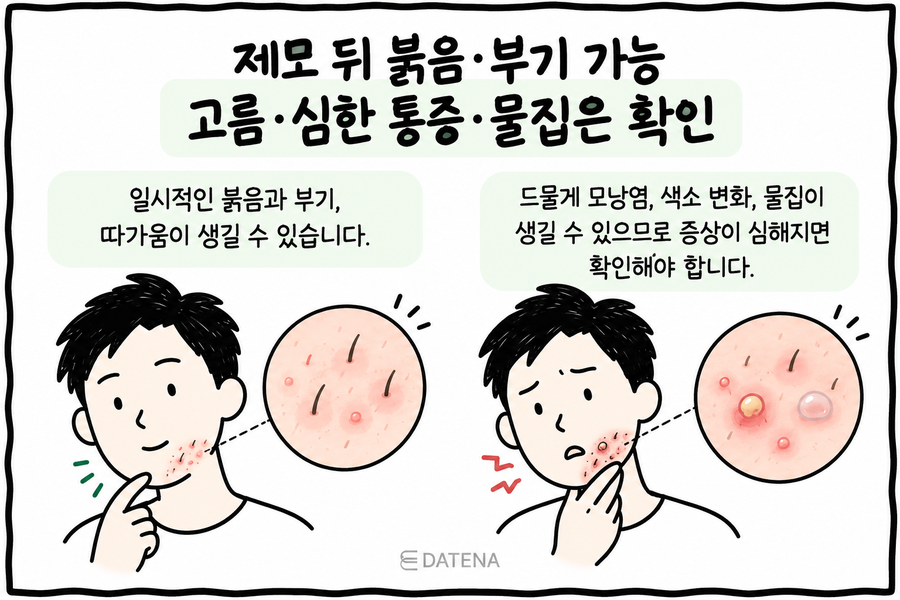
Temporary redness, swelling and stinging can occur.
Rarely, folliculitis, pigment changes or blisters can develop, so get checked if symptoms get worse.
If red spots appear around hairs after treatment, watch whether they settle down or whether pus and pain increase.
If small bumps linger for a long time, it's important to tell whether hairs are shedding out or whether it's inflammation.
After treatment, it's best to limit sun exposure and friction and follow the shaving and cleansing instructions you're given.
6. Deciding which beard to keep and which areas to reduce
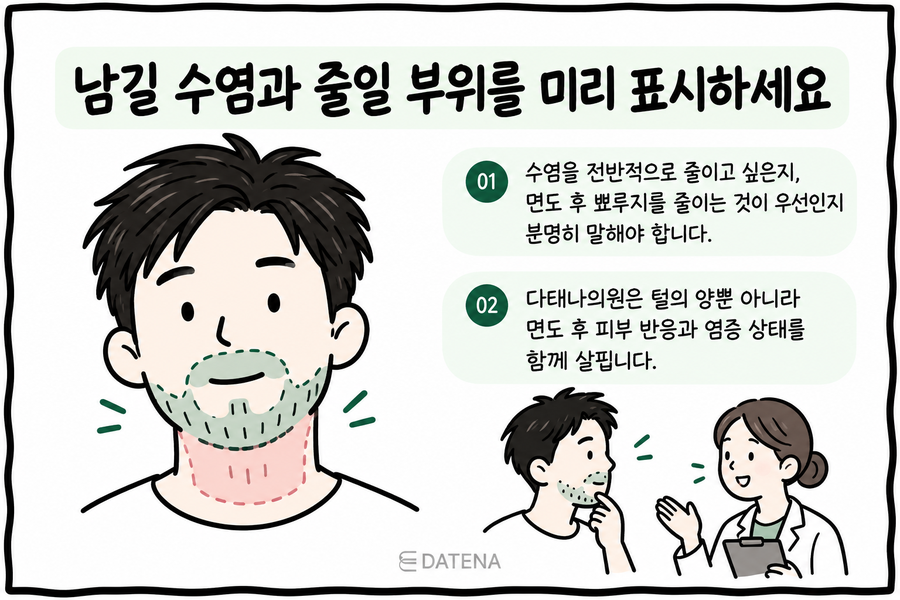
Be clear about whether you want to thin your beard overall or whether reducing post-shave bumps is the priority.
At Datena Clinic, we look not just at how much hair you have, but also at how your skin reacts after shaving and any inflammation.
If you want to keep your mustache and beard and only thin out the neck, it helps to mark in advance where the boundary should go.
That way we agree on the treatment area together so the edge doesn't end up looking uneven.
How many sessions you'll need, and what you can realistically expect, depends on your hair and skin.
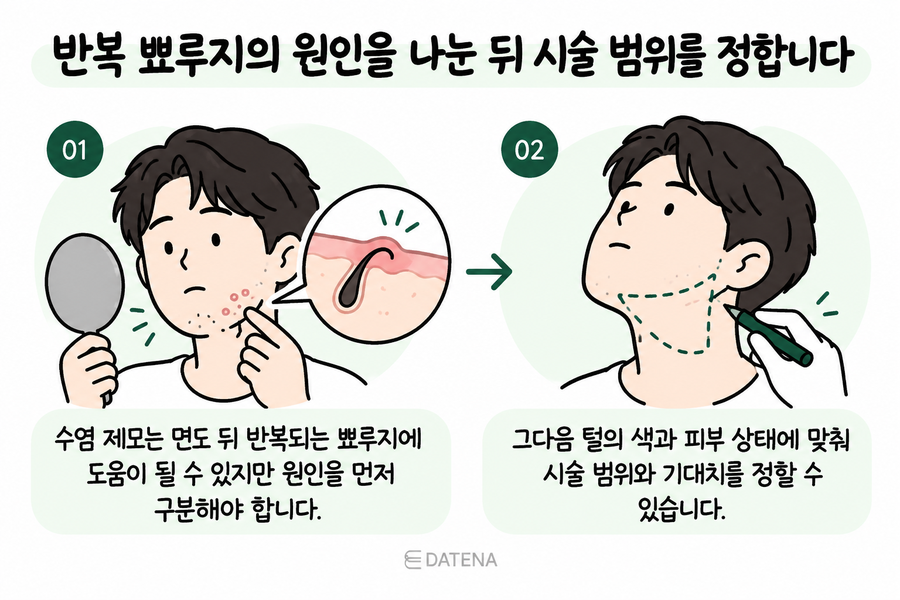
Beard laser hair removal can help with bumps that keep coming back after shaving, but the cause needs to be identified first.
Before beard hair removal, ingrown hairs need to be told apart from dermatitis and infection.
From there, the treatment area and expectations can be set based on your hair color and skin condition.
If there's an infection or dermatitis as well, it's important to factor that into the treatment plan.
You can find details on our treatments and directions on the Datena Clinic official website.