
Thermage vs. Ulthera: choosing based on what's causing the sagging
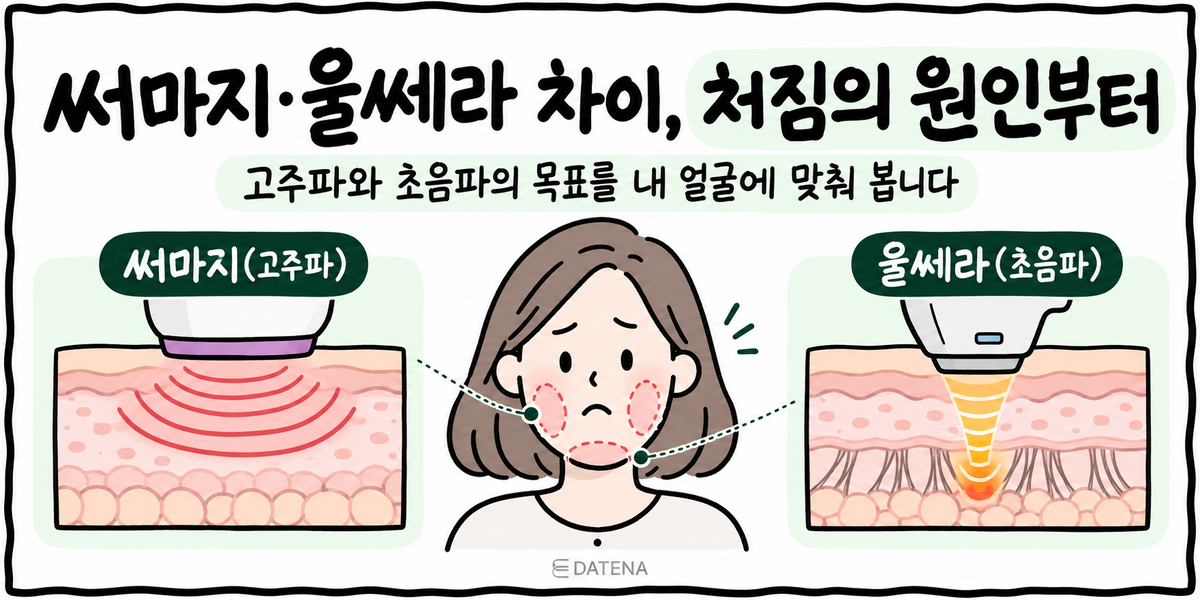
When you're trying to decide between Thermage and Ulthera, reviews alone won't tell you much.
We compare how radiofrequency and ultrasound work, what each treatment aims for, and which reactions to watch for.
Today's summary
Thermage uses monopolar radiofrequency.
Ulthera uses micro-focused ultrasound.
Neither treatment can be declared better based on individual condition alone.
We also compare pain and recovery.
Hello, this is Datena Clinic.
Search for the difference between Thermage and Ulthera and it can feel like you have to pick one.
But if the reason your jawline looks less defined, your skin thickness, or your past treatments differ, the questions you need to ask differ too.
Thermage and Ulthera are both described as treating sagging, but they use different energy and are planned differently.
To understand the difference, you first need to see what's actually reading as sagging on your face.
Rather than going by which device is popular, let's start with what you want to change about your face right now.
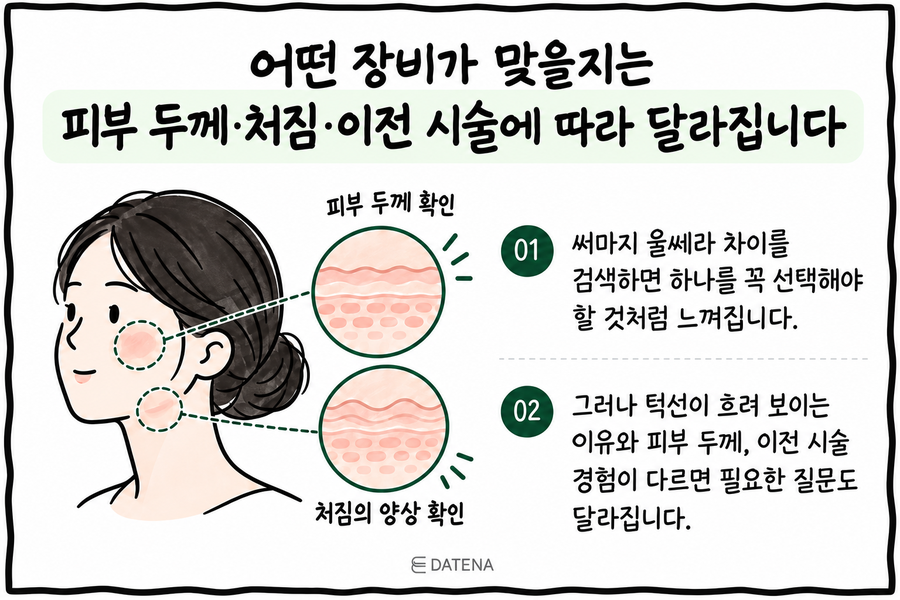
1. How radiofrequency and ultrasound work
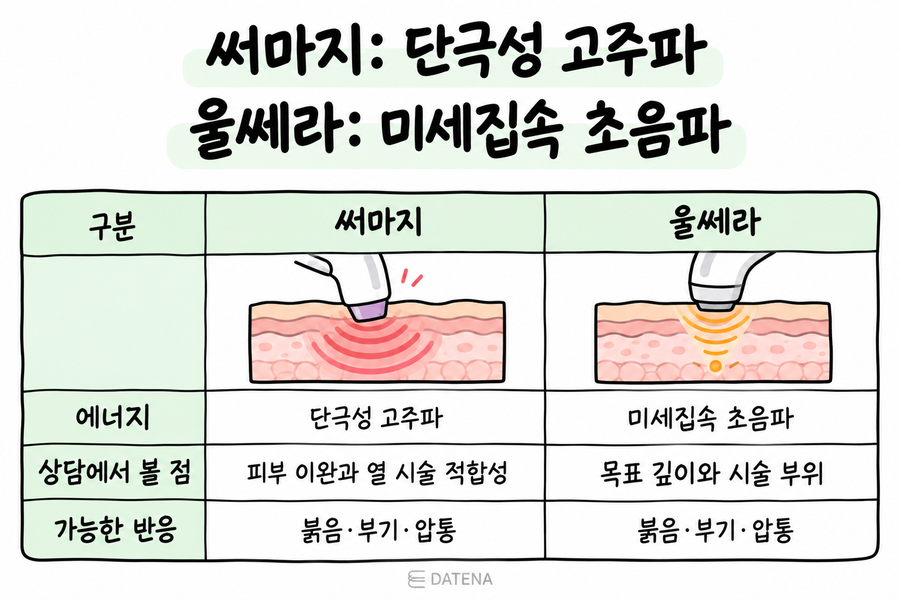
Thermage uses monopolar radiofrequency, while Ulthera uses micro-focused ultrasound.
Because they deliver energy differently and are planned differently, you can't assume they'll produce the same result in the same area.
Radiofrequency and ultrasound can't be compared at the same intensity or the same depth.
The more important question isn't the device name but which area you want to change and how.
Both are used to address skin laxity, but your personal goals need to be defined specifically.
Type | Thermage | Ulthera |
|---|---|---|
Energy | Monopolar radiofrequency | Micro-focused ultrasound |
What to look at in consultation | Skin laxity and suitability for heat-based treatment | Target depth and treatment area |
Possible reactions | Redness, swelling, tenderness | Redness, swelling, tenderness |
2. How to read the research on these two treatments
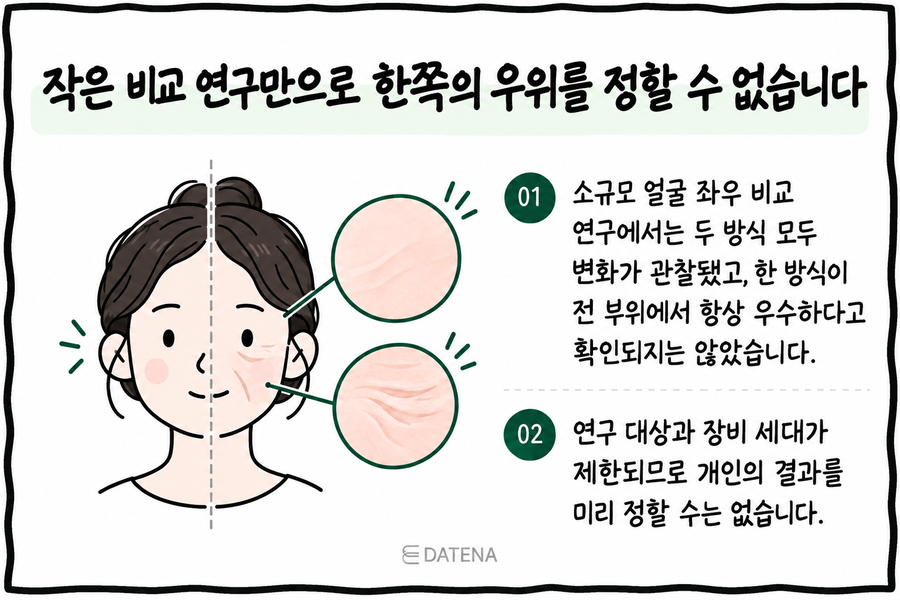
In a small split-face study, changes were seen with both methods, and neither one was shown to be consistently better across every area of the face.
Because the study populations and device generations were limited, no one can predict your individual result in advance.
The split-face study included only 20 participants.
A finding that the difference wasn't clear-cut shouldn't be read as meaning the two devices perform the same for every skin condition.
Skin thickness, the degree of laxity, and the areas you want to address all need to be assessed.
3. Telling sagging skin apart from volume loss
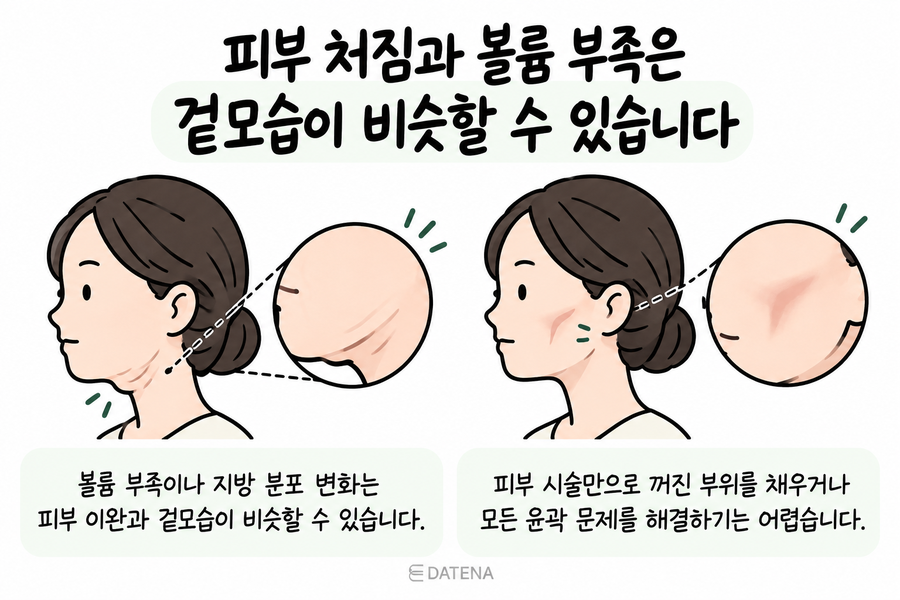
Volume loss or shifts in fat distribution can look a lot like loose skin.
Skin treatments alone can't easily fill hollowed areas or solve every contour concern.
If you have both fat and loose skin under the jaw, a single type of energy treatment is unlikely to change both to the same degree.
We need to look at your face from the front and the side to separate out the causes.
Identifying which factor is the main cause helps keep expectations realistic.
4. Pain during treatment and the recovery afterward
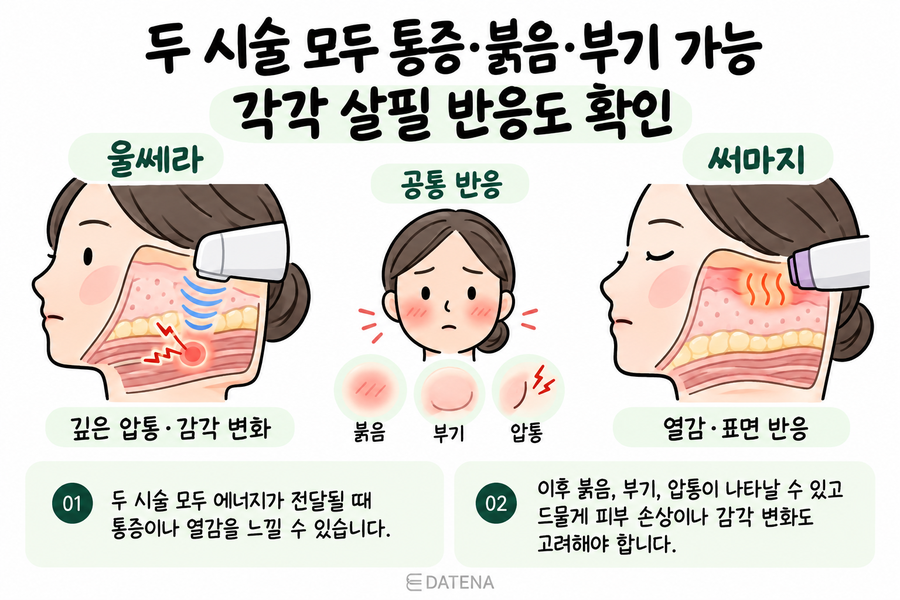
With both treatments, you may feel pain or heat as the energy is delivered.
Afterward, redness, swelling, and tenderness can occur, and in rare cases skin injury or changes in sensation also need to be considered.
After Ulthera, pay particular attention to deeper tenderness or changes in sensation; after Thermage, to heat and reactions on the skin's surface.
With either treatment, let us know right away if you feel unexpectedly strong pain during the procedure.
If you had any uncomfortable reactions from a previous treatment, be sure to tell us.
5. Before considering both devices together

Because they work differently, whether one person needs both depends on their facial condition and goals.
More treatment doesn't mean proportionally bigger results.
Before planning several devices at once, decide what you want to find out from one treatment.
And if you still have lingering reactions from a previous treatment, the timing of the next one should be reconsidered.
Timing, treatment areas, and skin reactions all need to be reviewed together.
6. How to choose what fits your face
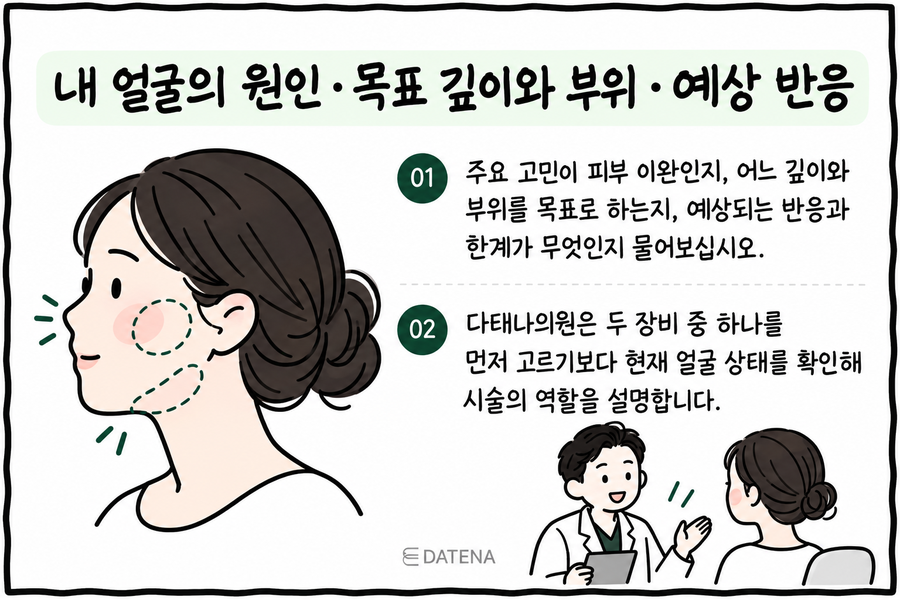
Ask whether your main concern is skin laxity, which depth and areas are being targeted, and what reactions and limitations to expect.
Rather than picking one of the two devices first, Datena Clinic assesses your current facial condition and explains what role each treatment would play.
Instead of asking your doctor to name a winner between the two devices, ask which part of your face is being treated and why.
Choosing gets easier once you've also been told what a treatment can't do.
Treatment methods and the number of sessions may vary depending on your individual plan.
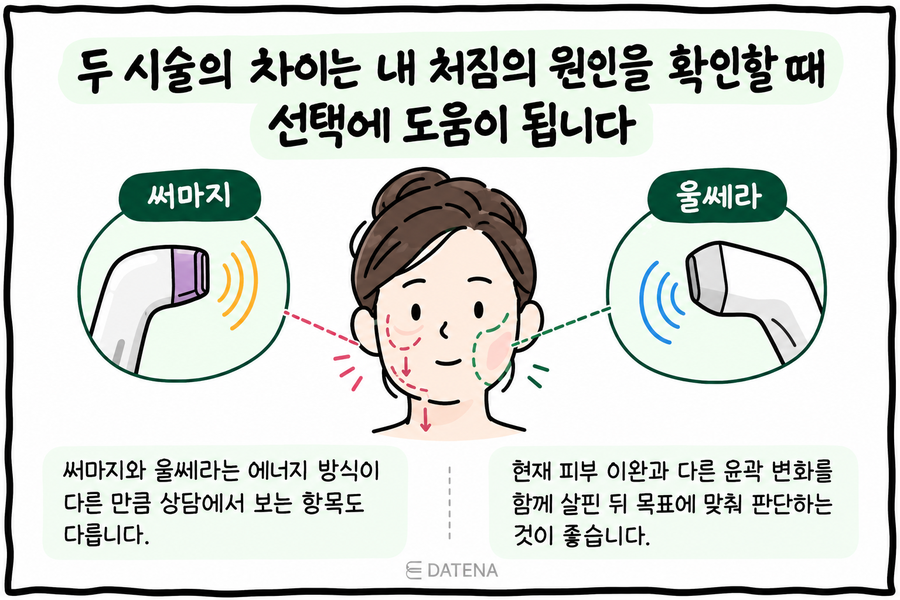
Because Thermage and Ulthera use different types of energy, the consultation looks at different things for each.
Simply memorizing the names of the energy types won't help you actually choose between Thermage and Ulthera.
It's best to look at your current skin laxity alongside other contour changes, then decide based on your goals.
The difference between the two treatments only becomes useful for your decision once you've identified what's causing the sagging in your face.
You can find details on our treatments and directions on the Datena Clinic official website.