
If Pore Laser Isn't Working, It May Be Scarring, Not Pores
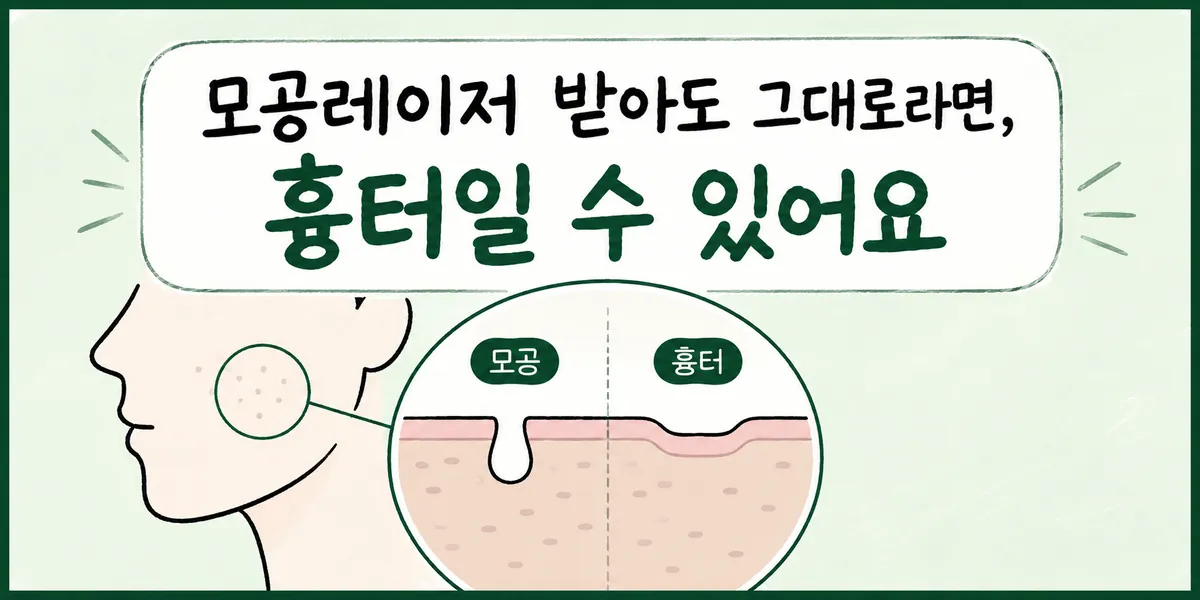
Today's summary
Pores can look enlarged for many reasons, including sebum, dead skin buildup and loss of elasticity
But some of those pores that look enlarged are actually acne scars.
If scarring is the cause, pore lasers or home care alone won't make them smaller.
Once they're confirmed as scars, the treatment approach and intervals differ from pore care too.
"I've had pore laser treatments several times. Why hasn't anything changed?"
"I've tried every pore-shrinking tip out there, and nothing has made them smaller."
Quite a few people come to us with exactly these concerns.
Hello, this is Datena Clinic.
Many people have tried everything for enlarged pores, from skincare products and home care to pore lasers.
But if your pores still won't tighten after sticking with these methods, it's not unusual for what you're seeing to actually be scarring left behind by acne, not pores.
Pores and scars can look alike on the surface, but what's happening beneath the skin is different, so the right care and treatment depend on which one you're dealing with.
1. What really makes pores look larger
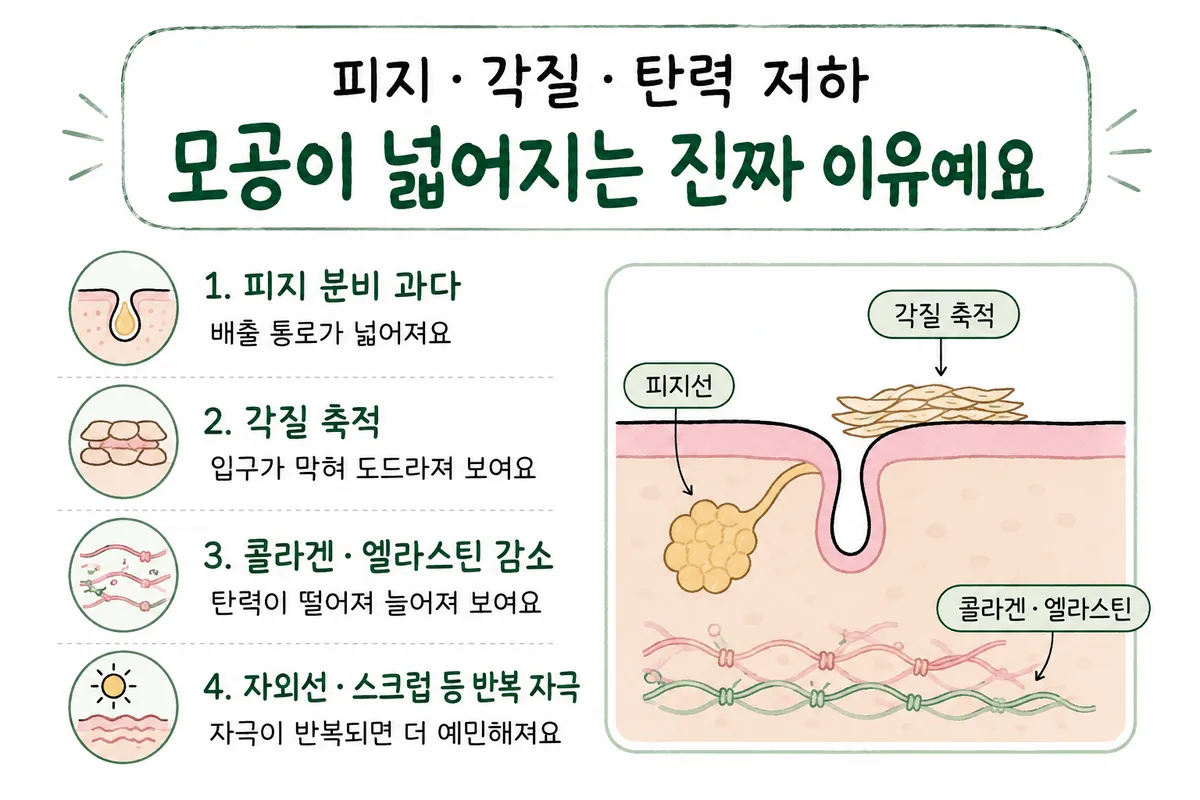
There are a few clear reasons pores look enlarged.
The most common is how much oil (sebum) your skin produces.
When the oil glands produce more sebum, the pore opening, which is the channel that releases it, gradually widens.
If your face gets shiny just a few hours after cleansing, oil production is likely contributing to your enlarged pores.
On top of that, when dead skin cells build up at the pore opening, oil can't drain smoothly, making pores look even more noticeable.
Some changes also happen naturally with age.
Collagen and elastin, which support the skin around pores, typically start to decline gradually from the mid-20s. As this tissue diminishes, pores can sag and look wider.
Accumulated sun exposure, or repeated harsh treatments like scrubs and pore strips, can also weaken the skin barrier around pores and make them worse.
2. Why scars can look like pores
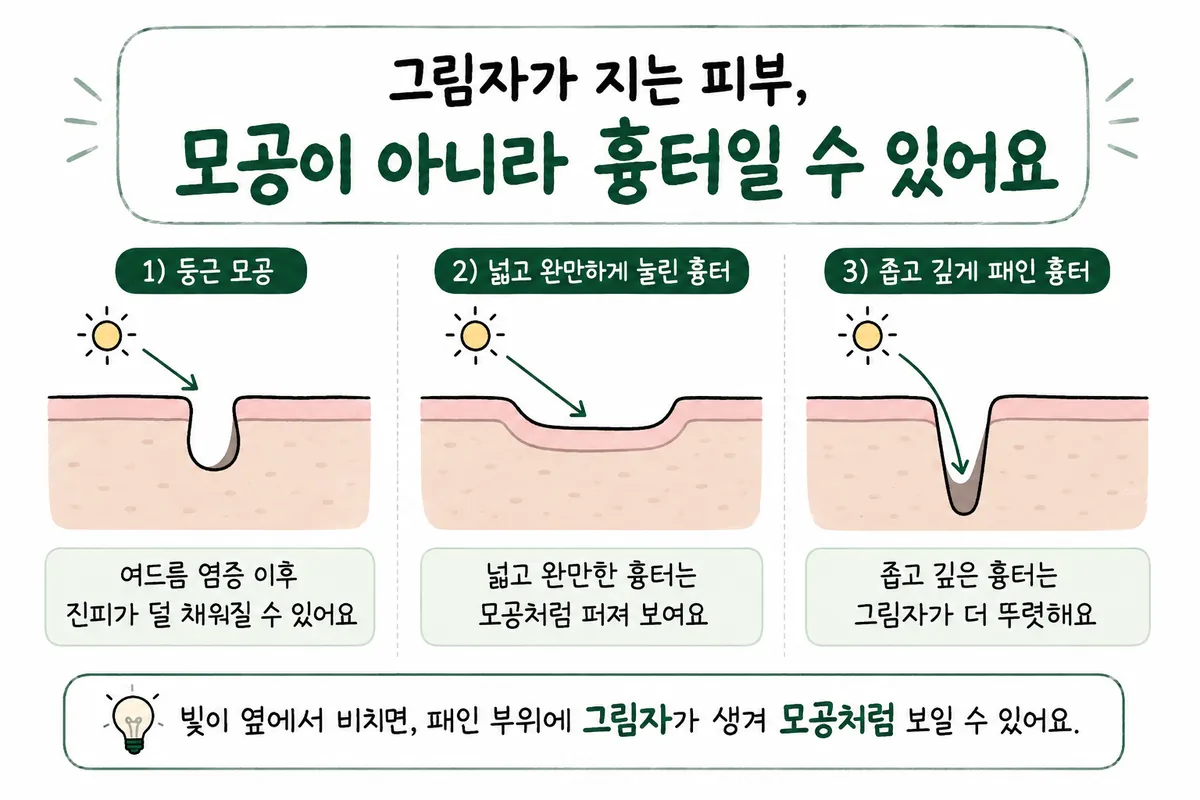
The catch is that some of these enlarged-looking pores aren't pores at all. They're acne scars.
Where deep acne inflammation has healed, the collagen beneath the skin may not have fully filled back in, or fibrous bands may remain that tether the scar downward.
Where the dermis has been damaged or tethered like this, the skin surface dips gently and casts a shadow, which looks very much like an enlarged pore.
Especially when gently depressed scars are spread across broad areas like the cheeks or temples, it's hard to tell by eye whether individual pores have widened or the skin is being pulled down by scarring.
Narrow, deep scars, on the other hand, may look small but cast sharp shadows, so they can stand out even more than pores.
These two types of scars have different causes and need different treatments, but both are easy to mistake for pores.
3. Signs pore-shrinking tips won't work
The commonly recommended ways to shrink pores include cleansing, exfoliation, sun protection, and skincare with niacinamide or retinol.
This kind of care can help pores caused by oil and dead skin, but it's unlikely to help when scarring is the cause.
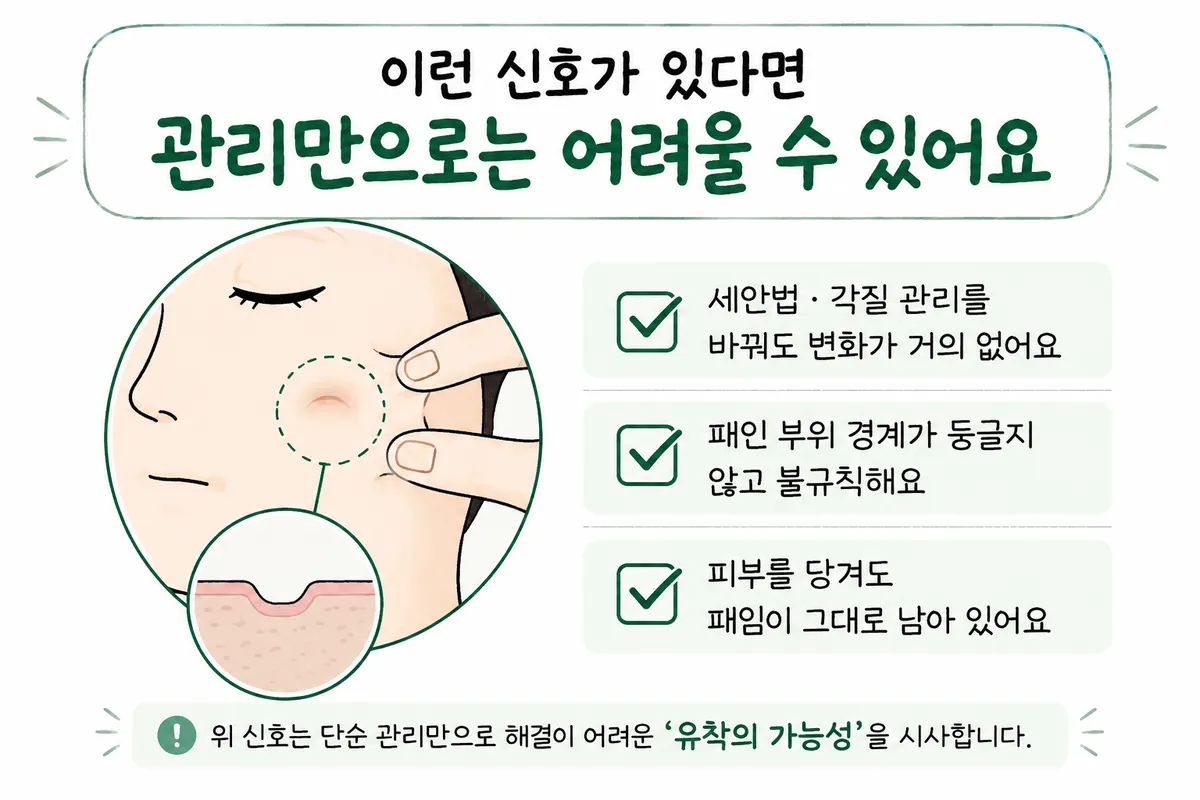
A few signs can help you gauge whether you're dealing with simple pores or scars that care alone won't fix.
First, if you've changed your cleansing routine and exfoliated consistently for several months or more with almost no change, it's worth suspecting a cause other than oil or dead skin.
Also, if the edges of the indentations aren't round and even but angular or irregular, they're more likely scars left after inflammation than enlarged pores.
If the indentation stays put when you gently stretch the skin sideways with your fingers, that's a sign fibrous tissue beneath the skin is pulling the scar down.
If you notice these signs together, rather than relying on home care alone, it's important to have the exact cause checked.
4. When pore lasers don't tighten pores
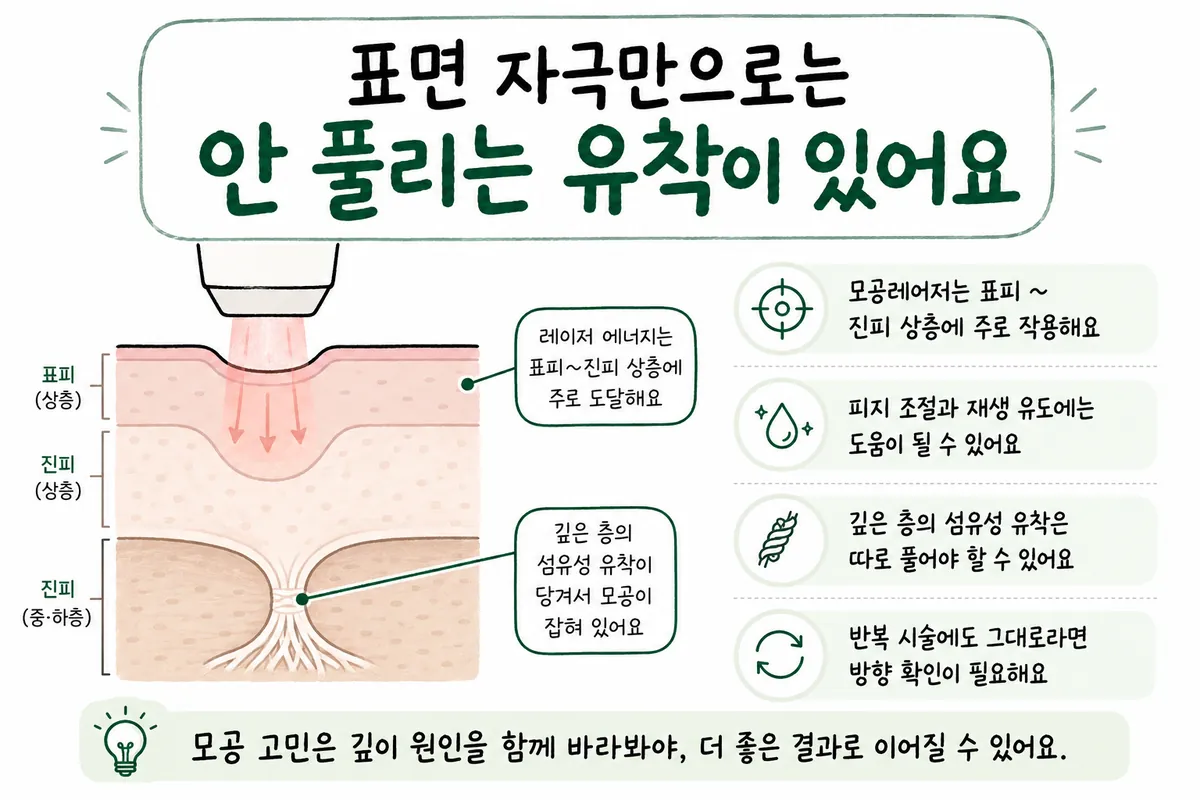
Pore lasers vary in how deep they work and how they work, depending on the type.
Non-ablative fractional lasers and toning-type lasers deliver heat to the epidermis and upper dermis, regulating oil gland activity and stimulating collagen renewal.
This approach can help with pores that have widened from excess oil and loss of firmness, but when fibrous tissue deep in the dermis is pulling a scar down, surface stimulation alone won't release that tethering.
In other words, even after repeated pore laser sessions, the scarred areas may stay exactly as they were.
Enlarged pores and scars rarely recover on their own once they've formed, so if repeated treatments aren't changing anything, it's worth asking whether the treatment approach was the right fit in the first place, rather than blaming the laser itself.
In these cases, instead of treatments that simply deliver heat to the surface, you may also need methods that directly cut the tethering or fill the dermis with regenerative materials.
5. Why the Scar Treatment Process and Intervals Are Different
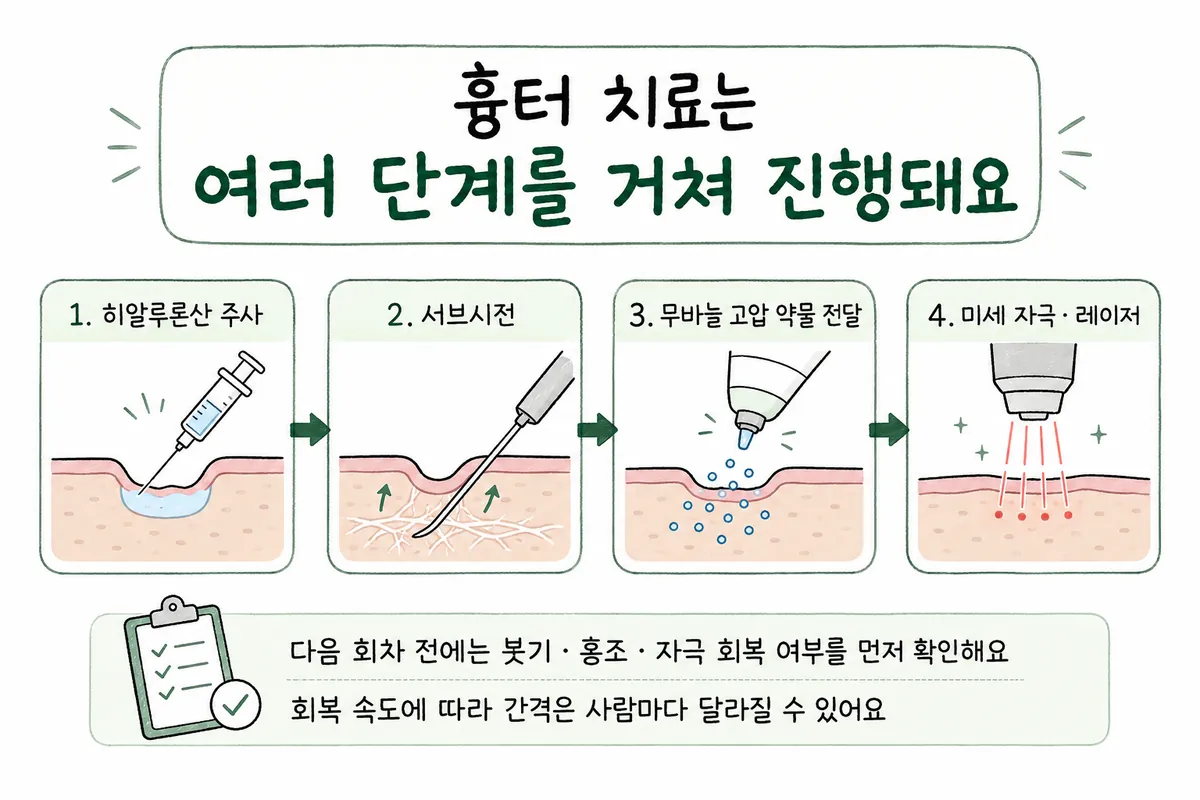
Once it's confirmed as a scar rather than a pore, the whole treatment process looks different from simple pore care.
Scar treatment usually isn't a single procedure; it combines several steps.
First, hyaluronic acid is placed beneath the scar to create space for recovery, and then subcision is used to cut the fibrous bands pulling the scar down, lifting the depressed area.
After that, a needle-free device that uses high pressure to deliver medication directly into the dermis fills narrow, deep areas with collagen-supporting ingredients, and fine micro-stimulation and laser are often added to boost the regenerative response.
Because so many steps happen in one session, before moving on to the next one we first need to confirm that swelling, redness and irritation have fully settled.
Rather than repeating on fixed dates, we decide the timing of the next session based on how stable the previously treated area is, so intervals can vary from person to person depending on how quickly you heal.
It helps to know that this works quite differently from pore care, which is often repeated weekly.
6. How to Tell Pores and Scars Apart
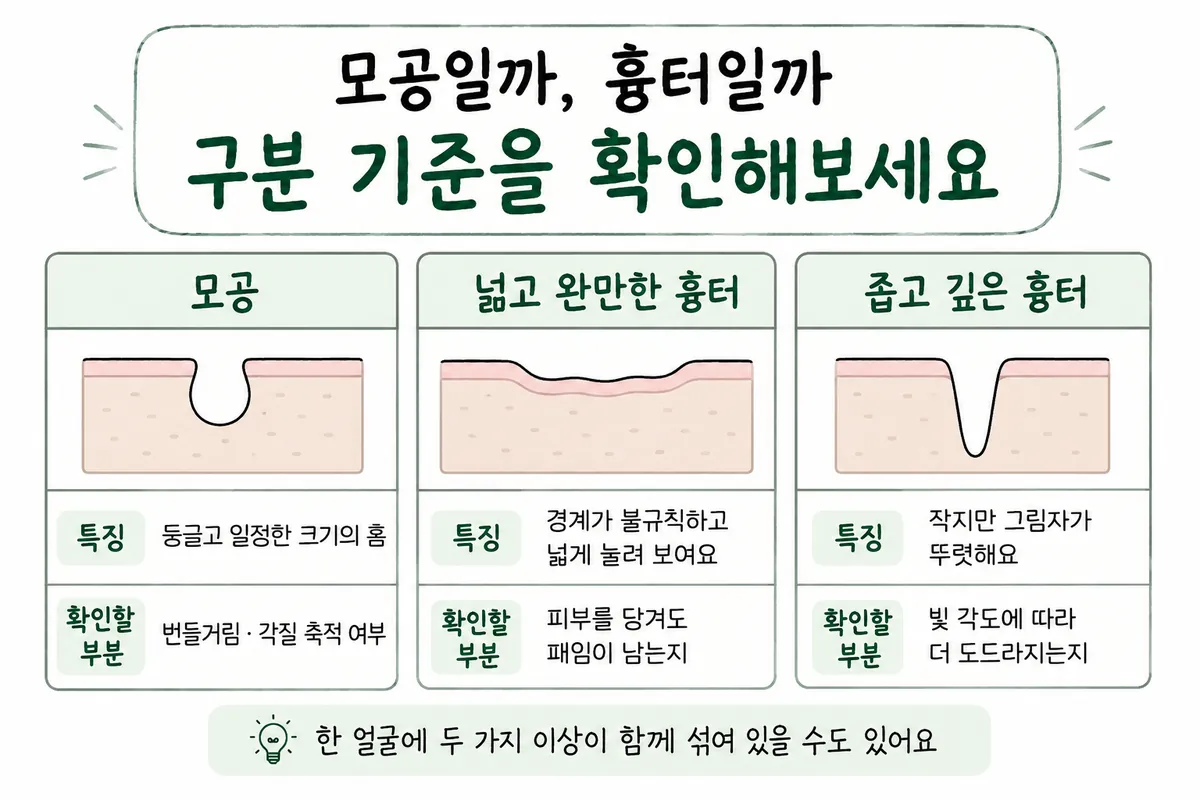
Based on everything above, here's a summary.
Type | Characteristics | What to check |
|---|---|---|
Pores | Appear as round, evenly sized dips on the surface | Does your face get shiny soon after washing? Does dead skin build up often? |
Wide, gently sunken scars | Irregular edges, with a wide area that looks gently sunken | Does the dip remain even when you stretch the skin sideways? |
Narrow, deep scars | Small in size, but casts a distinct shadow | Does how noticeable it is change with the angle of the light? |
Even on the same face, pores and scars can be mixed together in different areas, so it's hard to draw a firm conclusion from just one or two of the criteria in the table.
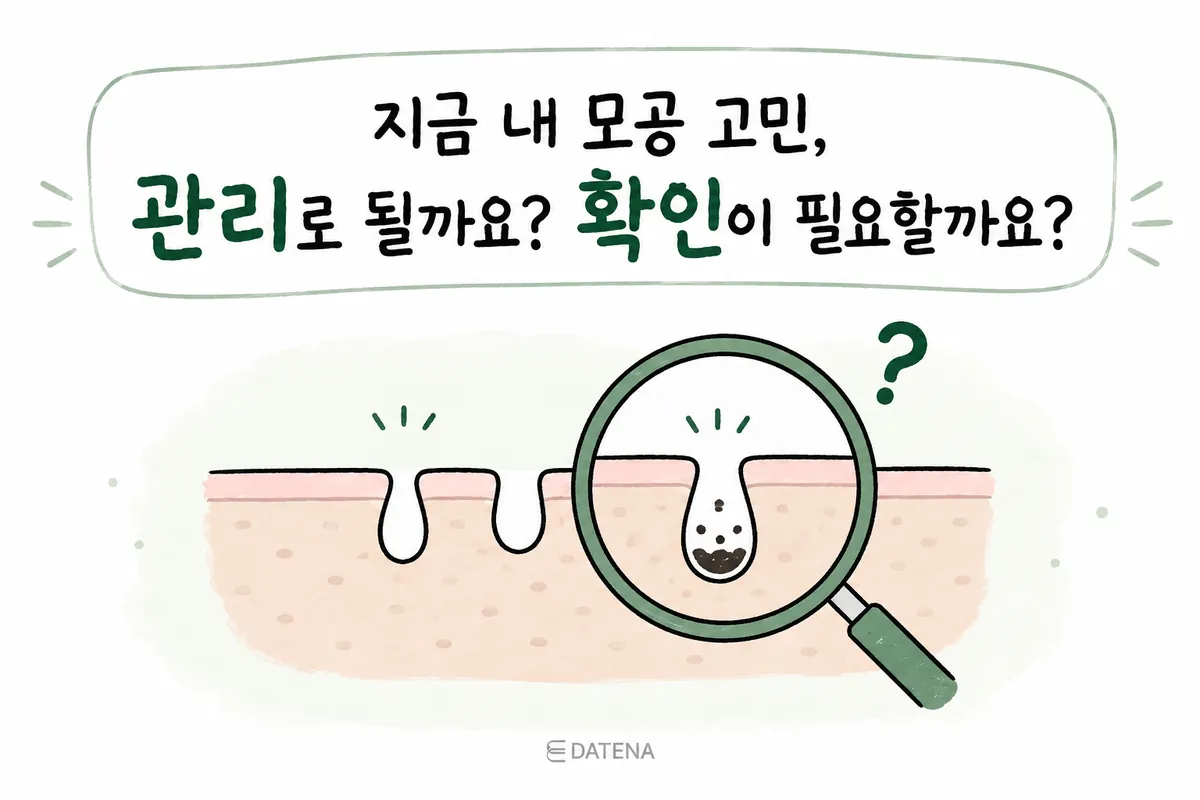
Knowing how to tell pores from scars can help you decide which care or treatment to consider.
That said, in reality both causes are often mixed in the same area, so rather than judging by eye alone, an in-person skin assessment may be needed.
At Datena Clinic, even for pore or scar consultations, the doctor personally examines your skin and checks oil production, firmness and any tethering before deciding on a treatment direction.
Whether your pore concern can be solved with skincare or needs a closer look is best determined after examining your skin in person.
Medically reviewed by: Dr. Kang Dong-hyun (Datena Clinic) · Meet our doctors: /about.html