
Rejuran Recovery: Skin Reactions to Check Before Worrying About Washing or Makeup
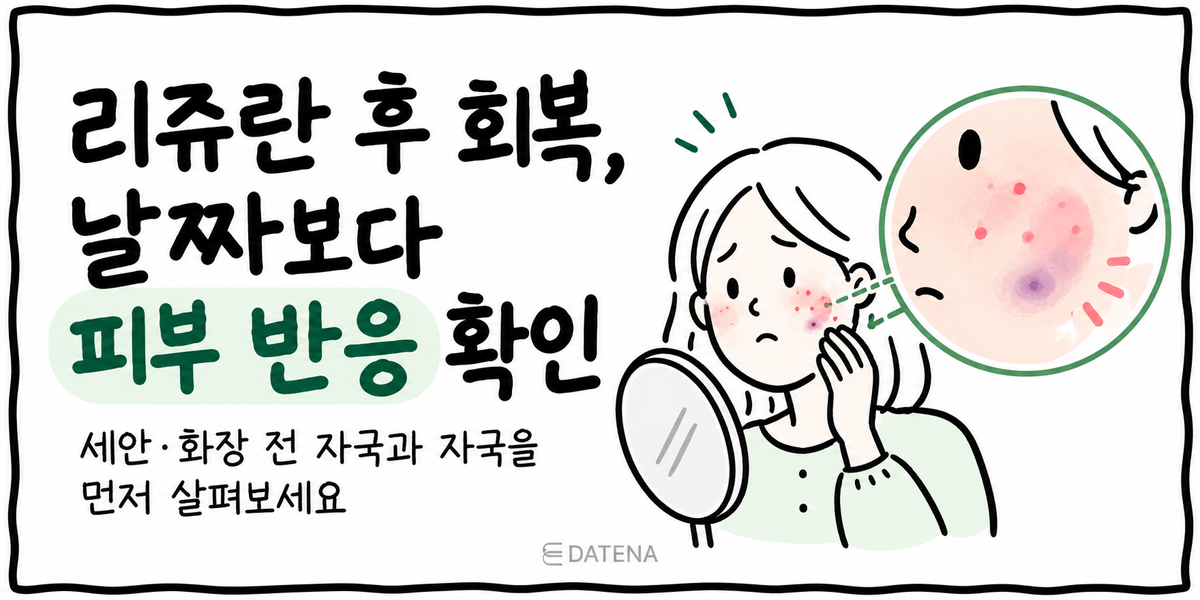
If you can see injection marks on your face after Rejuran, you'll probably wonder when you can get back to your normal routine.
Here's the order in which to check your skin right after treatment, and the warning signs to watch for while it heals.
Today's summary
Injection marks, redness, and bruising each last for different lengths of time.
First, check that your skin has settled down.
Adjust face washing and makeup according to your aftercare instructions.
If pain and warmth get worse, have it checked.
Hello, this is Datena Clinic.
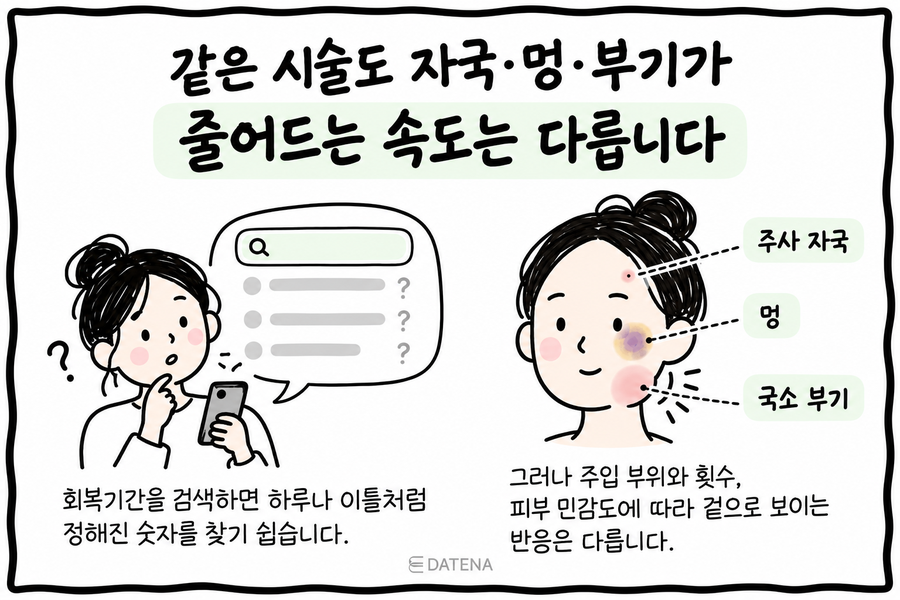
Search for recovery time and you'll easily find a set number, like one or two days.
But how your skin visibly reacts depends on the injection area, the number of injections, and how sensitive your skin is.
Treating Rejuran recovery like a fixed schedule can actually make it easier to miss important changes in your skin.
The point when visible marks fade and the point when your skin is actually less irritated may not be the same.
Rather than sticking to a timeline, it's more practical to watch which changes are fading the way they should.
1. What injection marks, bruising, and swelling look like at first
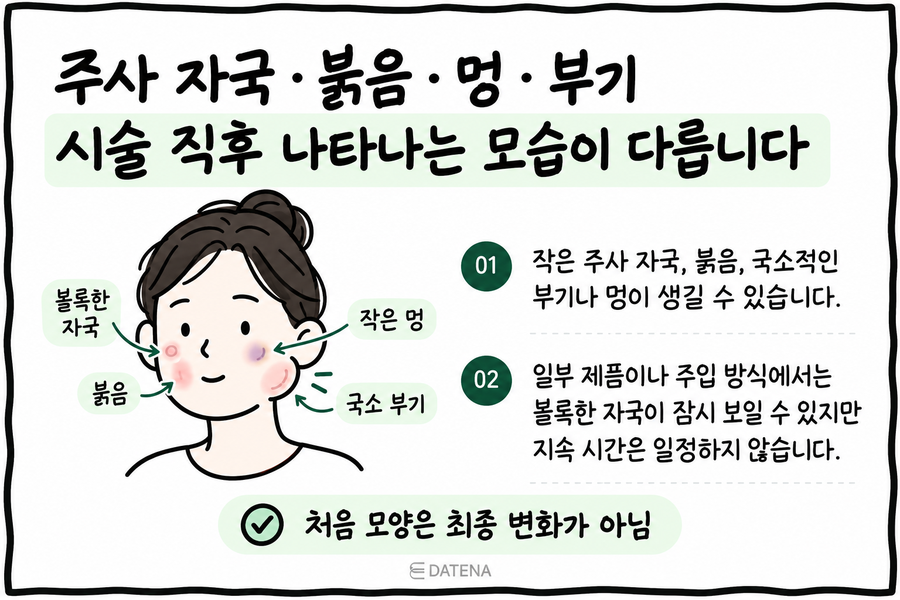
Small injection marks, redness, and localized swelling or bruising can appear.
With some products or injection techniques, raised bumps may be visible for a while, but how long they last varies.
The size and number of marks can differ depending on the injection technique.
Even after visible bumps go down, small bruises sometimes show up later, so it helps to look at the order in which changes happen.
Don't judge the final result by how your skin looks right after treatment.
2. What to check before going back to face washing and makeup
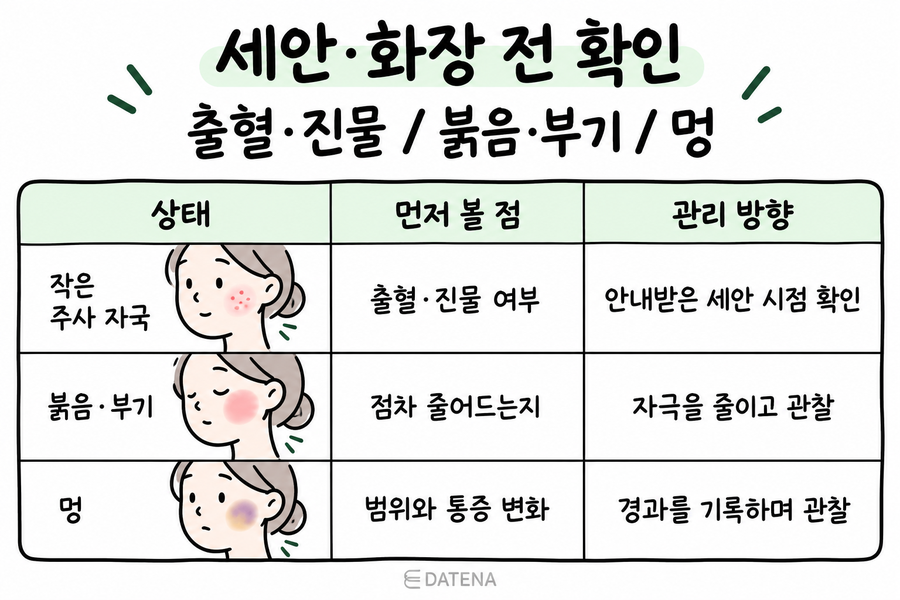
First check whether any bleeding or oozing remains on the skin's surface, and how irritated it feels.
When you can wash and wear makeup may depend on the product and technique used, so follow the instructions you were given first.
Letting water touch your skin and rubbing it with your hands put very different amounts of stress on it.
If you have plans that require makeup, let the medical team know before treatment so you can go over a workable aftercare plan.
Rubbing hard to cover redness with makeup can make the discomfort worse.
Condition | What to check first | Care approach |
|---|---|---|
Small injection marks | Any bleeding or oozing | Confirm when you were told you can wash your face |
Redness and swelling | Whether they are gradually going down | Minimize irritation and keep an eye on it |
Bruising | Changes in size and pain | Keep track of how it progresses |
3. How exercise and saunas affect your skin
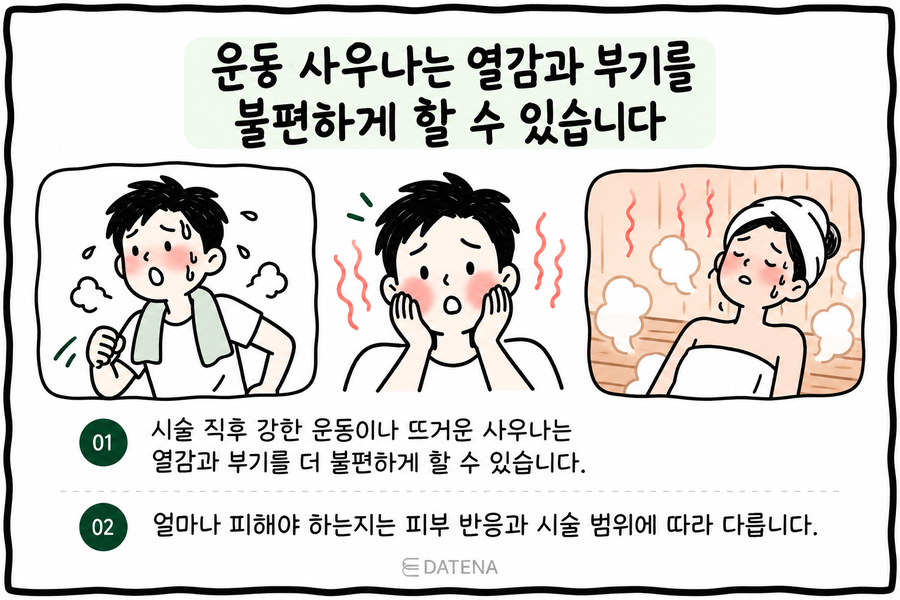
Intense exercise or a hot sauna right after treatment can make warmth and swelling more uncomfortable.
How long you should avoid them depends on how your skin reacts and the size of the treated area.
If your face is red or stinging, activities that generate a lot of heat may make the discomfort worse.
Don't decide when to get back to exercise based on the date alone. Look at how your skin is reacting now, along with the instructions you were given.
It's safest to let us know your plans in advance and get advice tailored to you.
4. When redness and pain linger
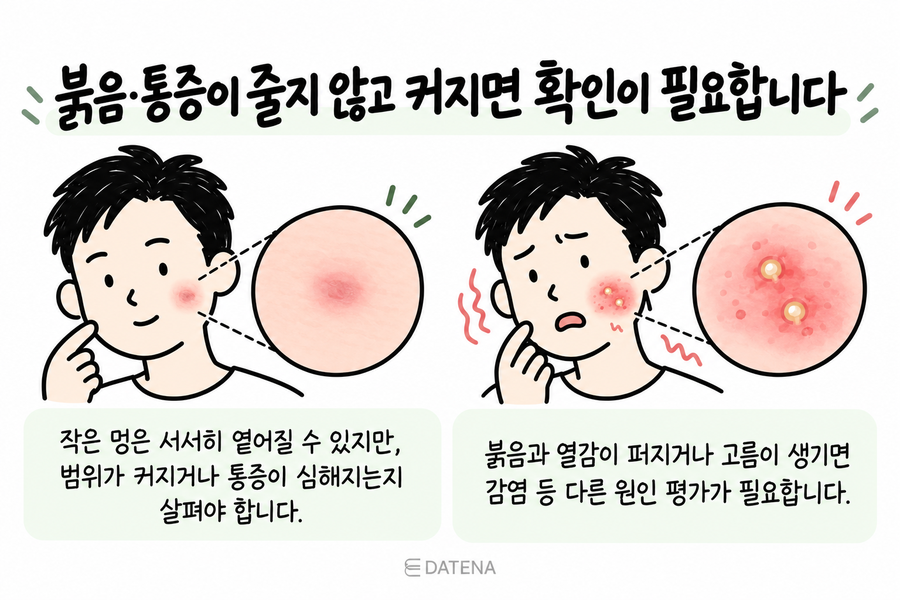
Small bruises may fade gradually, but watch whether they get bigger or the pain gets worse.
If redness and warmth spread or pus forms, other causes such as infection need to be evaluated.
If you have a bruise, check whether the color of the surrounding skin and the pain are changing along with it.
If the edges become more defined or it feels warm, it's best not to assume it's just an ordinary bruise.
If you notice allergy symptoms or a severe whole-body reaction, seek medical care promptly.
5. Adjusting your skincare during recovery
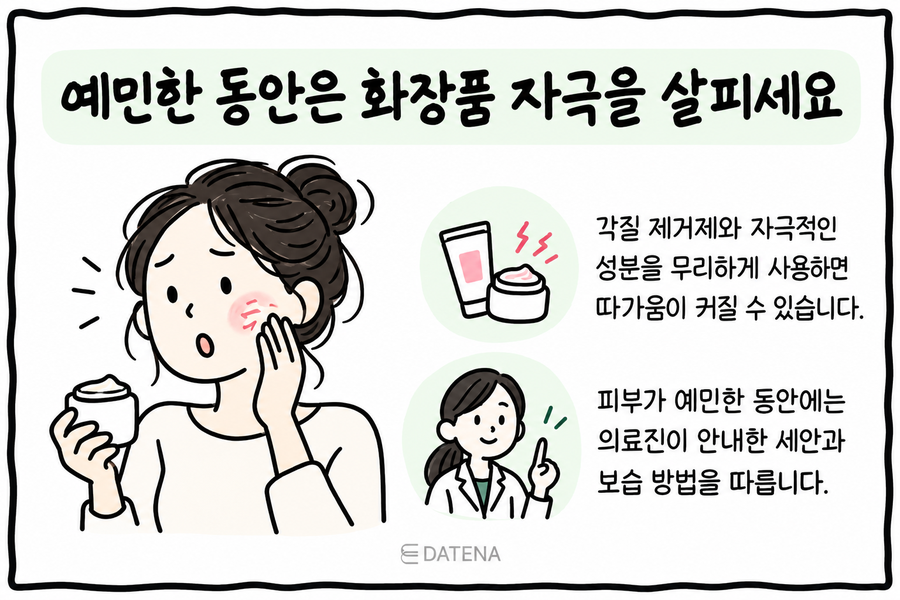
Overusing exfoliants and harsh ingredients can make stinging worse.
While your skin is sensitive, follow the cleansing and moisturizing routine your medical team recommended.
Even products that never bothered you before may sting right after treatment.
When to go back to acid or retinoid products should be decided based on how irritated your skin feels and the aftercare instructions you received.
Rather than starting new products, it's better to first check whether your usual products cause any irritation.
6. Planning your recovery around your schedule

Even with the same product, the injection area and skin reactions vary, so if you have an important event coming up, let us know in advance.
The key to monitoring recovery is telling the difference between symptoms that are easing and symptoms that are getting worse.
Taking recovery photos at the same time of day and under the same lighting makes it easier to compare changes.
When you describe your progress to Datena Clinic, it's more helpful to tell us when things started improving or getting worse than to just say "it's still red."
At Datena Clinic, we factor in your post-treatment plans and give you the guidance you need.
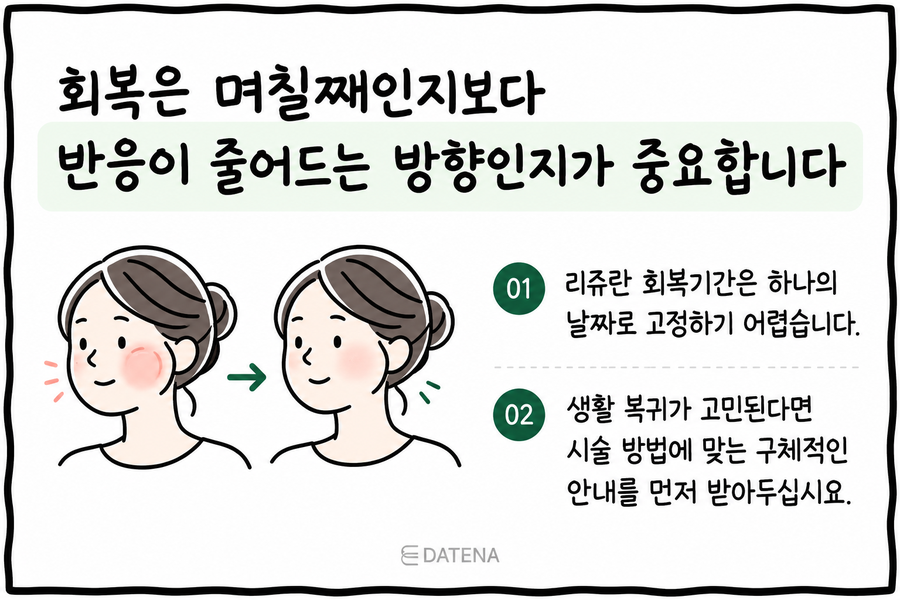
It's hard to pin Rejuran recovery time down to a single date.
The key to recovery isn't how many days have passed, but whether your skin's reactions are heading in the right direction.
If you're wondering when you can get back to your normal routine, get specific guidance for your treatment method beforehand.
Keep an eye on how the treated area responds, follow the aftercare instructions you were given, and check with your medical team about any symptoms that get worse.
You can find details on our treatments and directions on the Datena Clinic official website.