
Types of Skin Boosters: Why Your Skin Concern Matters More Than the Product Name
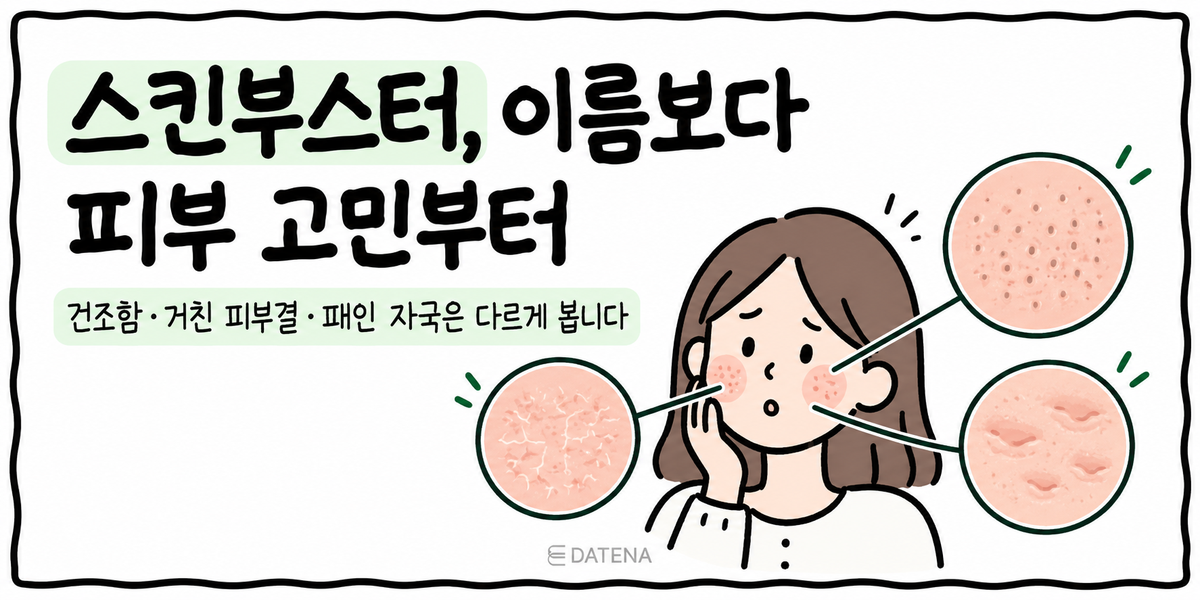
Search for skin boosters and you'll find so many ingredients and product names that it can be hard to know which treatment to choose.
We sort concerns like dryness, rough texture and shallow unevenness, and list the questions worth asking when you look at products.
Today's summary
"Skin booster" doesn't refer to a single ingredient.
Dryness and scarring are assessed in different ways.
Injectable treatments share some common side effects.
Check the product name and the treatment area together.
Hello, this is Datena Clinic.
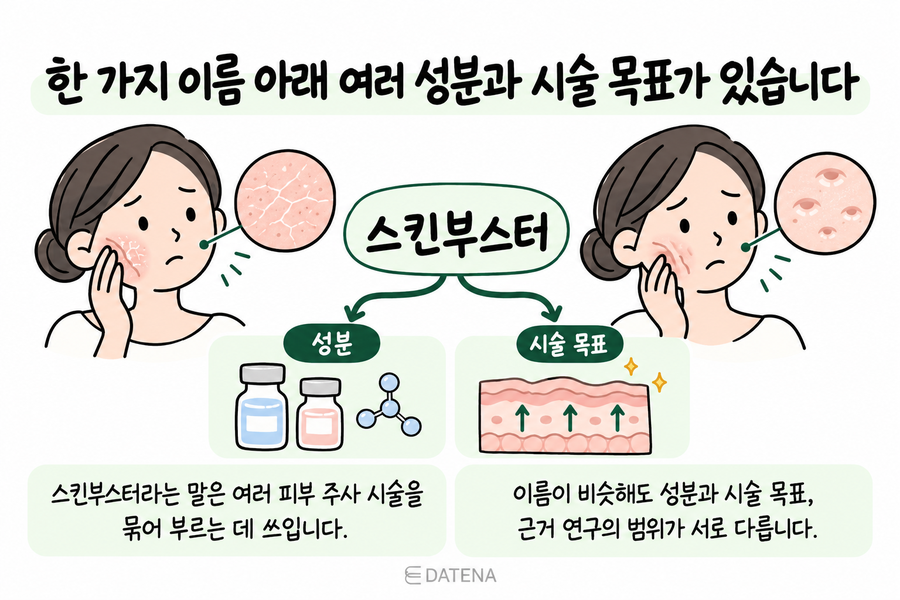
"Skin booster" is an umbrella term for a range of injectable skin treatments.
Even when the names sound alike, the ingredients, treatment goals and the scope of supporting research differ.
What matters first isn't which product is popular, but what's actually bothering your skin right now.
Skin that looks similarly rough can involve a mix of dryness, acne and indented marks.
Rather than a broad promise of "better skin," it helps to start by pinning down which problem bothers you most right now.
1. How Skin Boosters Differ by Ingredient
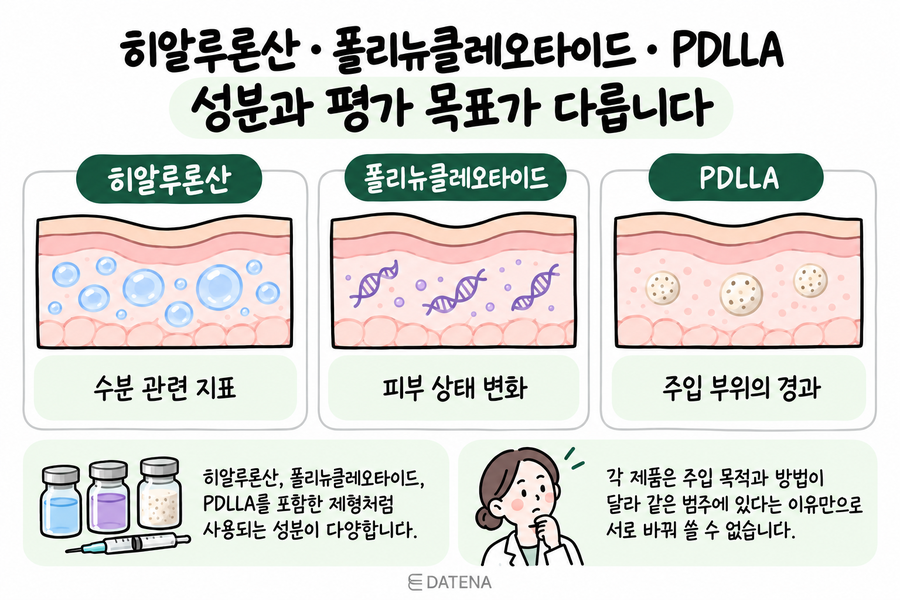
A variety of ingredients are used, such as hyaluronic acid, polynucleotides and formulations containing PDLLA.
Each product has its own injection purpose and technique, so they can't be swapped for one another just because they fall in the same category.
Their research goals differ: hyaluronic acid products look at hydration-related measures, polynucleotide products at changes in skin condition, and PDLLA products at how the injected area progresses.
In other words, sharing the "skin booster" label doesn't mean sharing the same evidence.
Even in the academic literature, definitions and outcome measures for skin boosters aren't consistent, so results need to be interpreted with care.
2. Looking at the Causes of Dryness and Rough Texture
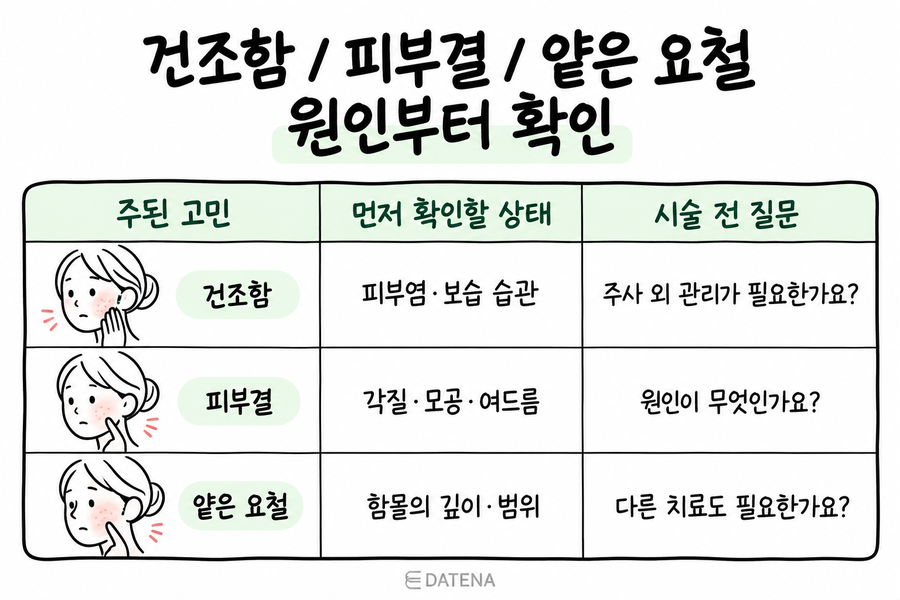
For skin that looks dry, we need to check how well hydrated it actually is and whether the skin barrier is irritated.
A rough feel can come from many things, including dead skin buildup, acne, pores and shallow scars.
If your skin feels very tight and flaky after cleansing, it's also worth checking for dermatitis or irritation.
If your skin is oily yet still feels rough, comedones and inflammation may be playing a bigger role.
When the cause is different, basic skin care or another treatment may need to come before injections.
Main concern | What to check first | Question to ask before treatment |
|---|---|---|
Dryness | Dermatitis and moisturizing habits | Do you need care beyond injections? |
Skin texture | Flaking, pores and acne | What's causing it? |
Shallow unevenness | Depth and extent of depressions | Do you need other treatments too? |
3. When injections alone aren't enough for indented marks
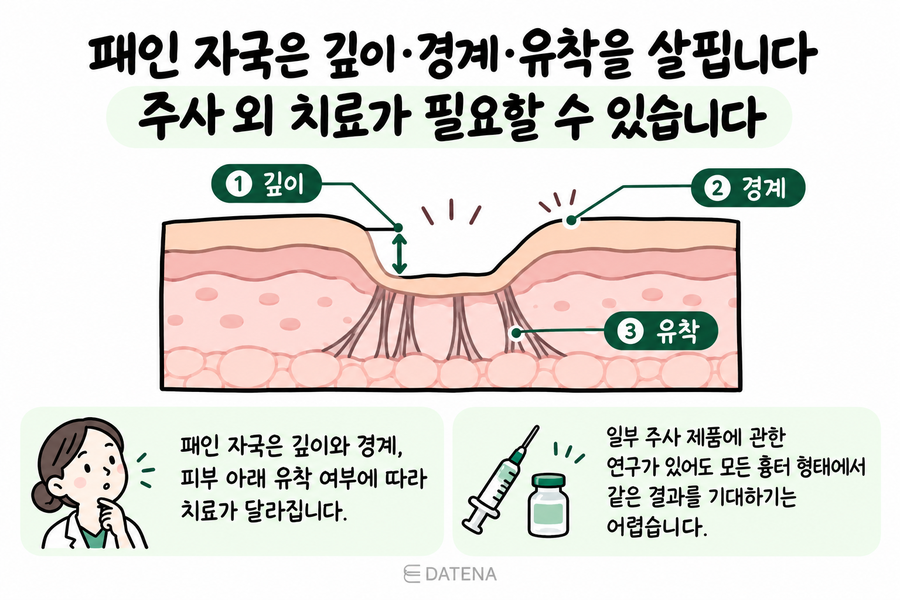
Treatment for depressed marks depends on their depth, their edges, and whether the skin is tethered underneath.
Even if there's research on certain injectable products, you can't expect the same results for every type of scar.
Areas that look like tiny pores in photos may actually be depressed scars.
If the edges and depth of a scar aren't assessed, the part that bothers you most can stay the same no matter how many texture treatments you repeat.
If there's still active inflammation, we may first look at treatment to reduce new marks.
4. Before applying research findings to your own skin
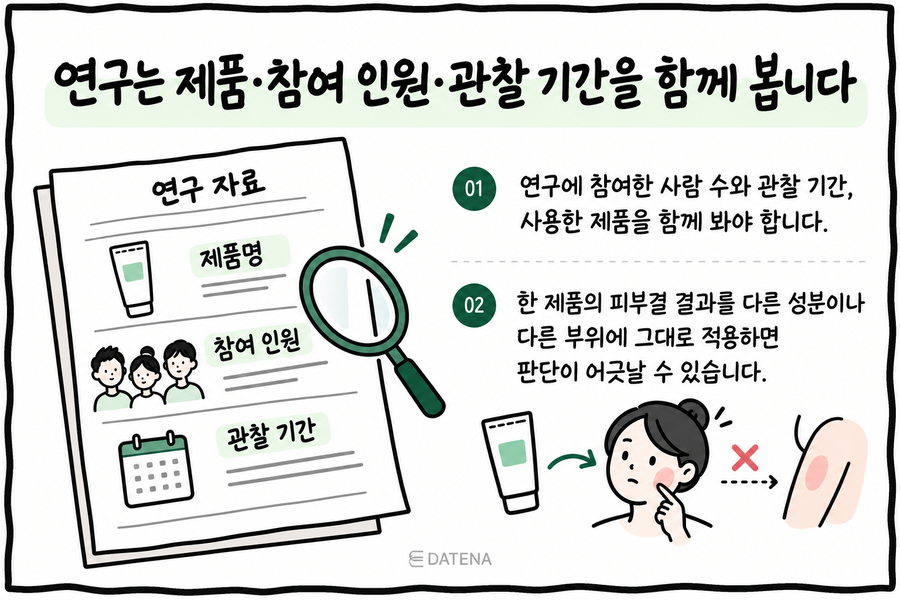
You need to look at how many people took part, how long they were followed, and which product was used.
Applying one product's texture results directly to a different ingredient or a different area can lead to the wrong conclusion.
It's also important to check whether the product used in the study is the same formulation you'll receive.
If the follow-up period was short, keep in mind there's no way to know how results hold up months later or whether delayed reactions appear.
Before-and-after photos can also make changes look bigger when the lighting and shooting conditions differ.
5. Common reactions and precautions for injection treatments
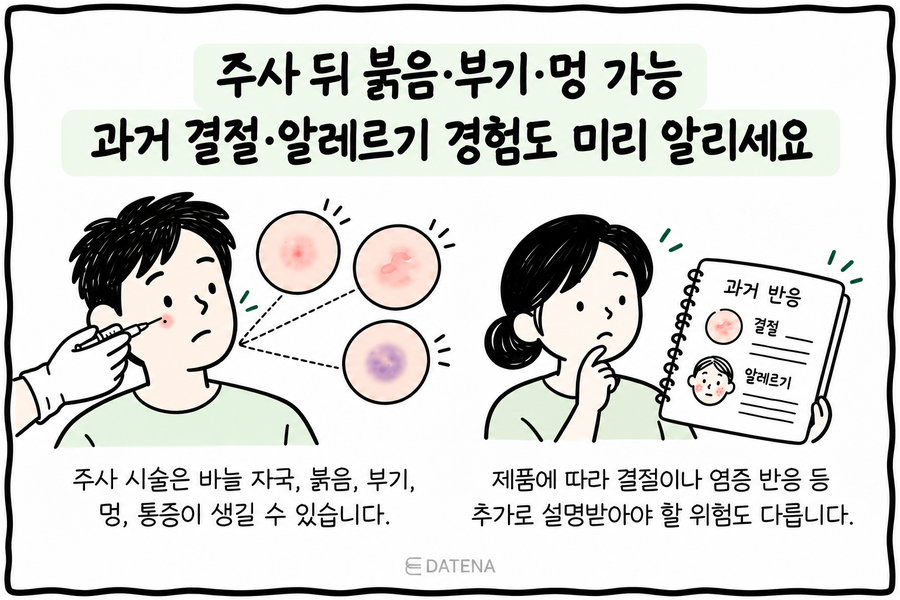
Injection treatments can cause needle marks, redness, swelling, bruising and pain.
Depending on the product, there are also different risks, such as nodules or inflammatory reactions, that should be explained to you.
On days when your skin is sensitive, even a small needle prick can feel much stronger.
If you've had inflammation or nodules after injections before, it's safest to tell us the product name and when it happened.
If an area may be infected or you have a history of allergies, let us know before the treatment.
6. Four things to check when choosing a product
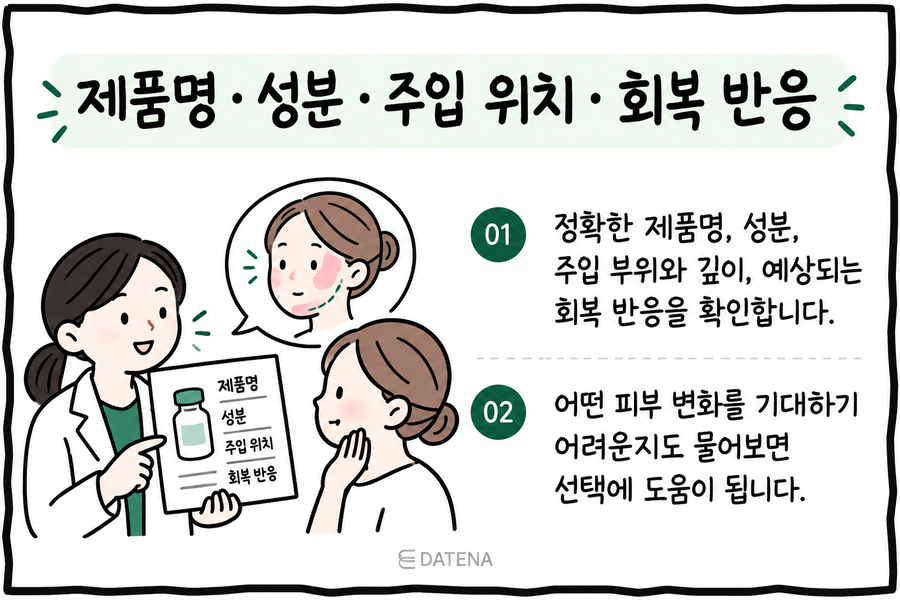
Confirm the exact product name, ingredients, injection area and depth, and expected recovery reactions.
It also helps to ask what kinds of skin changes are unlikely to happen.
At your consultation, try stating a specific goal, like "I want less tightness after washing my face," rather than "I want better skin."
A clear goal makes it easier to decide whether you need injections or whether basic treatment should come first.
At Datena Clinic, rather than focusing on product names, we look at whether your current skin condition and your goals match up.
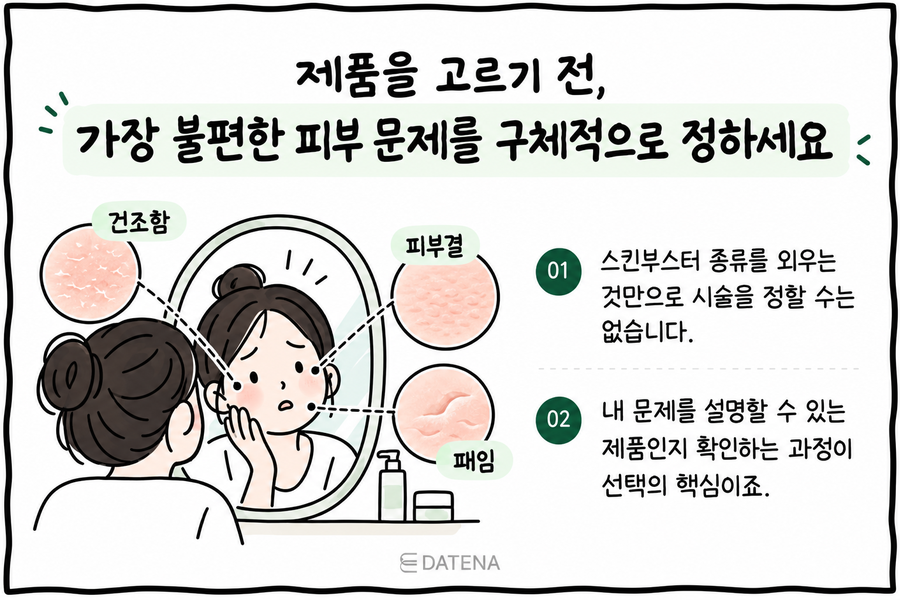
Memorizing a list of skin booster types won't tell you which treatment to choose.
When comparing several options, look beyond the ingredient descriptions to who was actually studied, which areas were treated, and what reactions to expect.
The key to choosing is checking whether a product actually addresses your specific concern.
It's best to choose once you understand the cause of your skin concern, the evidence behind each product, and what recovery looks like.
You can find details on our treatments and directions on the Datena Clinic official website.