
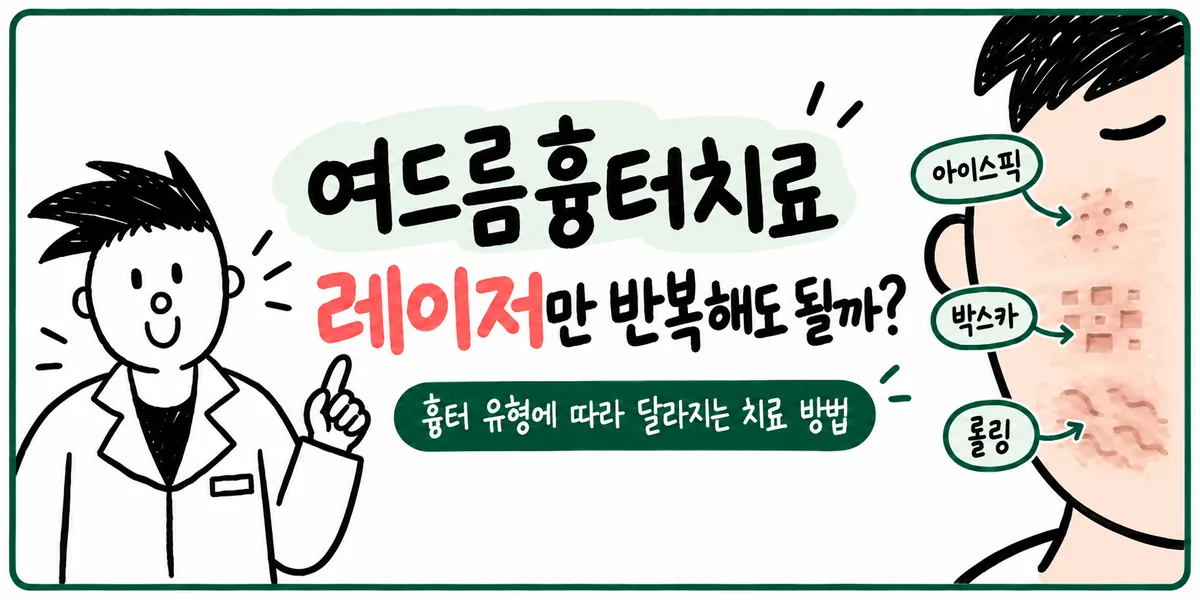
Acne scar treatment: is repeating just one laser enough?
Why scars remain after acne clears
Why you should look at the shape of the depression first
How treatment differs by scar type
Why several treatments are combined
How to check the number of sessions and recovery time
Acne scar care at Datena Clinic
1. Why scars remain after acne clears
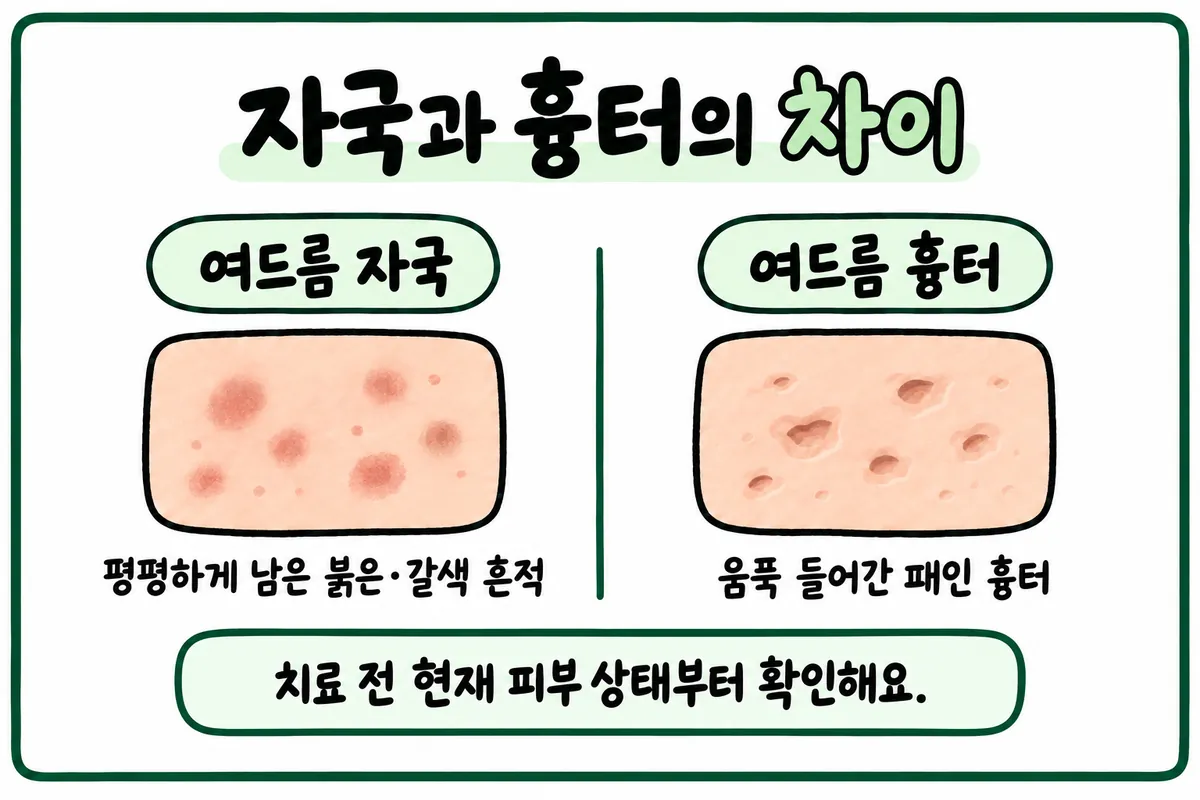
When red or brown marks linger after inflamed acne clears up, it's easy to assume they're all scars.
But it's worth telling apart marks that are just discoloration and lie flat from areas where the skin itself is actually indented. Depressed scars can form when the skin doesn't produce enough collagen while it heals.
The odds of scarring can go up, especially if you had deep, severely inflamed acne or repeatedly squeezed and picked at breakouts.
So when looking into treatment, the first step is to check whether what you're seeing is closer to pigmentation or redness, or whether it's a true depressed scar in the skin.
2. Why the Shape of the Scar Comes First
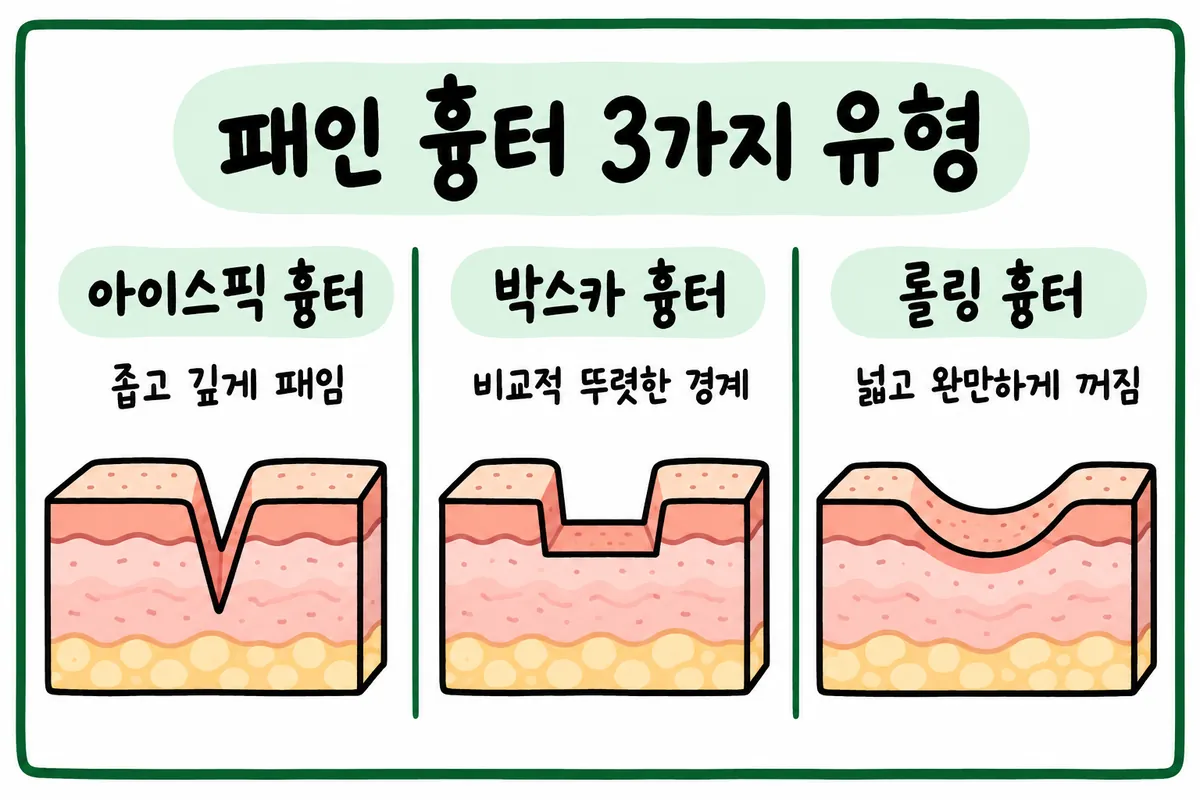
Not all depressed acne scars look the same.
Type | Shape | What to Check |
|---|---|---|
Ice pick | Narrow and deep | Scar depth |
Boxcar | Relatively wide with sharp edges | Edges and depth |
Rolling | Wide, gently sloping depressions | Tethering beneath the skin |
Several types can appear on the same face, so each scar's depth and shape needs to be checked.
3. Treatment Depends on the Scar Type
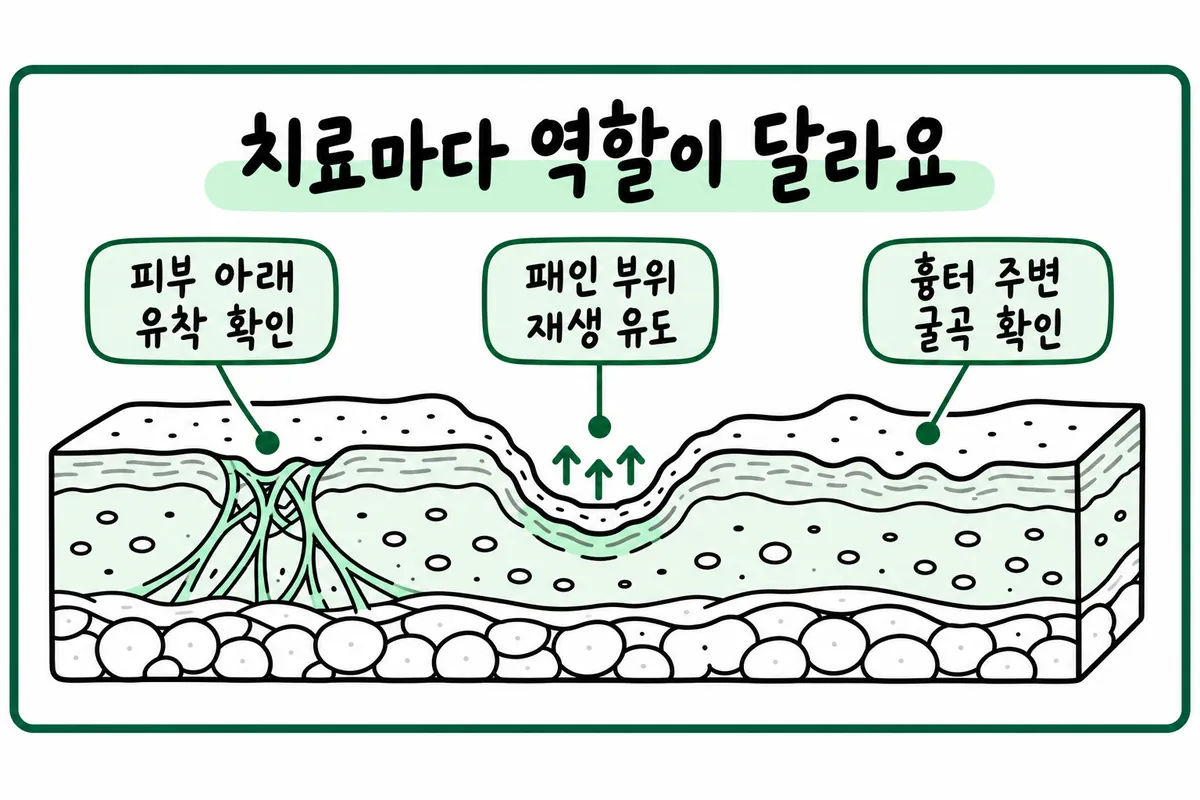
Search for acne scar treatment and you'll find everything from lasers to subcision and needling.
Each treatment does a different job. Subcision, for example, releases the fibrous bands under the skin that pull the scar downward.
Depending on the type, lasers can be used to stimulate skin regeneration or to address uneven contours around scars, while needling uses tiny controlled injuries to trigger the skin's renewal response.
So rather than focusing on the name of a particular device, it's worth understanding what role a treatment plays for the shape and depth of your own scars.
4. Why Treatments Are Often Combined
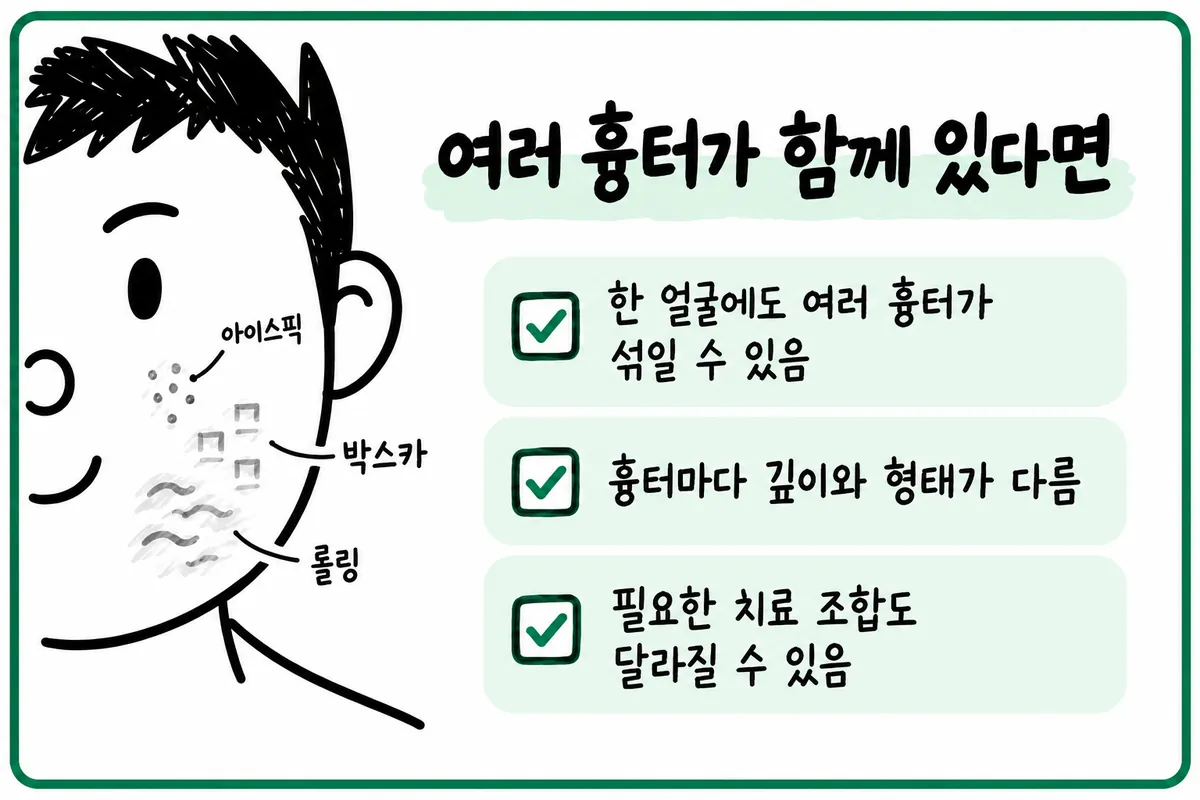
If you have a mix of scar types, a single method may not be enough to treat every area.
That's because some areas, like rolling scars, need attention to tethering underneath, while other areas with sharp edges or deep pits may exist alongside them.
Depending on the scars, Datena Clinic uses subcision, CureJet, MTS (microneedling), long-pulse 1064 Genesis laser, UltraPulse Encore CO2 laser and more.
Our Skin Therapy Program (Salgyeol Therapy) Premium likewise combines several treatments based on the shape, depth and extent of the scars, and not every step is applied the same way to everyone.
5. How Many Sessions and How Much Downtime?
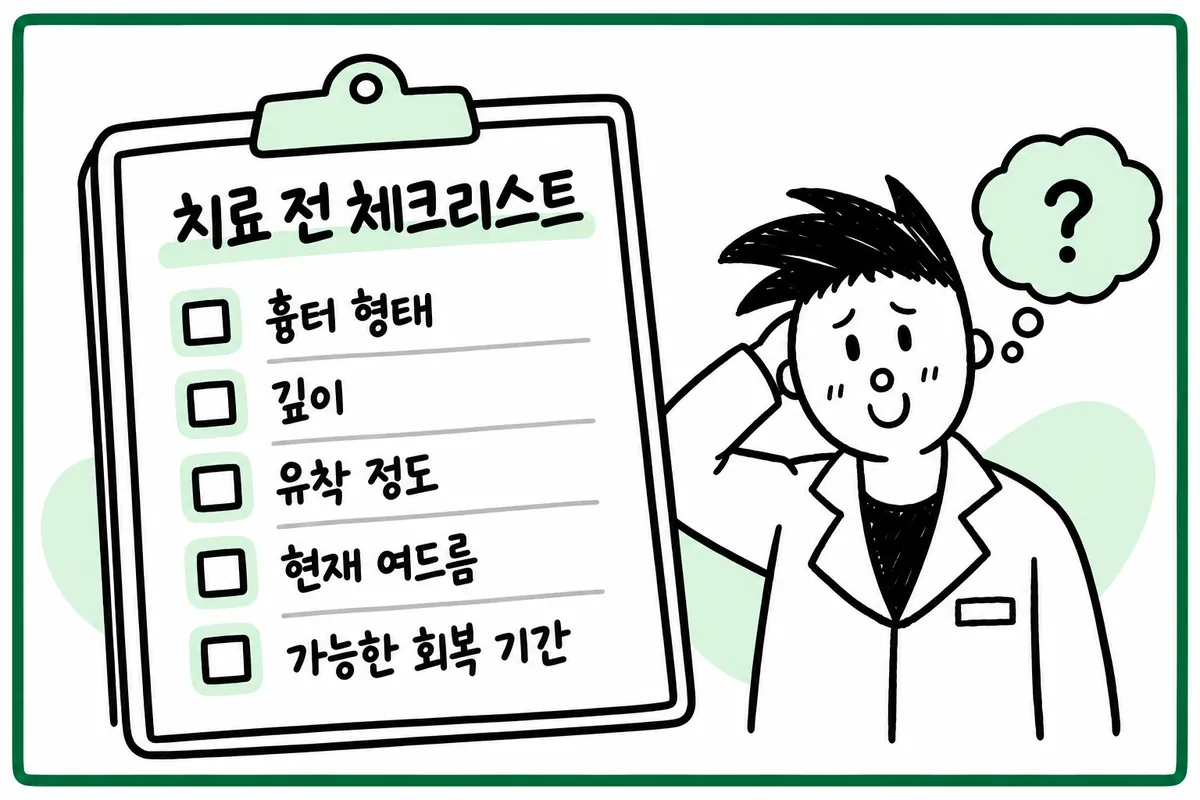
"How many sessions until they're gone?" is one of the questions we hear most.
The number of sessions needed can vary with scar type and depth, skin condition and the treatments used.
Depending on the method, you may have redness, swelling or tiny scabs afterward. If you have an important event coming up, it's a good idea to check the expected recovery in advance.
Rather than fixing the number of sessions up front, we decide which areas to prioritize on your current skin, watch how your skin responds, and then plan the next step.
6. Acne Scar Care at Datena Clinic
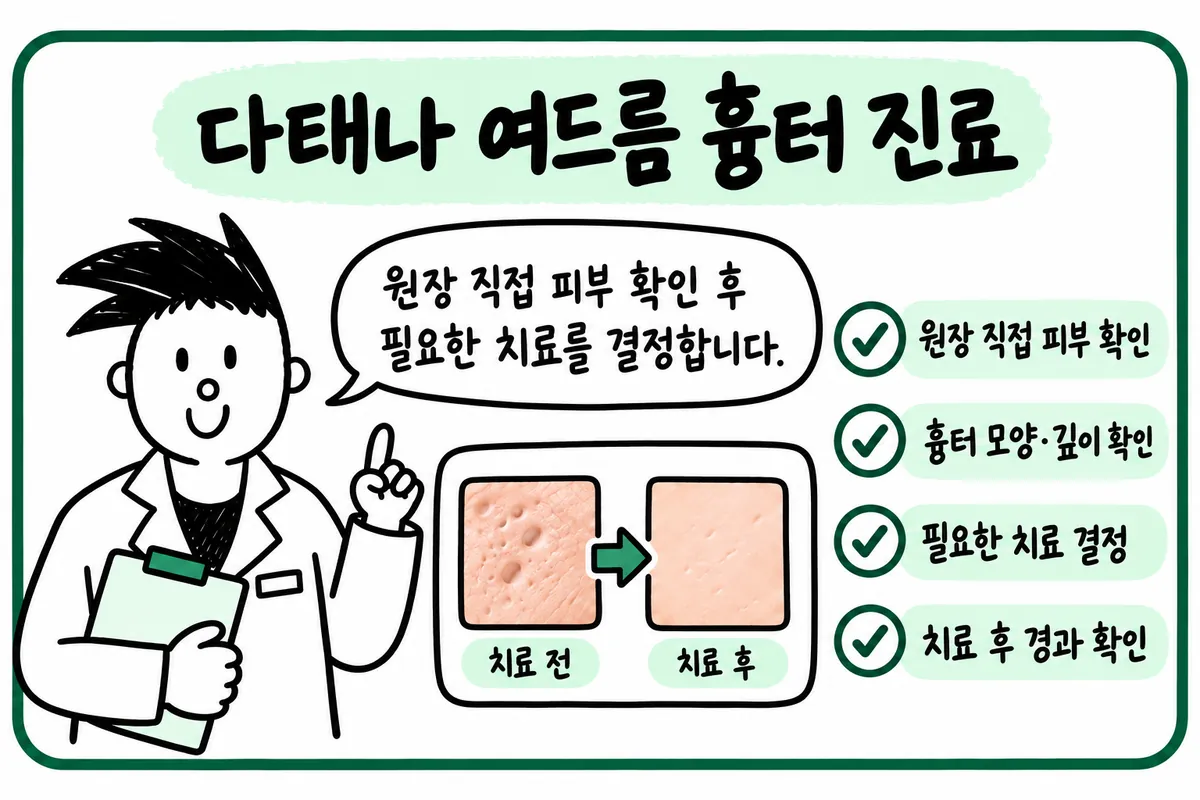
At Datena Clinic, we believe it matters that the doctor personally examines your skin, listens to your concerns and the changes you're hoping for, and only then recommends a treatment direction.
Acne scars also often come in more than one type.
If you're considering treatment, it's important to look at the shape and depth of the scars, how much tethering there is, how they're distributed, and your current acne activity, and then build a treatment plan tailored to your skin.
Medically reviewed by: Dr. Kang Dong-hyun (Datena Clinic) · Meet our doctors: /about.html