
Subcision: which acne scars can it be considered for?
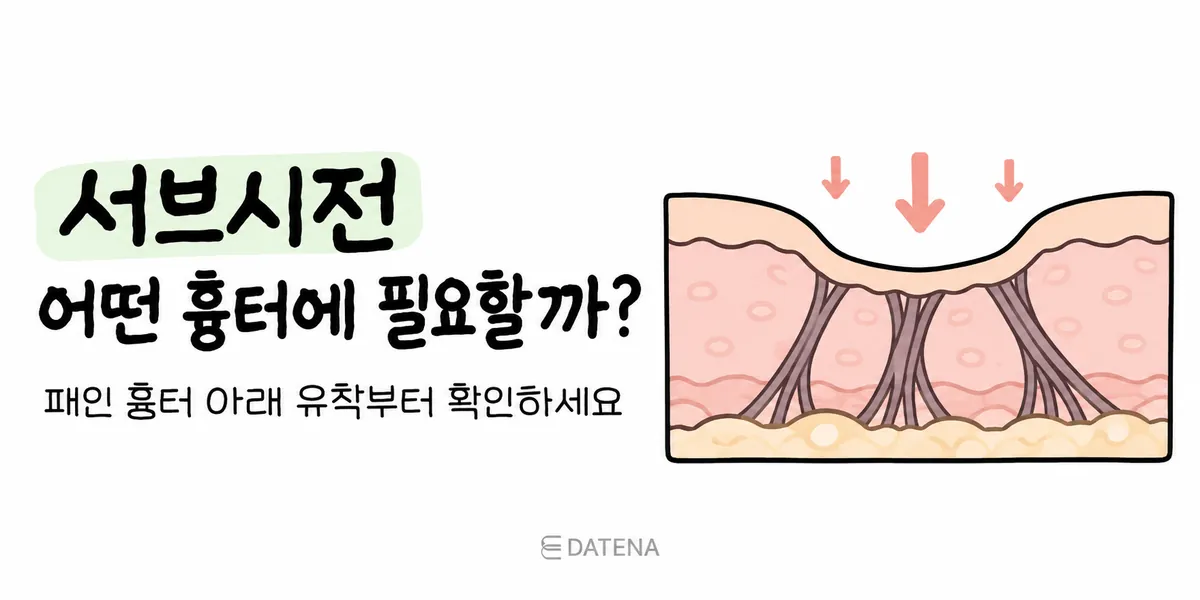
Depressed scars may be pulled down from beneath the skin
How does subcision work?
Scars where subcision may be considered
When other treatments are also needed
Changes you may notice after treatment
How do we approach this at Datena Clinic?
1. Depressed scars can be pulled down from beneath the skin
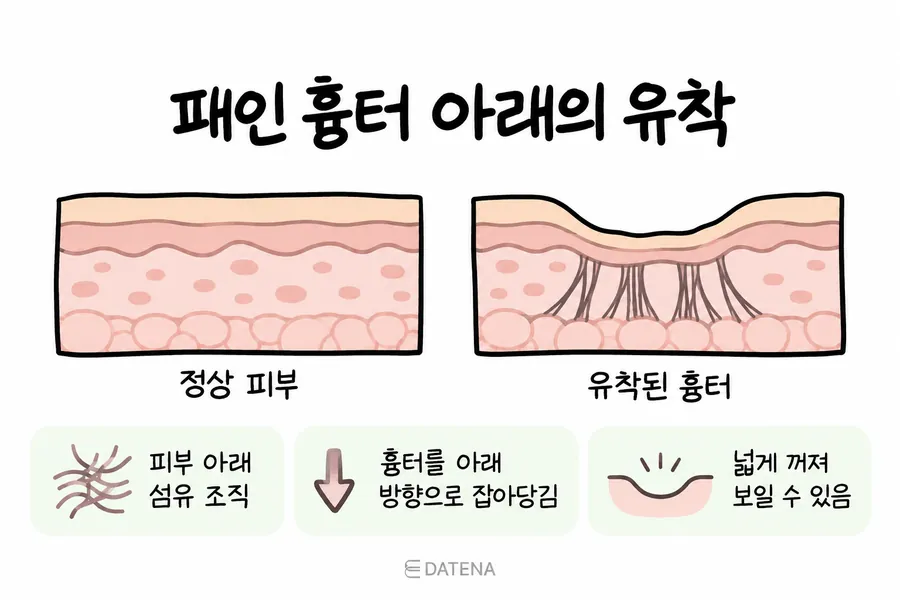
When you look at a depressed scar, it's easy to assume only the skin's surface is damaged.
But in some scars, tough fibrous tissue beneath the skin may actually be pulling the scar downward.
When these adhesions are present, the skin can look broadly sunken, and the unevenness may stand out even more depending on the direction of the light.
This is especially true for rolling scars, which dip broadly and gently, so it's important to also check for adhesions beneath the skin.
2. How does subcision work?
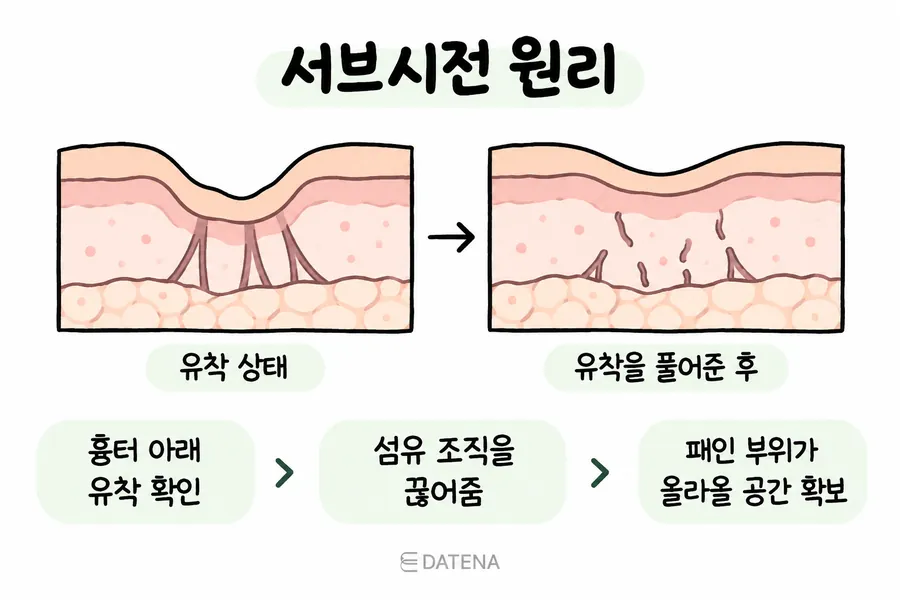
Subcision is a procedure that cuts the fibrous tissue that's pulling the scar down from beneath the skin.
In Datena's Skin Therapy Program (Salgyeol Therapy), subcision is used as a step that severs the bundles of fibrous tissue under the scar, helping the depressed area rise back up.
Rather than deciding based only on how the skin's surface looks, we need to check how strongly the scar is actually attached to the tissue below.
3. Scars where subcision may be considered
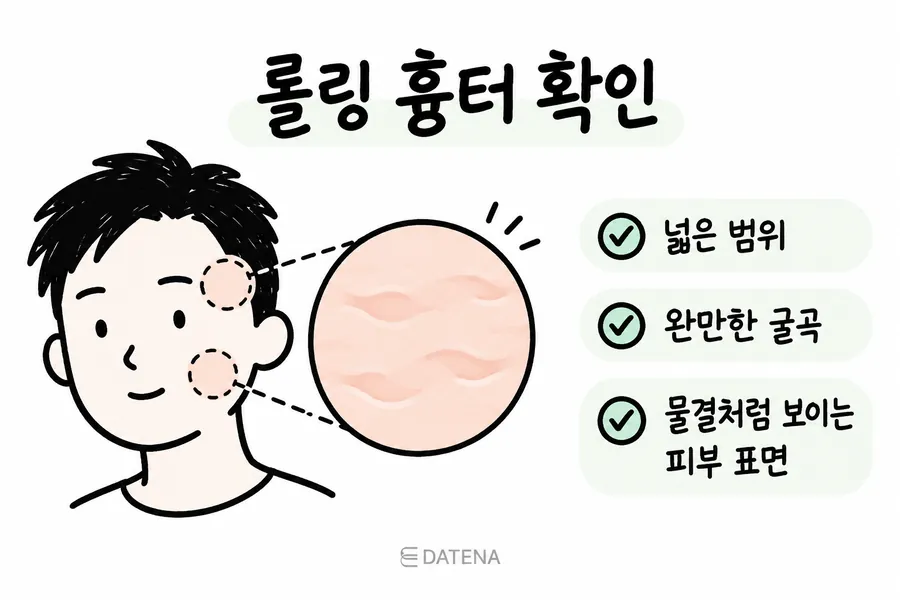
The most typical type we evaluate is the rolling scar.
Rolling scars sink gently over a relatively wide area, which can make the skin look wavy and uneven.
Datena Clinic's materials also describe subcision as a method used to treat rolling-type scars spread over a wide area, as well as scars around the temples.
That said, even scars that look like rolling scars vary from person to person in adhesion, depth and surrounding skin condition, so whether subcision is right for you is decided after examining your skin.
4. When other treatments are also needed
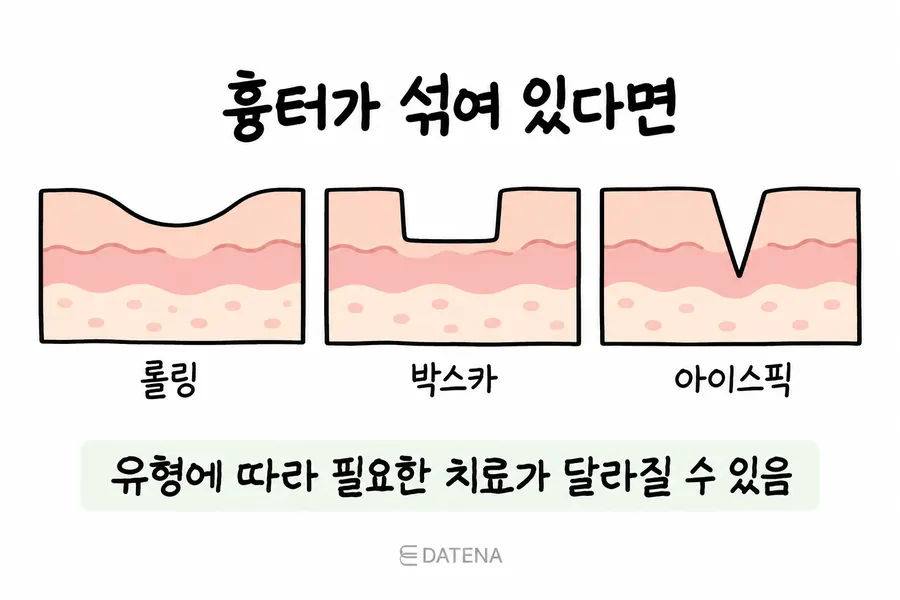
It's rare for the whole face to have only one type of scar.
Around broad, sunken rolling scars, you may also find narrow, deep icepick scars or boxcar scars with sharp edges.
What we find | Treatment approach considered |
|---|---|
Adhesions underneath | Subcision, etc. |
Narrow, deep depressions | Treatment suited to scar depth |
Firm scars with distinct edges | Treatment that addresses scar edges |
A mix of several types | A combination of treatments based on your condition |
Depending on your scars, Datena Clinic may also use CureJet for delivering medication, the UltraPulse Encore CO2 laser, and other options.
5. Changes you may notice after the procedure
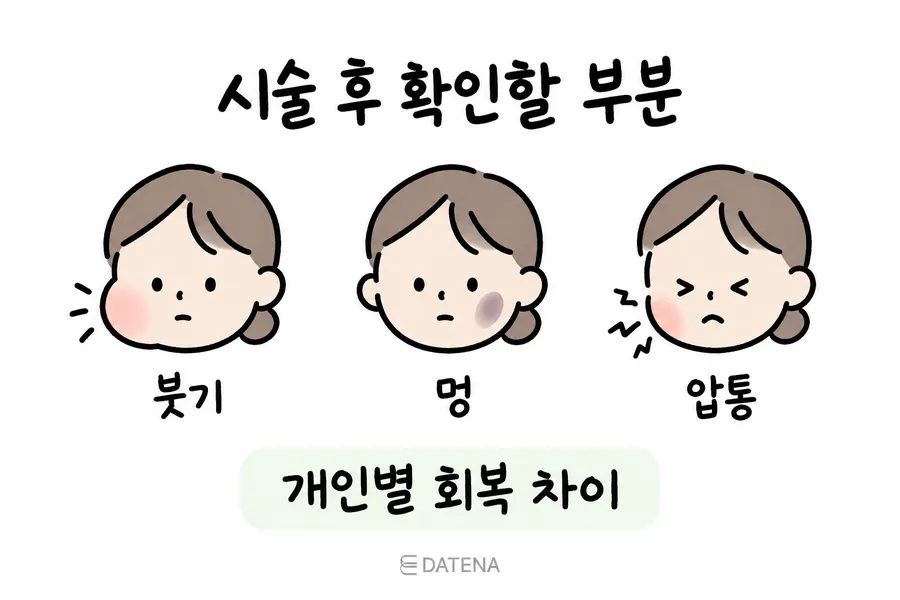
After subcision, you may experience swelling, bruising or tenderness in the treated area.
How much and how long recovery takes can differ depending on the treated area and your skin condition, so if you have an important event coming up, it's best to let our medical team know in advance.
It's also hard to say for certain that a single session will make every depressed scar disappear.
We can adjust the next steps as we check your current scar condition and how your skin responds after treatment.
6. How do we approach this at Datena Clinic?
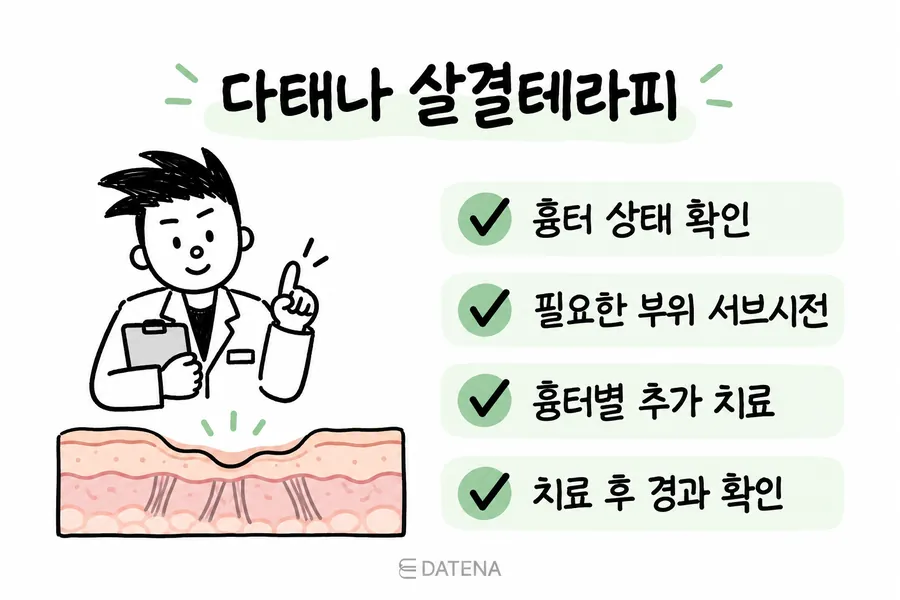
In Datena's Skin Therapy Program (Salgyeol Therapy) Premium, we perform subcision when needed, then use CureJet to deliver products such as Cell-LDM or Juvelook Volume into the dermis.
Depending on your scars, MTS (microneedling), the long-pulse 1064 Genesis laser, the UltraPulse Encore CO2 laser and other treatments may also be used.
We first check whether the depressed areas are being pulled down by tethering and whether other types of scars are present, and then decide on the treatment plan you need.
Medically reviewed by: Dr. Kang Dong-hyun (Datena Clinic) · Meet our doctors: /about.html