
Volnewmer results: telling skin firmness apart from facial volume
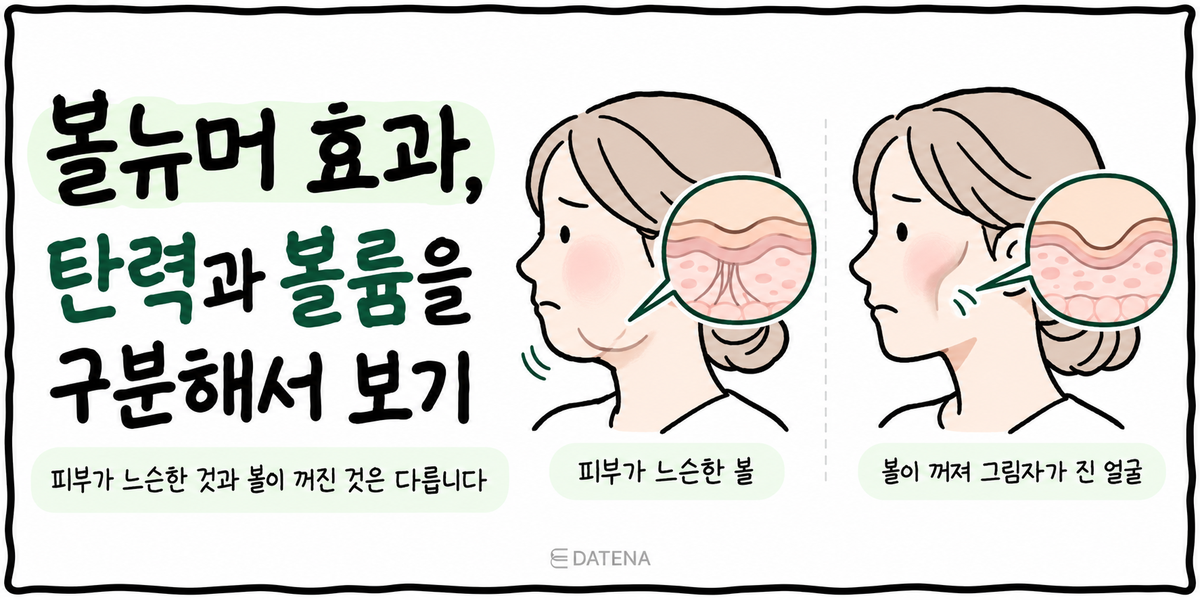
You may wonder whether your face will look different after Volnewmer, but it's easy to think of firmness and volume as the same change.
We separate the goals of radiofrequency treatment, when to assess results, and changes it's unlikely to deliver.
Today's summary
Volnewmer is a monopolar radiofrequency device.
Skin laxity and volume loss are different things.
We don't judge results by how you look right after treatment.
Be aware that warmth, redness, and swelling are possible.
Hello, this is Datena Clinic.
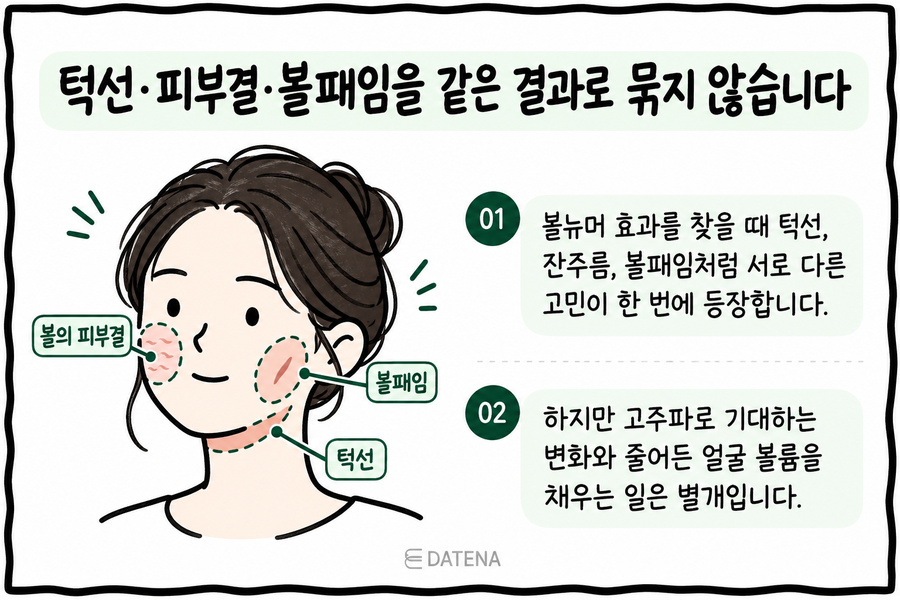
When people look up Volnewmer results, very different concerns come up at once: the jawline, fine lines, hollow cheeks.
But the changes you can expect from radiofrequency are separate from restoring lost facial volume.
When you're looking into Volnewmer, it helps to separate two kinds of change: a more defined jawline and skin that looks less loose.
The two can show up together, but they aren't measured the same way.
Let's start by looking at which change is actually behind your concern.
1. How Volnewmer uses radiofrequency and cooling
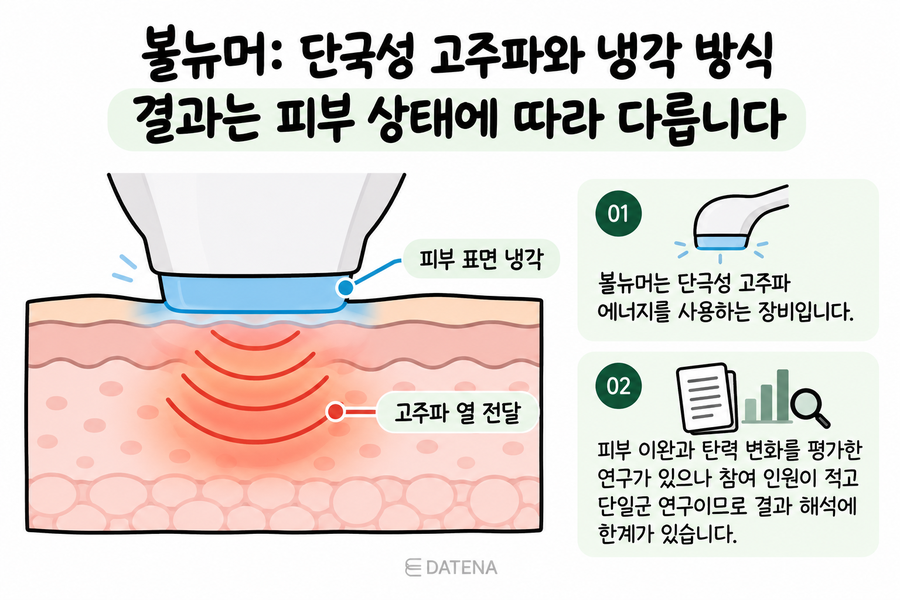
Volnewmer is a device that uses monopolar radiofrequency (RF) energy.
There is research looking at changes in skin laxity and firmness, but the studies had few participants and no control group, so the results should be read with caution.
Volnewmer combines monopolar RF with a cooling system that circulates water.
The research reported measures for both the jawline and facial volume, but average results from a small study don't mean the same changes will appear on every face shape.
What you can realistically expect depends on your skin thickness and how much laxity you have.
2. Skin firmness vs. facial volume
Skin that has lost firmness and cheeks that have lost fat or tissue can both look like sagging.
Some studies observed changes in facial contour and volume measures, but RF treatment shouldn't be thought of as working the same way as injectable volume replacement.
Check whether the hollowing in your cheeks stands out on one side or looks even on both sides.
How firm your skin feels to the touch and how much volume shows in photos are two different questions.
If hollow cheeks are your main concern, a plan that only addresses skin laxity may not be enough.
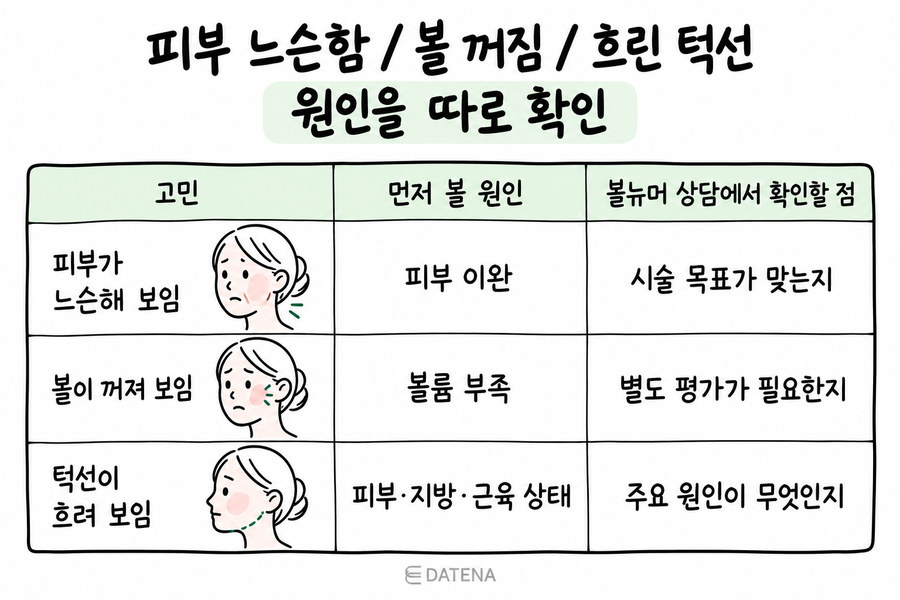
Concern | Find the cause of the cheek change first | What to check in a Volnewmer consultation |
|---|---|---|
Skin looks loose | Skin laxity | Whether the treatment fits your goal |
Cheeks look hollow | Volume loss | Whether a separate evaluation is needed |
Jawline looks less defined | Skin, fat and muscle condition | What the main cause is |
3. Assessing changes in the jawline and skin texture
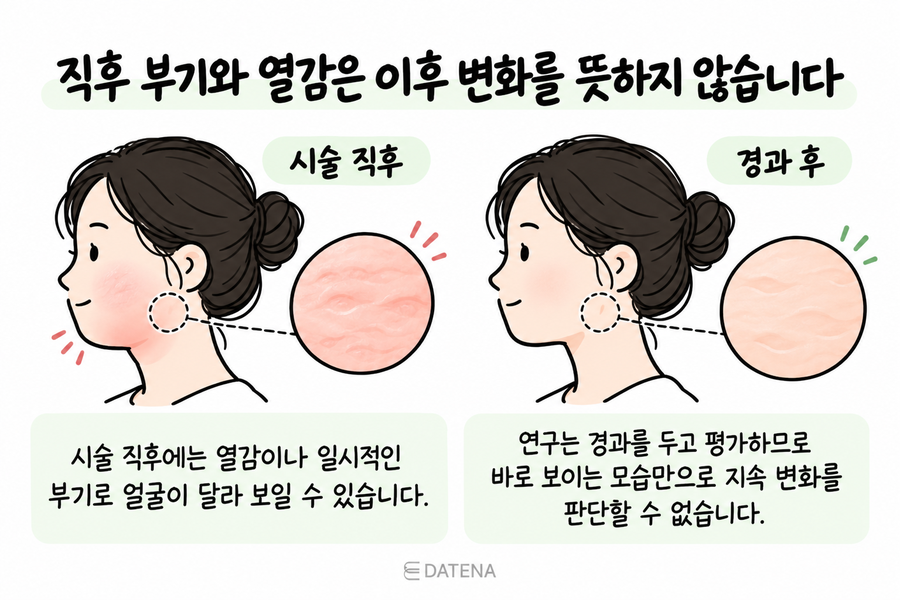
Right after treatment, warmth or temporary swelling can make your face look different.
Studies assess results over time, so you can't judge lasting change from how things look right away.
Front-facing photos alone may not show jawline changes clearly.
Besides photos, it helps to separately note how firm your skin feels and how your face looks when it moves.
It's best to review photos taken under the same lighting and expression alongside the hands-on assessment.
4. A plan tailored to each area of your skin
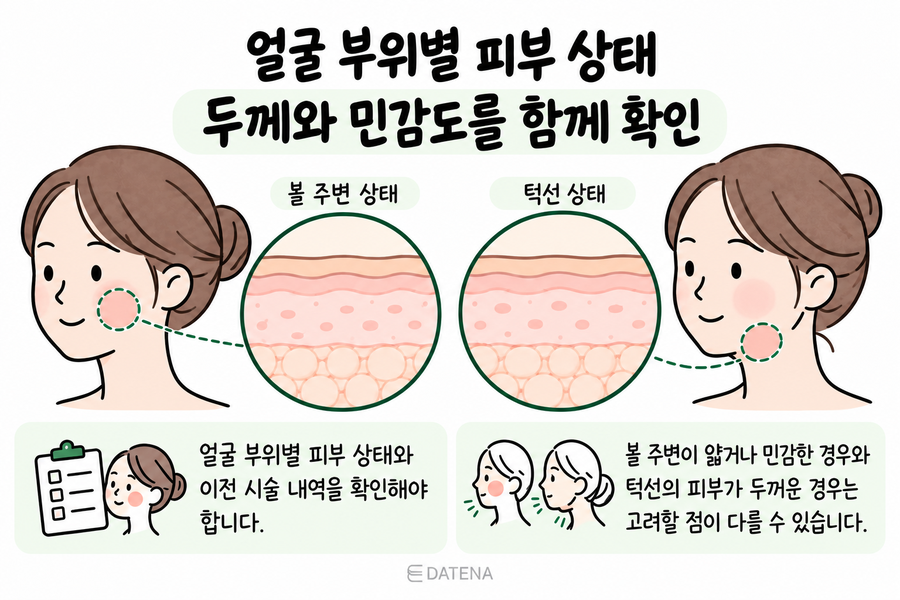
We need to check the skin condition in each area of your face and your treatment history.
Thin or sensitive skin around the cheeks and thicker skin along the jawline may call for different considerations.
We don't set the same goal for thin and thick areas, because heat transfer and visible change differ between them.
If you've recently had an RF or ultrasound treatment, please let us know the area and the date.
We don't apply a fixed number of sessions or energy level to everyone.
5. Heat during treatment and reactions afterward
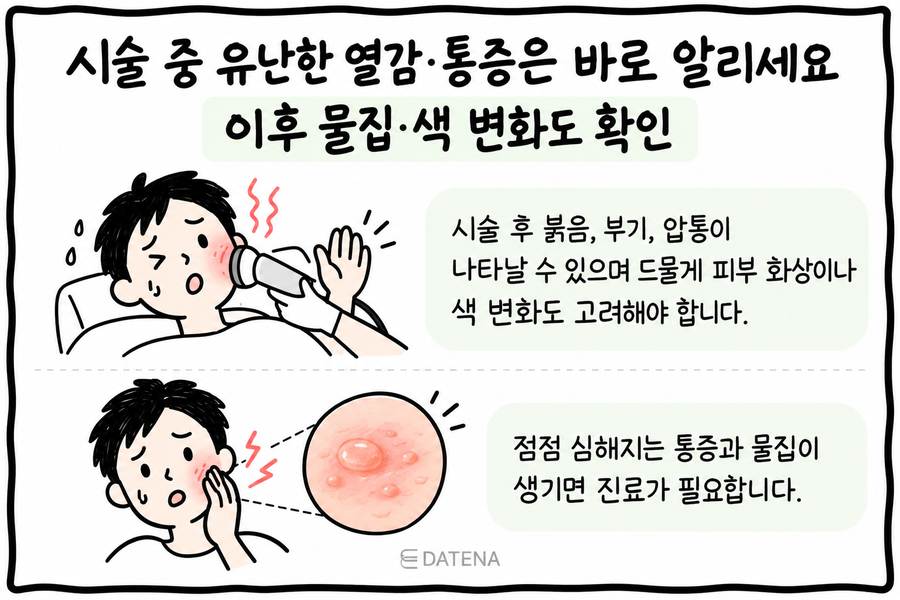
After treatment you may have redness, swelling or tenderness, and skin burns or pigment changes, though rare, also need to be considered.
If pain keeps getting worse or blisters form, you need to be seen by a doctor.
If a particular spot feels unusually hot or painful during treatment, tell us right away.
Blisters or pigment changes that linger afterward are a sign that a separate evaluation is needed.
Before treatment, let us know about any skin wounds, infections, or how your skin reacted to past heat-based treatments.
6. Set specific expectations
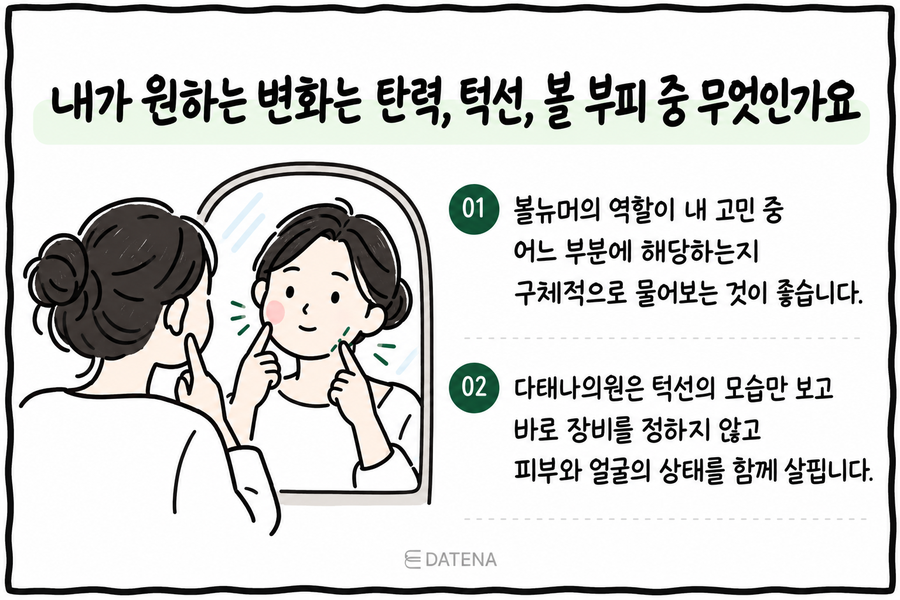
It's a good idea to ask specifically which part of your concern Volnewmer is meant to address.
At Datena Clinic, we don't pick a device just by looking at your jawline; we assess your skin and overall facial condition together.
The face that looks good in photos may differ from the change you actually want, so try writing down your priorities.
At Datena Clinic, the first step is explaining the difference between loss of skin firmness and loss of volume.
Results vary from person to person, so it's important to know in advance which areas are hard to change.
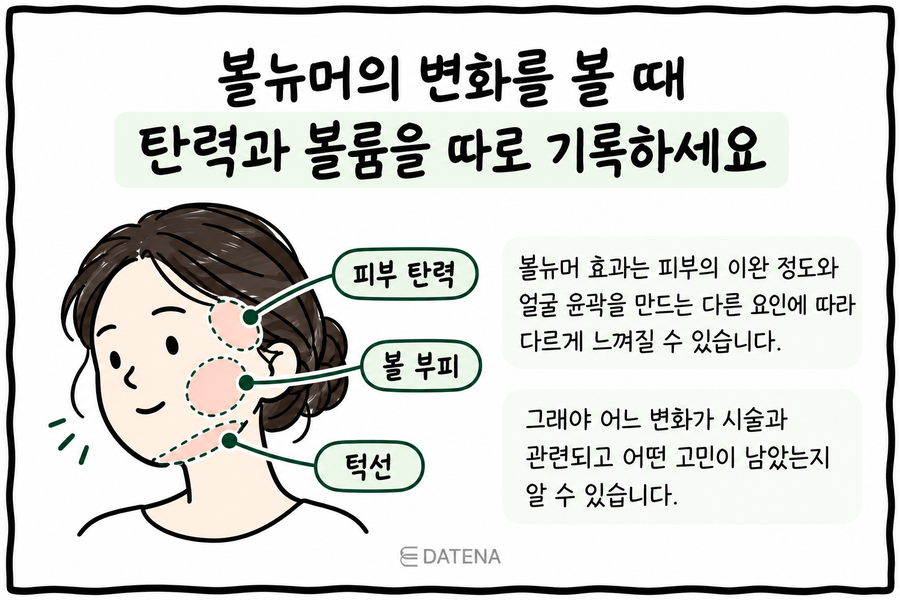
How Volnewmer's effect feels can vary depending on how lax your skin is and on other factors that shape your facial contours.
To understand Volnewmer results, skin firmness, jawline, and cheek volume should be looked at as separate things.
That way you can tell which changes relate to the treatment and which concerns remain.
Discussing firmness and volume separately during consultation helps set more precise treatment goals.
You can find details on our treatments and directions on the Datena Clinic official website.