
Ulthera results: why the right-after feeling and the changes months later should be looked at separately

When you hear that Ulthera seemed to make a difference right away, only for things to look the same again a few days later, it's easy to get confused about when the results actually show up. Here we separate the immediate sensation from the changes that unfold over several months, and lay out what you can realistically expect and how results vary from person to person.
1. The tightness and swelling you feel right after treatment
2. Collagen changes that develop over several months
3. How deep the ultrasound energy reaches
4. How Ulthera differs from surgical lifting
5. Factors that make results vary from person to person
6. Post-treatment reactions and signs to watch for
Today's summary
The tightness right after and the changes months later have different causes.
New collagen takes time to form.
Results vary with the degree of sagging, your weight and your skin condition.
Redness, swelling or tenderness that lingers should be checked.

Hello, this is Datena Clinic.
People searching for Ulthera results are usually about to have the treatment and want to know when their jawline will change and by how much. But the tightness you notice in the mirror on the day of treatment and the change you see in photos a few months later often come from different processes. Mixing the two up can lead you to think the effect has vanished as the swelling goes down, or to judge the results far too early. Today we'll walk through the order in which changes appear, the range you can expect, how it differs from surgical lifting, and the factors that make results differ.
1. The tightness and swelling you feel right after treatment

Right after treatment, some people feel their skin is slightly tighter or firmer. This is explained as a reaction to some of the collagen in the tissue contracting under the ultrasound heat, but there's also mild swelling at this stage, which can make your facial contours look more defined than they really are. Swelling usually settles within a few hours to a few days. So if things look less different the week after treatment than they did right after, it's too early to conclude the effect is gone. How strongly people feel this immediate sensation also varies, so barely feeling any tightness doesn't mean the treatment wasn't delivered properly.
2. Collagen changes that develop over several months
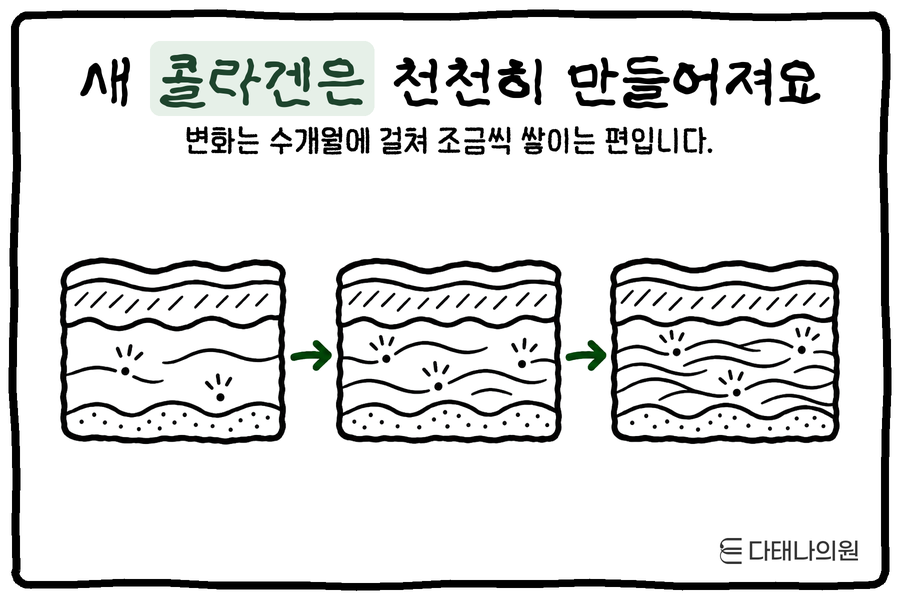
The core change Ulthera aims for is the formation of new collagen as tissue recovers from the heat stimulus. Studies describe new collagen forming over several weeks after treatment, with remodeling that can continue even longer, and clinical evaluations have generally been done at 3 and 6 months. So the change tends to build up gradually rather than appear overnight. Because studies differ in the degree of change and the timing of evaluation, it's hard to say that a set amount of change will appear at a specific point. Taking photos before treatment and again several months later, at the same angle and in the same lighting, makes it easier to judge the difference than relying on memory.
3. How deep the ultrasound energy reaches
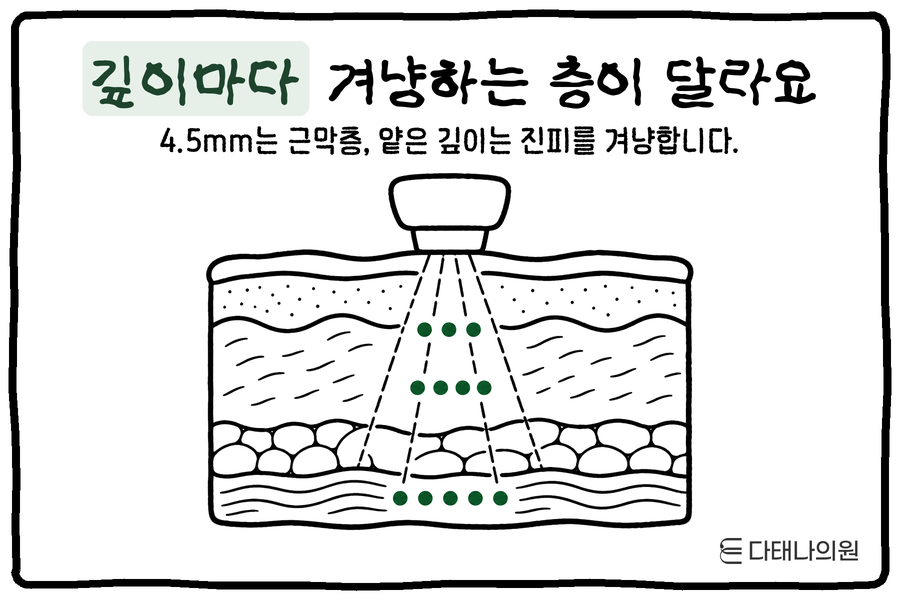
Ulthera is a focused ultrasound device that concentrates ultrasound to a single point, passing through the skin's surface and creating tiny thermal coagulation points only at a set depth. Depths of 1.5mm, 3.0mm and 4.5mm are commonly used: 4.5mm targets the subcutaneous tissue including the fascial layer (SMAS), while the shallower depths target the dermis. A distinctive feature is that the practitioner can see the layers beneath the skin on an ultrasound screen while delivering energy. This screen is also used to line up the target layer and avoid tissue that shouldn't be targeted. Depending on which depths are treated and how the energy is distributed, where you feel tightening and how much your skin texture changes can differ.
4. How Ulthera differs from surgical lifting

Ulthera doesn't cut the skin or remove excess skin; it uses a heat stimulus to encourage changes in tissue firmness. That means recovery is relatively easy, but you shouldn't expect the kind of significant lift surgery provides. The literature also considers it better suited to mild to moderate sagging, while surgical options are discussed for severe sagging or a lot of loose skin. Since Ulthera doesn't remove loose skin, the more excess skin there is, the less visible the change may be. The differences between the two approaches can be summarized as follows.
Comparison | Ulthera | Surgical lifting |
|---|---|---|
Method | Ultrasound heat stimulus | Incision, then lifting and securing |
Excess skin | Not removed | Can be removed |
Speed of change | Gradually, over several months | Fairly clear once healed |
Recovery burden | Degree of redness and swelling | Scarring and recovery time |
5. Factors that make results vary from person to person

Even with the same device and a similar energy dose, results vary from person to person. The degree of sagging, the thickness of the skin and the fat beneath it, and the amount of sun damage are the main factors, and some reports have observed less change in people with a higher body mass index. Also, if your weight goes up or down significantly after treatment, it becomes hard to tell whether changes in your facial contour came from the treatment. Even in the same person, sagging differs by area, so the jawline and cheeks may show different degrees of change. How long the effect lasts also depends on how quickly you age and on your lifestyle, so it's hard to promise a fixed period.
6. Post-treatment reactions and signs to watch for

Redness right after treatment usually fades within a few hours, while swelling and tenderness when pressed can last from a few days up to about two weeks. Rarely, bruising, raised line-shaped marks, temporary numbness or reduced sensation, or weakness in some facial muscles have been reported. Most of these resolve over time, but skin changes that look like blisters or burns, or altered sensation or asymmetry that hasn't improved after several weeks, should be checked separately. If you have inflammation, a wound, or severe acne in the treatment area, or if you use an electronic medical device such as a pacemaker, be sure to tell us before treatment. At Datena Clinic, we don't use sedation; we usually apply numbing cream for about 30 minutes and add nerve blocks when needed.
Wrapping up

It's more accurate to think of Ulthera results not as the tightness you feel on the day, but as the change that appears as tissue recovers over several months. Checking in advance whether your current degree of sagging fits this range, and deciding when and with which photos you'll compare results, helps narrow the gap between expectations and reality.
You can find details on our treatments and directions on the Datena Clinic official website.